Poland Medicinal Herbs Market: Import Trend Analysis
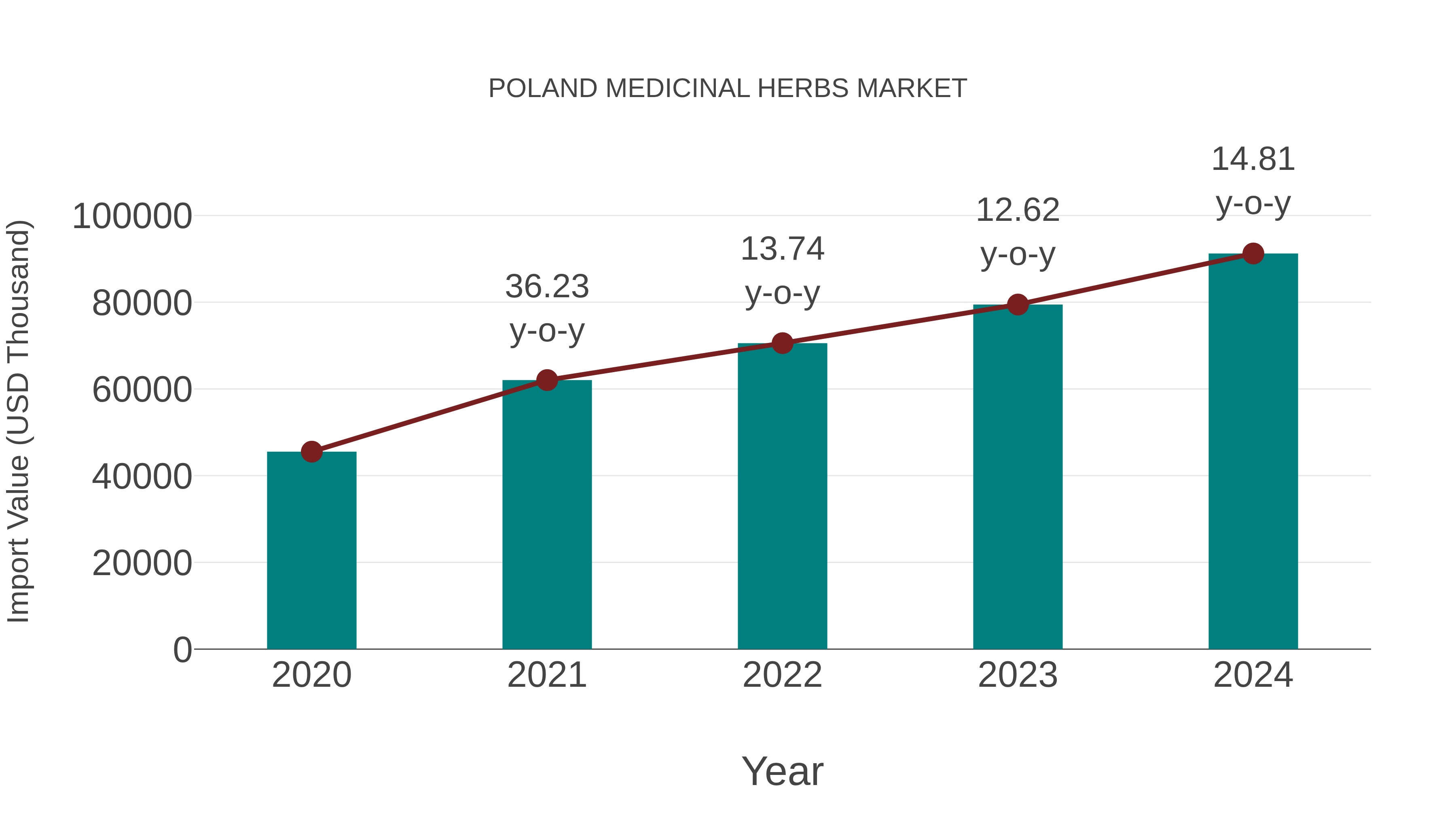
In the Poland medicinal herbs market, the import trend exhibited strong growth from 2023 to 2024, with a notable increase of 14.81%. The compound annual growth rate (CAGR) for the period 2020-2024 stood at 18.97%. This import momentum can be attributed to a notable shift in demand for herbal products, indicating a growing consumer preference for natural remedies and wellness products during this period.
Poland Medicinal Herbs Market Overview
The Poland Medicinal Herbs Market is witnessing steady growth due to increasing consumer awareness about the benefits of herbal remedies and the growing trend towards natural health solutions. The market is characterized by a wide variety of medicinal herbs being cultivated and traded, including popular herbs such as chamomile, peppermint, and echinacea. There is a growing demand for organic and sustainably sourced herbs, driving producers to focus on environmentally friendly cultivation practices. The market is also influenced by the rising popularity of traditional medicine and alternative therapies, leading to an expanding consumer base seeking herbal products. Additionally, the market is benefiting from the increasing integration of medicinal herbs into mainstream healthcare practices, further driving growth opportunities for herb producers and retailers in Poland.
Poland Medicinal Herbs Market Trends
In the Poland Medicinal Herbs Market, there is a growing demand for organic and sustainably sourced herbs as consumers become more health-conscious and environmentally aware. Consumers are seeking natural remedies and traditional herbal medicines for various health conditions, leading to an increased interest in medicinal herbs. There is also a rising trend towards incorporating medicinal herbs into everyday products such as teas, cosmetics, and supplements. Additionally, there is a growing focus on research and development in the field of herbal medicine, with an emphasis on identifying new uses and benefits of different herbs. Overall, the market is witnessing a shift towards natural and holistic approaches to health and wellness, driving the demand for medicinal herbs in Poland.
Poland Medicinal Herbs Market Challenges
In the Poland Medicinal Herbs Market, one of the key challenges faced is the increasing competition from imported herbs and products. This competition often leads to pricing pressures on local producers and distributors, making it difficult for them to maintain profitability. Another challenge is the lack of standardized regulations and quality control measures, which can impact consumer trust and safety. Additionally, limited awareness among the general population about the benefits of medicinal herbs and their proper usage poses a hurdle in market growth. Addressing these challenges will require strategic marketing efforts, investment in quality control processes, and collaboration with regulatory authorities to establish clear guidelines for the industry.
Poland Medicinal Herbs Market Investment Opportunities
In the Poland Medicinal Herbs Market, there are several promising investment opportunities. The growing trend towards natural and alternative healthcare solutions has led to an increased demand for medicinal herbs in Poland. This presents opportunities for investors to capitalize on the rising popularity of herbal remedies and supplements. Investing in the cultivation and production of high-quality medicinal herbs, as well as developing innovative products such as herbal medicines, teas, and skincare items, could be lucrative ventures. Additionally, there is potential for investment in research and development to discover new uses and applications for medicinal herbs. Overall, the Poland Medicinal Herbs Market offers diverse investment options for those looking to enter the growing herbal medicine industry.
Poland Medicinal Herbs Market Government Policy
The Poland Medicinal Herbs Market is subject to various government policies aimed at regulating the cultivation, processing, and distribution of medicinal herbs. The Polish government has implemented regulations to ensure the quality and safety of herbal products, including requirements for Good Manufacturing Practices (GMP) and adherence to European Union standards. Additionally, there are policies in place to promote sustainable harvesting practices to protect the environment and preserve biodiversity. The government also supports research and development in the medicinal herbs sector through grants and subsidies. Overall, the regulatory framework in Poland aims to facilitate the growth of the medicinal herbs market while safeguarding consumer health and environmental sustainability.
Poland Medicinal Herbs Market Future Outlook
The Poland Medicinal Herbs Market is expected to witness steady growth in the coming years due to increasing consumer awareness about the health benefits of herbal medicine and natural remedies. Factors such as the rising demand for organic and sustainable products, coupled with a growing preference for traditional and alternative medicine, will drive the market expansion. Additionally, the government`s supportive policies promoting the cultivation and use of medicinal herbs are likely to further boost the market. With a shift towards wellness and preventive healthcare practices, the Poland Medicinal Herbs Market is poised for significant development, presenting opportunities for both domestic producers and international players looking to enter the market.
Key Highlights of the Report:
- Poland Medicinal Herbs Market Outlook
- Market Size of Poland Medicinal Herbs Market, 2025
- Forecast of Poland Medicinal Herbs Market, 2032
- Historical Data and Forecast of Poland Medicinal Herbs Revenues & Volume for the Period 2022 - 2032F
- Poland Medicinal Herbs Market Trend Evolution
- Poland Medicinal Herbs Market Drivers and Challenges
- Poland Medicinal Herbs Price Trends
- Poland Medicinal Herbs Porter's Five Forces
- Poland Medicinal Herbs Industry Life Cycle
- Historical Data and Forecast of Poland Medicinal Herbs Market Revenues & Volume By Type for the Period 2022 - 2032F
- Historical Data and Forecast of Poland Medicinal Herbs Market Revenues & Volume By Horsetail for the Period 2022 - 2032F
- Historical Data and Forecast of Poland Medicinal Herbs Market Revenues & Volume By Dandelion for the Period 2022 - 2032F
- Historical Data and Forecast of Poland Medicinal Herbs Market Revenues & Volume By Echinacea for the Period 2022 - 2032F
- Historical Data and Forecast of Poland Medicinal Herbs Market Revenues & Volume By Valerian for the Period 2022 - 2032F
- Historical Data and Forecast of Poland Medicinal Herbs Market Revenues & Volume By St. John??s Wort for the Period 2022 - 2032F
- Historical Data and Forecast of Poland Medicinal Herbs Market Revenues & Volume By Lemon Balm for the Period 2022 - 2032F
- Historical Data and Forecast of Poland Medicinal Herbs Market Revenues & Volume By Yarrow for the Period 2022 - 2032F
- Historical Data and Forecast of Poland Horsetail Medicinal Herbs Market Revenues & Volume By Calendula for the Period 2022 - 2032F
- Historical Data and Forecast of Poland Medicinal Herbs Market Revenues & Volume By Nature for the Period 2022 - 2032F
- Historical Data and Forecast of Poland Medicinal Herbs Market Revenues & Volume By Organic for the Period 2022 - 2032F
- Historical Data and Forecast of Poland Medicinal Herbs Market Revenues & Volume By Conventional for the Period 2022 - 2032F
- Historical Data and Forecast of Poland Medicinal Herbs Market Revenues & Volume By Form for the Period 2022 - 2032F
- Historical Data and Forecast of Poland Medicinal Herbs Market Revenues & Volume By Whole for the Period 2022 - 2032F
- Historical Data and Forecast of Poland Medicinal Herbs Market Revenues & Volume By Powder for the Period 2022 - 2032F
- Historical Data and Forecast of Poland Medicinal Herbs Market Revenues & Volume By Liquid for the Period 2022 - 2032F
- Historical Data and Forecast of Poland Medicinal Herbs Market Revenues & Volume By End-Use for the Period 2022 - 2032F
- Historical Data and Forecast of Poland Medicinal Herbs Market Revenues & Volume By Medicinal Tea for the Period 2022 - 2032F
- Historical Data and Forecast of Poland Medicinal Herbs Market Revenues & Volume By Health Supplement for the Period 2022 - 2032F
- Historical Data and Forecast of Poland Medicinal Herbs Market Revenues & Volume By Nutritive Jams for the Period 2022 - 2032F
- Historical Data and Forecast of Poland Medicinal Herbs Market Revenues & Volume By Herbal Medicines for the Period 2022 - 2032F
- Historical Data and Forecast of Poland Medicinal Herbs Market Revenues & Volume By Cosmeceuticals for the Period 2022 - 2032F
- Historical Data and Forecast of Poland Medicinal Herbs Market Revenues & Volume By Other Uses for the Period 2022 - 2032F
- Poland Medicinal Herbs Import Export Trade Statistics
- Market Opportunity Assessment By Type
- Market Opportunity Assessment By Nature
- Market Opportunity Assessment By Form
- Market Opportunity Assessment By End-Use
- Poland Medicinal Herbs Top Companies Market Share
- Poland Medicinal Herbs Competitive Benchmarking By Technical and Operational Parameters
- Poland Medicinal Herbs Company Profiles
- Poland Medicinal Herbs Key Strategic Recommendations






































