Poland Packaged Water Market: Import Trend Analysis
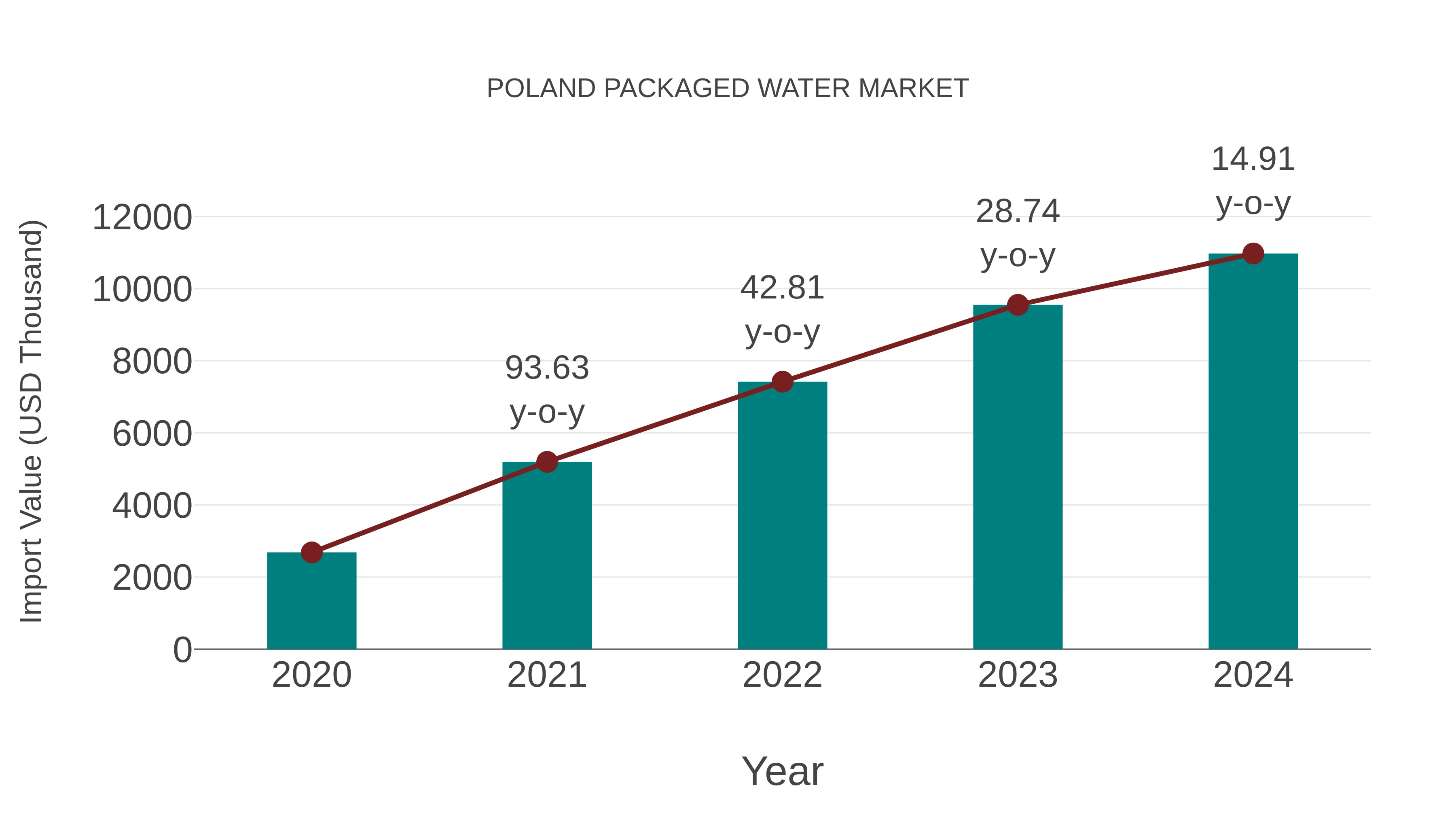
In the Poland packaged water market, the import trend exhibited significant growth, with a 14.91% increase from 2023 to 2024 and a notable compound annual growth rate (CAGR) of 42.22% for the period 2020-2024. This robust import momentum can be attributed to shifting consumer preferences towards healthier beverage options, driving increased demand for packaged water in the market.
Poland Packaged water Market Overview
The Poland Packaged water market is witnessing steady growth driven by increasing health consciousness among consumers, the convenience of on-the-go hydration, and concerns about water quality. The market is dominated by well-known brands offering a wide range of products, including still water, sparkling water, flavored water, and functional water infused with vitamins and minerals. The trend towards sustainable packaging and environmentally-friendly practices is also gaining traction in the market, with a growing demand for recyclable bottles and eco-friendly packaging solutions. Key players in the Poland Packaged water market are focusing on product innovation, marketing strategies, and distribution channels to stay competitive in this dynamic and evolving industry landscape.
Poland Packaged water Market Trends and Opportunities
The Poland Packaged water market is experiencing significant growth due to increasing consumer preference for convenient and healthy hydration options. The market is witnessing a shift towards premium and functional packaged water products, such as vitamin-infused or alkaline water, to meet evolving consumer demands. Opportunities for market expansion lie in the increasing awareness of the importance of hydration for overall health and wellness, as well as the rising trend of on-the-go consumption. Key players in the market are focusing on product innovation, sustainable packaging solutions, and expanding distribution channels to capitalize on this growing segment. With a strong emphasis on quality and safety standards, the Poland Packaged water market is poised for continued growth and diversification in the coming years.
Poland Packaged water Market Challenges
In the Poland Packaged water market, some of the key challenges include increasing competition from both domestic and international brands, price sensitivity among consumers, and concerns over the environmental impact of single-use plastic bottles. Additionally, regulatory changes related to packaging and waste management are putting pressure on companies to find more sustainable solutions. Distribution and logistics can also be challenging, especially in reaching remote or rural areas. Brand differentiation and maintaining consumer trust in terms of product quality and safety are crucial in such a competitive market. Overall, companies operating in the Poland Packaged water market must navigate these challenges effectively to sustain growth and meet evolving consumer preferences.
Poland Packaged water Market Drivers
The Poland Packaged water market is primarily driven by factors such as increasing health consciousness among consumers, growing awareness about the importance of hydration, and the convenience offered by packaged water for on-the-go consumption. Additionally, rising disposable incomes and changing consumer preferences towards healthier beverage options are boosting the demand for packaged water in Poland. The emphasis on safety and quality standards in the production of packaged water also contributes to its popularity among consumers. Furthermore, the increasing availability and accessibility of packaged water through various distribution channels such as supermarkets, convenience stores, and online platforms are driving market growth in Poland. Overall, the combination of health awareness, convenience, quality standards, and distribution channels are key drivers fueling the growth of the Packaged water market in Poland.
Poland Packaged water Market Government Policy
In Poland, the packaged water market is subject to various government policies and regulations aimed at ensuring the safety and quality of packaged water for consumers. The Ministry of Health oversees the regulatory framework, which includes standards for water quality, labeling requirements, and hygiene practices during the manufacturing process. The government enforces strict monitoring and testing procedures to prevent contamination and ensure compliance with health and safety standards. Additionally, there are regulations governing the advertising and promotion of packaged water products to protect consumers from misleading information. Overall, the government policies in Poland aim to safeguard public health by regulating the packaged water industry and promoting transparency in the market.
Poland Packaged water Market Future Outlook
The future outlook for the Poland Packaged water market appears promising, driven by increasing health consciousness among consumers and a growing preference for convenient and on-the-go hydration options. The market is expected to witness steady growth due to factors such as urbanization, rising disposable incomes, and the shift towards healthier beverage choices. Furthermore, the demand for packaged water is likely to be fueled by concerns regarding tap water quality and the convenience offered by single-serve packaging formats. Market players are anticipated to focus on product innovation, sustainable packaging solutions, and marketing strategies to capitalize on emerging trends and drive market expansion. Overall, the Poland Packaged water market is expected to experience sustained growth in the coming years, presenting opportunities for both domestic and international brands to flourish.
Key Highlights of the Report:
- Poland Packaged water Market Outlook
- Market Size of Poland Packaged water Market, 2025
- Forecast of Poland Packaged water Market, 2032
- Historical Data and Forecast of Poland Packaged water Revenues & Volume for the Period 2022 - 2032F
- Poland Packaged water Market Trend Evolution
- Poland Packaged water Market Drivers and Challenges
- Poland Packaged water Price Trends
- Poland Packaged water Porter's Five Forces
- Poland Packaged water Industry Life Cycle
- Historical Data and Forecast of Poland Packaged water Market Revenues & Volume By Product for the Period 2022 - 2032F
- Historical Data and Forecast of Poland Packaged water Market Revenues & Volume By Still for the Period 2022 - 2032F
- Historical Data and Forecast of Poland Packaged water Market Revenues & Volume By Carbonated for the Period 2022 - 2032F
- Historical Data and Forecast of Poland Packaged water Market Revenues & Volume By Flavored for the Period 2022 - 2032F
- Historical Data and Forecast of Poland Packaged water Market Revenues & Volume By Functional for the Period 2022 - 2032F
- Poland Packaged water Import Export Trade Statistics
- Market Opportunity Assessment By Product
- Poland Packaged water Top Companies Market Share
- Poland Packaged water Competitive Benchmarking By Technical and Operational Parameters
- Poland Packaged water Company Profiles
- Poland Packaged water Key Strategic Recommendations






































