Poland Wooden Carvings Pyrography and Marquetry Market (2026-2032) | Outlook, Value, Companies, Trends, Industry, Size, Analysis, Share, Growth, Forecast & Revenue
Market Forecast By Types (Carving, Pyrograpgy, Marquetry), By Tools Types (Chisels, Gouges, Knives, Others), By Applications (Commercial, Residential) And Competitive Landscape
| Product Code: ETC028295 | Publication Date: Oct 2020 | Updated Date: Mar 2026 | Product Type: Report | |
| Publisher: 6Wresearch | Author: Ravi Bhandari | No. of Pages: 70 | No. of Figures: 35 | No. of Tables: 5 |
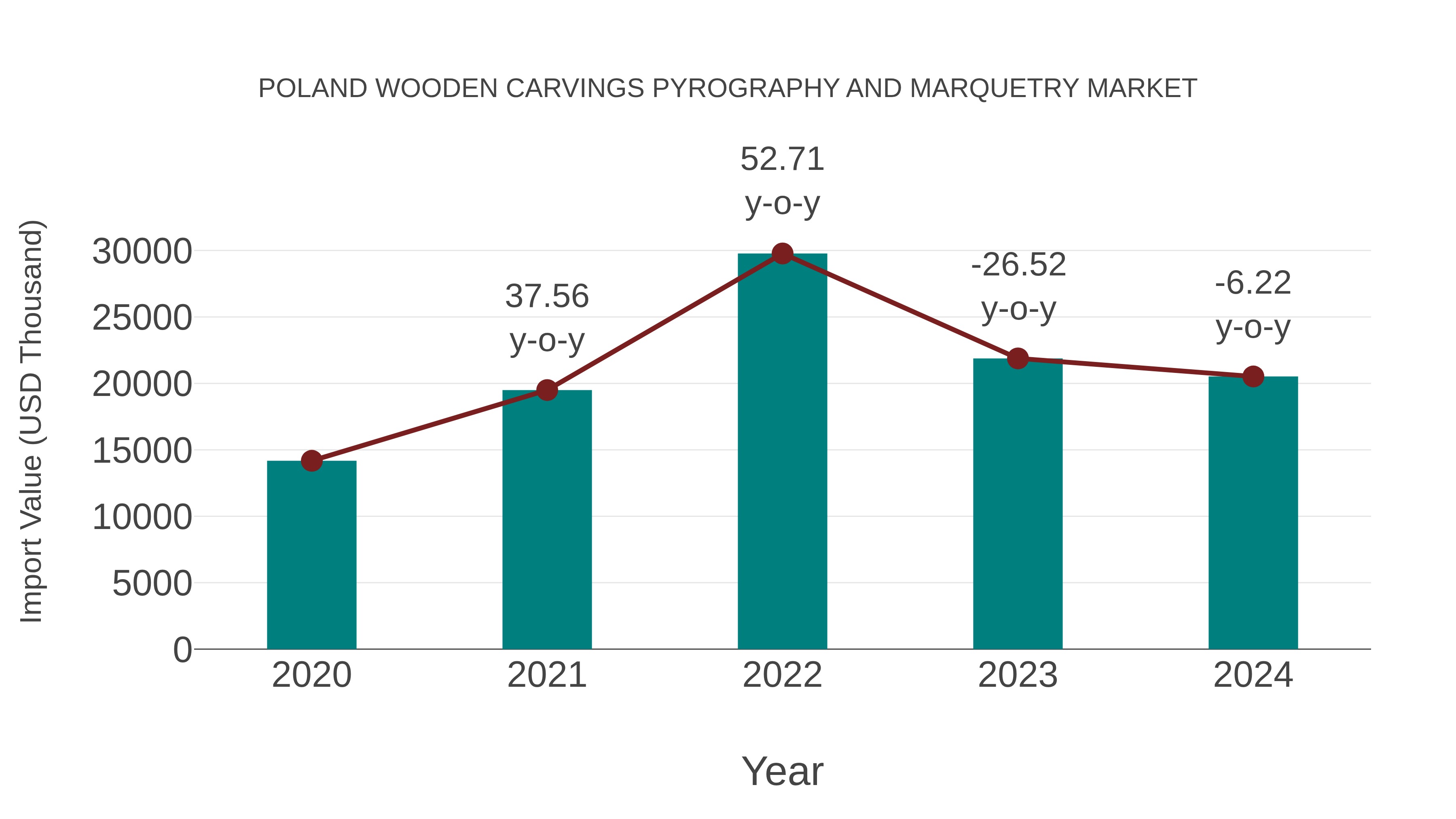
Poland Wooden Carvings Pyrography and Marquetry Market: Import Trend Analysis
In 2024, Poland import of wooden carvings, pyrography, and marquetry experienced a steady increase. The market saw a growing demand for these traditional crafts, reflecting a positive trend in consumer preferences for artisanal and handcrafted products.
Poland Wooden Carvings, Pyrography and Marquetry Market Highlights
| Report Name | Poland Wooden Carvings, Pyrography and Marquetry Market |
| Forecast Period | 2025-2031 |
| Market Size | USD 185 Million- 275 Million |
| CAGR | 8.2% |
| Growing Sector | Commercial |
Topics Covered in the Poland Wooden Carvings, Pyrography and Marquetry Market Report
The Poland Wooden Carvings, Pyrography and Marquetry market report thoroughly covers the market by type, by tool type and by application. The report provides an unbiased and detailed analysis of the on-going market trends, opportunities/high growth areas, and market drivers which would help the stakeholders to devise and align their market strategies according to the current and future market dynamics.
Poland Wooden Carvings, Pyrography and Marquetry Market Size & Analysis
In 2025, the Poland Wooden Carvings, Pyrography and Marquetry market is valued at approximately $ 185 million, with a projected compound annual growth rate (CAGR) of 8.2% over the next five years. Additionally, by 2031, the market is expected to reach around $ 275 million. The commercial sector holds significant position in the overall market.
Poland Wooden Carvings, Pyrography and Marquetry Market Synopsis
The wooden carvings, pyrography, and marquetry market in Poland is thriving due to the country's rich tradition of woodworking and craftsmanship, with a growing demand for artisanal, handcrafted products. Polish wooden carvings, particularly those influenced by traditional folk art and regional designs, are highly valued both locally and internationally, with strong export opportunities. The market benefits from Poland's robust tourism industry, where visitors seek authentic wooden souvenirs that reflect the country’s cultural heritage. Additionally, Poland's growing interior design and home décor sector is increasingly incorporating handcrafted wooden products, such as marquetry and pyrography, to add unique, bespoke elements to residential and commercial spaces. The increasing popularity of eco-friendly, sustainable products is also contributing to the market's growth, as consumers seek out locally sourced, handcrafted wooden items that align with environmental values. With the rise in global demand for cultural and sustainable craftsmanship, Poland's wooden carving industry is poised for continued growth.
According to 6Wresearch, Poland Wooden Carvings, Pyrography and Marquetry market size is projected to grow at a CAGR of 8.2% during 2025-2031. The growth of the Poland wooden carvings, pyrography, and marquetry market is primarily driven by the country’s rich tradition of craftsmanship, an increasing demand for unique, sustainable products, and a growing appreciation for handmade, artisanal goods. The tourism industry plays a significant role, with Polish wooden carvings being sought after as authentic souvenirs. Additionally, the rise in demand for bespoke home décor and furniture, particularly in the luxury sector, has boosted the commercial application of marquetry and wooden carvings. The global trend toward sustainability is another growth driver, as consumers increasingly favor eco-friendly, locally sourced products. However, the market also faces several challenges, such as the rising cost of raw materials, which can affect pricing and profitability for artisans. The sector is also contending with competition from mass-produced, machine-made products that offer lower costs, making it challenging for smaller, traditional artisans to compete on price. Furthermore, limited access to international markets and the lack of modern marketing strategies for small businesses are hindering the potential for broader market expansion. Despite these challenges, the demand for authentic, handcrafted wooden products, combined with the growing interest in Polish cultural heritage, presents opportunities for continued growth in the sector.
Poland Wooden Carvings, Pyrography and Marquetry Market Trends
- Increased Demand for Customization - Consumers are increasingly looking for personalized, one-of-a-kind wooden carvings and décor items, particularly for home and office interiors.
- Sustainability Focus - Growing awareness of sustainability is driving the demand for eco-friendly and locally sourced wooden products, with consumers preferring artisans who use sustainable practices.
- Tourism-Driven Demand - The influx of tourists to Poland continues to drive the demand for authentic, locally crafted wooden souvenirs and art pieces, boosting the market for decorative and functional carvings.
- Integration of Modern Design Trends - Traditional wooden carvings are being fused with contemporary design elements, attracting a wider audience interested in modern yet culturally significant décor.
- Luxury Sector Growth - Increased demand for bespoke wooden furniture and high-end wooden decorative pieces in luxury real estate, hotels, and commercial establishments is propelling the market.
Investment Opportunities in the Poland Wooden Carvings, Pyrography and Marquetry Market
- E-commerce Platforms - Investment in online marketplaces or digital platforms to help local artisans reach a broader, international audience.
- Sustainable Sourcing Initiatives - Investing in businesses that focus on sustainably sourcing timber and other raw materials to meet the growing demand for eco-friendly products.
- Artisan Skill Development - Funding training programs and workshops to enhance the skills of local artisans, enabling them to meet international design and production standards.
- Luxury Custom Furniture - Investing in the production of bespoke, high-end wooden furniture and décor for the luxury residential and hospitality sectors.
- Cultural Heritage Projects - Supporting initiatives that promote and preserve traditional woodworking techniques, potentially attracting cultural tourism and global interest.
Key Players in the Poland Wooden Carvings, Pyrography and Marquetry Market
In Poland, several key companies are shaping the wooden carvings, pyrography, and marquetry market, blending traditional craftsmanship with modern design. Polska Rzeźba Ludowa, a leading producer of folk art and wooden sculptures, is well known for its handcrafted carvings that reflect Poland's rich cultural heritage. Zakład Stolarski W. J. Piotrkowicz, a family-owned business, specializes in custom wooden furniture, utilizing intricate marquetry and carving techniques to create bespoke pieces for both residential and commercial clients. Folk Art and Handicrafts is another important player, focusing on traditional wooden carvings and pyrography, offering authentic Polish wooden art to both local and international customers. Additionally, made in Poland, a growing brand that emphasizes the use of sustainable, locally sourced wood, produces eco-friendly wooden décor and furniture, with a significant presence in the global market. Additionally, some of these players hold majority of the Poland Wooden Carvings, Pyrography and Marquetry market share. Moreover, these companies, along with smaller artisan workshops, contribute to Poland’s standing as a hub for high-quality, handcrafted wooden products, ensuring the continued growth and global appeal of the country's woodworking industry.
Government Regulations in the Poland Wooden Carvings, Pyrography and Marquetry Market
In Poland, the government enforces a range of regulations that aim to protect both the environment and the cultural heritage of the country’s woodworking traditions. The Ministry of Environment oversees regulations related to sustainable forestry practices, ensuring that the sourcing of wood for wooden carvings and marquetry adheres to environmentally friendly standards and the European Union's forestry laws. The National Heritage Institute plays a key role in protecting Poland’s traditional craftsmanship, offering support and regulation to safeguard folk art and artisan products. Additionally, Poland's laws align with EU directives on intellectual property, ensuring that wooden art and design innovations are protected against counterfeiting and unfair competition. Further, these initiatives have further boosted the Poland Wooden Carvings, Pyrography and Marquetry market revenues. Moreover, the government also supports small and medium-sized enterprises (SMEs) in the craft sector by offering subsidies and funding for innovation, as well as promoting the international export of traditional products. However, challenges persist regarding the enforcement of sustainable practices among smaller producers and the need for more comprehensive regulations to support the growth of artisan businesses in global markets.
Future Insights of the Poland Wooden Carvings, Pyrography and Marquetry Market
The future of the Poland wooden carvings, pyrography, and marquetry market looks promising, driven by growing consumer interest in authentic, handcrafted, and eco-friendly products. As global demand for sustainable and locally made goods continues to rise, Polish artisans are well-positioned to capitalize on their rich cultural heritage and expertise in woodworking. The expansion of e-commerce platforms and online sales channels will open new opportunities for local craftsmen to reach international markets, boosting exports of Polish wooden products. Additionally, the increasing popularity of bespoke and luxury wooden furniture, as well as home décor items, will continue to support growth in the commercial and residential sectors. With government initiatives focused on preserving traditional craftsmanship and promoting the export of cultural products, combined with a growing global appreciation for sustainable artistry, the wooden carving industry in Poland is poised for long-term growth. Embracing modern design trends while preserving traditional techniques will further enhance the appeal of Polish wooden carvings on the global stage.
Carving Category to Dominate the Market - By Type
According to Ravi Bhandari, Research Head, 6Wresearch, the carving category in Poland is experiencing steady growth, driven by a resurgence of interest in traditional folk art and the increasing demand for handcrafted, unique wooden products. Polish wooden carvings, particularly those inspired by regional styles and historical motifs, are highly sought after both domestically and internationally, especially in the tourism and souvenir sectors. The growing trend of personalization and customization in home décor is also contributing to the expansion of the carving category, as consumers increasingly opt for bespoke, hand-carved pieces to enhance their interiors. Additionally, the integration of modern design elements with traditional carving techniques is broadening the appeal of Polish wooden art, attracting a younger, more design-conscious demographic. With a strong cultural heritage in woodworking and increasing support for local artisans, the carving category in Poland is set for continued growth in both local and export markets.
Commercial Category to Dominate the Market - By Application
The commercial application of wooden carvings, pyrography, and marquetry in Poland is experiencing notable growth, particularly in the luxury real estate, hospitality, and interior design sectors. High-end hotels, resorts, and residential properties are increasingly incorporating bespoke, handcrafted wooden pieces to enhance their aesthetic appeal, with wooden carvings being a popular choice for creating unique, culturally rich environments. The demand for custom wooden furniture and décor is expanding as businesses seek distinctive designs that reflect Polish craftsmanship and add a personal touch to commercial spaces. Additionally, the growing trend of sustainable and eco-friendly products has led to increased interest in locally sourced, handcrafted wooden items, further driving commercial applications. As Polish wooden carvings gain recognition for their quality and design, the market for their use in commercial interiors is expected to continue to grow, offering significant opportunities for artisans and businesses alike.
Key Attractiveness of the Report
- 10 Years Market Numbers.
- Historical Data Starting from 2021 to 2024.
- Base Year - 2024.
- Forecast Data until 2031.
- Key Performance Indicators Impacting the Market.
- Major Upcoming Developments and Projects.
Key Highlights of the Report:
- Poland Wooden Carvings, Pyrography and Marquetry Market Overview
- Poland Wooden Carvings, Pyrography and Marquetry Market Outlook
- Market Size of Poland Wooden Carvings, Pyrography and Marquetry Market, 2025
- Forecast of Poland Wooden Carvings, Pyrography and Marquetry Market, 2032
- Historical Data and Forecast of Poland Wooden Carvings, Pyrography and Marquetry Revenues & Volume for the Period 2022-2032F
- Poland Wooden Carvings, Pyrography and Marquetry Market Trend Evolution
- Poland Wooden Carvings, Pyrography and Marquetry Market Drivers and Challenges
- Poland Wooden Carvings, Pyrography and Marquetry Price Trends
- Poland Wooden Carvings, Pyrography and Marquetry Porter's Five Forces
- Poland Wooden Carvings, Pyrography and Marquetry Industry Life Cycle
- Historical Data and Forecast of Poland Wooden Carvings, Pyrography and Marquetry Market Revenues & Volume, By Types for the Period 2022-2032F
- Historical Data and Forecast of Poland Wooden Carvings, Pyrography and Marquetry Market Revenues & Volume, By Carving for the Period 2022-2032F
- Historical Data and Forecast of Poland Wooden Carvings, Pyrography and Marquetry Market Revenues & Volume, By Pyrography for the Period 2022-2032F
- Historical Data and Forecast of Poland Wooden Carvings, Pyrography and Marquetry Market Revenues & Volume, By Marquetry for the Period 2022-2032F
- Historical Data and Forecast of Poland Wooden Carvings, Pyrography and Marquetry Market Revenues & Volume, By Tools Types for the Period 2022-2032F
- Historical Data and Forecast of Poland Wooden Carvings, Pyrography and Marquetry Market Revenues & Volume, By Chisels for the Period 2022-2032F
- Historical Data and Forecast of Poland Wooden Carvings, Pyrography and Marquetry Market Revenues & Volume, By Gouges for the Period 2022-2032F
- Historical Data and Forecast of Poland Wooden Carvings, Pyrography and Marquetry Market Revenues & Volume, By Knives for the Period 2022-2032F
- Historical Data and Forecast of Poland Wooden Carvings, Pyrography and Marquetry Market Revenues & Volume, By Others for the Period 2022-2032F
- Historical Data and Forecast of Poland Wooden Carvings, Pyrography and Marquetry Market Revenues & Volume, By Applications for the Period 2022-2032F
- Historical Data and Forecast of Poland Wooden Carvings, Pyrography and Marquetry Market Revenues & Volume, By Commercial for the Period 2022-2032F
- Historical Data and Forecast of Poland Wooden Carvings, Pyrography and Marquetry Market Revenues & Volume, By Residential for the Period 2022-2032F
- Poland Wooden Carvings, Pyrography and Marquetry Import Export Trade Statistics
- Market Opportunity Assessment, By Type
- Market Opportunity Assessment, By Tools Type
- Market Opportunity Assessment, By Application
- Poland Wooden Carvings, Pyrography and Marquetry Market - Top Companies Market Share
- Poland Wooden Carvings, Pyrography and Marquetry Market - Competitive Benchmarking, By Technical and Operational Parameters
- Poland Wooden Carvings, Pyrography and Marquetry Market - Company Profiles
- Poland Wooden Carvings, Pyrography and Marquetry Market - Key Strategic Recommendations
Markets Covered
The report provides a detailed analysis of the following market segments -
By Type
- Carving
- Pyrograpgy
- Marquetry
By Tool Type
- Chisels
- Gouges
- Knives
- Others
By Application
- Commercial
- Residential
Poland Wooden Carvings Pyrography and Marquetry Market (2026-2032): FAQs
The market growth is driven by the demand for handcrafted and intricate woodwork in both domestic and international markets.
The carving category is expected to register enormous growth over the years.
The commercial application holds the highest market share.
Dremel, Razertip, and Colwood are some of the prominent players in the Poland Wooden Carvings, Pyrography and Marquetry market.
6Wresearch actively monitors the Poland Wooden Carvings Pyrography and Marquetry Market and publishes its comprehensive annual report, highlighting emerging trends, growth drivers, revenue analysis, and forecast outlook. Our insights help businesses to make data-backed strategic decisions with ongoing market dynamics. Our analysts track relevent industries related to the Poland Wooden Carvings Pyrography and Marquetry Market, allowing our clients with actionable intelligence and reliable forecasts tailored to emerging regional needs.
Yes, we provide customisation as per your requirements. To learn more, feel free to contact us on sales@6wresearch.com
| 1 Executive Summary |
| 2 Introduction |
| 2.1 Key Highlights of the Report |
| 2.2 Report Description |
| 2.3 Market Scope & Segmentation |
| 2.4 Research Methodology |
| 2.5 Assumptions |
| 3 Poland Wooden Carvings, Pyrography and Marquetry Market Overview |
| 3.1 Poland Country Macro Economic Indicators |
| 3.2 Poland Wooden Carvings, Pyrography and Marquetry Market Revenues & Volume, 2022 & 2032F |
| 3.3 Poland Wooden Carvings, Pyrography and Marquetry Market - Industry Life Cycle |
| 3.4 Poland Wooden Carvings, Pyrography and Marquetry Market - Porter's Five Forces |
| 3.5 Poland Wooden Carvings, Pyrography and Marquetry Market Revenues & Volume Share, By Types, 2022 & 2032F |
| 3.6 Poland Wooden Carvings, Pyrography and Marquetry Market Revenues & Volume Share, By Tools Types, 2022 & 2032F |
| 3.7 Poland Wooden Carvings, Pyrography and Marquetry Market Revenues & Volume Share, By Applications, 2022 & 2032F |
| 4 Poland Wooden Carvings, Pyrography and Marquetry Market Dynamics |
| 4.1 Impact Analysis |
| 4.2 Market Drivers |
| 4.3 Market Restraints |
| 5 Poland Wooden Carvings, Pyrography and Marquetry Market Trends |
| 6 Poland Wooden Carvings, Pyrography and Marquetry Market, By Types |
| 6.1 Poland Wooden Carvings, Pyrography and Marquetry Market, By Types |
| 6.1.1 Overview and Analysis |
| 6.1.2 Poland Wooden Carvings, Pyrography and Marquetry Market Revenues & Volume, By Types, 2022-2032F |
| 6.1.3 Poland Wooden Carvings, Pyrography and Marquetry Market Revenues & Volume, By Carving, 2022-2032F |
| 6.1.4 Poland Wooden Carvings, Pyrography and Marquetry Market Revenues & Volume, By Pyrograpgy, 2022-2032F |
| 6.1.5 Poland Wooden Carvings, Pyrography and Marquetry Market Revenues & Volume, By Marquetry, 2022-2032F |
| 6.2 Poland Wooden Carvings, Pyrography and Marquetry Market, By Tools Types |
| 6.2.1 Overview and Analysis |
| 6.2.2 Poland Wooden Carvings, Pyrography and Marquetry Market Revenues & Volume, By Chisels, 2022-2032F |
| 6.2.3 Poland Wooden Carvings, Pyrography and Marquetry Market Revenues & Volume, By Gouges, 2022-2032F |
| 6.2.4 Poland Wooden Carvings, Pyrography and Marquetry Market Revenues & Volume, By Knives, 2022-2032F |
| 6.2.5 Poland Wooden Carvings, Pyrography and Marquetry Market Revenues & Volume, By Others, 2022-2032F |
| 6.3 Poland Wooden Carvings, Pyrography and Marquetry Market, By Applications |
| 6.3.1 Overview and Analysis |
| 6.3.2 Poland Wooden Carvings, Pyrography and Marquetry Market Revenues & Volume, By Commercial, 2022-2032F |
| 6.3.3 Poland Wooden Carvings, Pyrography and Marquetry Market Revenues & Volume, By Residential, 2022-2032F |
| 7 Poland Wooden Carvings, Pyrography and Marquetry Market Import-Export Trade Statistics |
| 7.1 Poland Wooden Carvings, Pyrography and Marquetry Market Export to Major Countries |
| 7.2 Poland Wooden Carvings, Pyrography and Marquetry Market Imports from Major Countries |
| 8 Poland Wooden Carvings, Pyrography and Marquetry Market Key Performance Indicators |
| 9 Poland Wooden Carvings, Pyrography and Marquetry Market - Opportunity Assessment |
| 9.1 Poland Wooden Carvings, Pyrography and Marquetry Market Opportunity Assessment, By Types, 2022 & 2032F |
| 9.2 Poland Wooden Carvings, Pyrography and Marquetry Market Opportunity Assessment, By Tools Types, 2022 & 2032F |
| 9.3 Poland Wooden Carvings, Pyrography and Marquetry Market Opportunity Assessment, By Applications, 2022 & 2032F |
| 10 Poland Wooden Carvings, Pyrography and Marquetry Market - Competitive Landscape |
| 10.1 Poland Wooden Carvings, Pyrography and Marquetry Market Revenue Share, By Companies, 2025 |
| 10.2 Poland Wooden Carvings, Pyrography and Marquetry Market Competitive Benchmarking, By Operating and Technical Parameters |
| 11 Company Profiles |
| 12 Recommendations |
| 13 Disclaimer |
Global Go To Market Strategy - 2030
Export potential enables firms to identify high-growth global markets with greater confidence by combining advanced trade intelligence with a structured quantitative methodology. The framework analyzes emerging demand trends and country-level import patterns while integrating macroeconomic and trade datasets such as GDP and population forecasts, bilateral import–export flows, tariff structures, elasticity differentials between developed and developing economies, geographic distance, and import demand projections. Using weighted trade values from 2020–2024 as the base period to project country-to-country export potential for 2030, these inputs are operationalized through calculated drivers such as gravity model parameters, tariff impact factors, and projected GDP per-capita growth. Through an analysis of hidden potentials, demand hotspots, and market conditions that are most favorable to success, this method enables firms to focus on target countries, maximize returns, and global expansion with data, backed by accuracy.
By factoring in the projected importer demand gap that is currently unmet and could be potential opportunity, it identifies the potential for the Exporter (Country) among 190 countries, against the general trade analysis, which identifies the biggest importer or exporter.
To discover high-growth global markets and optimize your business strategy:
Click Here
Pricing
- Single User License$ 1,995
- Department License$ 2,400
- Site License$ 3,120
- Global License$ 3,795

Leadership Perspectives from Industry Events
Search
Thought Leadership and Analyst Meet





Our Clients








6WResearch In News
- India Export Attractiveness Tracker 2026
- India Air Conditioner Market Set for Strong Rebound in 2026 After Weather-Led Correction and GST-Driven Recovery: 6Wresearch
- ADAS in India: How Automatic Emergency Braking, Blind Spot Detection & Driver Monitoring are Transforming Road Safety
- Doha a strategic location for EV manufacturing hub: IPA Qatar
- Demand for luxury TVs surging in the GCC, says Samsung
- Empowering Growth: The Thriving Journey of Bangladesh’s Cable Industry
Latest Reports
- Nicaragua RPG Gaming Market (2026-2032)
- New Zealand RPG Gaming Market (2026-2032)
- Netherlands RPG Gaming Market (2026-2032)
- Nauru RPG Gaming Market (2026-2032)
- Namibia RPG Gaming Market (2026-2032)
- Mozambique RPG Gaming Market (2026-2032)
- Montenegro RPG Gaming Market (2026-2032)
- Mongolia RPG Gaming Market (2026-2032)
- Monaco RPG Gaming Market (2026-2032)
- Micronesia RPG Gaming Market (2026-2032)
Industry Events and Analyst Meet

EV India Expo 2026

HIMTEX 2026

India Refining Summit 2026

India EV Show 2026

EV tech India Expo 2026
Whitepaper
- Middle East & Africa Commercial Security Market Click here to view more.
- Middle East & Africa Fire Safety Systems & Equipment Market Click here to view more.
- GCC Drone Market Click here to view more.
- Middle East Lighting Fixture Market Click here to view more.
- GCC Physical & Perimeter Security Market Click here to view more.


