Qatar Flower and Ornamental Plants Market Summary
The qatar flower and ornamental plants market was estimated at USD 882 Million in 2025 and is projected to reach USD 1286 Million by 2032, growing at a CAGR of 6.3% from 2026 to 2032.
Qatar Flower and Ornamental Plants Market Year-wise Growth Rate and Key Drivers
This graph highlights how the Qatar Flower and Ornamental Plants Market has steadily grown over the past five years, supported by major growth factors.
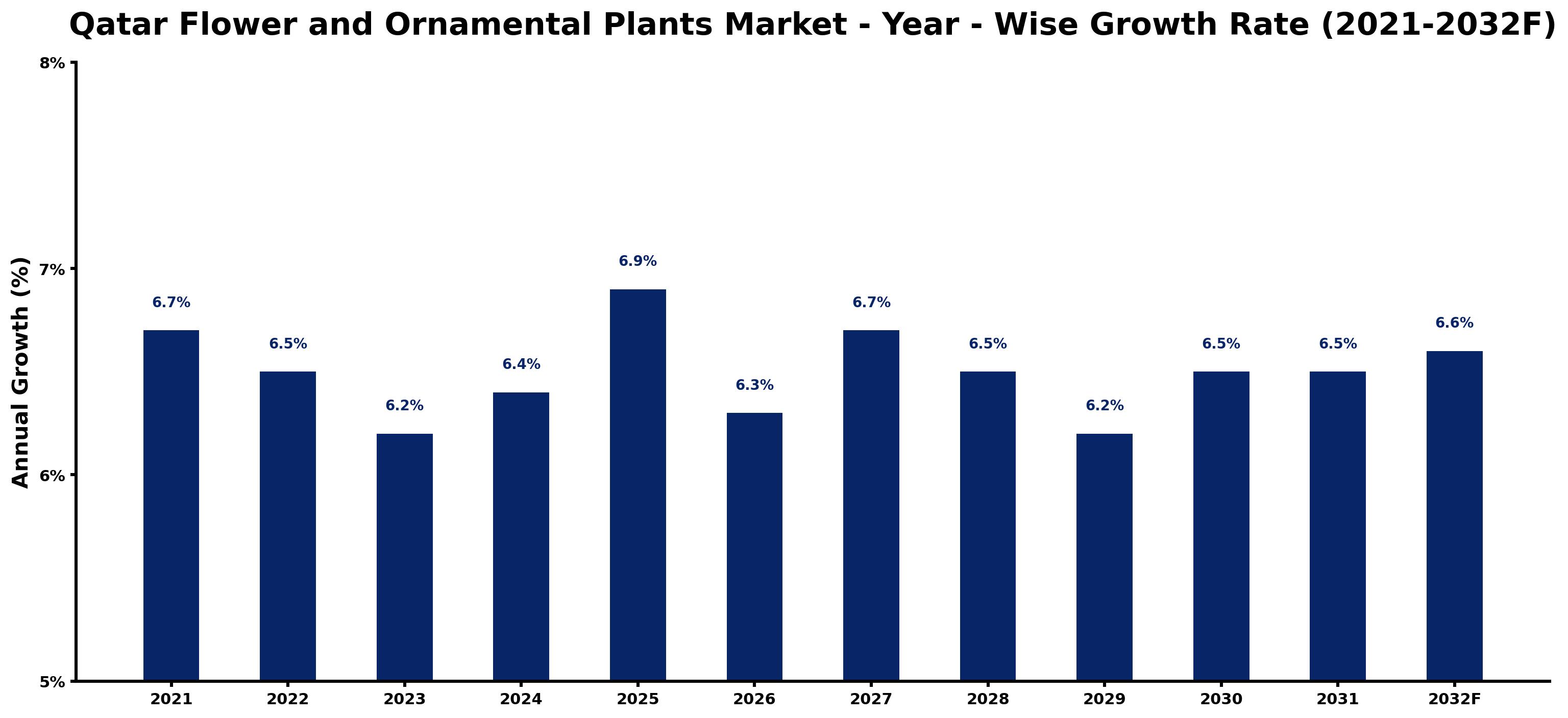
The table below presents the year wise growth rates along with the key drivers influencing the market
| Year | Growth Rate | Major Drivers |
| 2021 | 6.7% | Hospitality sector revitalization fueled demand for decorative plants in luxury hotels. |
| 2022 | 6.5% | Cultural events showcased indigenous flora, sparking interest in local ornamental varieties. |
| 2023 | 6.2% | Urban greening projects began enhancing public spaces, promoting sustainable landscape design. |
| 2024 | 6.4% | Increasing disposable income shifted consumer preferences towards high-end floral arrangements. |
| 2025 | 6.9% | Online sales platforms expanded, providing easy access to niche ornamental plant markets. |
| 2026 | 6.3% | Local production initiatives reduced reliance on imports, boosting domestic horticulture enterprises. |
| 2027 | 6.7% | Increased awareness of environmental benefits influenced consumer choices towards native plants. |
| 2028 | 6.5% | Architectural trends emphasized biophilic design, integrating plants into modern urban living spaces. |
| 2029 | 6.2% | Education campaigns highlighted the therapeutic effects of plants, driving sales in wellness sectors. |
| 2030 | 6.5% | Sustainability certifications became essential for businesses, increasing market competitiveness among producers. |
| 2031 | 6.5% | Collaborations between florists and restaurants emerged, enhancing the floral experience for diners. |
| 2032 | 6.6% | Government support for green initiatives fostered community gardens, increasing local engagement in horticulture. |
Note - Market size estimations and growth projections presented in this report are based on 6Wresearch's advanced forecasting approach, validated with industry datasets as of June 2026.
Qatar Flower and Ornamental Plants Market Synopsis
The Qatar Flower and Ornamental Plants Market is projected to reach 6.3% and witness significant growth during the forecast period (2026-2032). This anticipated expansion is largely driven by several key factors, including the rising demand for decorative plants in residential settings, heightened awareness regarding various species, and increased consumer purchasing power. Furthermore, governmental initiatives aimed at enhancing green spaces—such as parks, gardens, and well-planned avenues—are expected to create a conducive environment for the sector's growth. Rapid urbanization within Qatar has also intensified the appetite for exotic flowers sourced from countries such as Japan and Thailand. Additionally, the emergence of innovative retail channels, particularly online sales platforms, presents new avenues for growth within this dynamic market.
Qatar Flower and Ornamental Plants Market Growth Drivers
Several drivers are propelling the Qatar Flower and Ornamental Plants Market forward.
- Consumer Trends: The shifting lifestyle patterns, particularly those focusing on aesthetic home decor that utilizes flowers and ornamental plants, are significantly enhancing product demand across residential and commercial spaces.
- Urban Development: With ongoing urbanization across Qatar, there is a notable increase in the establishment of landscaped areas, heightening the demand for flowers that can enhance property value and visual appeal.
- Cultural Significance: Flowers and ornamental plants hold substantial cultural significance in Qatari celebrations and events, further driving their demand throughout the year.
- Social Media Influence: The rise of social media platforms has led to a surge in home decor trends that often feature flowers, encouraging consumers to invest in ornamental plants.
- Increased Spending Power: Economic growth in Qatar has resulted in improved disposable income for consumers, allowing for higher spending on luxury and decorative items, including flowers and plants.
Qatar Flower and Ornamental Plants Market Challenges and Restraints
While the Qatar Flower and Ornamental Plants Market is poised for growth, certain challenges may impede progress.
- Climate Effects: Qatar's climatic conditions present challenges in maintaining flower and plant quality, necessitating investments in controlled environments for cultivation.
- Supply Chain Issues: Logistical hurdles in the importation of exotic flowers from countries like Japan and Thailand may disrupt availability and elevate costs.
- Market Saturation: As more businesses enter the floral and ornamental plant market, competition may lead to price wars, affecting profitability.
- Consumer Education: A lack of awareness regarding different flower species and their care may hinder consumer purchasing decisions, particularly for exotic varieties.
- Sustainability Concerns: Growing environmental awareness could lead to increased demand for sustainably sourced flowers, challenging suppliers to adopt eco-friendly practices.
Qatar Flower and Ornamental Plants Market Trends and Opportunities
The Qatar Flower and Ornamental Plants Market is currently experiencing several noteworthy trends and opportunities.
- Online Retail Growth: The rise of e-commerce platforms is facilitating wider access to floral products, enabling consumers to purchase exotic flowers and ornamental plants from the comfort of their homes.
- DIY Culture: The increasing popularity of do-it-yourself (DIY) projects encourages consumers to incorporate flowers and plants into home decor, driving market demand.
- Corporate Investments: Businesses are increasingly investing in floral decorations for corporate events and conferences, creating a significant market for bulk floral arrangements.
- Education and Workshops: Floristry workshops and educational programs focused on plant care are becoming popular, enhancing consumer knowledge and engagement.
- Sustainable Practices: There is a growing trend towards sustainability, with consumers favoring locally sourced and environmentally friendly floral products, opening up new market opportunities.
Qatar Flower and Ornamental Plants Market Government Investment and Initiatives
The Qatari government is actively investing in initiatives that favor the Flower and Ornamental Plants Market.
- Urban Green Spaces: The government is prioritizing the creation of parks and gardens, which will drive demand for ornamental plants and flowers to beautify these spaces.
- Public Events: Support for cultural events and festivals that feature flowers as key decorative elements is helping to sustain interest in floral arrangements and ornamental plants.
- Financial Incentives: Public policies aimed at encouraging local agriculture could lead to financial support for businesses involved in the cultivation and sale of flowers.
- Research and Development: Government-funded research initiatives focused on horticulture can foster innovation in the cultivation of exotic flower varieties suitable for Qatar's climate.
- Environmental Regulations: Initiatives promoting environmental sustainability in agricultural practices can enhance the credibility of local floral products in the market.
Qatar Flower and Ornamental Plants Market Latest Developments (May 2025 - June 2026)
Recent developments in the Qatar Flower and Ornamental Plants Market indicate a shift towards increased collaboration across various segments of the industry.
- Emerging Trends: The market is witnessing innovative approaches to floral design and arrangement, with a focus on unique and personalized offerings that cater to evolving consumer preferences.
- Technological Adoption: Smart technology is increasingly being adopted in horticulture, enhancing cultivation efficiency and plant care practices.
- Enhanced Distribution Channels: Companies are exploring diverse distribution methods, including subscription-based models for regular floral deliveries, appealing to the convenience-focused consumer.
- Public Awareness Campaigns: Efforts to educate consumers about the benefits of ornamental plants and the role they play in enhancing mental well-being are gaining traction.
- Collaborations with Interior Designers: Synergies between floral suppliers and interior designers are becoming more common, allowing for integrated decor solutions that include ornamental plants.
Qatar Flower and Ornamental Plants Market - Key Attractiveness of the Report
- 10 Years of Market Numbers
- Historical Data Starting from 2022 to 2025
- Base Year: 2025
- Forecast Data until 2032
- Key Performance Indicators Impacting the Market
- Major Upcoming Developments and Projects
Key Highlights of the Report:
- Qatar Flower and Ornamental Plants Market Outlook
- Market Size of Qatar Flower and Ornamental Plants Market, 2025
- Forecast of Qatar Flower and Ornamental Plants Market, 2032F
- Historical Data and Forecast of Qatar Flower and Ornamental Plants Revenues & Volume for the Period 2022-2032F
- Qatar Flower and Ornamental Plants Market Trend Evolution
- Qatar Flower and Ornamental Plants Market Drivers and Challenges
- Qatar Flower and Ornamental Plants Price Trends
- Qatar Flower and Ornamental Plants Porter's Five Forces
- Qatar Flower and Ornamental Plants Industry Life Cycle
- Historical Data and Forecast of Qatar Flower and Ornamental Plants Market Revenues & Volume By Product Type for the Period 2022-2032F
- Historical Data and Forecast of Qatar Flower and Ornamental Plants Market Revenues & Volume By Potted Plants for the Period 2022-2032F
- Historical Data and Forecast of Qatar Flower and Ornamental Plants Market Revenues & Volume By Cut Flowers for the Period 2022-2032F
- Historical Data and Forecast of Qatar Flower and Ornamental Plants Market Revenues & Volume By Application for the Period 2022-2032F
- Historical Data and Forecast of Qatar Flower and Ornamental Plants Market Revenues & Volume By Home for the Period 2022-2032F
- Historical Data and Forecast of Qatar Flower and Ornamental Plants Market Revenues & Volume By Commercial for the Period 2022-2032F
- Qatar Flower and Ornamental Plants Import Export Trade Statistics
- Market Opportunity Assessment By Product Type
- Market Opportunity Assessment By Application
- Qatar Flower and Ornamental Plants Top Companies Market Share
- Qatar Flower and Ornamental Plants Competitive Benchmarking By Technical and Operational Parameters
- Qatar Flower and Ornamental Plants Company Profiles
- Qatar Flower and Ornamental Plants Key Strategic Recommendations






































