Qatar Hotel Furniture Market Summary
The qatar hotel furniture market was estimated at USD 157 Million in 2025 and is projected to reach USD 214 Million by 2032, growing at a CAGR of 5.3% from 2026 to 2032.
Qatar Hotel Furniture Market Year-wise Growth Rate and Key Drivers
This graph highlights how the Qatar Hotel Furniture Market has steadily grown over the past five years, supported by major growth factors.
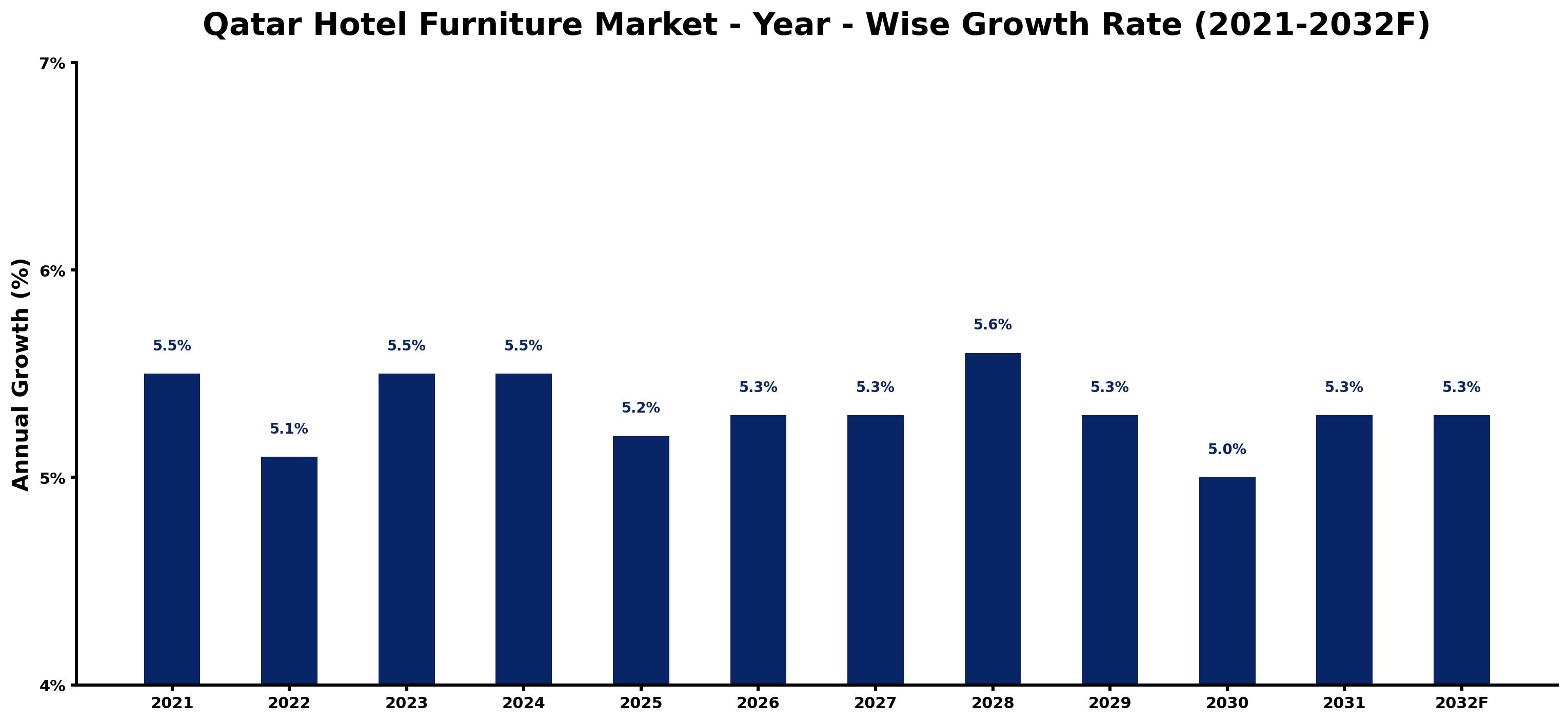
The table below presents the year wise growth rates along with the key drivers influencing the market
| Year | Growth Rate | Major Drivers |
| 2021 | 5.5% | Post-lockdown retail projects in Qatar sparked renewed interest in hotel renovations. |
| 2022 | 5.1% | High-profile events, like the World Cup, increased demand for luxury hotel furnishings. |
| 2023 | 5.5% | Sustainability considerations prompted hotels to invest in eco-friendly furniture solutions. |
| 2024 | 5.5% | New construction projects in Doha created opportunities for specialized hotel furniture suppliers. |
| 2025 | 5.2% | Technological integration in hospitality enhanced the need for modern, multifunctional furniture. |
| 2026 | 5.3% | Regional tourism growth highlighted the importance of unique, culturally inspired hotel interiors. |
| 2027 | 5.3% | Shifts in consumer preferences led hotels to prioritize bespoke, customizable furniture options. |
| 2028 | 5.6% | Collaboration between local artisans and global brands influenced furniture design in hotels. |
| 2029 | 5.3% | Economic diversification efforts encouraged investments in boutique hotels with distinctive furnishings. |
| 2030 | 5.0% | Increased competition among hotels prompted innovative designs to enhance guest experiences. |
| 2031 | 5.3% | Focus on wellness tourism drove the demand for ergonomically designed hotel furniture. |
| 2032 | 5.3% | Smart hotel rooms necessitated furniture that accommodates technology and enhances usability. |
Note - Market size estimations and growth projections presented in this report are based on 6Wresearch's advanced forecasting approach, validated with industry datasets as of June 2026.
Qatar Hotel Furniture Market Synopsis
The Qatar Hotel Furniture Market is projected to reach 5.3% and witness significant growth during the forecast period (2026-2032). This segment of the hospitality and interior design industry encompasses the supply of essential furniture for hotels, resorts, and various hospitality establishments. Hotel furniture is pivotal in delivering comfort, aesthetic appeal, and functionality for guests, necessitating durability to endure extensive use. As Qatar's tourism sector continues to flourish, the demand for high-quality hotel furniture remains robust.
Qatar Hotel Furniture Market Growth Drivers
The Qatar Hotel Furniture Market is experiencing substantial growth driven by several factors:
- Qatar's significant investment in the tourism sector has bolstered the hospitality industry, leading to an increased demand for hotel furniture as establishments seek to enhance guest experiences.
- The ongoing infrastructure projects, including the construction of new hotels and resorts, are creating a robust demand for furniture that meets high standards of quality and design.
- Qatar's reputation for luxury hotels and premium hospitality services is increasing the need for sophisticated, designer furniture that aligns with the high expectations of discerning guests.
- The hosting of major international sports events and exhibitions is prompting the requirement for temporary and event-specific hotel furniture, further stimulating market growth.
- The increasing number of business travelers and tourists, drawn by Qatar's unique blend of modernity and tradition, contributes directly to the rising demand for well-furnished accommodations.
Qatar Hotel Furniture Market Challenges and Restraints
Despite the positive growth trajectory, the Qatar Hotel Furniture Market faces several challenges:
- Economic fluctuations can create uncertainties in the hospitality sector, potentially impacting hotel revenues and their capacity to invest in new furniture.
- As sustainability gains traction, hoteliers are increasingly prioritizing eco-friendly furniture options, which may necessitate a shift in sourcing and design strategies.
- Competition from both international furniture suppliers and local manufacturers may pressure pricing and innovation within the market.
- Supply chain disruptions and increasing material costs can affect the availability and pricing of hotel furniture, complicating procurement strategies for establishments.
- The lingering effects of the Covid-19 pandemic have led to cautious spending and delayed renovation projects, impacting the demand for new furniture acquisitions.
Qatar Hotel Furniture Market Government Investment and Initiatives
The Qatari government is actively supporting the growth of the hotel furniture market through various initiatives:
- Significant investments in infrastructure development, particularly in the tourism and hospitality sectors, are being prioritized to attract international visitors and enhance local experiences.
- The Qatar National Vision 2030 outlines strategic goals for sustainable economic development, indirectly promoting investments in hospitality and related sectors, including furniture.
- Public-private partnerships are being encouraged to develop high-quality hospitality offerings, which can improve the demand for premium hotel furniture.
- Government incentives targeting sustainable practices are pushing the industry toward using eco-friendly materials, aligning with global trends in environmental consciousness.
- The regulation and standards set by the government for hotel management and design are fostering a competitive environment that necessitates high-quality furnishings in the hospitality sector.
Qatar Hotel Furniture Market Latest Developments (May 2025 - June 2026)
In the period from May 2025 to June 2026, the Qatar Hotel Furniture Market has witnessed several noteworthy developments:
- Increased interest in sustainable furniture options has led many hoteliers to seek environmentally friendly materials and designs, reflecting a broader industry shift towards sustainability.
- The ongoing preparations for international events, such as sports competitions and conferences, have necessitated significant investments in temporary and specialized furniture solutions.
- Emerging trends in customization of hotel furniture have begun to take root, with more hotels looking to differentiate themselves through unique and personalized design elements.
- The competition among local manufacturers has intensified, prompting innovation in design and functionality to cater to the evolving needs of the hospitality sector.
- Strategic collaborations between hoteliers and furniture suppliers are becoming more common, aimed at improving supply chain efficiencies and enhancing product offerings.
Qatar Hotel Furniture Market - Key Attractiveness of the Report
- 10 Years of Market Numbers
- Historical Data Starting from 2022 to 2025
- Base Year: 2025
- Forecast Data until 2032
- Key Performance Indicators Impacting the Market
- Major Upcoming Developments and Projects
Key Highlights of the Report:
- Qatar Hotel Furniture Market Outlook
- Market Size of Qatar Hotel Furniture Market, 2025
- Forecast of Qatar Hotel Furniture Market, 2032
- Historical Data and Forecast of Qatar Hotel Furniture Revenues & Volume for the Period 2022-2032F
- Qatar Hotel Furniture Market Trend Evolution
- Qatar Hotel Furniture Market Drivers and Challenges
- Qatar Hotel Furniture Price Trends
- Qatar Hotel Furniture Porter's Five Forces
- Qatar Hotel Furniture Industry Life Cycle
- Historical Data and Forecast of Qatar Hotel Furniture Market Revenues & Volume By Product Types for the Period 2022-2032F
- Historical Data and Forecast of Qatar Hotel Furniture Market Revenues & Volume By Table and Chairs for the Period 2022-2032F
- Historical Data and Forecast of Qatar Hotel Furniture Market Revenues & Volume By Hotel Beds for the Period 2022-2032F
- Historical Data and Forecast of Qatar Hotel Furniture Market Revenues & Volume By Hotel Casegoods for the Period 2022-2032F
- Historical Data and Forecast of Qatar Hotel Furniture Market Revenues & Volume By Other for the Period 2022-2032F
- Historical Data and Forecast of Qatar Hotel Furniture Market Revenues & Volume By Applications for the Period 2022-2032F
- Historical Data and Forecast of Qatar Hotel Furniture Market Revenues & Volume By Business Hotel for the Period 2022-2032F
- Historical Data and Forecast of Qatar Hotel Furniture Market Revenues & Volume By Luxury Hotel for the Period 2022-2032F
- Historical Data and Forecast of Qatar Hotel Furniture Market Revenues & Volume By Boutique Hotel for the Period 2022-2032F
- Historical Data and Forecast of Qatar Hotel Furniture Market Revenues & Volume By Other for the Period 2022-2032F
- Qatar Hotel Furniture Import Export Trade Statistics
- Market Opportunity Assessment By Product Types
- Market Opportunity Assessment By Applications
- Qatar Hotel Furniture Top Companies Market Share
- Qatar Hotel Furniture Competitive Benchmarking By Technical and Operational Parameters
- Qatar Hotel Furniture Company Profiles
- Qatar Hotel Furniture Key Strategic Recommendations






































