Qatar Non-grape Wine Market Summary
The qatar non-grape wine market was estimated at USD 225 Million in 2025 and is projected to reach USD 294 Million by 2032, growing at a CAGR of 4.3% from 2026 to 2032.
Qatar Non-grape Wine Market Year-wise Growth Rate and Key Drivers
This graph highlights how the Qatar Non-grape Wine Market has steadily grown over the past five years, supported by major growth factors.
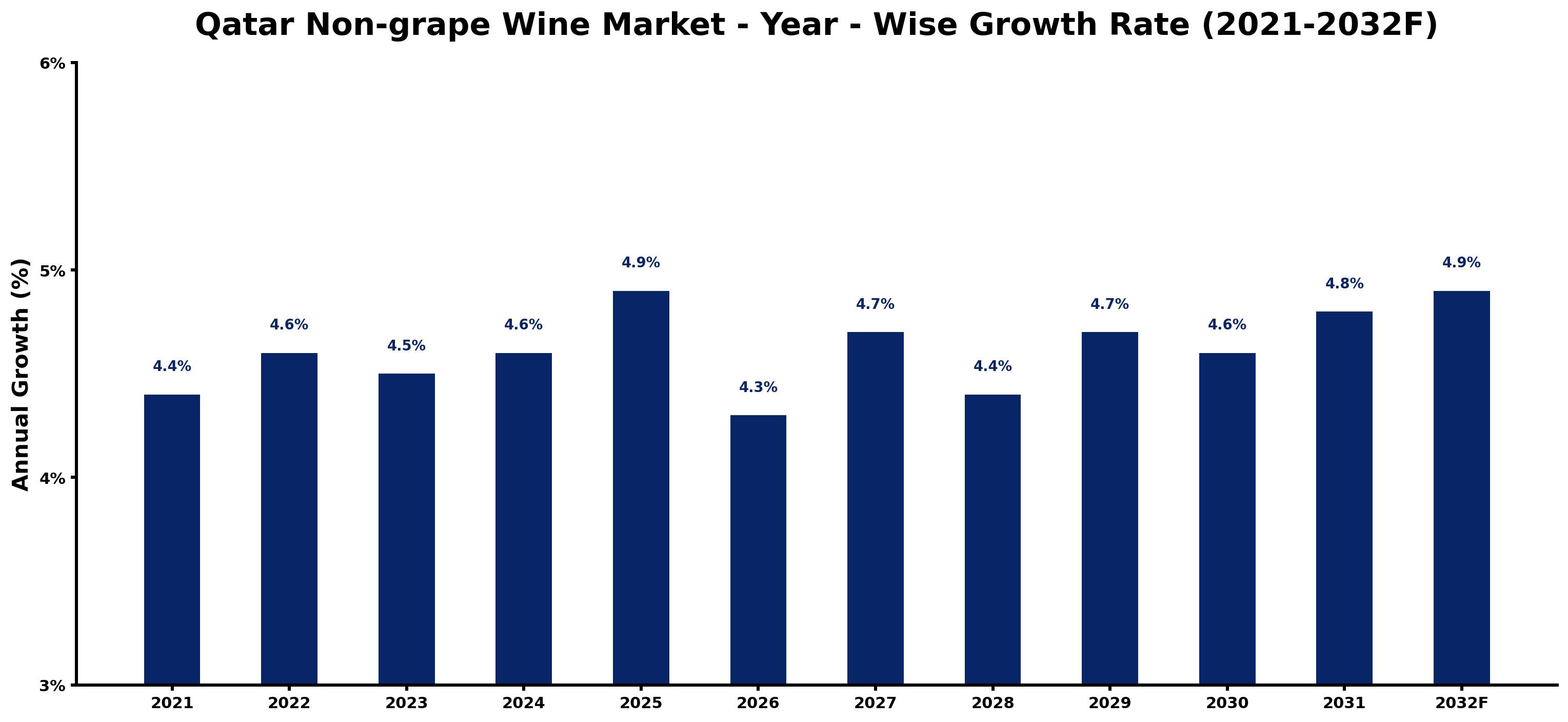
The table below presents the year wise growth rates along with the key drivers influencing the market
| Year | Growth Rate | Major Drivers |
| 2021 | 4.4% | Consumer interest in low-alcohol beverages has steadily increased in Qatar. |
| 2022 | 4.6% | Cultural events featuring non-grape wine options gained significant popularity among locals. |
| 2023 | 4.5% | Local producers began exploring unique flavors to cater to discerning palates. |
| 2024 | 4.6% | Tourism recovery brought diverse international wine selections to the Qatari market. |
| 2025 | 4.9% | Increased investment from regional distributors supported market expansion for non-grape wines. |
| 2026 | 4.3% | E-commerce channels for beverage sales enhanced accessibility across urban and suburban areas. |
| 2027 | 4.7% | Social media campaigns showcased non-grape wine pairings with traditional Qatari cuisine. |
| 2028 | 4.4% | Retail collaborations between local brands and international partners flourished in major cities. |
| 2029 | 4.7% | Emerging health trends prompted consumers to seek alternative beverage options regularly. |
| 2030 | 4.6% | Qatar's hospitality sector began incorporating non-grape wines into premium dining experiences. |
| 2031 | 4.8% | Wider acceptance of diverse beverage cultures encouraged unique tasting events nationwide. |
| 2032 | 4.9% | Innovation in production methods led to higher quality and more appealing non-grape wines. |
Note - Market size estimations and growth projections presented in this report are based on 6Wresearch's advanced forecasting approach, validated with industry datasets as of June 2026.
Qatar Non-grape Wine Market Synopsis
The Qatar Non-grape Wine Market is projected to reach 4.3% and witness significant growth during the forecast period (2026-2032). This market encapsulates a diverse range of products crafted from various fruits such as apples, pears, berries, and tropical fruits, in addition to being derived from other sources including honey, rice, and flowers. The variety of flavors offered caters to a wide spectrum of consumer preferences, reflecting the multicultural demographic of the nation.
Qatar Non-grape Wine Market Growth Drivers
Several key factors are influencing the growth of the Qatar Non-grape Wine Market. The country's multicultural population, encompassing both residents and expatriates, fosters a diverse consumer base with a variety of tastes and preferences. This diversity opens up avenues for increasing non-grape wine consumption across different cultural and religious backgrounds. Key drivers include:
- The expanding expatriate community in Qatar, which brings varied cultural palates and interest in unique beverage options.
- Growing awareness and popularity of alcohol-free beverages, with many consumers now seeking non-alcoholic alternatives like sparkling wines and fruit wines.
- Significant developments in Qatar's tourism and hospitality sectors, increasing the demand for various beverage options, including non-grape wines, for international visitors.
- An overall trend towards healthier lifestyles, leading to increased interest in non-alcoholic alcoholic alternatives.
- Enhanced distribution channels that are beginning to accommodate a broader range of non-grape wine products.
Qatar Non-grape Wine Market Challenges and Restraints
Despite the promising outlook, the Qatar Non-grape Wine Market faces several challenges that may hinder its growth. Key obstacles include:
- Strict regulations governing the sale and consumption of alcoholic beverages, which include non-grape wines, presenting a barrier to market entry and expansion.
- Local agricultural constraints leading to difficulties in sourcing specific fruits and ingredients necessary for non-grape wine production, resulting in a dependence on imports.
- Cultural norms prevalent in Qatar, primarily stemming from a predominantly Muslim population, that can deter consumer acceptance and demand for alcoholic products.
- Potential supply chain disruptions related to imported ingredients, which may impact product availability and pricing.
- The lingering effects of the Covid-19 pandemic on the hospitality sector, where fluctuating tourist numbers continue to influence consumption patterns.
Qatar Non-grape Wine Market Trends and Opportunities
The Qatar Non-grape Wine Market is currently witnessing several notable trends that present growth opportunities. These trends include:
- The increasing popularity of organic and health-conscious products, with consumers seeking non-grape wines made from natural ingredients without artificial additives.
- A rise in the collaboration between non-grape wine producers and local businesses to enhance brand visibility and reach a wider audience.
- Expansion of the non-alcoholic segment within the wine market, responding to consumer trends favoring alcohol-free beverages.
- Investment in innovative marketing strategies that target younger demographics who are more open to trying non-traditional wine products.
- The emergence of online retail platforms, making non-grape wines more accessible to consumers who may not be able to purchase them through traditional outlets.
Qatar Non-grape Wine Market Government Investment and Initiatives
The government of Qatar plays a crucial role in shaping the non-grape wine market through various policies and initiatives aimed at fostering economic diversification and tourism. Key government investments and initiatives include:
- Support for the hospitality sector through infrastructure development and the creation of attractive environments for international visitors, thereby increasing demand for diverse beverage options.
- Investment in public awareness campaigns promoting cultural experiences, which extend to appropriate beverage pairings.
- Encouragement of partnerships between local producers and international companies, aimed at enhancing innovation within the non-grape wine production industry.
- Incentives for businesses that comply with local regulations while also catering to the preferences of a diverse consumer base.
- Ongoing assessments of alcohol-related regulations that may adapt to changing consumer trends and cultural dynamics.
Qatar Non-grape Wine Market Latest Developments (May 2025 - June 2026)
The period from May 2025 to June 2026 is expected to witness notable developments in the Qatar Non-grape Wine Market. During this timeframe, industry stakeholders are likely to focus on enhancing product offerings, with emphasis on developing innovative non-alcoholic varieties to cater to the growing demand. Additionally, the gradual recovery of the tourism sector post-Covid-19 is anticipated to lead to increased consumer interest in non-grape wine options. Efforts to improve supply chain logistics and foster local partnerships will also be central to market strategies, as businesses aim to mitigate challenges related to imports and availability.
Qatar Non-grape Wine Market - Key Attractiveness of the Report
- 10 Years of Market Numbers
- Historical Data Starting from 2022 to 2025
- Base Year: 2025
- Forecast Data until 2032
- Key Performance Indicators Impacting the Market
- Major Upcoming Developments and Projects
Key Highlights of the Report:
- Qatar Non-grape Wine Market Outlook
- Market Size of Qatar Non-grape Wine Market, 2025
- Forecast of Qatar Non-grape Wine Market, 2032
- Historical Data and Forecast of Qatar Non-grape Wine Revenues & Volume for the Period 2022-2032F
- Qatar Non-grape Wine Market Trend Evolution
- Qatar Non-grape Wine Market Drivers and Challenges
- Qatar Non-grape Wine Price Trends
- Qatar Non-grape Wine Porter's Five Forces
- Qatar Non-grape Wine Industry Life Cycle
- Historical Data and Forecast of Qatar Non-grape Wine Market Revenues & Volume By Product Type for the Period 2022-2032F
- Historical Data and Forecast of Qatar Non-grape Wine Market Revenues & Volume By Fermented Fruit Wine for the Period 2022-2032F
- Historical Data and Forecast of Qatar Non-grape Wine Market Revenues & Volume By Distilled Fruit Wine for the Period 2022-2032F
- Historical Data and Forecast of Qatar Non-grape Wine Market Revenues & Volume By Preparation Fruit Wine for the Period 2022-2032F
- Historical Data and Forecast of Qatar Non-grape Wine Market Revenues & Volume By Sparkling Fruit Wine for the Period 2022-2032F
- Historical Data and Forecast of Qatar Non-grape Wine Market Revenues & Volume By Application for the Period 2022-2032F
- Historical Data and Forecast of Qatar Non-grape Wine Market Revenues & Volume By Household for the Period 2022-2032F
- Historical Data and Forecast of Qatar Non-grape Wine Market Revenues & Volume By Commercial for the Period 2022-2032F
- Qatar Non-grape Wine Import Export Trade Statistics
- Market Opportunity Assessment By Product Type
- Market Opportunity Assessment By Application
- Qatar Non-grape Wine Top Companies Market Share
- Qatar Non-grape Wine Competitive Benchmarking By Technical and Operational Parameters
- Qatar Non-grape Wine Company Profiles
- Qatar Non-grape Wine Key Strategic Recommendations






































