Qatar Sea Bass Market Size, Share & Growth Rate
The Qatar Sea Bass Market was estimated at USD 239 Million in 2025 and is projected to reach USD 316 Million by 2032, growing at a CAGR of 4.1% from 2026 to 2032. This growth trajectory is largely propelled by an evolving culinary landscape that emphasizes fresh, premium seafood options. Additionally, as health-conscious consumers increasingly turn to nutritious seafood, sea bass is gaining prominence due to its rich nutrient profile and versatility in various cuisines.
Qatar Sea Bass Market Year-wise Growth Rate and Key Drivers
This graph highlights how the Qatar Sea Bass Market has steadily grown over the years, supported by major growth factors.
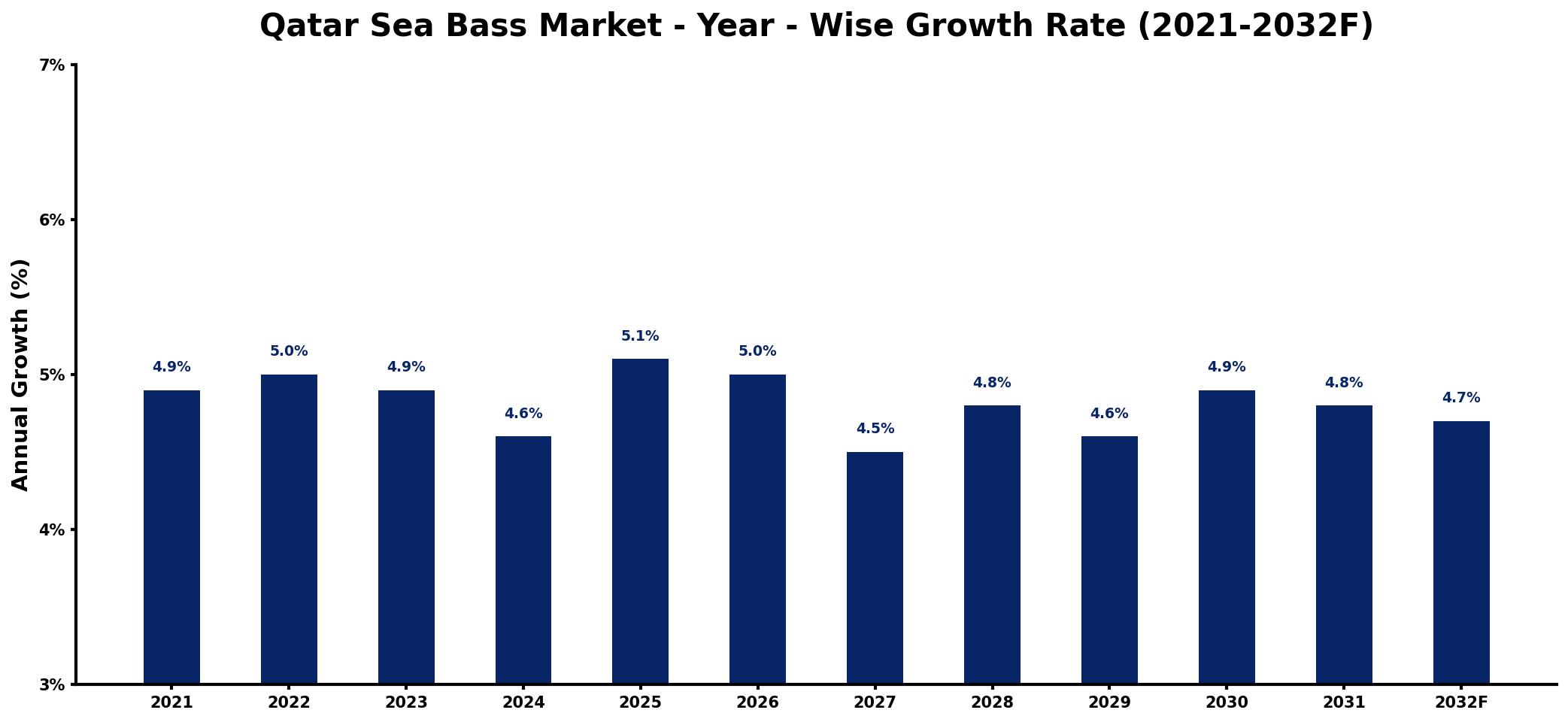
The table below presents the year‑wise growth rates along with the key drivers influencing the market
| Year | Growth Rate | Major Drivers |
| 2021 | 4.9% | Rising consumer health awareness |
| 2022 | 5.0% | Increased export opportunities abroad |
| 2023 | 4.9% | Growing culinary tourism interest |
| 2024 | 4.6% | Emerging aquaculture technology advancements |
| 2025 | 5.1% | Expansion of sustainable sourcing practices |
| 2026 | 5.0% | Strengthening local restaurant partnerships |
| 2027 | 4.5% | Diversification of distribution channels |
| 2028 | 4.8% | Enhanced product marketing strategies |
| 2029 | 4.6% | Growing online sales platforms |
| 2030 | 4.9% | Investment in local fisheries infrastructure |
| 2031 | 4.8% | Strengthening food safety regulations |
| 2032 | 4.7% | Increasing consumer preference shifts |
Note: Market size estimations and growth projections presented in this report are based on 6Wresearch's proprietary forecasting methodology, utilizing the latest available industry data, government publications, and primary research inputs.
Qatar Sea Bass Market Synopsis
In recent years, the sea bass market in Qatar has transformed into a dynamic segment within the broader seafood industry. An upscale dining culture has emerged, leading to heightened demand for high-quality fish, particularly sea bass, known for its mild flavor and adaptability in diverse culinary applications.
Additionally, Qatar's geographic advantages, including its proximity to coastal waters, support sustainable aquaculture practices. The commitment to responsible sourcing ensures a consistent supply chain while catering to a market eager for premium seafood offerings.
Qatar Sea Bass Market Key Takeaways
- The Qatar sea bass market is characterized by a shift toward premium seafood consumption.
- Sustainable aquaculture practices are crucial for maintaining supply and environmental health.
- Health benefits and culinary versatility of sea bass enhance its market appeal.
- COVID-19 recovery will lead to a resurgence in dining and seafood demand.
- The local consumer base is increasingly open to diverse seafood options, boosting market growth.
Evaluation of Restraints in Qatar Sea Bass Market
Despite the promising growth, several restraints could impact the Qatar sea bass market. The urgent need for sustainable sourcing is paramount, particularly given the rising demand for sea bass. Overfishing and environmental degradation pose significant risks if aquaculture is not managed responsibly. Additionally, fluctuations in sea temperature and water quality remain critical concerns, affecting production stability and the health of cultivated stocks. Addressing these challenges will be essential for sustaining growth in this sector.
Qatar Sea Bass Market Trends
Current trends in the Qatar sea bass market are shaped by a growing preference for health-oriented and sustainable food choices. Consumers are becoming increasingly knowledgeable about seafood origins and health benefits, leading them to favor options like sea bass. Additionally, advancements in aquaculture technology are improving yields and quality, facilitating the expansion of fresh sea bass supply. Culinary innovation, particularly in high-end restaurants, is further driving demand as chefs experiment with this versatile fish.
Qatar Sea Bass Market Opportunities
The market presents significant growth and investment opportunities, particularly in sustainable aquaculture practices. Investments in technology that enhance fish farming efficiency can lead to increased production capacity and better quality control. Furthermore, the growing restaurant and hospitality sector in Qatar presents a ripe market for suppliers of fresh seafood, including sea bass, particularly in premium dining establishments. This aligns with consumers interests in health and quality dining experiences.
Government Initiatives in the Qatar Sea Bass Market
The Qatari government is actively promoting sustainable fisheries and aquaculture development to enhance food security and environmental responsibility. Various public initiatives focus on supporting sustainable fishing practices, providing grants, and facilitating research into improved aquaculture techniques. These efforts are intended to stimulate growth within the sea bass market while ensuring that the ecological impact is managed effectively, setting the stage for long-term sustainability.
Future Insights of the Qatar Sea Bass Market
Looking ahead to 2026-2032, the Qatar sea bass market is positioned for steady growth, driven by increasing consumer demand for diverse seafood options and a continued emphasis on sustainability. The integration of advanced aquaculture technologies and sustainable farming practices will play a critical role in meeting this demand while maintaining quality. As culinary trends continue to evolve, the sea bass market is expected to innovate, capturing the attention of both consumers and restaurateurs eager to explore fresh, healthy offerings.
Qatar Sea Bass Market Latest Developments (2025 - 2026)
Recent developments in the Qatar sea bass market reveal a strengthened focus on sustainability and quality. With increasing investments in aquaculture technology, producers are enhancing efficiency and yield. Additionally, market players are exploring new partnerships to boost distribution channels, facilitating access to fresh sea bass. As dining experiences evolve, there is a noticeable shift toward innovative culinary applications that highlight the unique characteristics of sea bass, driving consumer interest.
Qatar Sea Bass Market - Key Attractiveness of the Report
- 10 Years of Market Numbers
- Historical Data Starting from 2022 to 2025
- Base Year: 2025
- Forecast Data until 2032
- Key Performance Indicators Impacting the Market
- Major Upcoming Developments and Projects
Key Highlights of the Report:
- Qatar Sea Bass Market Outlook
- Market Size of Qatar Sea Bass Market, 2025
- Forecast of Qatar Sea Bass Market, 2032
- Historical Data and Forecast of Qatar Sea Bass Revenues & Volume for the Period 2022-2032F
- Qatar Sea Bass Market Trend Evolution
- Qatar Sea Bass Market Drivers and Challenges
- Qatar Sea Bass Price Trends
- Qatar Sea Bass Porter's Five Forces
- Qatar Sea Bass Industry Life Cycle
- Historical Data and Forecast of Qatar Sea Bass Market Revenues & Volume By Nature for the Period 2022-2032F
- Historical Data and Forecast of Qatar Sea Bass Market Revenues & Volume By Wild for the Period 2022-2032F
- Historical Data and Forecast of Qatar Sea Bass Market Revenues & Volume By Farmed for the Period 2022-2032F
- Historical Data and Forecast of Qatar Sea Bass Market Revenues & Volume By Type for the Period 2022-2032F
- Historical Data and Forecast of Qatar Sea Bass Market Revenues & Volume By Fresh for the Period 2022-2032F
- Historical Data and Forecast of Qatar Sea Bass Market Revenues & Volume By Processed for the Period 2022-2032F
- Historical Data and Forecast of Qatar Sea Bass Market Revenues & Volume By Sales Channel for the Period 2022-2032F
- Historical Data and Forecast of Qatar Sea Bass Market Revenues & Volume By Food Service for the Period 2022-2032F
- Historical Data and Forecast of Qatar Sea Bass Market Revenues & Volume By Hypermarket/Supermarket for the Period 2022-2032F
- Historical Data and Forecast of Qatar Sea Bass Market Revenues & Volume By Specialty Stores for the Period 2022-2032F
- Historical Data and Forecast of Qatar Sea Bass Market Revenues & Volume By Online Channels for the Period 2022-2032F
- Qatar Sea Bass Import Export Trade Statistics
- Market Opportunity Assessment By Nature
- Market Opportunity Assessment By Type
- Market Opportunity Assessment By Sales Channel
- Qatar Sea Bass Top Companies Market Share
- Qatar Sea Bass Competitive Benchmarking By Technical and Operational Parameters
- Qatar Sea Bass Company Profiles
- Qatar Sea Bass Key Strategic Recommendations






































