Qatar Soup and Extracts Market Summary
The qatar soup and extracts market was estimated at USD 339 Million in 2025 and is projected to reach USD 480 Million by 2032, growing at a CAGR of 6.0% from 2026 to 2032.
Qatar Soup and Extracts Market Year-wise Growth Rate and Key Drivers
This graph highlights how the Qatar Soup and Extracts Market has steadily grown over the past five years, supported by major growth factors.
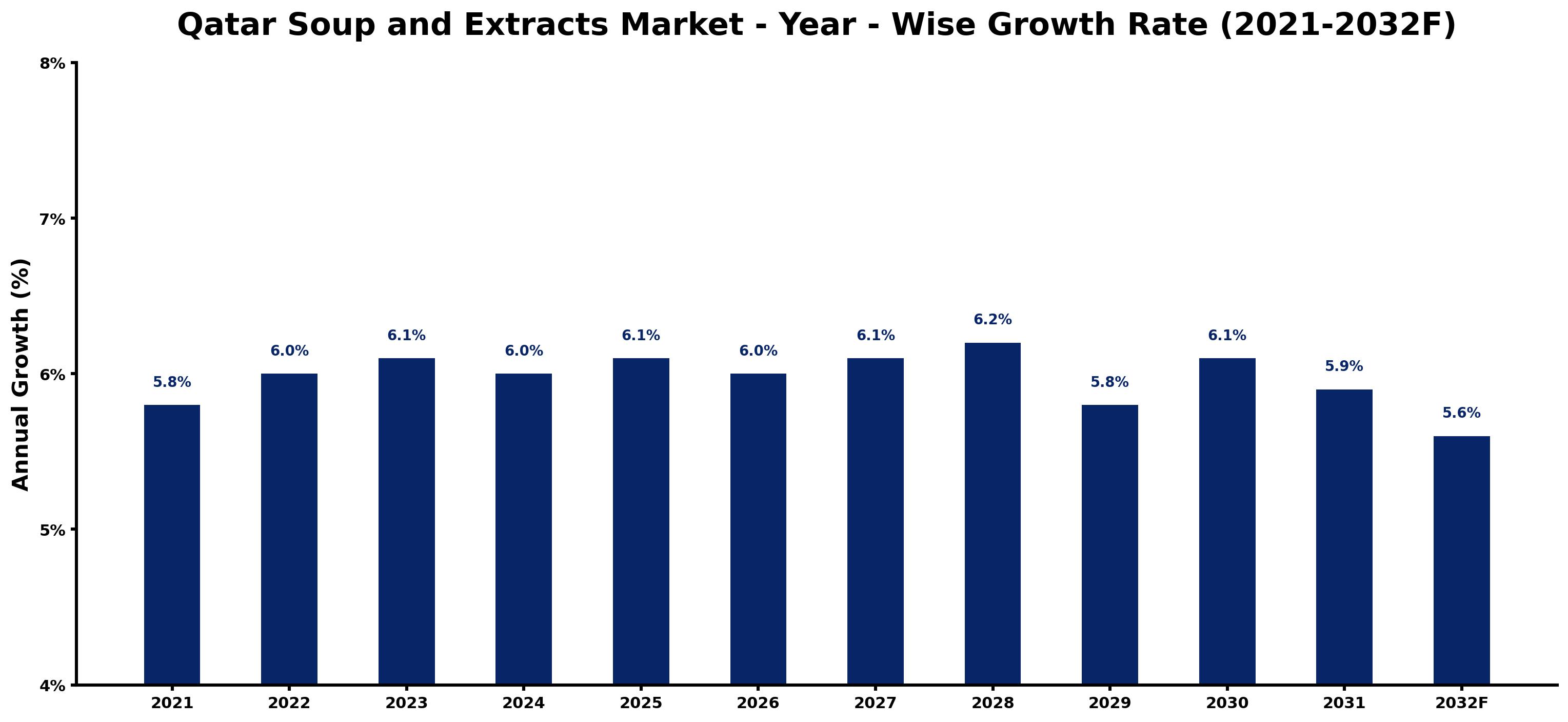
The table below presents the year wise growth rates along with the key drivers influencing the market
| Year | Growth Rate | Major Drivers |
| 2021 | 5.8% | Post-lockdown retail projects ignited a renewed interest in local food products. |
| 2022 | 6.0% | Culinary tourism flourished, boosting the demand for authentic soup varieties. |
| 2023 | 6.1% | Consumer focus on health highlighted the nutritional value of soups and extracts. |
| 2024 | 6.0% | International brands entered the market, increasing competition and product variety. |
| 2025 | 6.1% | E-commerce platforms became vital for distributing soup products amid urban expansion. |
| 2026 | 6.0% | Regional climate conditions spurred interest in comfort foods like hearty soups. |
| 2027 | 6.1% | Local sourcing initiatives gained traction, promoting homegrown ingredient usage in extracts. |
| 2028 | 6.2% | Health-conscious consumers shifted preferences towards organic and gluten-free soup options. |
| 2029 | 5.8% | Culinary innovation events showcased modern soup recipes, attracting diverse demographics. |
| 2030 | 6.1% | Digital marketing campaigns effectively targeted younger audiences interested in unique flavors. |
| 2031 | 5.9% | Collaborations between chefs and brands enhanced product visibility in upscale markets. |
| 2032 | 5.6% | Sustainability trends encouraged eco-friendly packaging solutions in the soup market. |
Note - Market size estimations and growth projections presented in this report are based on 6Wresearch's advanced forecasting approach, validated with industry datasets as of June 2026.
Qatar Soup and Extracts Market Synopsis
The Qatar Soup and Extracts Market is projected to reach 6.0% and witness significant growth during the forecast period (2026-2032). The increasing inclination of health-conscious consumers towards nutritious and convenient food options is a pivotal factor contributing to growth in this sector. The demand for soups and extracts has surged notably as these products are recognized for their health benefits, easy preparation, and versatility. Furthermore, the expanding restaurant sector in Qatar, which is increasingly incorporating these offerings into their menus, has bolstered the market's expansion. Manufacturers are responding by diversifying their product ranges, introducing various flavors and innovative packaging formats designed to attract a broader customer base. Coupled with rising disposable income levels among Qatar's population, this trend is expected to significantly propel the market forward in the coming years.
Qatar Soup and Extracts Market Growth Drivers
The growth of the Qatar soup and extracts market can be attributed to several primary drivers:
- Increasing disposable incomes among consumers, which have facilitated the shift towards premium and health-focused food products, significantly enhancing the market potential.
- A shift in dietary habits, with more people opting for quick and convenient meal solutions such as ready-to-eat canned soups and purees, further stimulating demand.
- Urbanization trends that have led to busier lifestyles, prompting consumers to prioritize convenience in meal preparation over traditional home-cooked options.
- Heightened health consciousness, resulting in a strong preference for low-fat and sugar-free soups and extracts, which is driving sales in the healthier food segment.
- The proliferation of culinary diversity in Qatar, with an influx of international food trends encouraging restaurants to innovate their menus with diverse soup offerings.
Qatar Soup and Extracts Market Challenges and Restraints
Despite the promising growth trajectory, the Qatar soup and extracts market faces several challenges:
- High production costs associated with manufacturing and processing facilities, which can deter new entrants aiming to compete in an already established market.
- The availability of substitutes, such as frozen foods and fresh ingredients, poses a potential risk to the processed soup market as consumers may opt for perceived fresher options.
- Fluctuations in raw material prices, influenced by global supply chain dynamics, which can affect profitability and pricing strategies in the sector.
- Increased consumer scrutiny regarding ingredient transparency and health claims, demanding manufacturers to ensure high standards in product quality and labeling.
- The impact of economic uncertainties, which may lead consumers to adopt more cautious spending practices, particularly related to non-essential food items.
Qatar Soup and Extracts Market Covid-19 Impact
The Covid-19 pandemic has significantly affected the Qatar soup and extracts market, introducing various challenges:
- Disruption in supply chains led to shortages of raw materials, causing delays in production and impacting the availability of products in the market.
- Economic challenges, such as job losses and salary cuts, resulted in reduced consumer spending, particularly affecting discretionary purchases like soups and extracts.
- The closure of restaurants and catering services during lockdown periods had a substantial negative impact on product sales, as these channels historically contributed to significant revenue streams.
- While some manufacturers experienced decreased demand, others pivoted to online sales channels, adapting their business models to better meet consumer needs during the pandemic.
- The pandemic prompted a renewed focus on health and nutrition, with some consumers turning to soups and extracts for comfort and wellness during uncertain times, potentially benefiting the market long-term.
Qatar Soup and Extracts Market Government Investment and Initiatives
The Qatari government is actively investing in various initiatives to bolster the food sector, including the soup and extracts market:
- Government policies aimed at enhancing food security and promoting local production have encouraged investments in the food processing industry.
- Public spending on infrastructure projects, including logistics and supply chain improvements, has been introduced to enhance the distribution of food products across the country.
- Development plans focusing on sustainability and innovation are in place, prioritizing the research and development of new food products, including nutritious soups and extracts.
- Incentives for local manufacturers, such as tax breaks and grants for adopting modern technologies, aim to improve competitiveness and product quality within the market.
- Collaboration with international food organizations and academic institutions fosters knowledge transfer and best practices, thereby strengthening the local soup and extracts industry.
Qatar Soup and Extracts Market Latest Developments (May 2025 - June 2026)
The Qatar soup and extracts market is anticipated to experience several key developments during the period from May 2025 to June 2026:
- There has been a notable increase in product diversification, with manufacturers introducing new flavors and organic options to cater to evolving consumer preferences.
- Partnerships between food technology firms and local producers are becoming more frequent, focusing on creating innovative packaging solutions that enhance product shelf life and usability.
- The emergence of plant-based and vegetarian options in the soup category is gaining popularity among health-conscious consumers and driving market trends.
- Online platforms have seen increased activity, with manufacturers enhancing their e-commerce capabilities to reach consumers more effectively in a post-pandemic environment.
- Public health campaigns promoting the benefits of soups and extracts as nutritious meal options are expected to further stimulate consumer interest and market growth.
Qatar Soup and Extracts Market - Key Attractiveness of the Report
- 10 Years of Market Numbers
- Historical Data Starting from 2022 to 2025
- Base Year: 2025
- Forecast Data until 2032
- Key Performance Indicators Impacting the Market
- Major Upcoming Developments and Projects
Key Highlights of the Report:
- Qatar Soup and Extracts Market Outlook
- Market Size of Qatar Soup and Extracts Market, 2025
- Forecast of Qatar Soup and Extracts Market, 2032
- Historical Data and Forecast of Qatar Soup and Extracts Revenues & Volume for the Period 2022-2032F
- Qatar Soup and Extracts Market Trend Evolution
- Qatar Soup and Extracts Market Drivers and Challenges
- Qatar Soup and Extracts Price Trends
- Qatar Soup and Extracts Porter's Five Forces
- Qatar Soup and Extracts Industry Life Cycle
- Historical Data and Forecast of Qatar Soup and Extracts Market Revenues & Volume By Soup Type for the Period 2022-2032F
- Historical Data and Forecast of Qatar Soup and Extracts Market Revenues & Volume By Dried for the Period 2022-2032F
- Historical Data and Forecast of Qatar Soup and Extracts Market Revenues & Volume By Wet for the Period 2022-2032F
- Historical Data and Forecast of Qatar Soup and Extracts Market Revenues & Volume By Canned for the Period 2022-2032F
- Historical Data and Forecast of Qatar Soup and Extracts Market Revenues & Volume By UHT for the Period 2022-2032F
- Historical Data and Forecast of Qatar Soup and Extracts Market Revenues & Volume By Sources for the Period 2022-2032F
- Historical Data and Forecast of Qatar Soup and Extracts Market Revenues & Volume By Spices for the Period 2022-2032F
- Historical Data and Forecast of Qatar Soup and Extracts Market Revenues & Volume By Herbs for the Period 2022-2032F
- Historical Data and Forecast of Qatar Soup and Extracts Market Revenues & Volume By Flowers for the Period 2022-2032F
- Historical Data and Forecast of Qatar Soup and Extracts Market Revenues & Volume By Tea leaves for the Period 2022-2032F
- Historical Data and Forecast of Qatar Soup and Extracts Market Revenues & Volume By Distribution Channel for the Period 2022-2032F
- Historical Data and Forecast of Qatar Soup and Extracts Market Revenues & Volume By Supermarkets & Hypermarkets for the Period 2022-2032F
- Historical Data and Forecast of Qatar Soup and Extracts Market Revenues & Volume By Convenience Stores for the Period 2022-2032F
- Historical Data and Forecast of Qatar Soup and Extracts Market Revenues & Volume By Online for the Period 2022-2032F
- Qatar Soup and Extracts Import Export Trade Statistics
- Market Opportunity Assessment By Soup Type
- Market Opportunity Assessment By Sources
- Market Opportunity Assessment By Distribution Channel
- Qatar Soup and Extracts Top Companies Market Share
- Qatar Soup and Extracts Competitive Benchmarking By Technical and Operational Parameters
- Qatar Soup and Extracts Company Profiles
- Qatar Soup and Extracts Key Strategic Recommendations






































