Romania Packaged Water Market: Import Trend Analysis
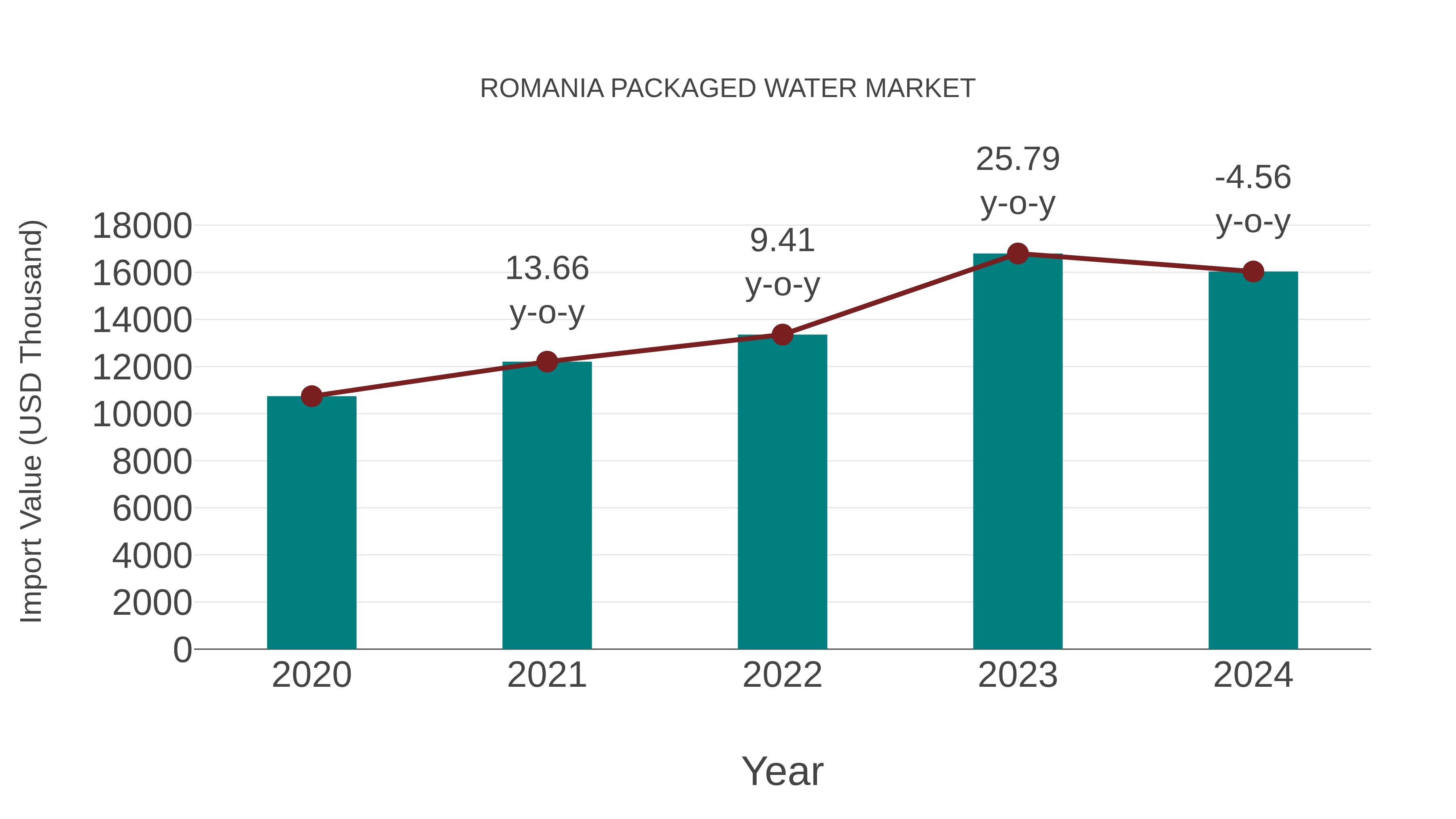
In the Romania packaged water market, the import trend experienced a -4.56% growth rate from 2023 to 2024, while the compound annual growth rate (CAGR) for 2020-2024 stood at 10.54%. This decline in import momentum in 2024 may have been influenced by fluctuations in consumer demand or changes in trade policies impacting market stability.
Romania Packaged water Market Overview
The Romania packaged water market is experiencing steady growth driven by increasing consumer awareness about the importance of hydration and health consciousness. Factors such as convenient packaging, improved distribution channels, and a rising trend towards on-the-go consumption are fueling the demand for packaged water in the country. Key players in the market are focusing on product innovation, offering a variety of flavored, functional, and premium packaged water options to cater to diverse consumer preferences. The market is also witnessing a shift towards sustainable packaging practices, with a growing emphasis on eco-friendly and recyclable packaging materials. Overall, the Romania packaged water market is projected to continue its growth trajectory, supported by changing consumer lifestyles and preferences.
Romania Packaged water Market Trends and Opportunities
The Romania Packaged water market is experiencing steady growth due to increasing health consciousness among consumers and a rising demand for convenient and safe drinking water options. With a growing focus on hydration and wellness, there is a significant opportunity for companies to introduce innovative packaging solutions, such as eco-friendly materials and functional packaging designs. Additionally, the trend towards on-the-go consumption and the popularity of flavored and vitamin-enhanced waters present avenues for product diversification and market expansion. As consumers prioritize health and sustainability, there is potential for brands to differentiate themselves through transparent sourcing practices and environmentally friendly initiatives, tapping into the growing demand for premium and value-added packaged water products in Romania.
Romania Packaged water Market Challenges
In the Romania Packaged water market, several challenges are faced including increasing competition from both domestic and international brands, fluctuating raw material prices impacting production costs, and changing consumer preferences towards healthier and sustainable beverage options. Additionally, regulatory requirements for packaging materials and environmental concerns related to plastic waste disposal are also significant challenges for the industry. Furthermore, economic instability and uncertainties can affect consumer buying behavior and overall market demand. To navigate these challenges, companies in the Romania Packaged water market need to focus on product innovation, marketing strategies, sustainability initiatives, and maintaining competitive pricing to stay relevant and maintain market share in a rapidly evolving industry landscape.
Romania Packaged water Market Drivers
The Romania Packaged water market is primarily driven by increasing health consciousness among consumers, leading to a growing preference for safe and convenient hydration options. The rising awareness about the importance of staying hydrated, coupled with concerns over the quality of tap water, has fueled the demand for packaged water products. Additionally, the busy lifestyles of modern consumers have resulted in a shift towards on-the-go and single-serve packaging formats, further driving market growth. The availability of a wide range of flavored and functional water products, as well as the convenience of purchasing packaged water from various retail channels, are also key factors driving the market in Romania. Overall, the market is expected to continue expanding as consumers prioritize health and convenience in their beverage choices.
Romania Packaged water Market Government Policy
In Romania, the packaged water market is governed by various government policies aimed at ensuring quality, safety, and consumer protection. The Romanian National Regulatory Authority for Energy (ANRE) oversees the regulation of packaged water prices and quality standards. Additionally, the Ministry of Health sets guidelines for the production, labeling, and distribution of packaged water to ensure compliance with health and safety standards. The National Consumer Protection Authority (ANPC) monitors market practices to prevent misleading advertising and protect consumer rights. Overall, the government policies in Romania`s packaged water market focus on maintaining high quality standards, ensuring fair pricing, and safeguarding consumer interests.
Romania Packaged water Market Future Outlook
The Romania packaged water market is expected to witness steady growth in the coming years, driven by factors such as increasing health consciousness among consumers, rising disposable incomes, and a growing preference for convenience and on-the-go hydration options. The market is likely to see further expansion with the introduction of innovative packaging formats, enhanced product offerings, and a focus on sustainability and eco-friendly practices. Furthermore, the shift towards online retail channels and the rising demand for functional and flavored water products are anticipated to contribute to the market`s growth trajectory. Overall, the Romania packaged water market presents opportunities for companies to capitalize on evolving consumer preferences and market trends to maintain a competitive edge and drive future growth.
Key Highlights of the Report:
- Romania Packaged water Market Outlook
- Market Size of Romania Packaged water Market, 2025
- Forecast of Romania Packaged water Market, 2032
- Historical Data and Forecast of Romania Packaged water Revenues & Volume for the Period 2022 - 2032F
- Romania Packaged water Market Trend Evolution
- Romania Packaged water Market Drivers and Challenges
- Romania Packaged water Price Trends
- Romania Packaged water Porter's Five Forces
- Romania Packaged water Industry Life Cycle
- Historical Data and Forecast of Romania Packaged water Market Revenues & Volume By Product for the Period 2022 - 2032F
- Historical Data and Forecast of Romania Packaged water Market Revenues & Volume By Still for the Period 2022 - 2032F
- Historical Data and Forecast of Romania Packaged water Market Revenues & Volume By Carbonated for the Period 2022 - 2032F
- Historical Data and Forecast of Romania Packaged water Market Revenues & Volume By Flavored for the Period 2022 - 2032F
- Historical Data and Forecast of Romania Packaged water Market Revenues & Volume By Functional for the Period 2022 - 2032F
- Romania Packaged water Import Export Trade Statistics
- Market Opportunity Assessment By Product
- Romania Packaged water Top Companies Market Share
- Romania Packaged water Competitive Benchmarking By Technical and Operational Parameters
- Romania Packaged water Company Profiles
- Romania Packaged water Key Strategic Recommendations






































