Bahrain Packaged Water Market: Import Trend Analysis
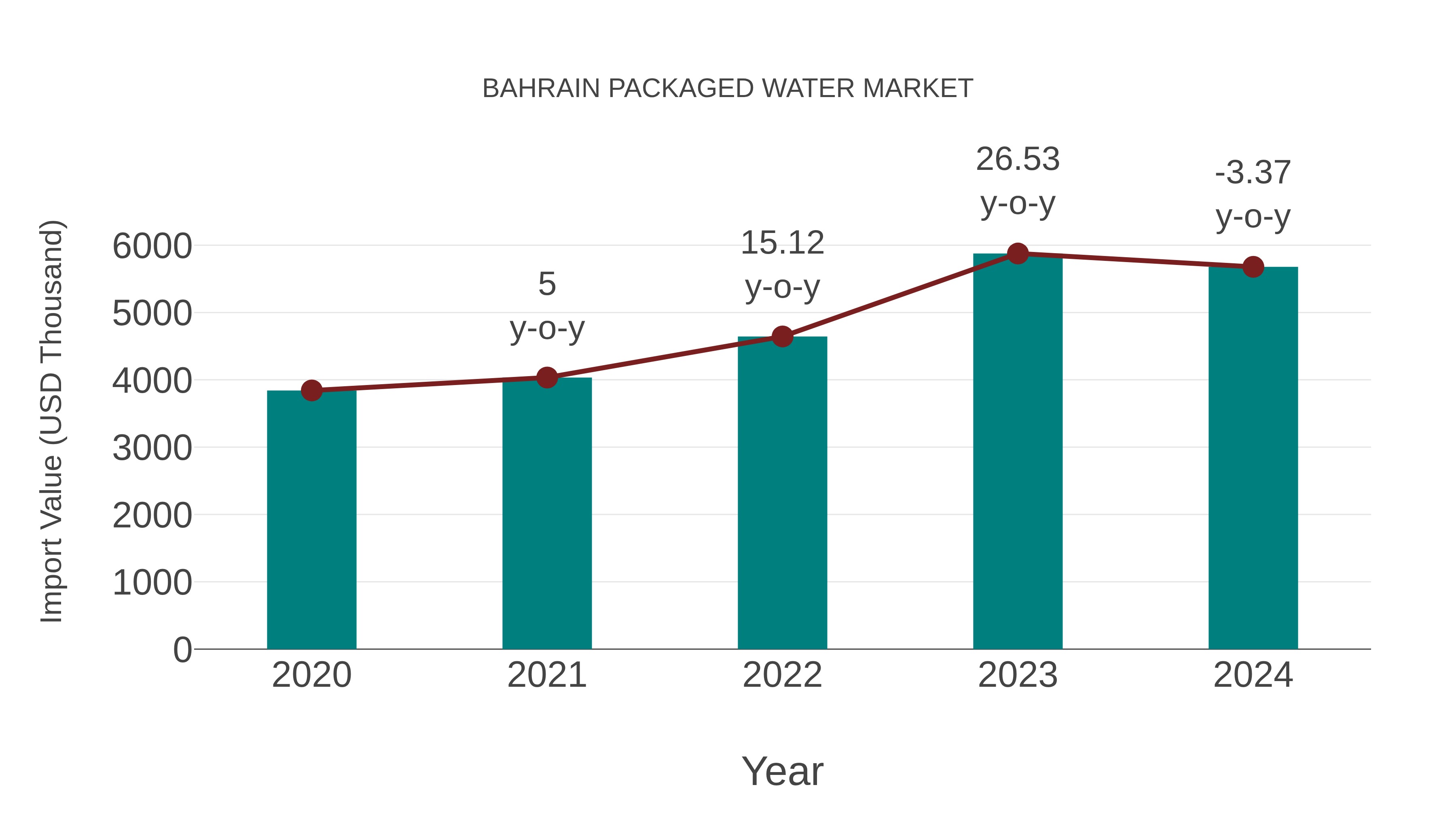
In 2024, Bahrain packaged water market saw a notable increase in imports. The trend indicated a growing reliance on imported packaged water products to meet consumer demand within the country.
Bahrain Packaged water Market Overview
The Bahrain packaged water market is experiencing steady growth driven by factors such as increasing health consciousness, a growing population, and a rising preference for convenience. Consumers are increasingly opting for packaged water due to concerns over water quality and safety. The market is characterized by the presence of both domestic and international brands offering a variety of products including mineral water, flavored water, and functional water. Key players in the Bahrain packaged water market are focusing on product innovation, eco-friendly packaging, and expanding distribution channels to gain a competitive edge. With a favorable regulatory environment supporting the industry and rising disposable incomes among consumers, the market is expected to continue its growth trajectory in the coming years.
Bahrain Packaged water Market Trends and Opportunities
The Bahrain packaged water market is experiencing growth due to increasing health consciousness among consumers, particularly with concerns about water quality and safety. There is a rising demand for convenient and portable hydration options, driving the sales of packaged water. The market is also witnessing a shift towards premium and value-added products such as flavored water, functional water with added vitamins and minerals, and sustainable packaging options. Opportunities exist for companies to innovate and differentiate their products through unique flavors, eco-friendly packaging, and targeted marketing strategies. Additionally, partnerships with retailers and e-commerce platforms can help reach a wider consumer base. Overall, the Bahrain packaged water market presents opportunities for companies to capitalize on the growing demand for healthy and convenient hydration solutions.
Bahrain Packaged water Market Challenges
In the Bahrain packaged water market, some of the key challenges faced include intense competition among numerous brands, leading to price wars and margin pressures. The market is also impacted by fluctuating raw material costs, such as plastic for bottles and transportation expenses, which can affect the overall profitability of companies. Additionally, ensuring product quality and safety standards in a highly regulated industry can be a challenge for manufacturers. Furthermore, consumer preferences and trends towards sustainability and eco-friendly packaging are influencing purchasing decisions, requiring companies to innovate and adapt to meet changing demands. Overall, navigating these challenges while maintaining a competitive edge and meeting evolving consumer expectations is crucial for success in the Bahrain packaged water market.
Bahrain Packaged water Market Drivers
The Bahrain Packaged water market is primarily driven by the growing awareness among consumers regarding the importance of hydration for maintaining good health and well-being. With increasing concerns over water quality and safety, packaged water is seen as a convenient and reliable source of clean drinking water. The rising trend of on-the-go consumption, coupled with lifestyle changes leading to higher demand for convenient and portable hydration options, further fuels the growth of the market. Additionally, the expanding tourism industry in Bahrain boosts the consumption of packaged water, as tourists often prefer bottled water for safety reasons. Marketing strategies emphasizing the purity, convenience, and health benefits of packaged water also play a significant role in driving market growth in Bahrain.
Bahrain Packaged water Market Government Policy
The Bahrain packaged water market is subject to government policies aimed at ensuring the safety and quality of drinking water for consumers. The Ministry of Health in Bahrain regulates the bottled water industry through stringent quality control measures and regular inspections of production facilities. Companies in the packaged water market must comply with labeling requirements, including providing information on the source of the water, expiration dates, and nutritional content. Additionally, the government imposes regulations on pricing and advertising to prevent misleading claims and ensure fair competition in the market. Overall, government policies in Bahrain focus on safeguarding consumer health and promoting transparency in the packaged water industry.
Bahrain Packaged water Market Future Outlook
The future outlook for the Bahrain packaged water market appears promising, with steady growth expected due to factors such as increasing health consciousness among consumers, rising disposable incomes, and a growing preference for convenience and on-the-go hydration options. The market is likely to witness a surge in demand for premium and innovative packaged water products, including flavored and functional waters. Additionally, the focus on sustainability and eco-friendly packaging materials is anticipated to drive product innovation and consumer interest. With a competitive landscape comprising both local and international players, strategic marketing initiatives and product differentiation will be crucial for companies to capitalize on the expanding market opportunities in Bahrain`s packaged water sector.
Key Highlights of the Report:
- Bahrain Packaged water Market Outlook
- Market Size of Bahrain Packaged water Market, 2025
- Forecast of Bahrain Packaged water Market, 2032
- Historical Data and Forecast of Bahrain Packaged water Revenues & Volume for the Period 2022 - 2032F
- Bahrain Packaged water Market Trend Evolution
- Bahrain Packaged water Market Drivers and Challenges
- Bahrain Packaged water Price Trends
- Bahrain Packaged water Porter's Five Forces
- Bahrain Packaged water Industry Life Cycle
- Historical Data and Forecast of Bahrain Packaged water Market Revenues & Volume By Product for the Period 2022 - 2032F
- Historical Data and Forecast of Bahrain Packaged water Market Revenues & Volume By Still for the Period 2022 - 2032F
- Historical Data and Forecast of Bahrain Packaged water Market Revenues & Volume By Carbonated for the Period 2022 - 2032F
- Historical Data and Forecast of Bahrain Packaged water Market Revenues & Volume By Flavored for the Period 2022 - 2032F
- Historical Data and Forecast of Bahrain Packaged water Market Revenues & Volume By Functional for the Period 2022 - 2032F
- Bahrain Packaged water Import Export Trade Statistics
- Market Opportunity Assessment By Product
- Bahrain Packaged water Top Companies Market Share
- Bahrain Packaged water Competitive Benchmarking By Technical and Operational Parameters
- Bahrain Packaged water Company Profiles
- Bahrain Packaged water Key Strategic Recommendations






































