Romania Pickled Cucumber Market Size (2020-2030)
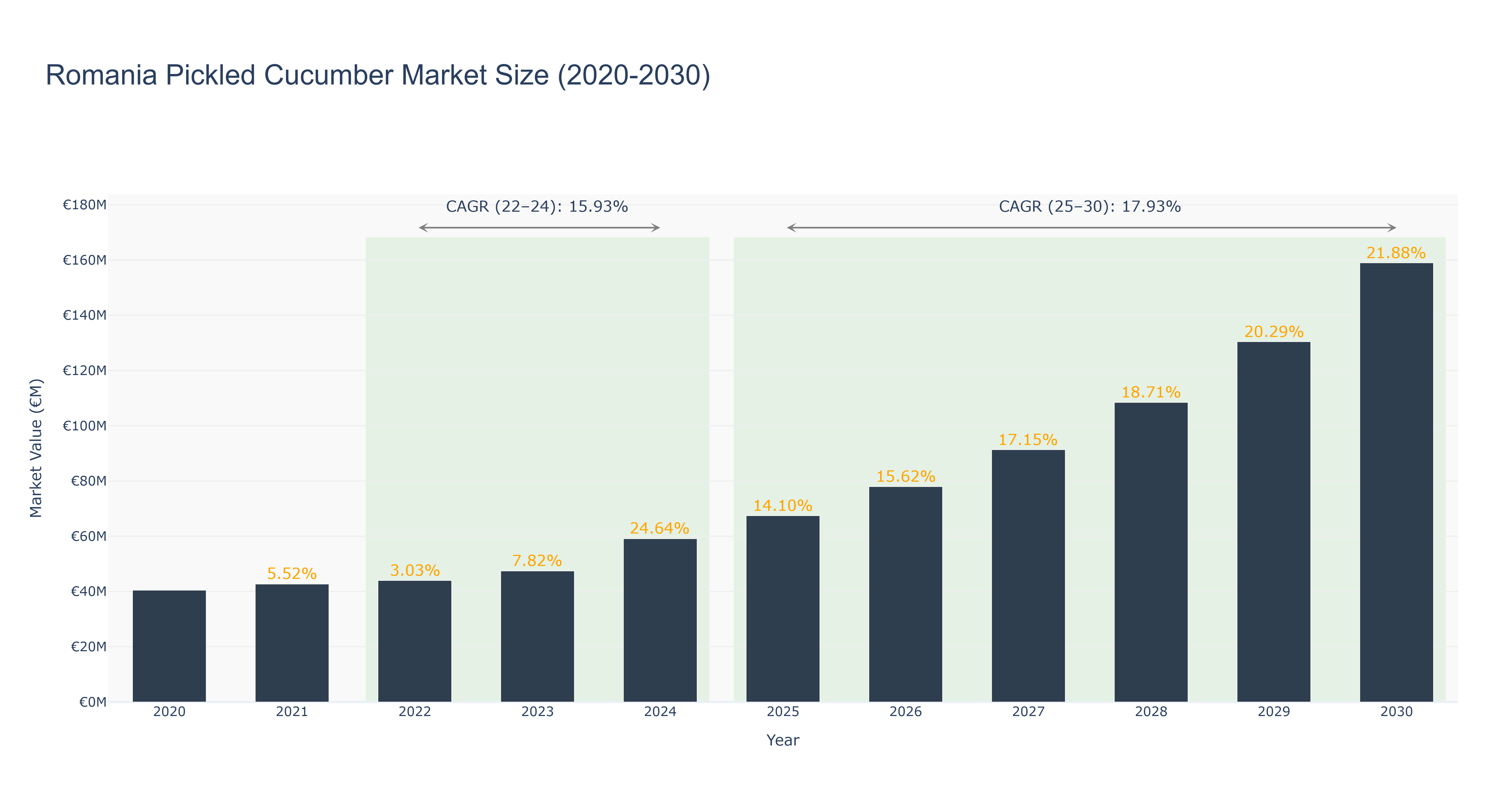
The Romania Pickled Cucumber Market has shown a steady growth trajectory over the years. The peak market size was recorded in 2030 at €158.96 million. From 2020 to 2024, the market size increased from €40.45 million to €59.10 million, driven by a notable CAGR of 15.93% during 2022-24. The forecasted market size from 2025 to 2030 is expected to reach €158.96 million, with a CAGR of 17.93% during 2025-30. The market's growth can be attributed to increasing consumer demand for healthy and natural food products, as well as the rising popularity of pickled vegetables in culinary trends. Looking ahead, Romania is set to introduce new sustainable farming practices in the pickled cucumber industry, aiming to enhance product quality and meet growing market demands.
Romania Pickled Cucumber Market: Production & Trade Performance (2019-2025)
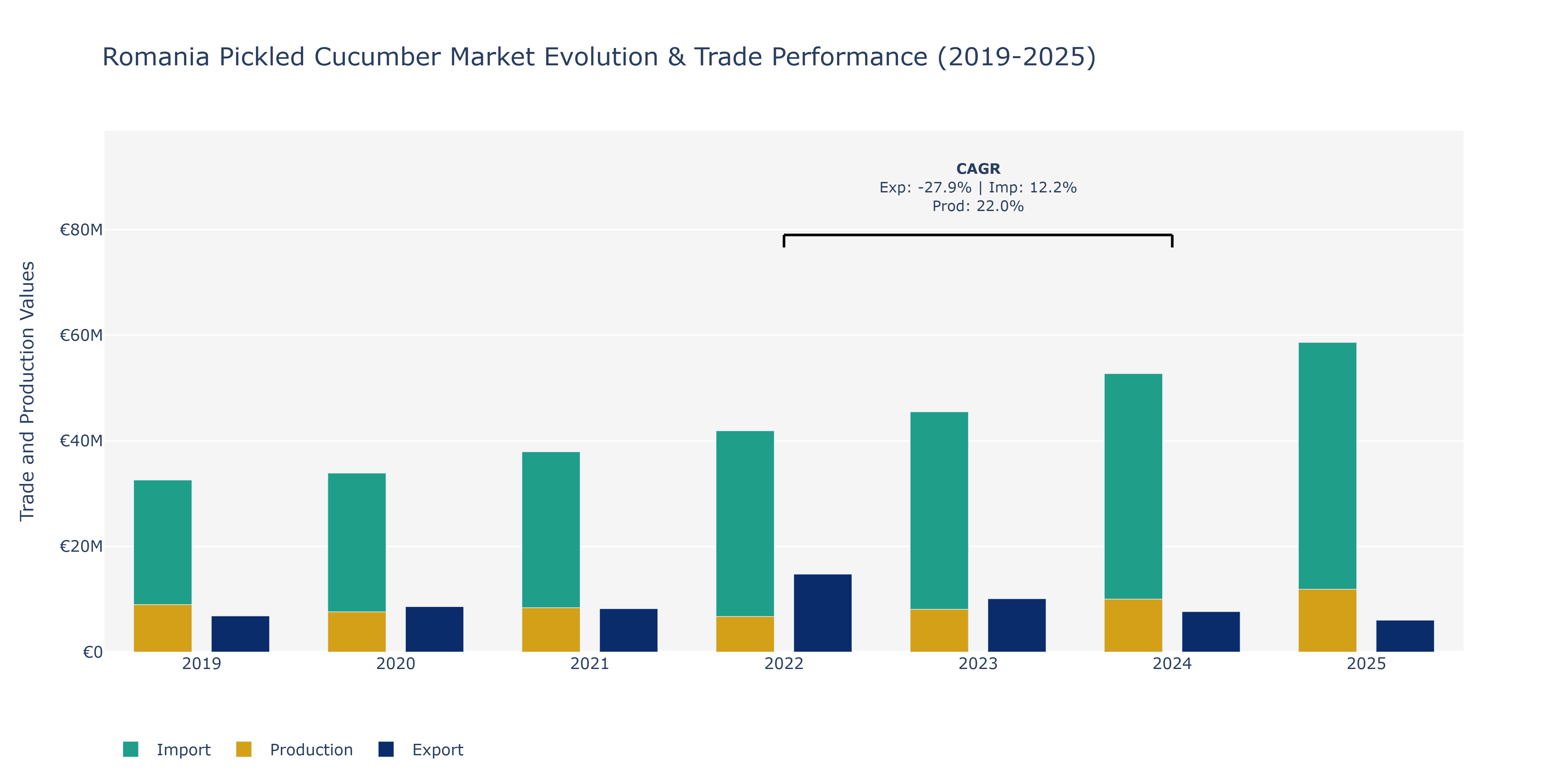
The Romania Pickled Cucumber Market experienced notable fluctuations in Exports, Imports, and Production from 2019 to 2025. Exports saw a surge from €6.84 million in 2019 to a peak of €14.75 million in 2022, followed by a decline to €6.02 million in 2025. Imports steadily increased from €32.57 million in 2019 to €58.63 million in 2025, showcasing consistent growth. Production, however, displayed a varying trend, decreasing to €7.60 million in 2020 before peaking at €11.89 million in 2025. The drop in exports post-2022 could be attributed to changing consumer preferences, impacting overseas demand. Conversely, the continual rise in imports suggests increased domestic consumption or reliance on foreign sources. The fluctuating production levels might stem from weather conditions affecting harvests, impacting supply. To maintain export competitiveness, diversification of product offerings or exploring new markets could be strategic considerations, as seen in similar agricultural sectors facing global market shifts.
Key Highlights of the Report:
- Romania Pickled Cucumber Market Outlook
- Market Size of Romania Pickled Cucumber Market, 2025
- Forecast of Romania Pickled Cucumber Market, 2032
- Historical Data and Forecast of Romania Pickled Cucumber Revenues & Volume for the Period 2022-2032F
- Romania Pickled Cucumber Market Trend Evolution
- Romania Pickled Cucumber Market Drivers and Challenges
- Romania Pickled Cucumber Price Trends
- Romania Pickled Cucumber Porter's Five Forces
- Romania Pickled Cucumber Industry Life Cycle
- Historical Data and Forecast of Romania Pickled Cucumber Market Revenues & Volume By Type for the Period 2022-2032F
- Historical Data and Forecast of Romania Pickled Cucumber Market Revenues & Volume By Whole Pickled Cucumber for the Period 2022-2032F
- Historical Data and Forecast of Romania Pickled Cucumber Market Revenues & Volume By Pickled Cucumber Slice for the Period 2022-2032F
- Historical Data and Forecast of Romania Pickled Cucumber Market Revenues & Volume By Application for the Period 2022-2032F
- Historical Data and Forecast of Romania Pickled Cucumber Market Revenues & Volume By Households for the Period 2022-2032F
- Historical Data and Forecast of Romania Pickled Cucumber Market Revenues & Volume By Restaurant for the Period 2022-2032F
- Historical Data and Forecast of Romania Pickled Cucumber Market Revenues & Volume By Others for the Period 2022-2032F
- Romania Pickled Cucumber Import Export Trade Statistics
- Market Opportunity Assessment By Type
- Market Opportunity Assessment By Application
- Romania Pickled Cucumber Top Companies Market Share
- Romania Pickled Cucumber Competitive Benchmarking By Technical and Operational Parameters
- Romania Pickled Cucumber Company Profiles
- Romania Pickled Cucumber Key Strategic Recommendations






































