Saudi Arabia Ethylene Glycol Market: Import Trend Analysis
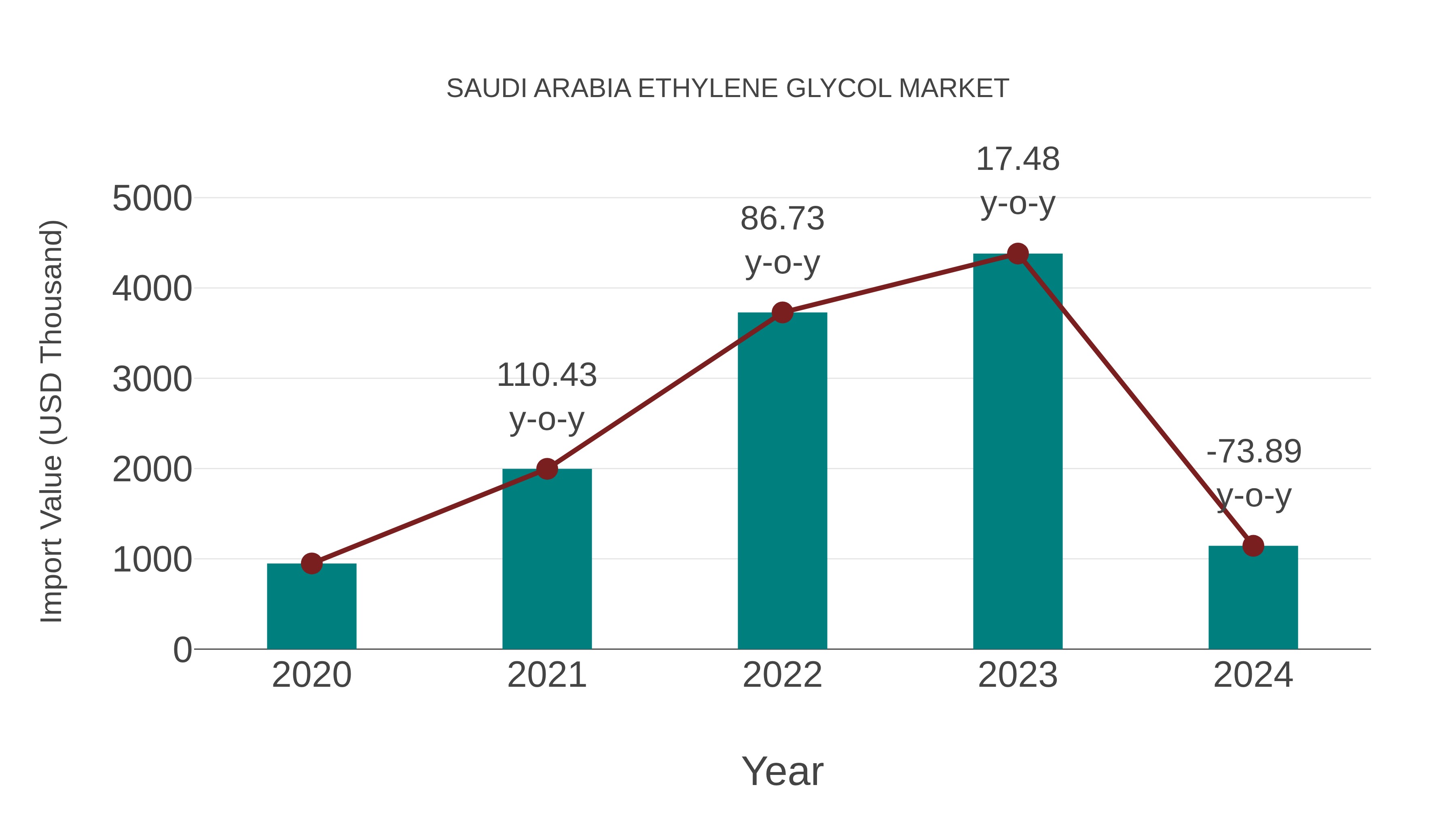
In the Saudi Arabia ethylene glycol market, the import trend exhibited a significant decline from 2023 to 2024, with a notable contraction of -73.89%. Despite this, the compound annual growth rate (CAGR) for the period 2020-2024 stood at 4.78%. This sharp decline in import momentum can be attributed to shifts in demand dynamics or alterations in trade policies impacting market stability.
Saudi Arabia Ethylene Glycol Market Synopsis
The Saudi Arabia ethylene glycol market has witnessed steady growth in recent years. Ethylene glycol is a key chemical used in various industries, including automotive, textiles, and petrochemicals. The demand for ethylene glycol in Saudi Arabia is driven by the growing automotive sector and the increasing use of PET bottles in the packaging industry. Additionally, the country`s petrochemical industry plays a significant role in ethylene glycol production. saudi arabia strategic location as a hub for export also contributes to the growth of this market.
Drivers of the Market
The Saudi Arabia ethylene glycol market is experiencing robust growth, primarily driven by its widespread use in the automotive and textiles industries. Ethylene glycol is a crucial component in the production of antifreeze and coolant fluids, which are essential for vehicle maintenance, particularly in a hot climate like Saudi Arabia. The country`s automotive sector is expanding, leading to increased demand for ethylene glycol. Additionally, the textiles industry relies on ethylene glycol for the manufacturing of polyester fibers and fabrics, and the growing fashion and textile market in Saudi Arabia has boosted its consumption. Moreover, the chemical industry`s inclination towards eco-friendly products, including bio-based ethylene glycol, is expected to further drive market growth in the coming years.
Opportunities of the Market
Challenges of the Market
The ethylene glycol market in Saudi Arabia encounters challenges associated with the need for sustainable production methods and responsible waste management. Ethylene glycol production typically involves energy-intensive processes, and addressing environmental concerns through cleaner production methods is a priority. Proper disposal of waste and by-products is also crucial to mitigate environmental impact.
COVID-19 Impact on the Market
The Saudi Arabia ethylene glycol market underwent significant shifts due to the COVID-19 pandemic. Ethylene glycol is a vital component in the production of polyester fibers, antifreeze, and various plastics. The pandemic initially led to reduced demand as industrial activities and consumer spending contracted. The automotive industry, a major consumer of antifreeze products, faced production halts and reduced sales, impacting ethylene glycol demand. Similarly, disruptions in textile and apparel industries affected polyester fiber demand. The restrictions also affected the supply chain, leading to logistical challenges and inventory management issues. However, the market began recovering as countries eased restrictions and economies adapted to the new normal. The resumption of manufacturing activities, increased consumption of packaged goods, and the eventual revival of the automotive and textile sectors contributed to the market`s recovery. Moving forward, changing consumer preferences and sustainability considerations are likely to influence the trajectory of the ethylene glycol market in Saudi Arabia.
Key Players in the Market
Key players in the Saudi Arabia ethylene glycol market include SABIC, MEGlobal, and Reliance Industries. These companies produce ethylene glycol, a crucial chemical used in various applications, including antifreeze, polyester production, and industrial processes.
Key Highlights of the Report:
- Saudi Arabia Ethylene Glycol Market Outlook
- Market Size of Saudi Arabia Ethylene Glycol Market, 2025
- Forecast of Saudi Arabia Ethylene Glycol Market, 2032
- Historical Data and Forecast of Saudi Arabia Ethylene Glycol Revenues & Volume for the Period 2022-2032F
- Saudi Arabia Ethylene Glycol Market Trend Evolution
- Saudi Arabia Ethylene Glycol Market Drivers and Challenges
- Saudi Arabia Ethylene Glycol Price Trends
- Saudi Arabia Ethylene Glycol Porter's Five Forces
- Saudi Arabia Ethylene Glycol Industry Life Cycle
- Historical Data and Forecast of Saudi Arabia Ethylene Glycol Market Revenues & Volume By Product for the Period 2022-2032F
- Historical Data and Forecast of Saudi Arabia Ethylene Glycol Market Revenues & Volume By MEG for the Period 2022-2032F
- Historical Data and Forecast of Saudi Arabia Ethylene Glycol Market Revenues & Volume By DEG for the Period 2022-2032F
- Historical Data and Forecast of Saudi Arabia Ethylene Glycol Market Revenues & Volume By TEG for the Period 2022-2032F
- Historical Data and Forecast of Saudi Arabia Ethylene Glycol Market Revenues & Volume By Application for the Period 2022-2032F
- Historical Data and Forecast of Saudi Arabia Ethylene Glycol Market Revenues & Volume By PET for the Period 2022-2032F
- Historical Data and Forecast of Saudi Arabia Ethylene Glycol Market Revenues & Volume By Polyester Fiber for the Period 2022-2032F
- Historical Data and Forecast of Saudi Arabia Ethylene Glycol Market Revenues & Volume By Antifreeze for the Period 2022-2032F
- Historical Data and Forecast of Saudi Arabia Ethylene Glycol Market Revenues & Volume By Films for the Period 2022-2032F
- Saudi Arabia Ethylene Glycol Import Export Trade Statistics
- Market Opportunity Assessment By Product
- Market Opportunity Assessment By Application
- Saudi Arabia Ethylene Glycol Top Companies Market Share
- Saudi Arabia Ethylene Glycol Competitive Benchmarking By Technical and Operational Parameters
- Saudi Arabia Ethylene Glycol Company Profiles
- Saudi Arabia Ethylene Glycol Key Strategic Recommendations






































