Saudi Arabia Soybean Oil Market: Import Trend Analysis
In 2024, Saudi Arabia`s soybean oil market witnessed a notable increase in imports. This growth can be attributed to rising consumer demand and the expanding food processing industry in the region. The trend indicates a shift towards higher consumption of soybean oil in Saudi Arabia.
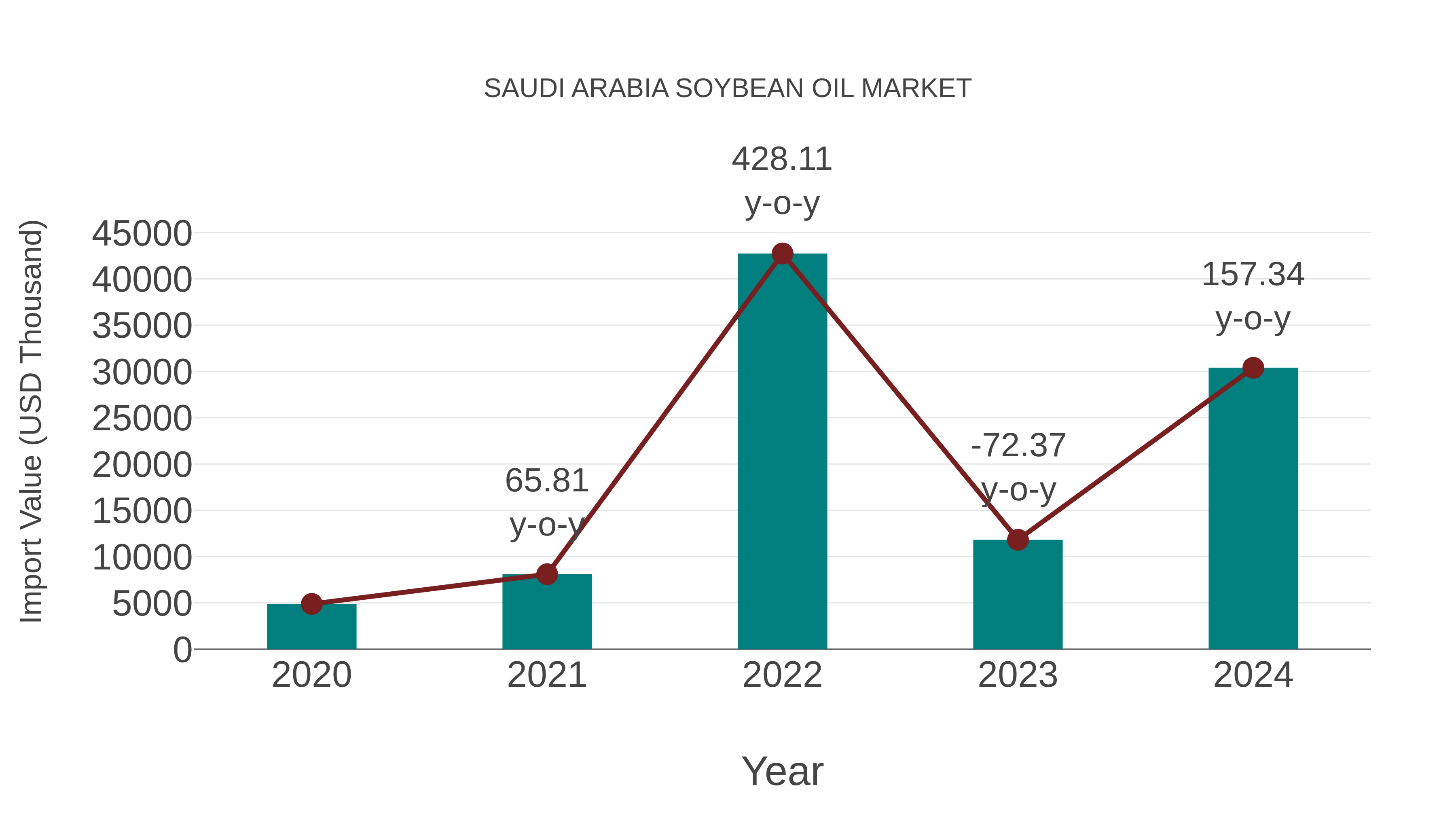
Saudi Arabia Soybean Oil Market Synopsis
The soybean oil market in Saudi Arabia holds a significant place in the nation`s cooking oil consumption patterns. Soybean oil is widely used for culinary purposes, ranging from household cooking to food processing industries. It is valued for its neutral flavor, high smoke point, and nutritional attributes. The market is driven by changing dietary habits, population growth, and urbanization. Soybean oil consumption is influenced by health considerations and consumer preferences for vegetable-based oils. The market also intersects with global soybean production trends and trade dynamics, ensuring a steady supply of soybean oil to meet domestic demand.
Drivers of the Market
In the Saudi Arabia soybean oil market, the primary driver is the growing demand for edible oils in cooking and food processing. Soybean oil is one of the most widely consumed vegetable oils in the country due to its neutral flavor and versatility. The increasing awareness of healthy cooking oils and the preference for plant-based oils contribute to the market`s expansion.
Challenges of the Market
The Saudi Arabia soybean oil market encounters challenges related to achieving self-sufficiency in edible oil production while maintaining a balance between domestic cultivation and imports. Enhancing the efficiency of soybean oil extraction, addressing quality control concerns, and promoting the nutritional benefits of soybean oil are key challenges. Furthermore, ensuring sustainable agricultural practices and supporting local farmers to meet the demand for soybeans pose significant hurdles.
COVID-19 Impact on the Market
The soybean oil market in Saudi Arabia experienced fluctuations during the COVID-19 pandemic. The closure of restaurants and reduced foodservice operations initially led to a decline in demand for edible oils, including soybean oil. However, the market for packaged food products and cooking at home saw increased demand. The soybean oil market adjusted to changes in consumer behavior and preferences. The recovery was linked to the easing of restrictions on foodservice operations and the gradual return of normal economic activities.
Key Players in the Market
Notable players in the Saudi Arabia soybean oil market include Savola Group, Almarai Company, and Saudi Vegetable Oil & Ghee Co. These companies are major producers and suppliers of soybean oil, serving both consumer and industrial demands.
Key Highlights of the Report:
- Saudi Arabia Soybean Oil Market Outlook
- Market Size of Saudi Arabia Soybean Oil Market, 2025
- Forecast of Saudi Arabia Soybean Oil Market, 2032
- Historical Data and Forecast of Saudi Arabia Soybean Oil Revenues & Volume for the Period 2022-2032F
- Saudi Arabia Soybean Oil Market Trend Evolution
- Saudi Arabia Soybean Oil Market Drivers and Challenges
- Saudi Arabia Soybean Oil Price Trends
- Saudi Arabia Soybean Oil Porter's Five Forces
- Saudi Arabia Soybean Oil Industry Life Cycle
- Historical Data and Forecast of Saudi Arabia Soybean Oil Market Revenues & Volume By End-Use for the Period 2022-2032F
- Historical Data and Forecast of Saudi Arabia Soybean Oil Market Revenues & Volume By Food for the Period 2022-2032F
- Historical Data and Forecast of Saudi Arabia Soybean Oil Market Revenues & Volume By Feed for the Period 2022-2032F
- Historical Data and Forecast of Saudi Arabia Soybean Oil Market Revenues & Volume By Industrial for the Period 2022-2032F
- Saudi Arabia Soybean Oil Import Export Trade Statistics
- Market Opportunity Assessment By End-Use
- Saudi Arabia Soybean Oil Top Companies Market Share
- Saudi Arabia Soybean Oil Competitive Benchmarking By Technical and Operational Parameters
- Saudi Arabia Soybean Oil Company Profiles
- Saudi Arabia Soybean Oil Key Strategic Recommendations






































