Saudi Arabia Washable Markers Market: Import Trend Analysis
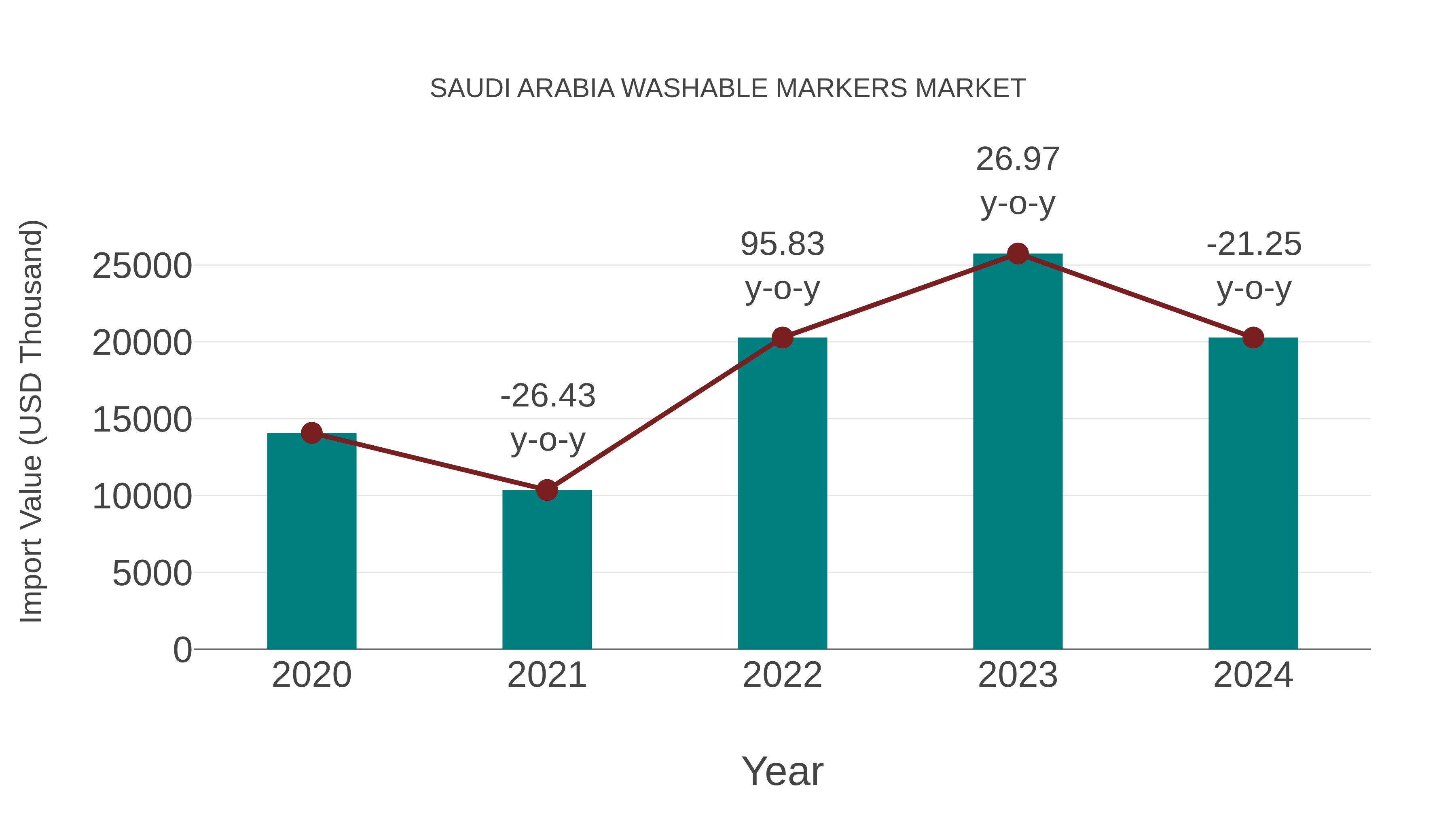
In 2024, Saudi Arabia`s import of washable markers showed a steady increase, driven by growing demand for office and school supplies. Imports mainly originated from countries like China, the USA, and Germany, reflecting a diverse sourcing strategy to meet market needs.
Saudi Arabia Washable Markers Market Synopsis
The washable markers market in Saudi Arabia has experienced notable expansion, largely fueled by the education sector, creative industries, and office spaces. Washable markers are favored for their convenience and versatility, catering to a wide range of age groups and purposes. As the country`s education system continues to evolve and remote work becomes more commonplace, the demand for such markers is expected to remain steady. Manufacturers may focus on product safety, washability, and vibrant color options to maintain consumer interest.
Drivers of the Market
The Saudi Arabia washable markers market is witnessing growth due to the increasing focus on education and creative activities. Washable markers, popular among students and artists, offer a convenient and mess-free way to express creativity. The markers` ability to be easily washed off from surfaces promotes their use in educational settings, particularly for young children. As educational methodologies evolve to include more interactive and visual learning approaches, the demand for washable markers is on the rise.
Opportunities of the Market
Challenges of the Market
The washable markers market in Saudi Arabia encounters challenges related to environmental concerns, as consumers and regulatory authorities focus more on sustainability. This necessitates the development of eco-friendly marker solutions. Furthermore, the market faces competition from digital alternatives, which are gaining popularity among children and adults. Marketing strategies and innovation will be crucial to sustaining growth.
COVID-19 Impact on the Market
The market for washable markers in Saudi Arabia saw mixed effects during the pandemic. With schools and offices transitioning to remote work and learning, there was a decline in the demand for traditional stationery products. However, as families spent more time at home, the demand for creative and recreational products like washable markers increased. Manufacturers had to adapt to changing consumer preferences and focus on e-commerce sales.
Key Players in the Market
In the washable markers segment, Crayola, Faber-Castell, and Sharpie are the key players. These brands are known for their high-quality, washable markers that are popular among children and artists alike.
Key Highlights of the Report:
- Saudi Arabia Washable Markers Market Outlook
- Market Size of Saudi Arabia Washable Markers Market, 2025
- Forecast of Saudi Arabia Washable Markers Market, 2032
- Historical Data and Forecast of Saudi Arabia Washable Markers Revenues & Volume for the Period 2022-2032F
- Saudi Arabia Washable Markers Market Trend Evolution
- Saudi Arabia Washable Markers Market Drivers and Challenges
- Saudi Arabia Washable Markers Price Trends
- Saudi Arabia Washable Markers Porter's Five Forces
- Saudi Arabia Washable Markers Industry Life Cycle
- Historical Data and Forecast of Saudi Arabia Washable Markers Market Revenues & Volume By Washability for the Period 2022-2032F
- Historical Data and Forecast of Saudi Arabia Washable Markers Market Revenues & Volume By Basic- Washable for the Period 2022-2032F
- Historical Data and Forecast of Saudi Arabia Washable Markers Market Revenues & Volume By Super-washable for the Period 2022-2032F
- Historical Data and Forecast of Saudi Arabia Washable Markers Market Revenues & Volume By End User for the Period 2022-2032F
- Historical Data and Forecast of Saudi Arabia Washable Markers Market Revenues & Volume By Children for the Period 2022-2032F
- Historical Data and Forecast of Saudi Arabia Washable Markers Market Revenues & Volume By Professionals for the Period 2022-2032F
- Saudi Arabia Washable Markers Import Export Trade Statistics
- Market Opportunity Assessment By Washability
- Market Opportunity Assessment By End User
- Saudi Arabia Washable Markers Top Companies Market Share
- Saudi Arabia Washable Markers Competitive Benchmarking By Technical and Operational Parameters
- Saudi Arabia Washable Markers Company Profiles
- Saudi Arabia Washable Markers Key Strategic Recommendations






































