Singapore Edible Beans Market: Import Trend Analysis
In the Singapore edible beans market, the import trend experienced a slight decline from 2023 to 2024, with a growth rate of -0.5%. The compound annual growth rate (CAGR) for imports over the period 2020-2024 stood at -21.29%. This negative momentum can be attributed to shifting consumer preferences or changes in trade policies impacting the market`s stability.
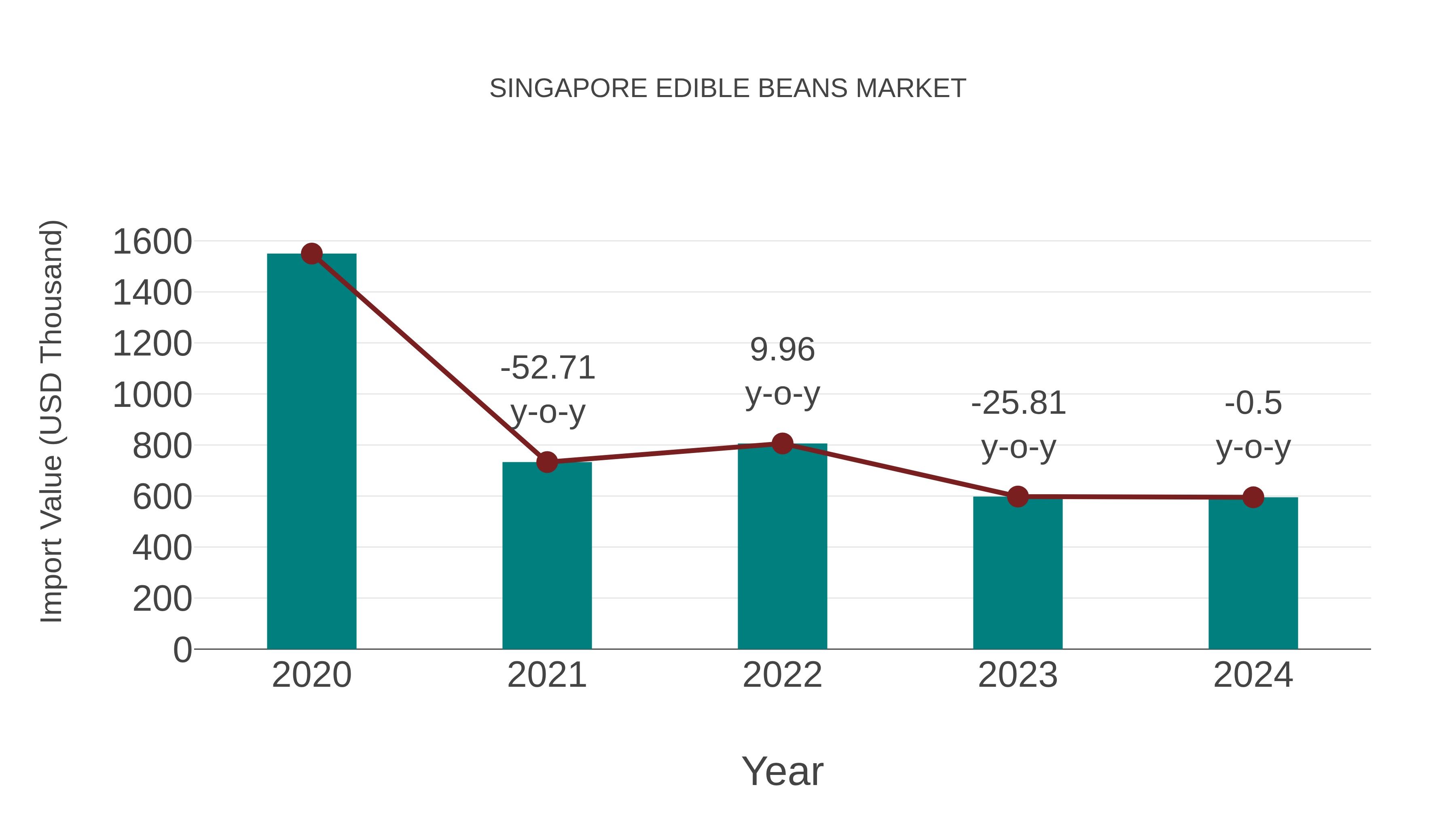
Singapore Edible Beans Market Synopsis
The Singapore edible beans market continues to thrive due to the rising consumer preference for plant-based protein sources and healthy snacking options. Edible beans, including kidney beans, black beans, and soybeans, are gaining popularity as they are rich in nutrients and contribute to a balanced diet. Additionally, the market is benefiting from the growth of the food processing industry, which incorporates beans into various products. As health-conscious consumers seek more diverse and nutritious food choices, the edible beans market is poised for sustained growth.
Drivers of the Market
The Singapore edible beans market is thriving due to multiple drivers. Firstly, changing dietary preferences and a growing awareness of the health benefits associated with consuming beans have led to an increased demand for these nutritious food products. Additionally, the diverse culinary landscape in Singapore, with a rich mix of local and international cuisines, drives the consumption of beans in various dishes. Furthermore, the country`s well-established distribution networks and retail infrastructure make it easy for consumers to access a wide variety of bean products. As consumers continue to prioritize health-conscious food choices and explore diverse cuisines, the edible beans market in Singapore is poised for continued growth.
Challenges of the Market
The Singapore edible beans market faces challenges driven by health-conscious consumer trends and supply chain disruptions. As consumers seek healthier dietary options, manufacturers must innovate and offer bean-based products that cater to changing preferences. Global supply chain disruptions, such as those caused by the COVID-19 pandemic, underscore the need for resilient sourcing and distribution strategies. Moreover, the market faces competition from alternative protein sources, putting pressure on bean producers to remain competitive.
COVID-19 Impact on the Market
The Singapore edible beans market faced disruptions during the pandemic due to supply chain interruptions and logistical challenges. Import restrictions and border closures affected the availability of beans. However, as people turned to home cooking and healthy eating, there was a surge in demand for edible beans like lentils and chickpeas, leading to a gradual recovery in the market. Online sales and home delivery services played a significant role in sustaining the market during lockdowns.
Key Players in the Market
In the Singapore edible beans market, Cargill is a significant player, involved in the sourcing and distribution of a variety of edible beans, catering to the food industry. Olam International is another major name, known for its global presence in the agribusiness sector, including the trade of edible beans.
Key Highlights of the Report:
- Singapore Edible Beans Market Outlook
- Market Size of Singapore Edible Beans Market, 2025
- Forecast of Singapore Edible Beans Market, 2032
- Historical Data and Forecast of Singapore Edible Beans Revenues & Volume for the Period 2022-2032F
- Singapore Edible Beans Market Trend Evolution
- Singapore Edible Beans Market Drivers and Challenges
- Singapore Edible Beans Price Trends
- Singapore Edible Beans Porter's Five Forces
- Singapore Edible Beans Industry Life Cycle
- Historical Data and Forecast of Singapore Edible Beans Market Revenues & Volume By Product Type for the Period 2022-2032F
- Historical Data and Forecast of Singapore Edible Beans Market Revenues & Volume By Pinto Beans for the Period 2022-2032F
- Historical Data and Forecast of Singapore Edible Beans Market Revenues & Volume By Navy Beans for the Period 2022-2032F
- Historical Data and Forecast of Singapore Edible Beans Market Revenues & Volume By Great Northern Beans for the Period 2022-2032F
- Historical Data and Forecast of Singapore Edible Beans Market Revenues & Volume By Red Kidney Beans for the Period 2022-2032F
- Historical Data and Forecast of Singapore Edible Beans Market Revenues & Volume By Black Beans for the Period 2022-2032F
- Historical Data and Forecast of Singapore Edible Beans Market Revenues & Volume By Yellow Beans for the Period 2022-2032F
- Historical Data and Forecast of Singapore Edible Beans Market Revenues & Volume By Others for the Period 2022-2032F
- Historical Data and Forecast of Singapore Edible Beans Market Revenues & Volume By Distribution Channel for the Period 2022-2032F
- Historical Data and Forecast of Singapore Edible Beans Market Revenues & Volume By Supermarket/Hypermarket for the Period 2022-2032F
- Historical Data and Forecast of Singapore Edible Beans Market Revenues & Volume By Online Stores for the Period 2022-2032F
- Historical Data and Forecast of Singapore Edible Beans Market Revenues & Volume By Specialty Stores for the Period 2022-2032F
- Historical Data and Forecast of Singapore Edible Beans Market Revenues & Volume By Other for the Period 2022-2032F
- Historical Data and Forecast of Singapore Edible Beans Market Revenues & Volume By Application for the Period 2022-2032F
- Historical Data and Forecast of Singapore Edible Beans Market Revenues & Volume By Household for the Period 2022-2032F
- Historical Data and Forecast of Singapore Edible Beans Market Revenues & Volume By Restaurants for the Period 2022-2032F
- Historical Data and Forecast of Singapore Edible Beans Market Revenues & Volume By Others for the Period 2022-2032F
- Singapore Edible Beans Import Export Trade Statistics
- Market Opportunity Assessment By Product Type
- Market Opportunity Assessment By Distribution Channel
- Market Opportunity Assessment By Application
- Singapore Edible Beans Top Companies Market Share
- Singapore Edible Beans Competitive Benchmarking By Technical and Operational Parameters
- Singapore Edible Beans Company Profiles
- Singapore Edible Beans Key Strategic Recommendations






































