Singapore Food Colors Market: Import Trend Analysis
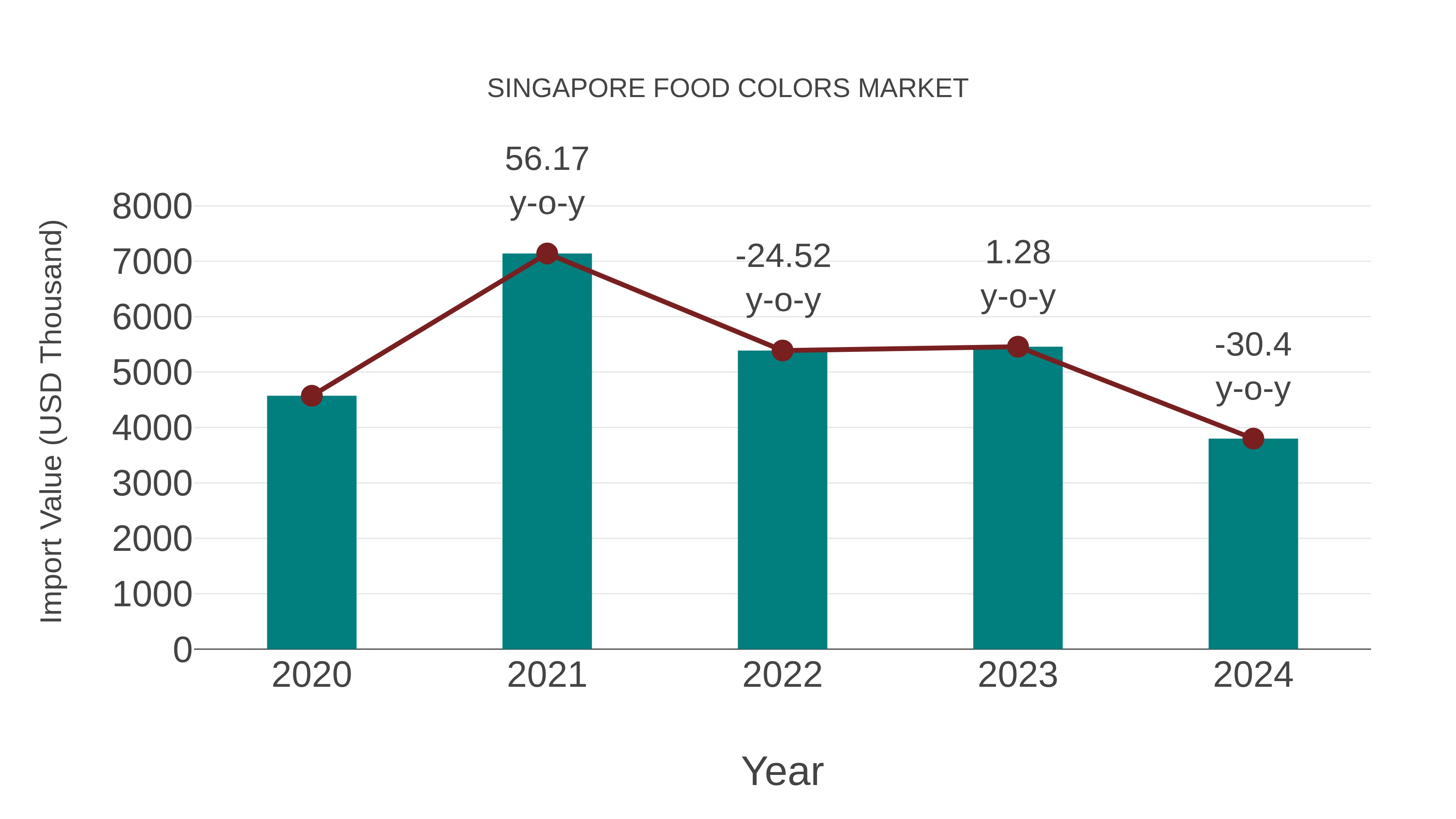
In 2024, Singapore`s food colors market experienced a notable decline in import momentum, with a -30.4% growth rate compared to the previous year. The compound annual growth rate (CAGR) for 2020-2024 stood at -4.52%. This downward trend can be attributed to shifting consumer preferences or changes in regulatory standards impacting demand for food color additives.
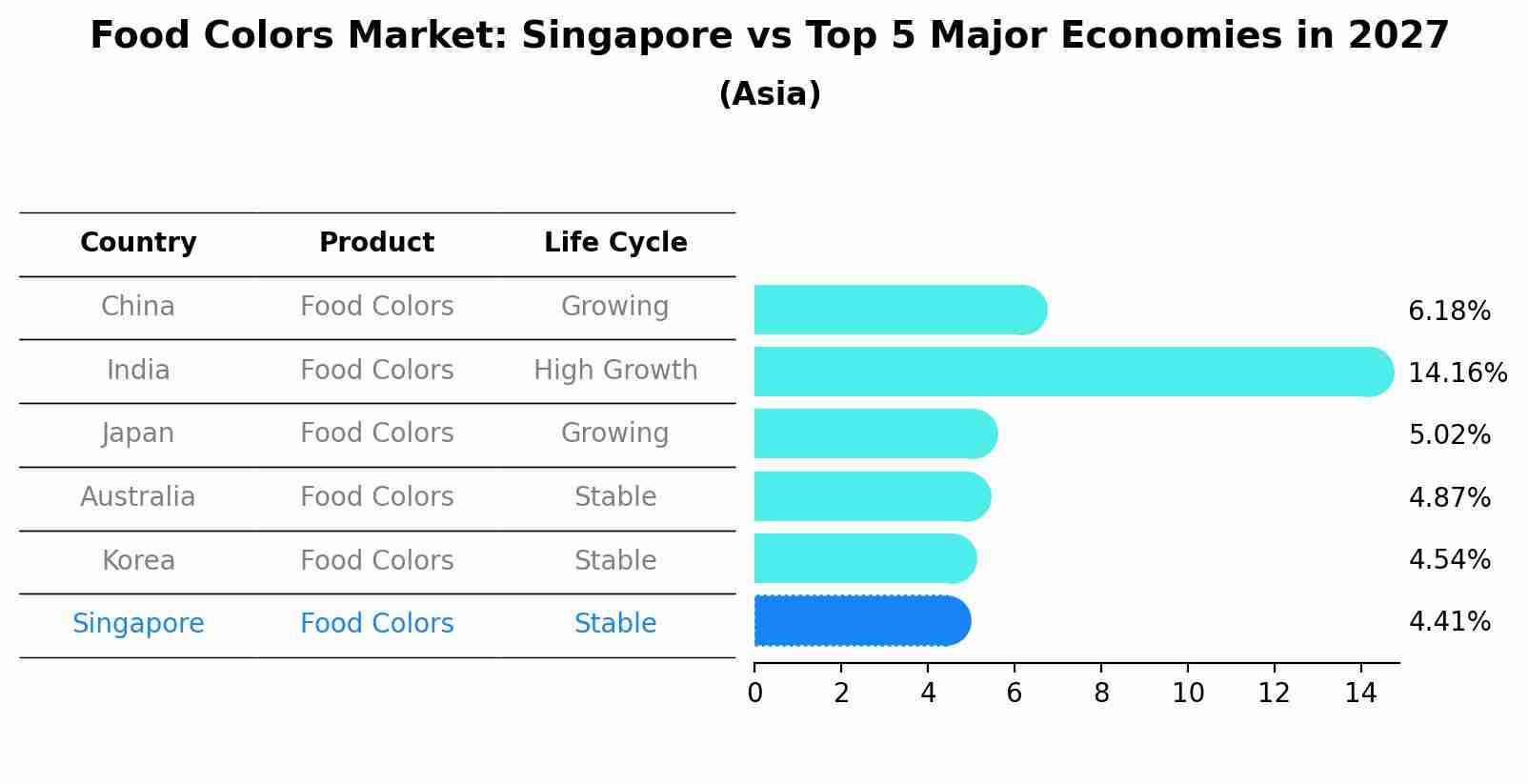
Food Colors Market: Singapore vs Top 5 Major Economies in 2027 (Asia)
By 2027, Singapore's Food Colors market is forecasted to achieve a stable growth rate of 4.41%, with China leading the Asia region, followed by India, Japan, Australia and South Korea.
Singapore Food Colors Market Synopsis
The Singapore food colors market has seen robust growth as the food and beverage industry continues to expand and diversify. Food colors are essential in enhancing the visual appeal of food products and play a crucial role in consumer preference. Natural food colors, sourced from fruits, vegetables, and other organic materials, have gained popularity due to increasing health consciousness among consumers. Regulatory approval and adherence to food safety standards are of utmost importance in this market. As manufacturers look for ways to meet consumer demands for natural and clean-label products, the food colors market in Singapore is poised for continued growth, driven by innovation, and changing consumer preferences.
Drivers of the Market
The food colors market in Singapore is thriving due to the food industry`s emphasis on visual appeal and product differentiation. Food colors enhance the aesthetic appeal of food and beverage products, making them more attractive to consumers. The market is also influenced by the growing demand for natural and organic food colors as consumers seek healthier and clean-label alternatives. Additionally, the rise in bakery and confectionery products further drives the demand for food colors.
Challenges of the Market
The Singapore food colors market grapples with several challenges linked to regulatory compliance, consumer preferences, and supply chain dynamics. Firstly, regulatory authorities have stringent regulations regarding food color additives, necessitating constant monitoring and adherence to safety standards. This can increase the cost and complexity of product development. Secondly, consumer preferences for natural and clean-label products have led to a shift away from synthetic food colors, posing challenges for manufacturers in achieving vibrant and stable colors using natural sources. Additionally, ensuring the consistent supply of natural colorants can be difficult due to factors like seasonality and geographic variations. Lastly, the demand for exotic and innovative colors in the food industry requires continuous research and development efforts. Balancing these various factors while delivering safe and visually appealing food products is a significant challenge for the food colors market in Singapore.
COVID-19 Impact on the Market
The Singapore Food Colors Market experienced relatively stable demand during the pandemic. While there were shifts in consumer preferences towards home-cooked meals, the food industry continued to use food colors to enhance product appeal.
Key Players in the Market
Singapore food colors market includes significant players like Chr. Hansen Holding A/S and Sensient Technologies Corporation. Chr. Hansen Holding A/S is a global leader in natural food coloring solutions, catering to the food and beverage industry`s demand for vibrant and safe colors. Sensient Technologies Corporation offers a wide range of food coloring solutions, including natural and synthetic options.
Key Highlights of the Report:
- Singapore Food Colors Market Outlook
- Market Size of Singapore Food Colors Market, 2025
- Forecast of Singapore Food Colors Market, 2032
- Historical Data and Forecast of Singapore Food Colors Revenues & Volume for the Period 2022-2032F
- Singapore Food Colors Market Trend Evolution
- Singapore Food Colors Market Drivers and Challenges
- Singapore Food Colors Price Trends
- Singapore Food Colors Porter's Five Forces
- Singapore Food Colors Industry Life Cycle
- Historical Data and Forecast of Singapore Food Colors Market Revenues & Volume By Type for the Period 2022-2032F
- Historical Data and Forecast of Singapore Food Colors Market Revenues & Volume By Natural for the Period 2022-2032F
- Historical Data and Forecast of Singapore Food Colors Market Revenues & Volume By Synthetic for the Period 2022-2032F
- Historical Data and Forecast of Singapore Food Colors Market Revenues & Volume By Nature Identical for the Period 2022-2032F
- Historical Data and Forecast of Singapore Food Colors Market Revenues & Volume By Application for the Period 2022-2032F
- Historical Data and Forecast of Singapore Food Colors Market Revenues & Volume By Food Products for the Period 2022-2032F
- Historical Data and Forecast of Singapore Food Colors Market Revenues & Volume By Beverages for the Period 2022-2032F
- Historical Data and Forecast of Singapore Food Colors Market Revenues & Volume By Form for the Period 2022-2032F
- Historical Data and Forecast of Singapore Food Colors Market Revenues & Volume By Liquid for the Period 2022-2032F
- Historical Data and Forecast of Singapore Food Colors Market Revenues & Volume By Powder for the Period 2022-2032F
- Historical Data and Forecast of Singapore Food Colors Market Revenues & Volume By Gel for the Period 2022-2032F
- Historical Data and Forecast of Singapore Food Colors Market Revenues & Volume By Solubility for the Period 2022-2032F
- Historical Data and Forecast of Singapore Food Colors Market Revenues & Volume By Dyes for the Period 2022-2032F
- Historical Data and Forecast of Singapore Food Colors Market Revenues & Volume By Lakes for the Period 2022-2032F
- Singapore Food Colors Import Export Trade Statistics
- Market Opportunity Assessment By Type
- Market Opportunity Assessment By Application
- Market Opportunity Assessment By Form
- Market Opportunity Assessment By Solubility
- Singapore Food Colors Top Companies Market Share
- Singapore Food Colors Competitive Benchmarking By Technical and Operational Parameters
- Singapore Food Colors Company Profiles
- Singapore Food Colors Key Strategic Recommendations






































