Singapore Herbal Cosmetics Market: Import Trend Analysis
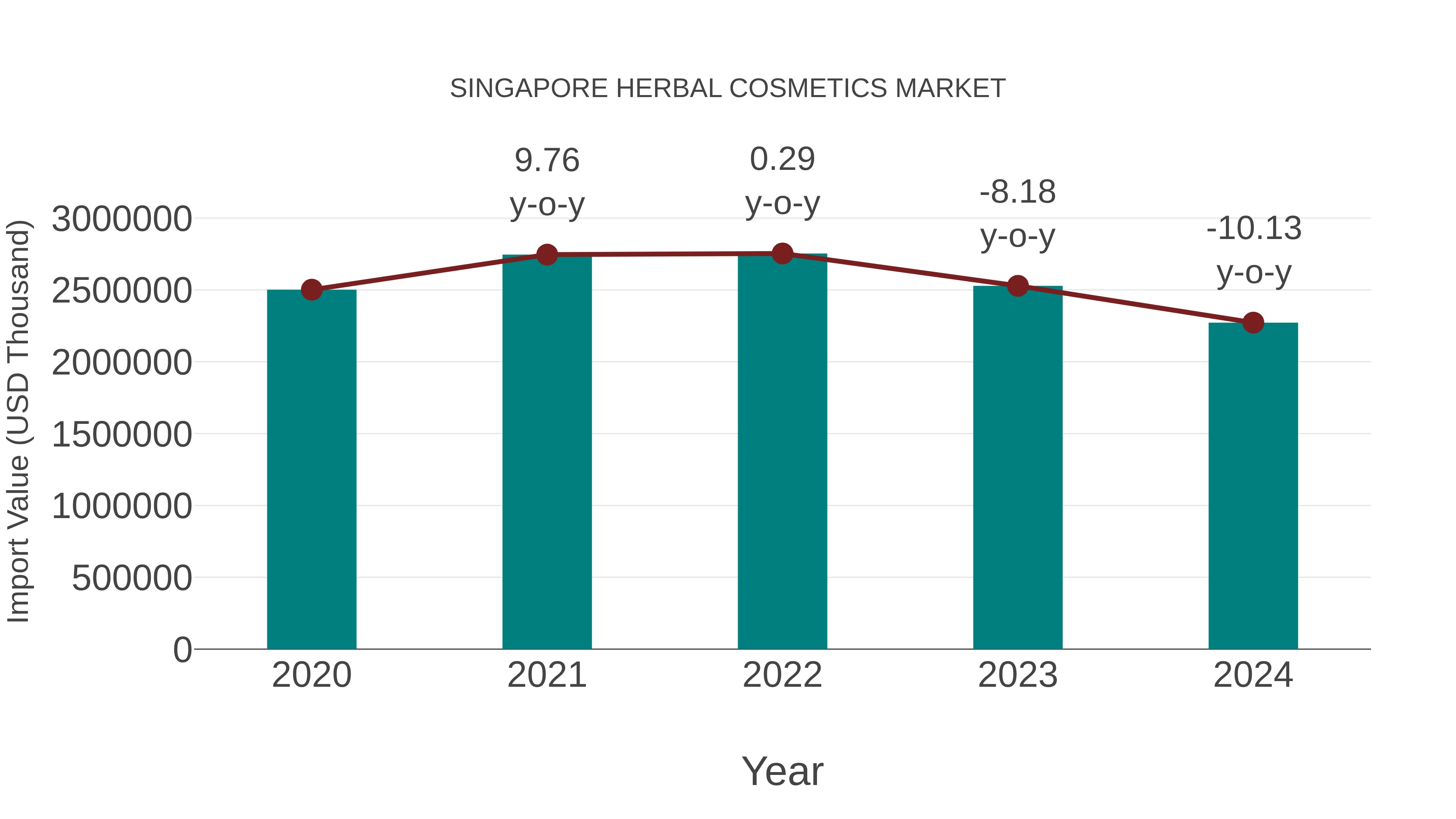
In the Singapore herbal cosmetics market, the import trend exhibited a decline, with a growth rate of -10.13% from 2023 to 2024 and a compound annual growth rate (CAGR) of -2.37% from 2020 to 2024. This negative import momentum may have been influenced by shifting consumer preferences or changes in regulatory policies impacting trade flows.
Singapore Herbal Cosmetics Market Synopsis
The herbal cosmetics market in Singapore is thriving due to a growing preference for natural and organic beauty products. Consumers are increasingly conscious of the ingredients in their skincare and cosmetics, and herbal formulations are perceived as safer and more environmentally friendly. Local and international beauty brands have responded to this trend by introducing herbal cosmetics that cater to various skincare needs. With a focus on sustainable and eco-friendly packaging, the market is poised for further expansion.
Drivers of the Market
The herbal cosmetics market in Singapore is driven by a growing preference for natural and organic beauty products. Consumers are becoming more conscious of the ingredients in cosmetics and are looking for herbal alternatives that offer benefits beyond conventional products. The awareness of potential harmful effects of synthetic chemicals in cosmetics has led to a shift toward herbal and organic options. Singapore thriving beauty and skincare industry also support the growth of this market.
Challenges of the Market
The herbal cosmetics market in Singapore confronts several notable challenges. One major hurdle is the need for consistent efficacy and safety testing of herbal ingredients, as consumer trust in these products relies on their effectiveness and safety. Regulatory compliance is also demanding, necessitating adherence to strict guidelines for product labeling and claims. Furthermore, the market faces stiff competition from established cosmetic brands, which may be more trusted by consumers. Balancing the use of herbal ingredients with the need for shelf-stability and extended product life can also be a technical challenge for manufacturers.
COVID-19 Impact on the Market
The herbal cosmetics market in Singapore displayed resilience during the pandemic. Consumers increasingly sought natural and organic beauty products, contributing to sustained demand for herbal cosmetics. Online sales and e-commerce channels became vital for cosmetics companies as physical stores faced restrictions. As consumer preferences shifted towards clean and green beauty, the herbal cosmetics market continued to thrive.
Key Players in the Market
The Singapore herbal cosmetics market is influenced by renowned brands like Himalaya Herbals, Biotique, and Forest Essentials. These companies specialize in formulating herbal and natural skincare and cosmetic products. Their emphasis on traditional herbal ingredients and ethical practices has earned them a loyal customer base in Singapore beauty and skincare industry.
Key Highlights of the Report:
- Singapore Herbal Cosmetics Market Outlook
- Market Size of Singapore Herbal Cosmetics Market, 2025
- Forecast of Singapore Herbal Cosmetics Market, 2032
- Historical Data and Forecast of Singapore Herbal Cosmetics Revenues & Volume for the Period 2022-2032F
- Singapore Herbal Cosmetics Market Trend Evolution
- Singapore Herbal Cosmetics Market Drivers and Challenges
- Singapore Herbal Cosmetics Price Trends
- Singapore Herbal Cosmetics Porter's Five Forces
- Singapore Herbal Cosmetics Industry Life Cycle
- Historical Data and Forecast of Singapore Herbal Cosmetics Market Revenues & Volume By Physical State for the Period 2022-2032F
- Historical Data and Forecast of Singapore Herbal Cosmetics Market Revenues & Volume By Solid for the Period 2022-2032F
- Historical Data and Forecast of Singapore Herbal Cosmetics Market Revenues & Volume By Semi-solid for the Period 2022-2032F
- Historical Data and Forecast of Singapore Herbal Cosmetics Market Revenues & Volume By Liquid for the Period 2022-2032F
- Historical Data and Forecast of Singapore Herbal Cosmetics Market Revenues & Volume By Product for the Period 2022-2032F
- Historical Data and Forecast of Singapore Herbal Cosmetics Market Revenues & Volume By Skin Care Product for the Period 2022-2032F
- Historical Data and Forecast of Singapore Herbal Cosmetics Market Revenues & Volume By Hair Care Product for the Period 2022-2032F
- Historical Data and Forecast of Singapore Herbal Cosmetics Market Revenues & Volume By Baby Care Product for the Period 2022-2032F
- Historical Data and Forecast of Singapore Herbal Cosmetics Market Revenues & Volume By Oral Care Product for the Period 2022-2032F
- Historical Data and Forecast of Singapore Herbal Cosmetics Market Revenues & Volume By Make-up Product for the Period 2022-2032F
- Historical Data and Forecast of Singapore Herbal Cosmetics Market Revenues & Volume By Distribution Channel for the Period 2022-2032F
- Historical Data and Forecast of Singapore Herbal Cosmetics Market Revenues & Volume By Supermarket for the Period 2022-2032F
- Historical Data and Forecast of Singapore Herbal Cosmetics Market Revenues & Volume By Pharmacy for the Period 2022-2032F
- Historical Data and Forecast of Singapore Herbal Cosmetics Market Revenues & Volume By Departmental Store for the Period 2022-2032F
- Historical Data and Forecast of Singapore Herbal Cosmetics Market Revenues & Volume By Beauty Spa/Salon for the Period 2022-2032F
- Historical Data and Forecast of Singapore Herbal Cosmetics Market Revenues & Volume By Internet Retailing for the Period 2022-2032F
- Historical Data and Forecast of Singapore Herbal Cosmetics Market Revenues & Volume By Specialty Store for the Period 2022-2032F
- Singapore Herbal Cosmetics Import Export Trade Statistics
- Market Opportunity Assessment By Physical State
- Market Opportunity Assessment By Product
- Market Opportunity Assessment By Distribution Channel
- Singapore Herbal Cosmetics Top Companies Market Share
- Singapore Herbal Cosmetics Competitive Benchmarking By Technical and Operational Parameters
- Singapore Herbal Cosmetics Company Profiles
- Singapore Herbal Cosmetics Key Strategic Recommendations






































