Singapore Musical Instrument Market Size Growth Rate
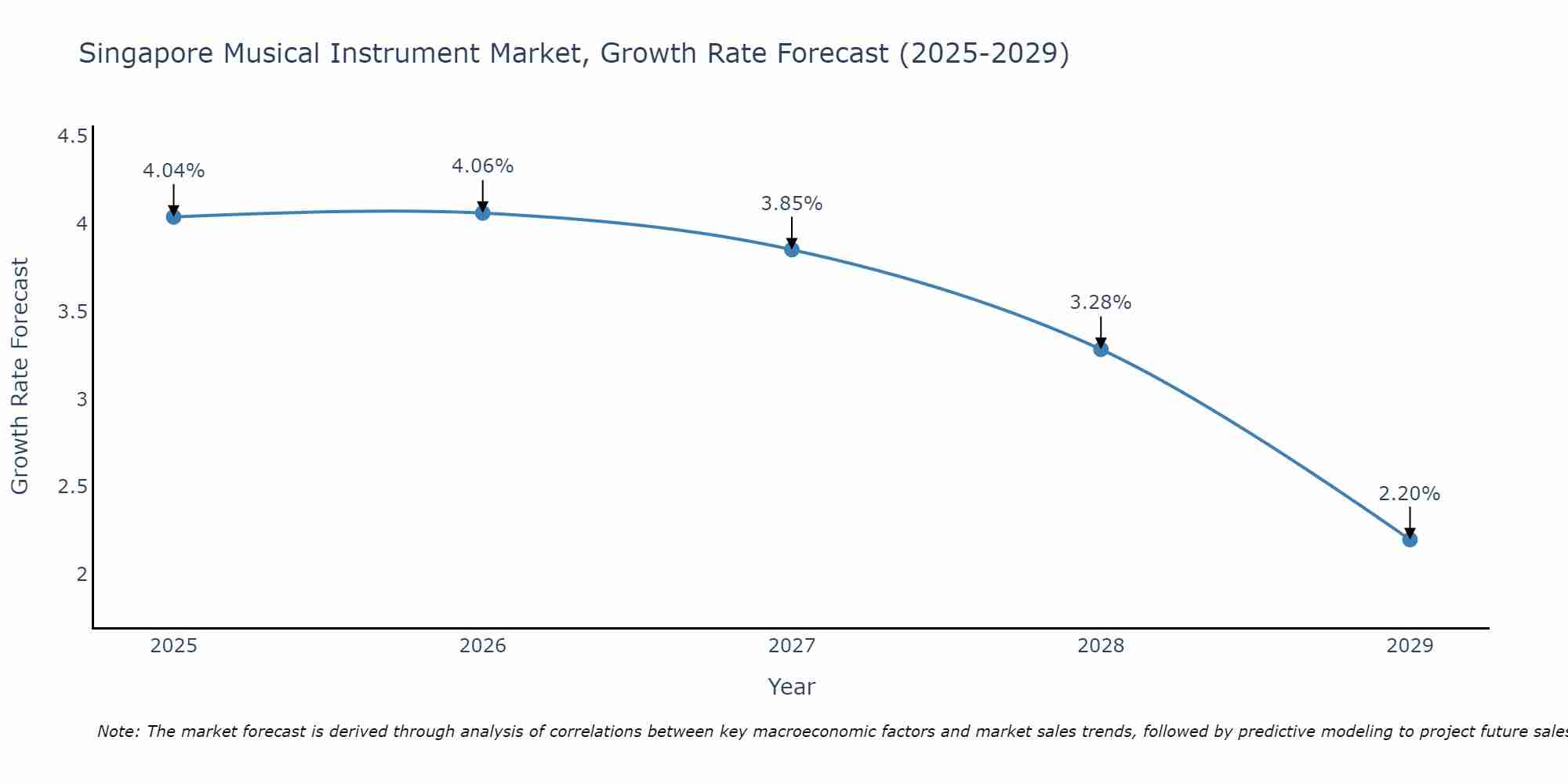
The Singapore Musical Instrument Market is projected to witness mixed growth rate patterns during 2025 to 2029. Growth accelerates to 4.06% in 2026, following an initial rate of 4.04%, before easing to 2.20% at the end of the period.
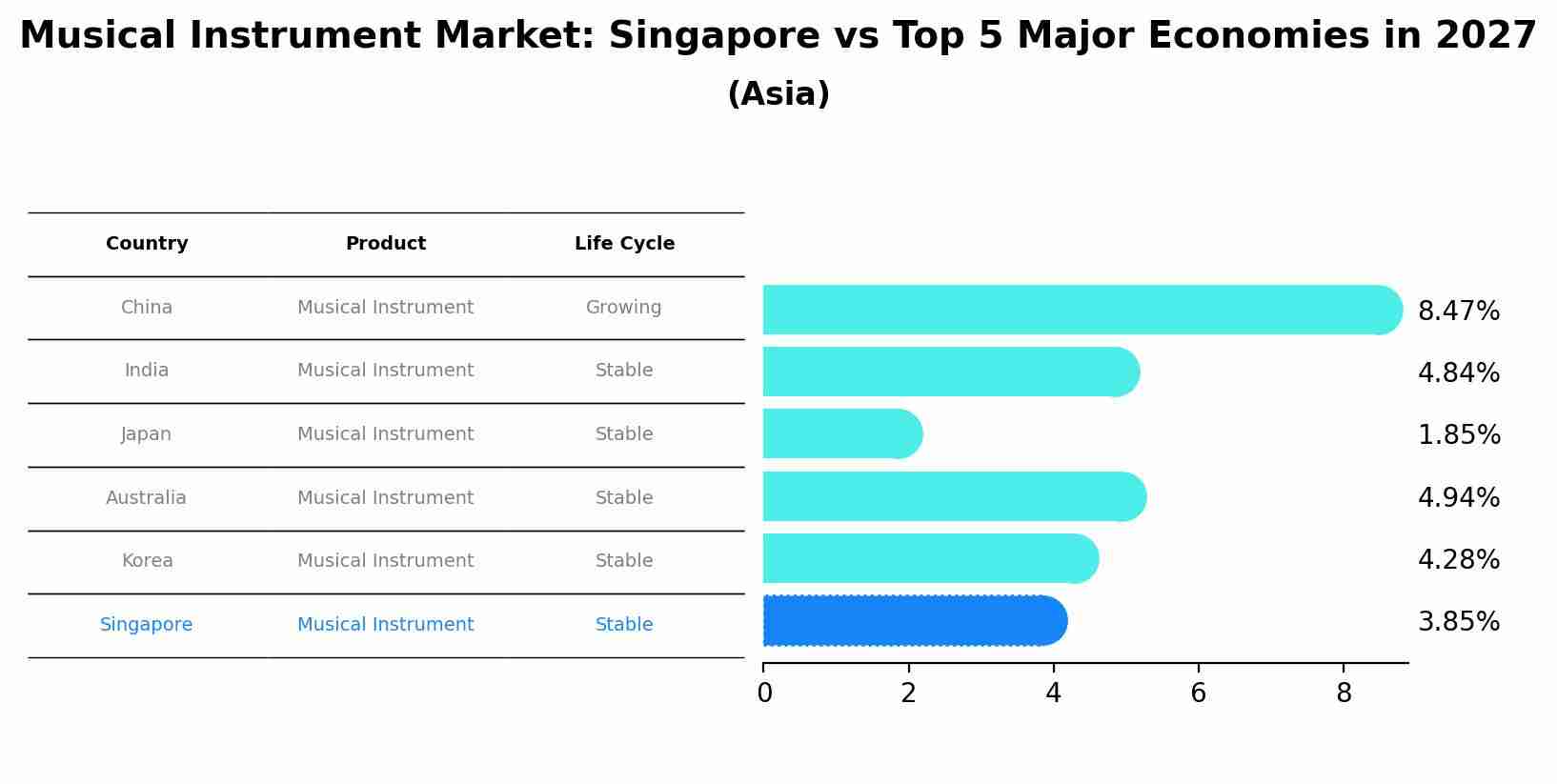
Musical Instrument Market: Singapore vs Top 5 Major Economies in 2027 (Asia)
By 2027, Singapore's Musical Instrument market is forecasted to achieve a stable growth rate of 3.85%, with China leading the Asia region, followed by India, Japan, Australia and South Korea.
Singapore Musical Instrument Market Synopsis
The Singapore Musical Instrument Market reflects the nation`s appreciation for music and the arts. This market encompasses a wide range of instruments, from traditional ones like pianos and violins to contemporary synthesizers and electronic instruments. The market is influenced by factors such as cultural events, education, and personal hobbies. Demand for high-quality instruments, music education, and live performances fuels the industry. Manufacturers and retailers continuously introduce innovative products and educational programs to cater to a diverse and discerning customer base.
Drivers of the Market
The Singapore musical instrument market is influenced by several factors. Firstly, the increasing interest in music education and the growing number of music schools and academies in the country drive the demand for musical instruments. Additionally, the entertainment industry, including live music performances and events, stimulates the need for high-quality instruments. Technological advancements in instrument manufacturing, such as digital and electronic innovations, are also boosting market growth. Moreover, Singapore reputation as a cultural hub further fuels the demand for a wide variety of musical instruments.
Challenges of the Market
The Singapore musical instrument market faces several challenges, including economic factors. During economic downturns, consumers may prioritize essential items over musical instruments, leading to decreased sales. Additionally, the market is highly competitive, with numerous global and local manufacturers vying for market share. This competition can put pressure on pricing and profit margins. Furthermore, the rise of digital technology and software-based music production tools presents a threat to traditional instrument sales.
COVID-19 Impact on the Market
The COVID-19 pandemic significantly impacted the Singapore musical instrument market. With lockdowns and social distancing measures in place, live music events and performances came to a halt, leading to a drop in demand for musical instruments. Retail stores faced challenges due to reduced foot traffic, while online sales saw a surge in demand. Many musicians and music enthusiasts turned to online learning and practicing, boosting the sales of digital instruments and accessories. However, the overall market experienced a downturn, and recovery has been gradual as restrictions eased.
Key Players in the Market
The Singapore musical instrument market is characterized by a mix of international and local manufacturers and retailers. Prominent players include well-known instrument brands with a history of craftsmanship and innovation. Additionally, local music stores and distributors also play a vital role in supplying a wide range of musical instruments to meet the demands of musicians and enthusiasts in Singapore.
Key Highlights of the Report:
- Singapore Musical Instrument Market Outlook
- Market Size of Singapore Musical Instrument Market, 2024
- Forecast of Singapore Musical Instrument Market, 2031
- Historical Data and Forecast of Singapore Musical Instrument Revenues & Volume for the Period 2021-2031
- Singapore Musical Instrument Market Trend Evolution
- Singapore Musical Instrument Market Drivers and Challenges
- Singapore Musical Instrument Price Trends
- Singapore Musical Instrument Porter's Five Forces
- Singapore Musical Instrument Industry Life Cycle
- Historical Data and Forecast of Singapore Musical Instrument Market Revenues & Volume By Product for the Period 2021-2031
- Historical Data and Forecast of Singapore Musical Instrument Market Revenues & Volume By String Instruments for the Period 2021-2031
- Historical Data and Forecast of Singapore Musical Instrument Market Revenues & Volume By Pianos And Keyboards for the Period 2021-2031
- Historical Data and Forecast of Singapore Musical Instrument Market Revenues & Volume By Drums And Percussion Instruments for the Period 2021-2031
- Historical Data and Forecast of Singapore Musical Instrument Market Revenues & Volume By Others for the Period 2021-2031
- Singapore Musical Instrument Import Export Trade Statistics
- Market Opportunity Assessment By Product
- Singapore Musical Instrument Top Companies Market Share
- Singapore Musical Instrument Competitive Benchmarking By Technical and Operational Parameters
- Singapore Musical Instrument Company Profiles
- Singapore Musical Instrument Key Strategic Recommendations






































