Chile Musical Instrument Market Growth Rate Analysis (2021-2031)
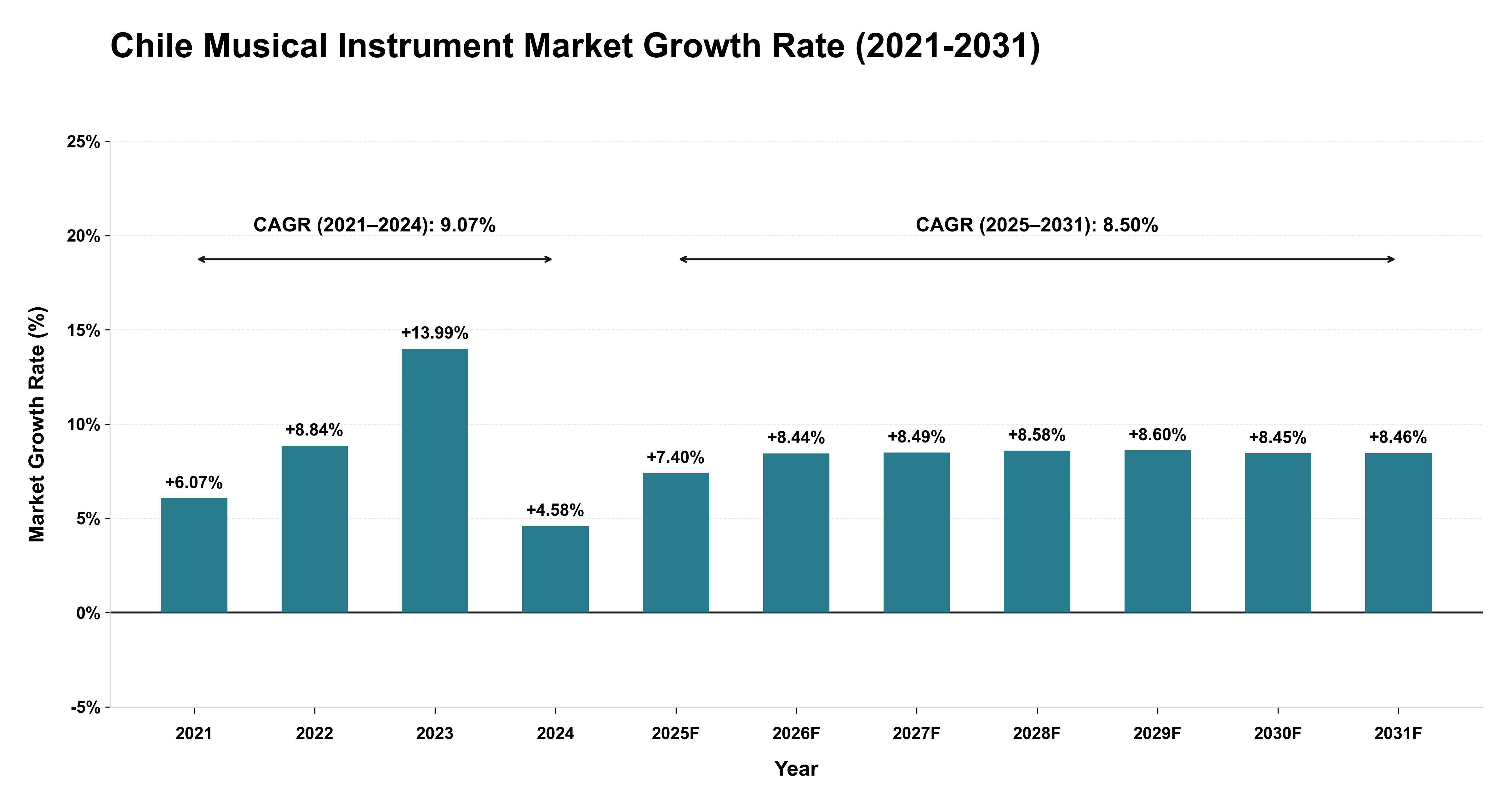
The Chilean musical instrument market exhibited a robust historical trend from 2021 to 2024, with a CAGR of 9.07%, driven by steady growth rates in those years, ranging from 6.07% to 13.99%. The market experienced a slight slowdown in 2024 with a growth rate of 4.58%, indicating a period of consolidation and adjustment. Looking ahead to the forecast period from 2025 to 2031, the market is expected to continue expanding at a slightly slower pace, with a projected CAGR of 8.50%. This stabilization follows the volatile growth seen in the previous years, as evidenced by the consistent growth rates ranging from 7.40% to 8.60% annually. Overall, the Chilean musical instrument market is poised for continued but more moderate growth, reflecting a maturing stage in its market development.
Chile Musical Instrument Market Overview
The musical instrument market in Chile encompasses a wide range of products, including guitars, pianos, drums, and wind instruments. Music education programs, cultural events, and consumer interest drive demand for musical instruments in Chile. With the increasing popularity of music streaming services and live performances, the market for musical instruments remains vibrant, supported by a diverse community of musicians and music enthusiasts.
Drivers of the market
The cultural significance of music and the growing interest in music education stimulate demand for musical instruments in Chile. With a vibrant music scene and a rising number of music schools and academies, there is sustained demand for a wide range of instruments, from guitars and pianos to wind and percussion instruments, driving market growth.
Challenges of the market
The musical instrument market in Chile faces challenges such as import regulations, tariffs, and currency fluctuations affecting the cost of imported instruments. Additionally, competition from international brands, consumer purchasing power, and shifts in music education programs influence market dynamics and consumer demand for musical instruments.
Government Policy of the market
Government policies promoting arts and culture, education, and trade impact the musical instrument market in Chile. Initiatives supporting music education in schools, import/export regulations for musical instruments, and cultural programs promoting local music production shape the market landscape and ensure accessibility and diversity in musical instrument availability.
Key Highlights of the Report:
- Chile Musical Instrument Market Outlook
- Market Size of Chile Musical Instrument Market, 2024
- Forecast of Chile Musical Instrument Market, 2031
- Historical Data and Forecast of Chile Musical Instrument Revenues & Volume for the Period 2018 - 2031
- Chile Musical Instrument Market Trend Evolution
- Chile Musical Instrument Market Drivers and Challenges
- Chile Musical Instrument Price Trends
- Chile Musical Instrument Porter's Five Forces
- Chile Musical Instrument Industry Life Cycle
- Historical Data and Forecast of Chile Musical Instrument Market Revenues & Volume By Product for the Period 2018 - 2031
- Historical Data and Forecast of Chile Musical Instrument Market Revenues & Volume By String Instruments for the Period 2018 - 2031
- Historical Data and Forecast of Chile Musical Instrument Market Revenues & Volume By Pianos And Keyboards for the Period 2018 - 2031
- Historical Data and Forecast of Chile Musical Instrument Market Revenues & Volume By Drums And Percussion Instruments for the Period 2018 - 2031
- Historical Data and Forecast of Chile Musical Instrument Market Revenues & Volume By Others for the Period 2018 - 2031
- Chile Musical Instrument Import Export Trade Statistics
- Market Opportunity Assessment By Product
- Chile Musical Instrument Top Companies Market Share
- Chile Musical Instrument Competitive Benchmarking By Technical and Operational Parameters
- Chile Musical Instrument Company Profiles
- Chile Musical Instrument Key Strategic Recommendations






































