Singapore Oil and Gas Pipeline Market: Import Trend Analysis
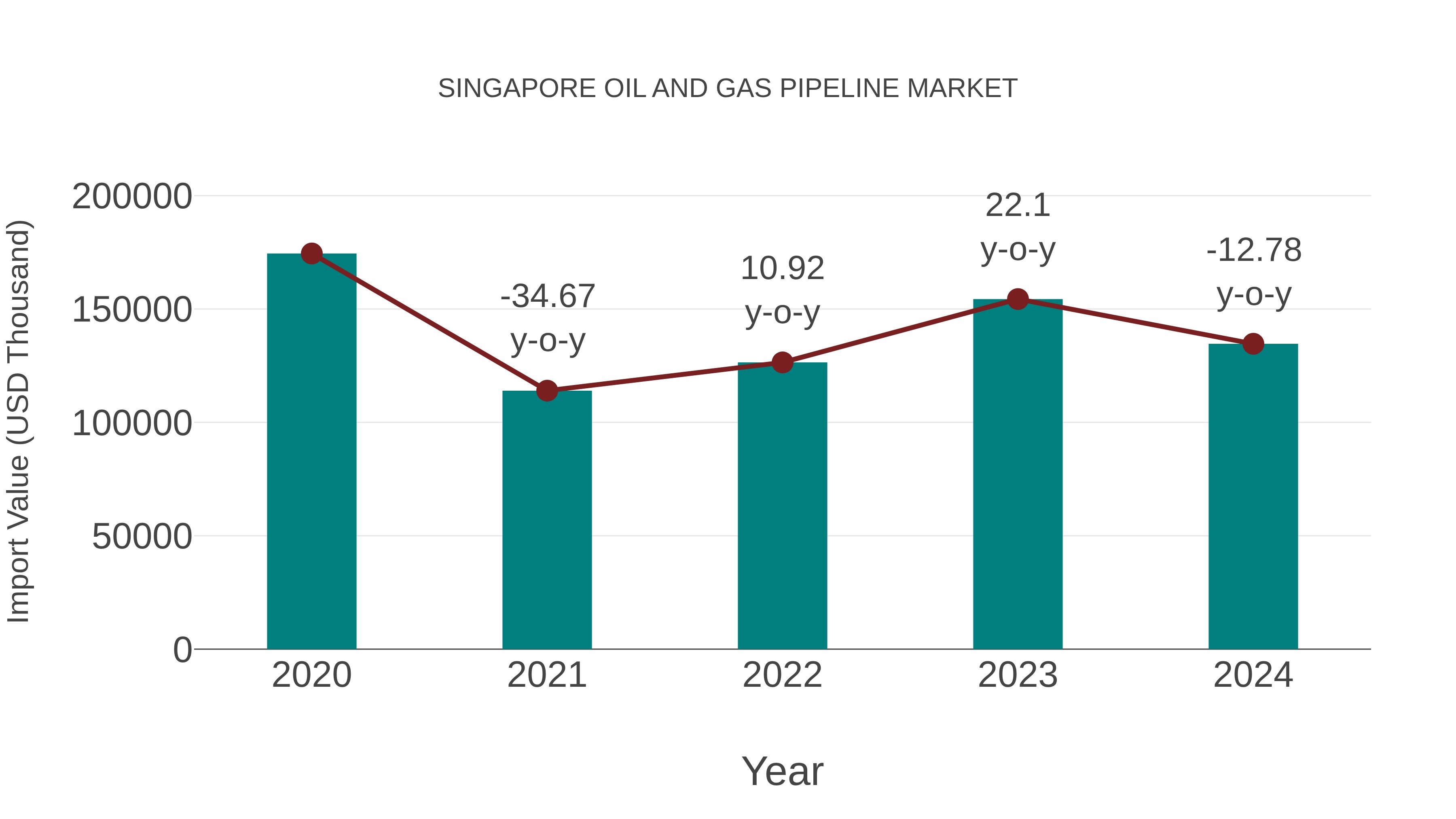
In 2024, Singapore`s oil and gas pipeline market witnessed a steady increase in imports. The country`s reliance on imported pipelines for its energy infrastructure highlights the significance of international trade in meeting domestic demand.
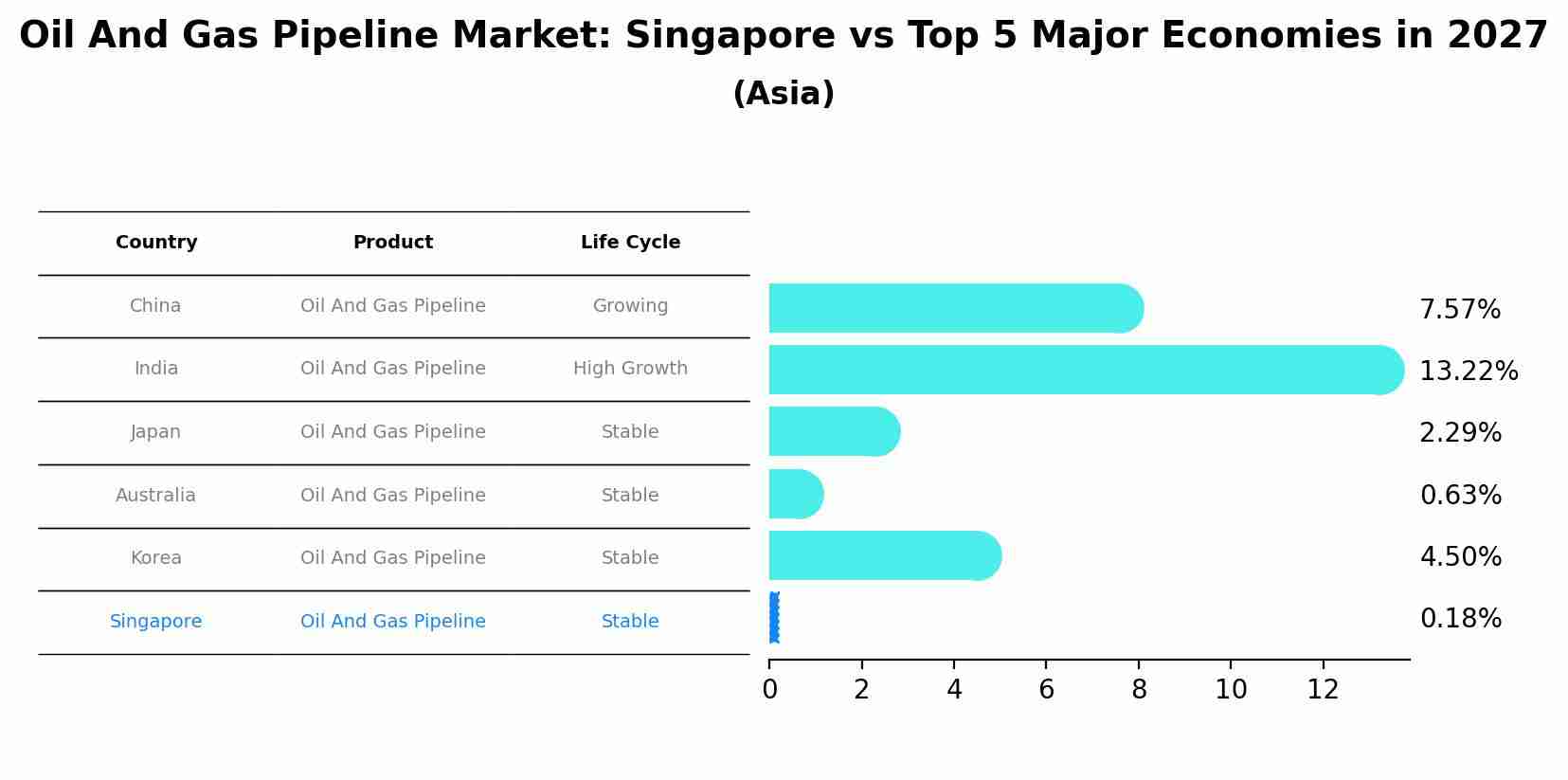
Oil And Gas Pipeline Market: Singapore vs Top 5 Major Economies in 2027 (Asia)
By 2027, Singapore's Oil And Gas Pipeline market is forecasted to achieve a stable growth rate of 0.18%, with China leading the Asia region, followed by India, Japan, Australia and South Korea.
Singapore Oil and Gas Pipeline Market Synopsis
The oil and gas pipeline market in Singapore is expected to experience growth as the energy sector continues to invest in pipeline infrastructure for the transportation and distribution of oil and gas products. Oil and gas pipelines are vital for energy supply networks. The market`s expansion is driven by energy demand and the need for efficient pipeline systems.
Drivers of the Market
The growth of the Singapore oil and gas pipeline market is influenced by factors such as energy infrastructure, petrochemical industries, and offshore drilling. Oil and gas pipelines are vital for transporting petroleum products, natural gas, and other energy resources. Growth drivers include the demand for pipeline networks for energy distribution, the development of offshore oil and gas reserves, and applications in the petrochemical, energy, and marine sectors. As energy demands continue to rise, the oil and gas pipeline market is poised for growth, providing essential infrastructure for the energy industry.
Challenges of the Market
The oil and gas pipeline market in Singapore encounters challenges concerning energy demand fluctuations and global competition. The market is influenced by oil and gas demand and pricing trends, making it susceptible to economic fluctuations. Moreover, competing with international pipeline suppliers while maintaining quality and cost competitiveness is essential for market sustainability.
COVID-19 Impact on the Market
The oil and gas pipeline market in Singapore faced challenges during the COVID-19 pandemic. With fluctuations in energy demand and global oil prices, the market experienced disruptions. However, there was sustained interest in pipeline infrastructure for energy transport. Manufacturers adapted by offering advanced and corrosion-resistant pipeline solutions. The pandemic emphasized the need for efficient and reliable pipeline systems in energy distribution, influencing market strategies.
Key Players in the Market
Prominent companies in the Singapore oil and gas pipeline market, including TechnipFMC plc, Saipem S.p.A., and McDermott International, Inc., specialize in the engineering, construction, and installation of oil and gas pipelines for offshore and onshore projects. Their expertise in pipeline technology and energy sector solutions establishes their strong market presence.
Key Highlights of the Report:
- Singapore Oil And Gas Pipeline Market Outlook
- Market Size of Singapore Oil And Gas Pipeline Market, 2025
- Forecast of Singapore Oil And Gas Pipeline Market, 2032
- Historical Data and Forecast of Singapore Oil And Gas Pipeline Revenues & Volume for the Period 2022-2032F
- Singapore Oil And Gas Pipeline Market Trend Evolution
- Singapore Oil And Gas Pipeline Market Drivers and Challenges
- Singapore Oil And Gas Pipeline Price Trends
- Singapore Oil And Gas Pipeline Porter's Five Forces
- Singapore Oil And Gas Pipeline Industry Life Cycle
- Historical Data and Forecast of Singapore Oil And Gas Pipeline Market Revenues & Volume By Location of Deployment for the Period 2022-2032F
- Historical Data and Forecast of Singapore Oil And Gas Pipeline Market Revenues & Volume By Onshore for the Period 2022-2032F
- Historical Data and Forecast of Singapore Oil And Gas Pipeline Market Revenues & Volume By Offshore for the Period 2022-2032F
- Historical Data and Forecast of Singapore Oil And Gas Pipeline Market Revenues & Volume By Type for the Period 2022-2032F
- Historical Data and Forecast of Singapore Oil And Gas Pipeline Market Revenues & Volume By Crude Oil Pipeline for the Period 2022-2032F
- Historical Data and Forecast of Singapore Oil And Gas Pipeline Market Revenues & Volume By Gas Pipeline for the Period 2022-2032F
- Singapore Oil And Gas Pipeline Import Export Trade Statistics
- Market Opportunity Assessment By Location of Deployment
- Market Opportunity Assessment By Type
- Singapore Oil And Gas Pipeline Top Companies Market Share
- Singapore Oil And Gas Pipeline Competitive Benchmarking By Technical and Operational Parameters
- Singapore Oil And Gas Pipeline Company Profiles
- Singapore Oil And Gas Pipeline Key Strategic Recommendations






































