Singapore Washable Markers Market: Import Trend Analysis
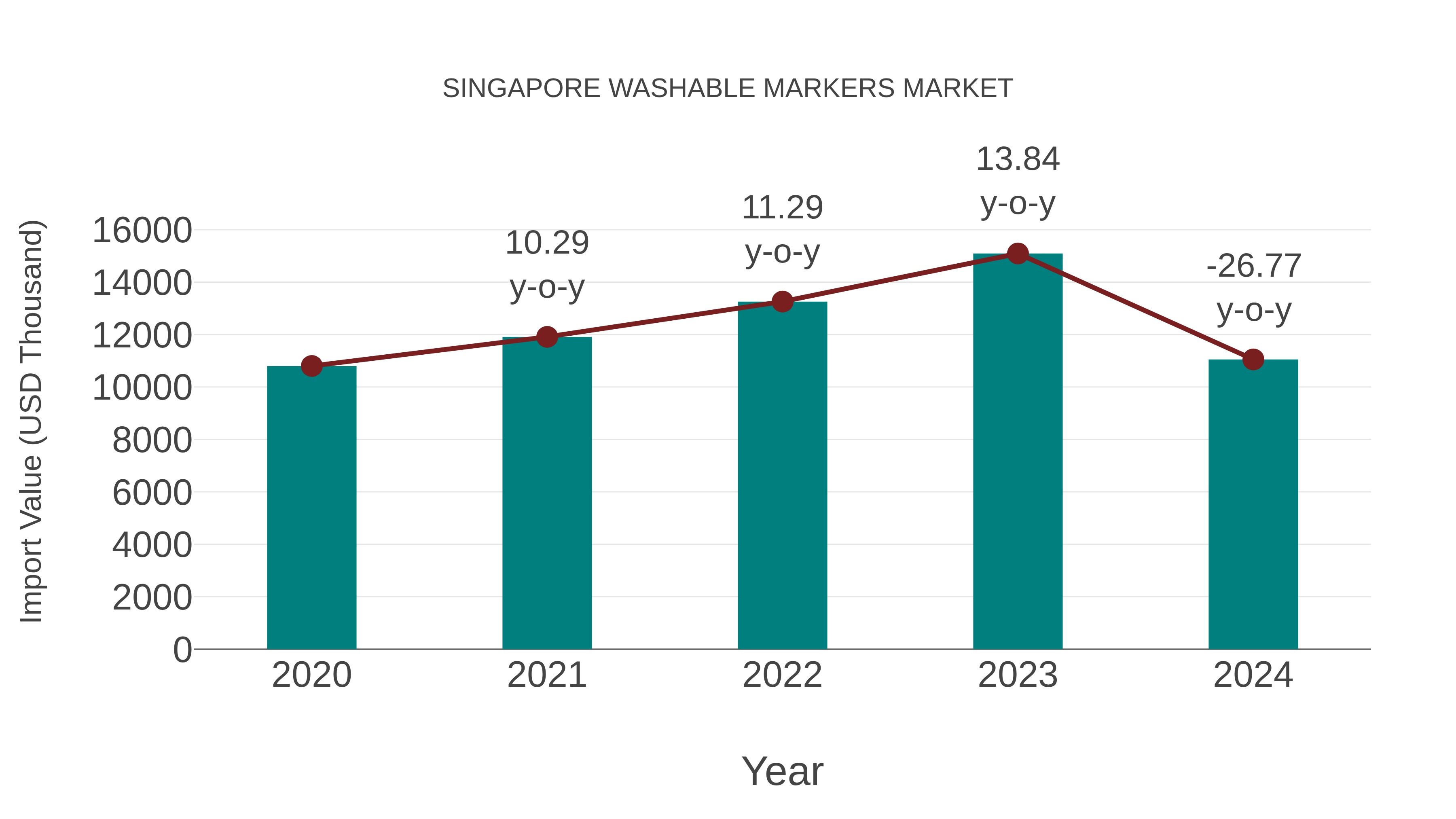
In 2024, Singapore`s import of washable markers experienced a steady increase, driven by rising demand for quality art supplies. Increased consumer interest in creative activities contributed to the growth of the Singapore washable markers market during that period.
Singapore Washable Markers Market Synopsis
The washable markers market in Singapore is poised for steady growth in the forecast period. These markers are popular among children, students, and artists for their convenience and ease of use. The education sector`s expansion and the growing interest in arts and crafts contribute to the market`s positive outlook. The use of washable markers also aligns with the emphasis on environmentally friendly products, which resonates with conscious consumers. Product innovation, including markers with improved washability and non-toxic formulations, is expected to drive market growth as manufacturers cater to evolving customer demands.
Drivers of the Market
The washable markers market in Singapore is thriving due to its relevance in the education sector and the increasing emphasis on child safety and convenience. Parents and educators prefer washable markers for children as they are easy to clean and non-toxic, addressing concerns about accidental ingestion. The markers are widely used in schools, art classes, and for creative activities at home. Additionally, with the trend of adult coloring books and creative hobbies gaining popularity, the market has expanded to cater to a wider age group. The convenience of washable markers aligns with the busy lifestyles of many Singapore, further fueling market growth.
Challenges of the Market
One of the challenges in the Singapore washable markers market is the growing popularity of digital alternatives for drawing and coloring among children. As technology advances, traditional art supplies face competition from digital apps and devices. Moreover, ensuring that washable markers are truly washable without causing stains can be a challenge, as unsatisfactory product performance can damage a brand`s reputation.
COVID-19 Impact on the Market
The Singapore Washable Markers market faced both positive and negative consequences during the pandemic. While the closure of schools and offices led to decreased institutional demand, the increase in remote learning and home-based work contributed to a rise in demand for art supplies, including washable markers. Manufacturers also introduced safety-focused marketing to highlight the washable nature of their products, which resonated with health-conscious consumers.
Key Players in the Market
In the Singapore washable markers market, renowned brands like Crayola and Faber-Castell are prominent. They produce washable markers suitable for art and educational purposes.
Key Highlights of the Report:
- Singapore Washable Markers Market Outlook
- Market Size of Singapore Washable Markers Market, 2025
- Forecast of Singapore Washable Markers Market, 2032
- Historical Data and Forecast of Singapore Washable Markers Revenues & Volume for the Period 2022-2032F
- Singapore Washable Markers Market Trend Evolution
- Singapore Washable Markers Market Drivers and Challenges
- Singapore Washable Markers Price Trends
- Singapore Washable Markers Porter's Five Forces
- Singapore Washable Markers Industry Life Cycle
- Historical Data and Forecast of Singapore Washable Markers Market Revenues & Volume By Washability for the Period 2022-2032F
- Historical Data and Forecast of Singapore Washable Markers Market Revenues & Volume By Basic- Washable for the Period 2022-2032F
- Historical Data and Forecast of Singapore Washable Markers Market Revenues & Volume By Super-washable for the Period 2022-2032F
- Historical Data and Forecast of Singapore Washable Markers Market Revenues & Volume By End User for the Period 2022-2032F
- Historical Data and Forecast of Singapore Washable Markers Market Revenues & Volume By Children for the Period 2022-2032F
- Historical Data and Forecast of Singapore Washable Markers Market Revenues & Volume By Professionals for the Period 2022-2032F
- Singapore Washable Markers Import Export Trade Statistics
- Market Opportunity Assessment By Washability
- Market Opportunity Assessment By End User
- Singapore Washable Markers Top Companies Market Share
- Singapore Washable Markers Competitive Benchmarking By Technical and Operational Parameters
- Singapore Washable Markers Company Profiles
- Singapore Washable Markers Key Strategic Recommendations






































