Slovakia Bread Market Size (2020-2030)
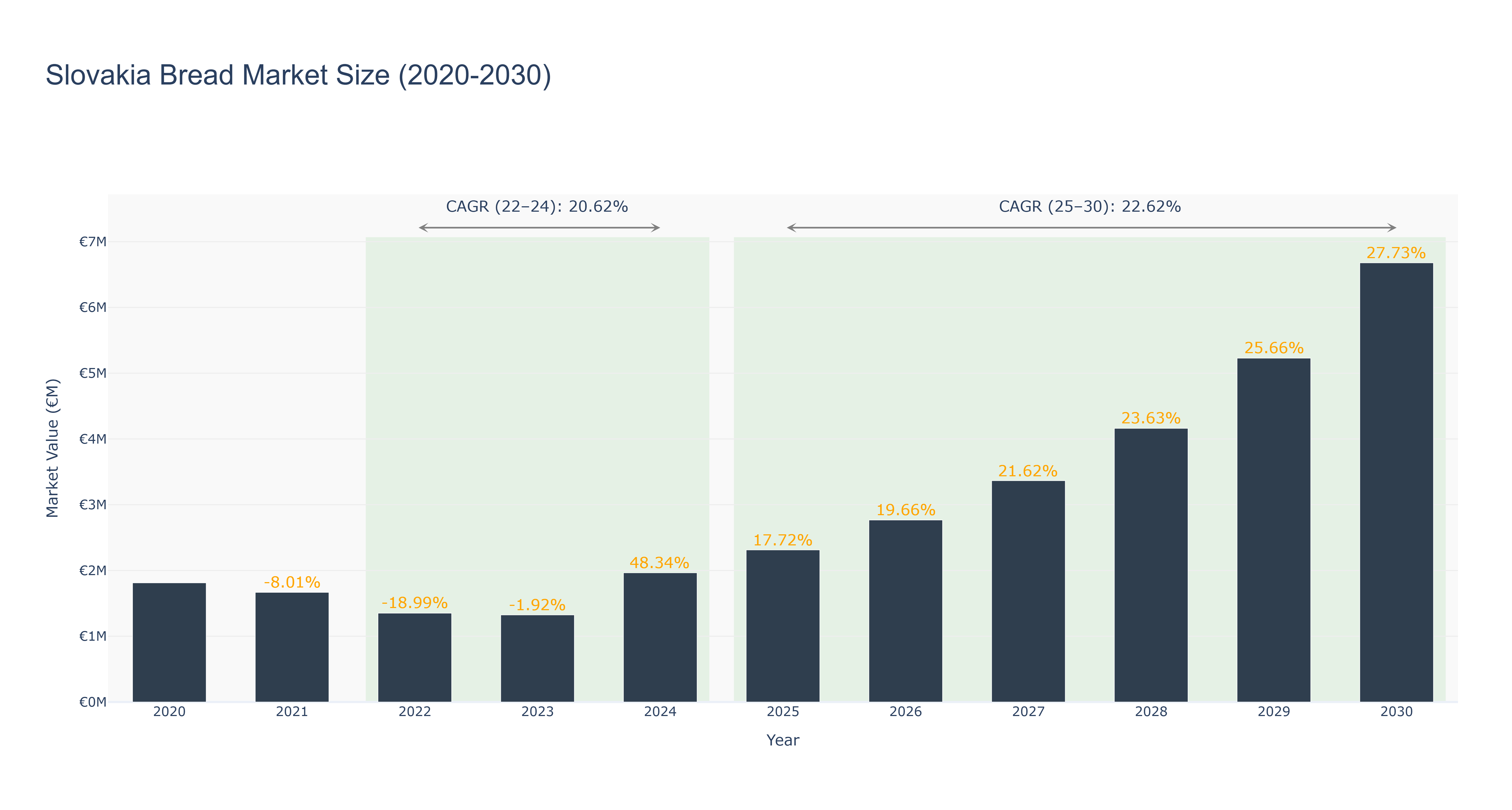
Slovakia Bread Market has shown a fluctuating trend over the past decade. The peak market size of €6.68 million is projected for 2030, with a steady growth trajectory. From 2020 to 2024, the market size ranged from €1.81 million to €1.96 million, experiencing a notable 48.34% growth in 2024. The market then saw a substantial increase in size, reaching €2.31 million in 2025, with a consistent upward trend forecasted until 2030. The CAGR for the period 2022-24 was 20.62%, and from 2025-30 it is expected to be 22.62%. The market's growth can be attributed to changing consumer preferences towards healthier bread options and an increasing focus on convenience foods. Looking ahead, Slovakia is set to witness a rise in artisanal bakeries and innovative bread products to cater to evolving consumer demands.
Slovakia Bread Market: Production & Trade Performance (2019-2025)
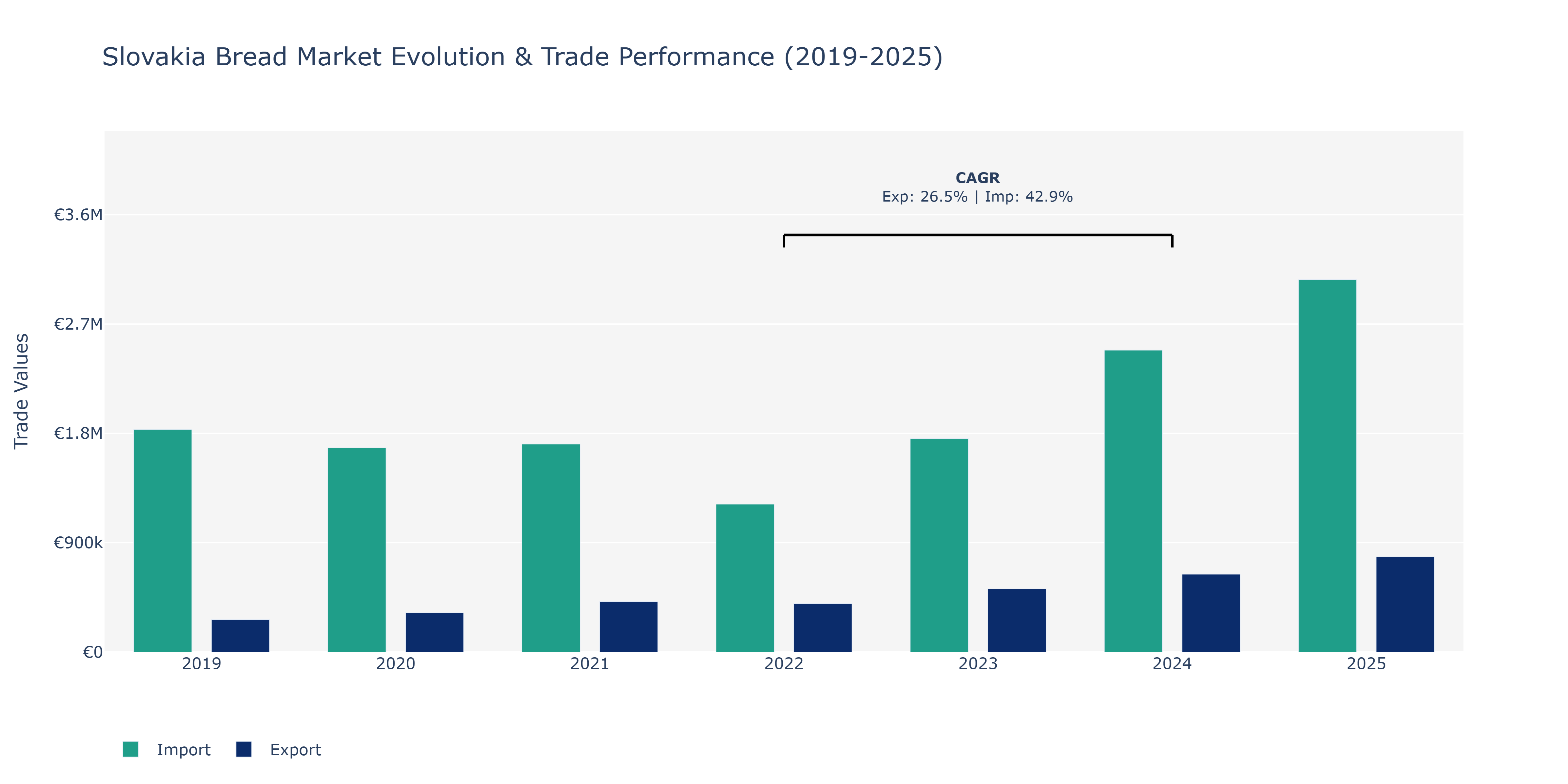
In the Slovakia Bread Market, exports saw consistent growth from 2019 to 2025, increasing from €268.24 thousand to €783.75 thousand. The peak point observed in 2025 reflects a significant uptrend in Export value, possibly driven by enhanced product quality, diversification of product range, and effective marketing strategies. Conversely, imports fluctuated during the same period, reaching €3.07 million in 2025 after a decline in 2022. This erratic pattern may be influenced by changes in domestic consumption patterns, currency exchange rates, and global market dynamics impacting procurement decisions. The substantial increase in imports in 2025 could be attributed to the demand for specialized ingredients or equipment not readily available domestically. The notable CAGR for imports from 2022 to 2024 at 42.86% suggests a strategic shift in sourcing practices or increased demand for foreign goods. Continued monitoring of consumer preferences and international trade policies is crucial for stakeholders in navigating the evolving landscape of the Slovakia Bread Market.
Slovakia Bread Market Synopsis
The bread market in Slovakia is estimated to be worth around ?1 billion. The majority of the market share is held by large industrial bakeries, which produce a wide variety of types of breads and bakery products such as rolls, pastries and cakes. Smaller artisanal bakeries are gaining traction due to an increased focus on organic and health-conscious foods.
In terms of consumption, white or wheat-based breads remain the most popular type consumed in Slovakia with demand for rye-based varieties increasing steadily. Other specialty options like gluten free, vegan, or sourdough also have growing popularity among consumers. Packaged breads tend to dominate sales across all segments while fresh baked goods are mainly found in local stores or specialized outlets.
Price competition has been driving prices down over the last few years as supermarkets drive discounts in order to attract customers and retain market share. Additionally, convenience trends have led more people towards purchasing pre-packaged sliced ?bread rather than whole loaves at local bakeries due to its easier preparation time and shelf life extension features???.
Key Highlights of the Report:
- Slovakia Bread Market Outlook
- Market Size of Slovakia Bread Market, 2019
- Forecast of Slovakia Bread Market, 2026
- Historical Data and Forecast of Slovakia Bread Revenues & Volume for the Period 2016 - 2026
- Slovakia Bread Market Trend Evolution
- Slovakia Bread Market Drivers and Challenges
- Slovakia Bread Price Trends
- Slovakia Bread Porter's Five Forces
- Slovakia Bread Industry Life Cycle
- Historical Data and Forecast of Slovakia Bread Market Revenues & Volume By Loaves for the Period 2016 - 2026
- Historical Data and Forecast of Slovakia Bread Market Revenues & Volume By Baguettes for the Period 2016 - 2026
- Historical Data and Forecast of Slovakia Bread Market Revenues & Volume By Rolls for the Period 2016 - 2026
- Historical Data and Forecast of Slovakia Bread Market Revenues & Volume By Burger Buns for the Period 2016 - 2026
- Historical Data and Forecast of Slovakia Bread Market Revenues & Volume By Ciabatta for the Period 2016 - 2026
- Historical Data and Forecast of Slovakia Bread Market Revenues & Volume By Others for the Period 2016 - 2026
- Historical Data and Forecast of Slovakia Bread Market Revenues & Volume By Convenience Stores for the Period 2016 - 2026
- Historical Data and Forecast of Slovakia Bread Market Revenues & Volume By Specialist Retailers for the Period 2016 - 2026
- Historical Data and Forecast of Slovakia Bread Market Revenues & Volume By Supermarkets and Hypermarkets for the Period 2016 - 2026
- Historical Data and Forecast of Slovakia Bread Market Revenues & Volume By Online Retail for the Period 2016 - 2026
- Historical Data and Forecast of Slovakia Bread Market Revenues & Volume By Variety Stores for the Period 2016 - 2026
- Historical Data and Forecast of Slovakia Bread Market Revenues & Volume By Others for the Period 2016 - 2026
- Slovakia Bread Import Export Trade Statistics
- Market Opportunity Assessment By Loaves
- Market Opportunity Assessment By Convenience Stores
- Slovakia Bread Top Companies Market Share
- Slovakia Bread Competitive Benchmarking By Technical and Operational Parameters
- Slovakia Bread Company Profiles
- Slovakia Bread Key Strategic Recommendations






































