Slovakia Inorganic Chemicals Market Size (2020-2030)
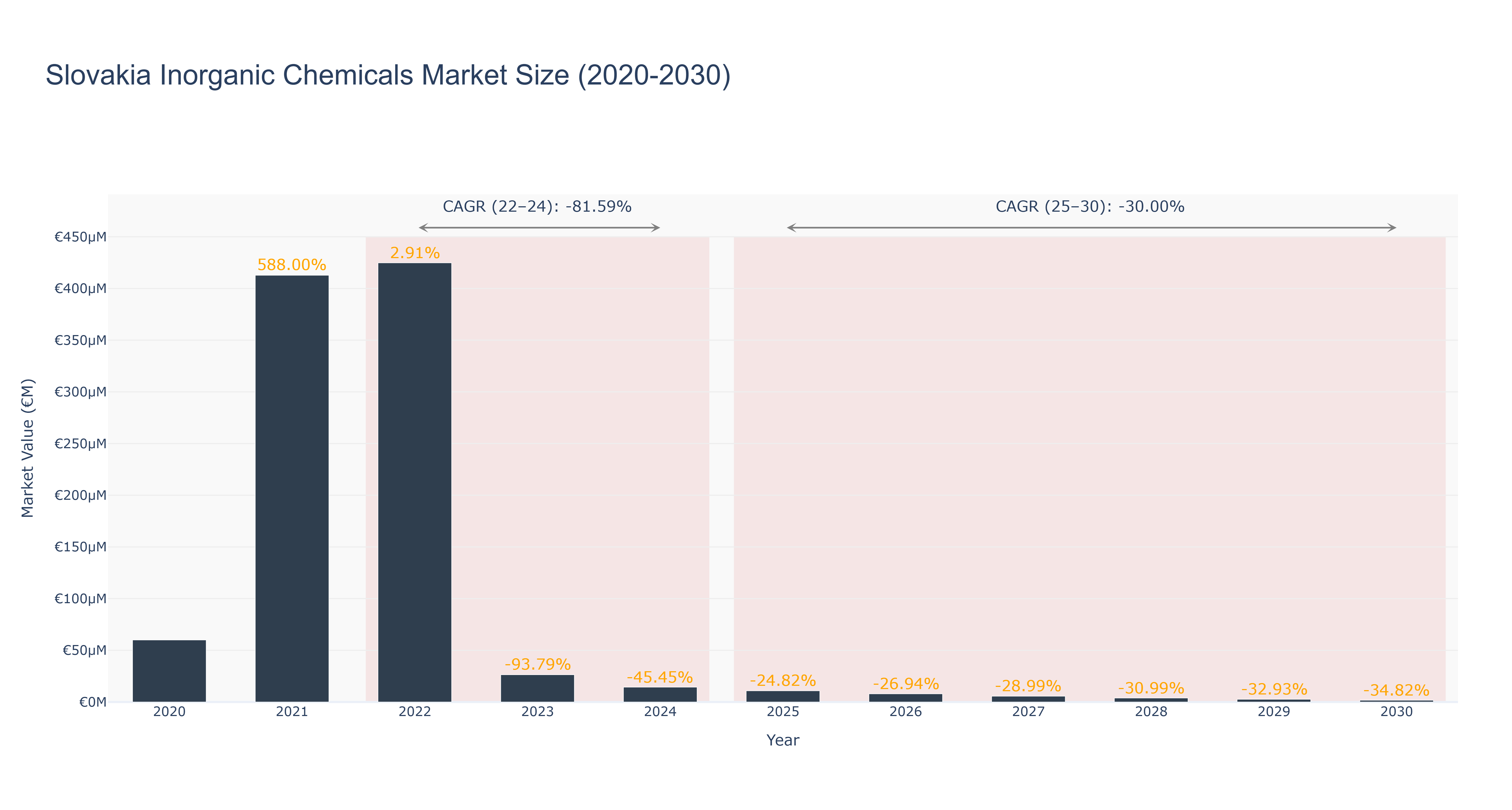
The Slovakia Inorganic Chemicals Market has experienced a dramatic decline following a peak in 2021, where the market size surged to €412.80 million, reflecting an extraordinary growth rate of 588.00%. However, actual market sizes plummeted to €26.40 million in 2023 and further decreased to €14.40 million in 2024, resulting in a compounded annual growth rate (CAGR) of -81.59% from 2022 to 2024. The forecasted period from 2025 to 2030 indicates continued contraction, with projected market sizes dwindling to €1.69 million by 2030, reflecting a CAGR of -30.00%. This decline can be attributed to factors such as reduced demand, increased competition, and potential regulatory challenges impacting production. Without significant investment or innovation in the sector, the outlook remains bleak, as macroeconomic pressures and shifts in consumer preferences continue to shape the market dynamics.
Slovakia Inorganic Chemicals Market: Production & Trade Performance (2019-2025)
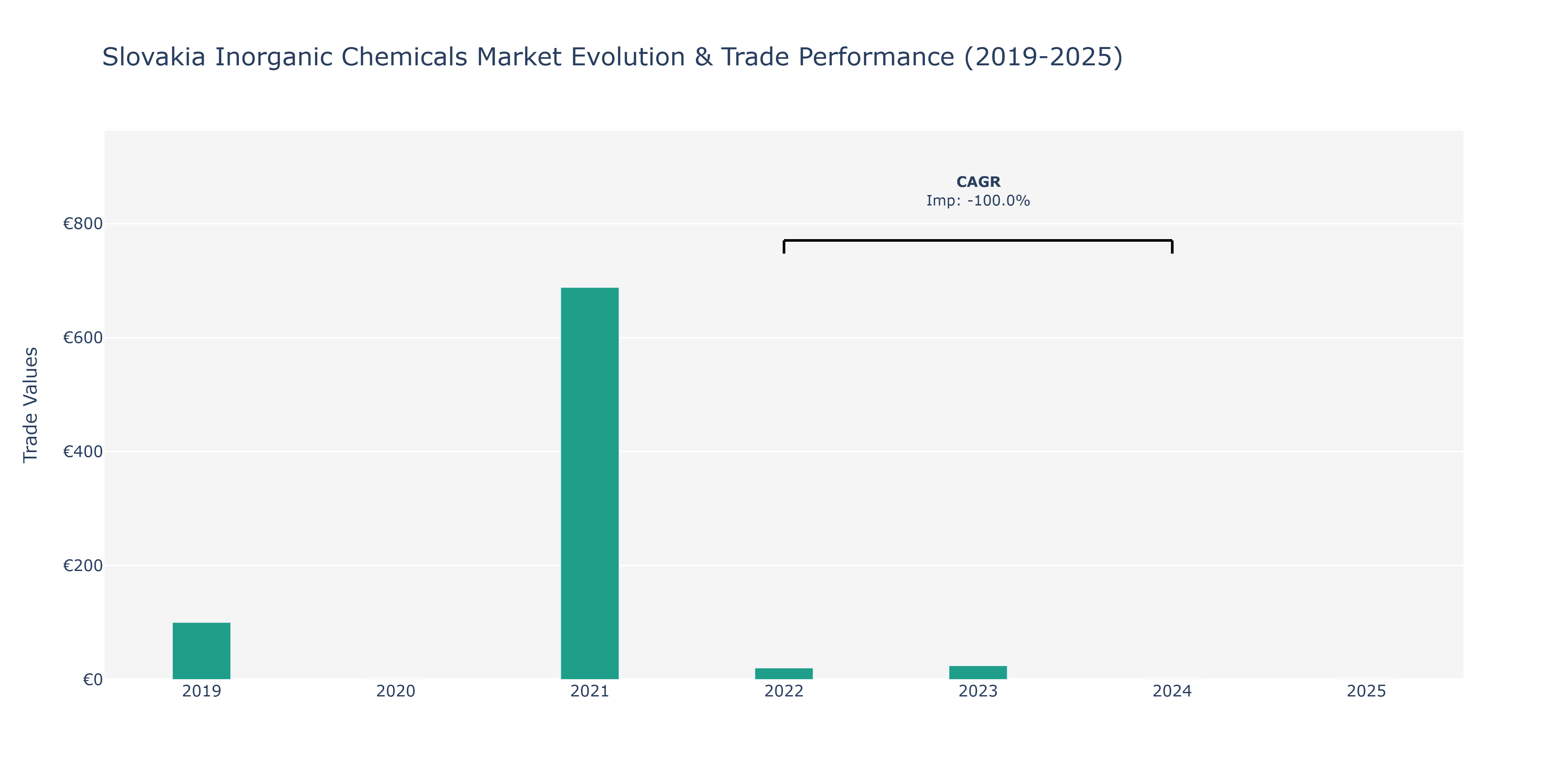
Between 2019 and 2021, imports of inorganic chemicals in Slovakia surged from €100 million to €688 million, marking a substantial increase. However, a sharp decline was observed in 2022, dropping to €20 million. This significant decrease could be attributed to various factors such as changes in regulatory policies, fluctuating demand from key industries, or disruptions in the global supply chain affecting import volumes. In 2023, imports slightly recovered to €24 million, indicating a possible stabilization in the market. The drastic fluctuations in import values highlight the market's sensitivity to external factors and the need for businesses to adapt quickly to changing conditions. With such volatility, stakeholders in the Slovakia Inorganic Chemicals Market must stay agile and closely monitor market dynamics to mitigate risks and capitalize on emerging opportunities.
Key Highlights of the Report:
- Slovakia Inorganic Chemicals Market Outlook
- Market Size of Slovakia Inorganic Chemicals Market, 2025
- Forecast of Slovakia Inorganic Chemicals Market, 2032
- Historical Data and Forecast of Slovakia Inorganic Chemicals Revenues & Volume for the Period 2022 - 2032F
- Slovakia Inorganic Chemicals Market Trend Evolution
- Slovakia Inorganic Chemicals Market Drivers and Challenges
- Slovakia Inorganic Chemicals Price Trends
- Slovakia Inorganic Chemicals Porter's Five Forces
- Slovakia Inorganic Chemicals Industry Life Cycle
- Historical Data and Forecast of Slovakia Inorganic Chemicals Market Revenues & Volume By Type for the Period 2022 - 2032F
- Historical Data and Forecast of Slovakia Inorganic Chemicals Market Revenues & Volume By Ammonia for the Period 2022 - 2032F
- Historical Data and Forecast of Slovakia Inorganic Chemicals Market Revenues & Volume By Chlor alkali for the Period 2022 - 2032F
- Historical Data and Forecast of Slovakia Inorganic Chemicals Market Revenues & Volume By Ammonium nitrate for the Period 2022 - 2032F
- Historical Data and Forecast of Slovakia Inorganic Chemicals Market Revenues & Volume By Ammonium sulfate for the Period 2022 - 2032F
- Historical Data and Forecast of Slovakia Inorganic Chemicals Market Revenues & Volume By Inorganic acid for the Period 2022 - 2032F
- Historical Data and Forecast of Slovakia Inorganic Chemicals Market Revenues & Volume By Sodium hydroxide for the Period 2022 - 2032F
- Historical Data and Forecast of Slovakia Inorganic Chemicals Market Revenues & Volume By Hydrogen peroxide for the Period 2022 - 2032F
- Historical Data and Forecast of Slovakia Ammonia Inorganic Chemicals Market Revenues & Volume By Oxygen for the Period 2022 - 2032F
- Slovakia Inorganic Chemicals Import Export Trade Statistics
- Market Opportunity Assessment By Type
- Slovakia Inorganic Chemicals Top Companies Market Share
- Slovakia Inorganic Chemicals Competitive Benchmarking By Technical and Operational Parameters
- Slovakia Inorganic Chemicals Company Profiles
- Slovakia Inorganic Chemicals Key Strategic Recommendations






































