Slovakia Musical Instrument Market Top 5 Importing Countries and Market Competition (HHI) Analysis
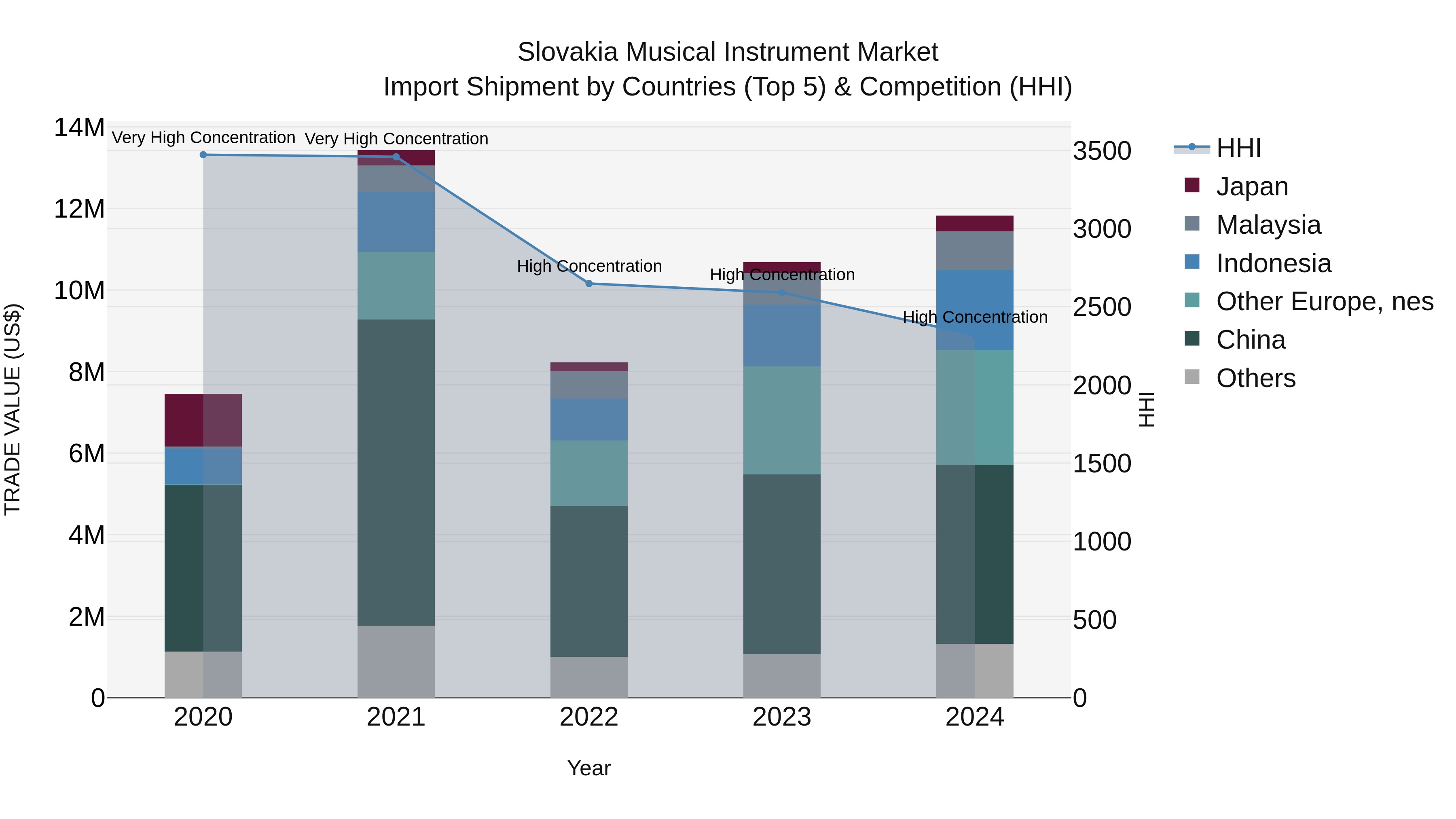
In 2024, Slovakia continued to see significant imports of musical instruments, with top exporting countries including China, Other Europe, Indonesia, and Malaysia. The high Herfindahl-Hirschman Index (HHI) indicates a concentrated Market Top 5 Importing Countries and Market Competition (HHI) Analysis, while the strong Compound Annual Growth Rate (CAGR) of 12.23% from 2020 to 2024 demonstrates sustained growth. The impressive growth rate of 10.71% from 2023 to 2024 suggests continued momentum in the Slovakian musical instrument import Market Top 5 Importing Countries and Market Competition (HHI) Analysis, potentially driven by evolving consumer preferences and increasing demand for a variety of musical instruments.
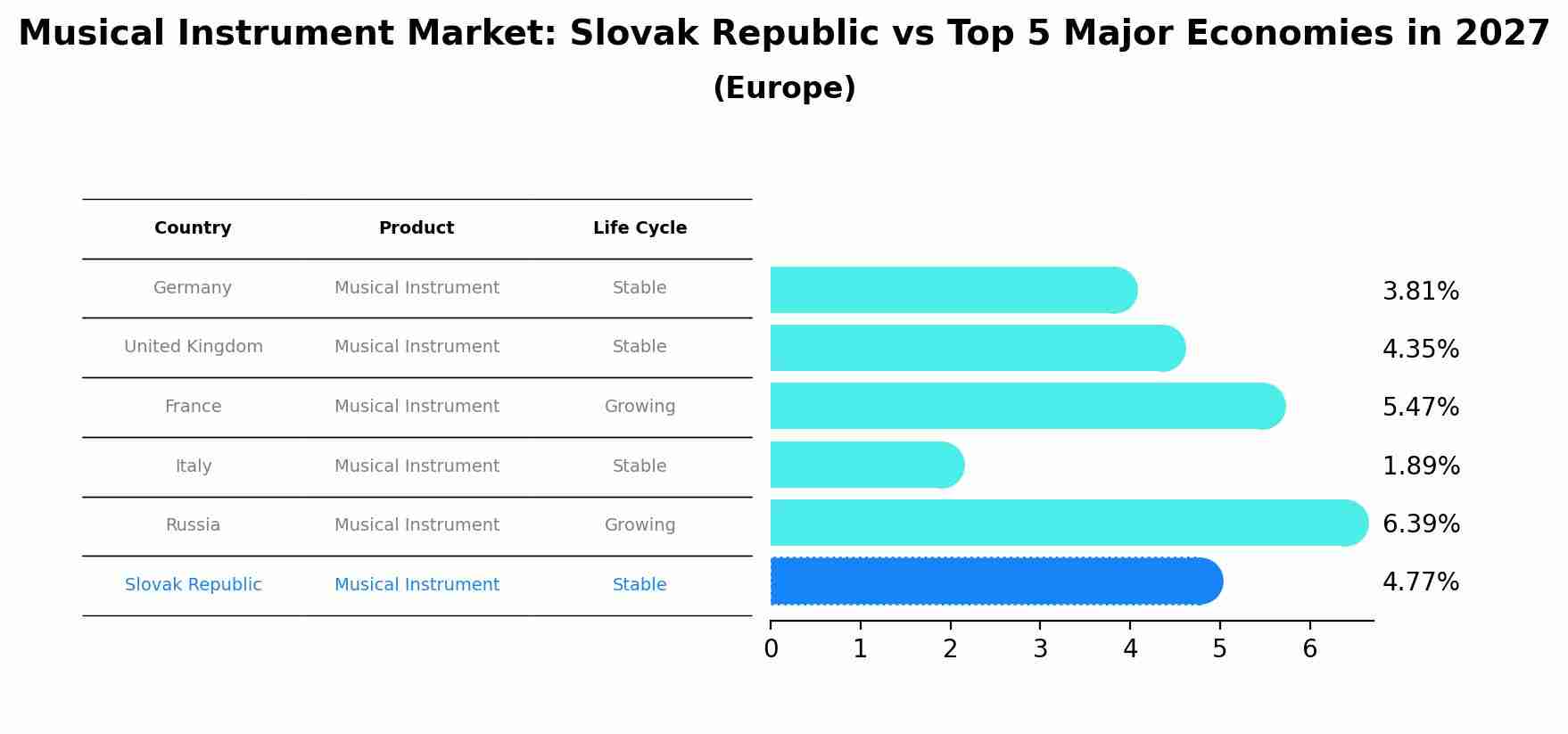
Musical Instrument Market: Slovak Republic vs Top 5 Major Economies in 2027 (Europe)
In the Europe region, the Musical Instrument market in Slovak Republic is projected to expand at a stable growth rate of 4.77% by 2027. The largest economy is Germany, followed by United Kingdom, France, Italy and Russia.
Slovakia Musical Instrument Market Synopsis
The Slovakia Musical Instrument Market is a dynamic and growing industry that caters to a diverse range of musicians and enthusiasts. Key players in the market include retailers, distributors, and manufacturers offering a wide variety of musical instruments such as guitars, pianos, drums, and wind instruments. The market is driven by factors such as increasing interest in music education, rising disposable incomes, and the growing popularity of music as a form of entertainment. Online sales channels are gaining traction in addition to traditional brick-and-mortar stores, providing consumers with more options for purchasing musical instruments. The market is also influenced by trends in music genres and preferences, with a demand for both traditional and modern instruments shaping the product offerings available in Slovakia.
Slovakia Musical Instrument Market Trends
The Slovakia musical instrument market is experiencing a growing demand for digital and electronic instruments, such as electric guitars, digital pianos, and synthesizers, driven by a younger generation of musicians and music enthusiasts. These digital instruments offer versatility, convenience, and a wide range of sounds and effects, appealing to both beginners and experienced musicians. Additionally, there is a rising interest in traditional Slovak folk instruments, creating a niche market for products like fujaras, koncovkas, and cimbaloms among local musicians and collectors. Online retail channels are gaining popularity for purchasing musical instruments, providing consumers with a wider selection and competitive pricing. Overall, the market is witnessing a blend of traditional and modern preferences, with a focus on innovation and accessibility in musical instrument offerings.
Slovakia Musical Instrument Market Challenges
In the Slovakia Musical Instrument Market, some key challenges include a relatively small market size compared to other European countries, leading to limited growth opportunities for businesses. Additionally, the market is highly competitive with many international brands dominating the industry, making it challenging for local manufacturers to compete. Economic factors such as fluctuating exchange rates and consumer spending habits also impact the market dynamics. Furthermore, the lack of awareness and interest in music education among the younger population poses a challenge in stimulating demand for musical instruments. Overall, navigating these challenges requires strategic planning, innovation, and a deep understanding of the market trends and consumer preferences to succeed in the Slovakia Musical Instrument Market.
Slovakia Musical Instrument Market Investment Opportunities
The Slovakia Musical Instrument Market presents various investment opportunities across a range of segments. With a growing interest in music and cultural activities, there is a rising demand for musical instruments such as guitars, pianos, violins, and traditional folk instruments. Investing in the distribution and retail sector can be lucrative, especially with the increasing popularity of online sales channels. Additionally, there is potential for investment in music education and training centers, as more individuals seek to develop their musical skills. Collaborating with local musicians and music schools to offer specialized services or products can also be a strategic investment approach. Overall, the Slovakia Musical Instrument Market offers diverse opportunities for investors looking to capitalize on the country`s musical landscape.
Jordan Agar Market Government Policies
Government policies related to the Slovakia Musical Instrument Market primarily focus on promoting cultural heritage and supporting the arts sector. This includes providing financial support and incentives for music education programs, cultural events, and musical instrument manufacturing. Additionally, there are regulations related to product quality and safety standards to ensure that musical instruments meet certain criteria before they can be sold in the market. The government also plays a role in promoting local musicians and artists through grants and funding opportunities. Overall, the government policies in Slovakia aim to nurture the musical instrument market by fostering a supportive environment for musicians, music education, and the production of high-quality instruments.
Slovakia Musical Instrument Market Future Outlook
The future outlook for the Slovakia Musical Instrument Market appears to be positive, with steady growth expected in the coming years. As disposable income increases and consumer interest in music and cultural activities rises, there is likely to be a growing demand for musical instruments across various age groups. The market is also expected to benefit from technological advancements in the music industry, such as digital instruments and software, which are likely to attract younger consumers. Additionally, the rising popularity of online music lessons and tutorials is anticipated to drive sales of musical instruments in Slovakia. Overall, the market is poised for growth, with opportunities for both traditional and modern musical instrument manufacturers and retailers to thrive in the evolving landscape.
Key Highlights of the Report:
- Slovakia Musical Instrument Market Outlook
- Market Size of Slovakia Musical Instrument Market, 2021
- Forecast of Slovakia Musical Instrument Market, 2031
- Historical Data and Forecast of Slovakia Musical Instrument Revenues & Volume for the Period 2018 - 2031
- Slovakia Musical Instrument Market Trend Evolution
- Slovakia Musical Instrument Market Drivers and Challenges
- Slovakia Musical Instrument Price Trends
- Slovakia Musical Instrument Porter's Five Forces
- Slovakia Musical Instrument Industry Life Cycle
- Historical Data and Forecast of Slovakia Musical Instrument Market Revenues & Volume By Product for the Period 2018 - 2031
- Historical Data and Forecast of Slovakia Musical Instrument Market Revenues & Volume By String Instruments for the Period 2018 - 2031
- Historical Data and Forecast of Slovakia Musical Instrument Market Revenues & Volume By Pianos And Keyboards for the Period 2018 - 2031
- Historical Data and Forecast of Slovakia Musical Instrument Market Revenues & Volume By Drums And Percussion Instruments for the Period 2018 - 2031
- Historical Data and Forecast of Slovakia Musical Instrument Market Revenues & Volume By Others for the Period 2018 - 2031
- Slovakia Musical Instrument Import Export Trade Statistics
- Market Opportunity Assessment By Product
- Slovakia Musical Instrument Top Companies Market Share
- Slovakia Musical Instrument Competitive Benchmarking By Technical and Operational Parameters
- Slovakia Musical Instrument Company Profiles
- Slovakia Musical Instrument Key Strategic Recommendations






































