Slovakia Pickled Cucumber Market Size (2020-2030)
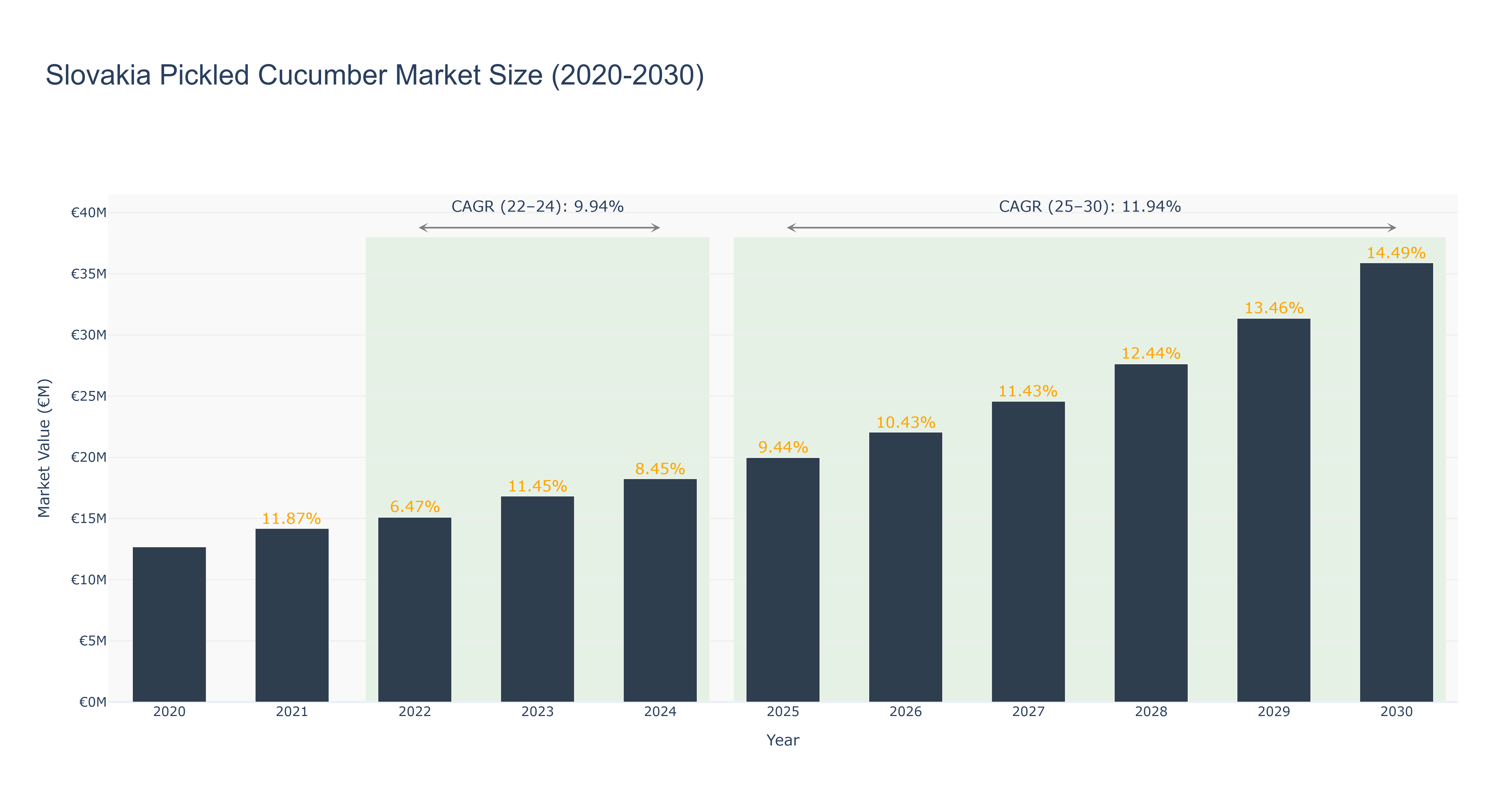
The Slovakia Pickled Cucumber Market has demonstrated robust growth from 2020 to 2024, peaking at a market size of €18.25 million in 2024, with an actual compound annual growth rate (CAGR) of 9.94% for the period. This growth trajectory has been fueled by rising consumer interest in fermented foods due to their health benefits, alongside increased local production and export opportunities. The forecasted outlook for 2025 to 2030 remains promising, with projected market sizes climbing to €35.89 million by 2030 and an anticipated CAGR of 11.94%. Key drivers for this growth include an expanding consumer base, innovation in product offerings, and potential initiatives to enhance local agricultural practices. As the market evolves, the focus on quality and sustainability is expected to shape future developments, positioning Slovakia as a significant player in the European pickled cucumber sector.
Slovakia Pickled Cucumber Market: Production & Trade Performance (2019-2025)
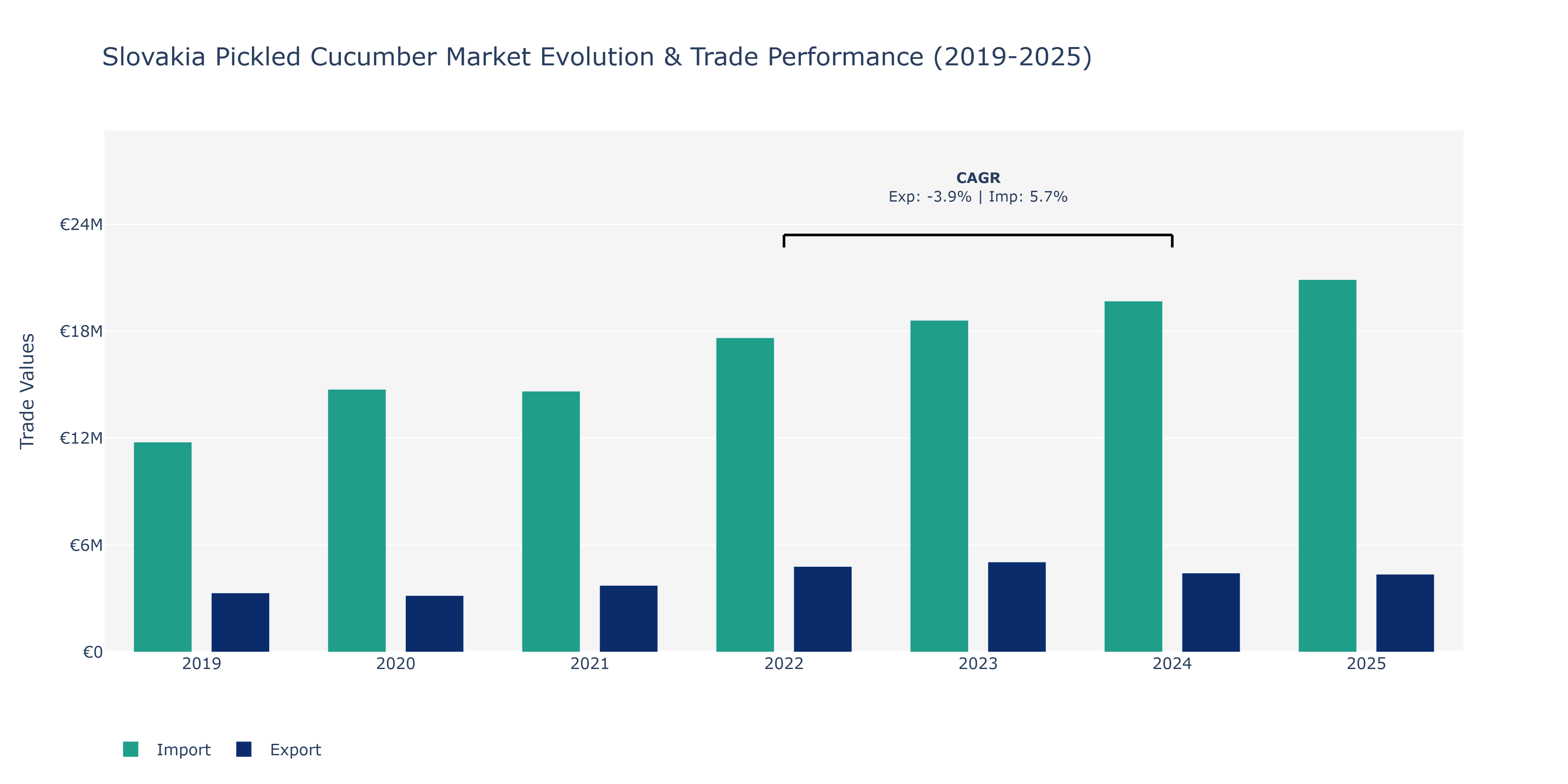
Between 2019 and 2025, Slovakia's Pickled Cucumber Market witnessed varied trends in exports and imports. In 2019, exports stood at €3.32 million, showing a slight decline to €3.17 million in 2020 before rebounding in 2021 to €3.74 million. The peak export value of €5.06 million was achieved in 2023, followed by a decline in 2024 to €4.43 million, and a slight decrease in 2025 to €4.37 million. On the other hand, imports consistently increased during the period, starting at €11.78 million in 2019 and reaching €20.9 million in 2025. This upward trajectory signifies a growing demand for foreign pickled cucumbers within Slovakia. Possible factors contributing to these trends include changing consumer preferences towards healthy and exotic foods, increased awareness of international cuisines, and expanding distribution channels, reflecting a global food market influenced by globalization and evolving dietary habits.
Key Highlights of the Report:
- Slovakia Pickled Cucumber Market Outlook
- Market Size of Slovakia Pickled Cucumber Market, 2025
- Forecast of Slovakia Pickled Cucumber Market, 2032
- Historical Data and Forecast of Slovakia Pickled Cucumber Revenues & Volume for the Period 2022 - 2032F
- Slovakia Pickled Cucumber Market Trend Evolution
- Slovakia Pickled Cucumber Market Drivers and Challenges
- Slovakia Pickled Cucumber Price Trends
- Slovakia Pickled Cucumber Porter's Five Forces
- Slovakia Pickled Cucumber Industry Life Cycle
- Historical Data and Forecast of Slovakia Pickled Cucumber Market Revenues & Volume By Type for the Period 2022 - 2032F
- Historical Data and Forecast of Slovakia Pickled Cucumber Market Revenues & Volume By Whole Pickled Cucumber for the Period 2022 - 2032F
- Historical Data and Forecast of Slovakia Pickled Cucumber Market Revenues & Volume By Pickled Cucumber Slice for the Period 2022 - 2032F
- Historical Data and Forecast of Slovakia Pickled Cucumber Market Revenues & Volume By Application for the Period 2022 - 2032F
- Historical Data and Forecast of Slovakia Pickled Cucumber Market Revenues & Volume By Households for the Period 2022 - 2032F
- Historical Data and Forecast of Slovakia Pickled Cucumber Market Revenues & Volume By Restaurant for the Period 2022 - 2032F
- Historical Data and Forecast of Slovakia Pickled Cucumber Market Revenues & Volume By Others for the Period 2022 - 2032F
- Slovakia Pickled Cucumber Import Export Trade Statistics
- Market Opportunity Assessment By Type
- Market Opportunity Assessment By Application
- Slovakia Pickled Cucumber Top Companies Market Share
- Slovakia Pickled Cucumber Competitive Benchmarking By Technical and Operational Parameters
- Slovakia Pickled Cucumber Company Profiles
- Slovakia Pickled Cucumber Key Strategic Recommendations






































