South Africa Brandy Market: Import Trend Analysis
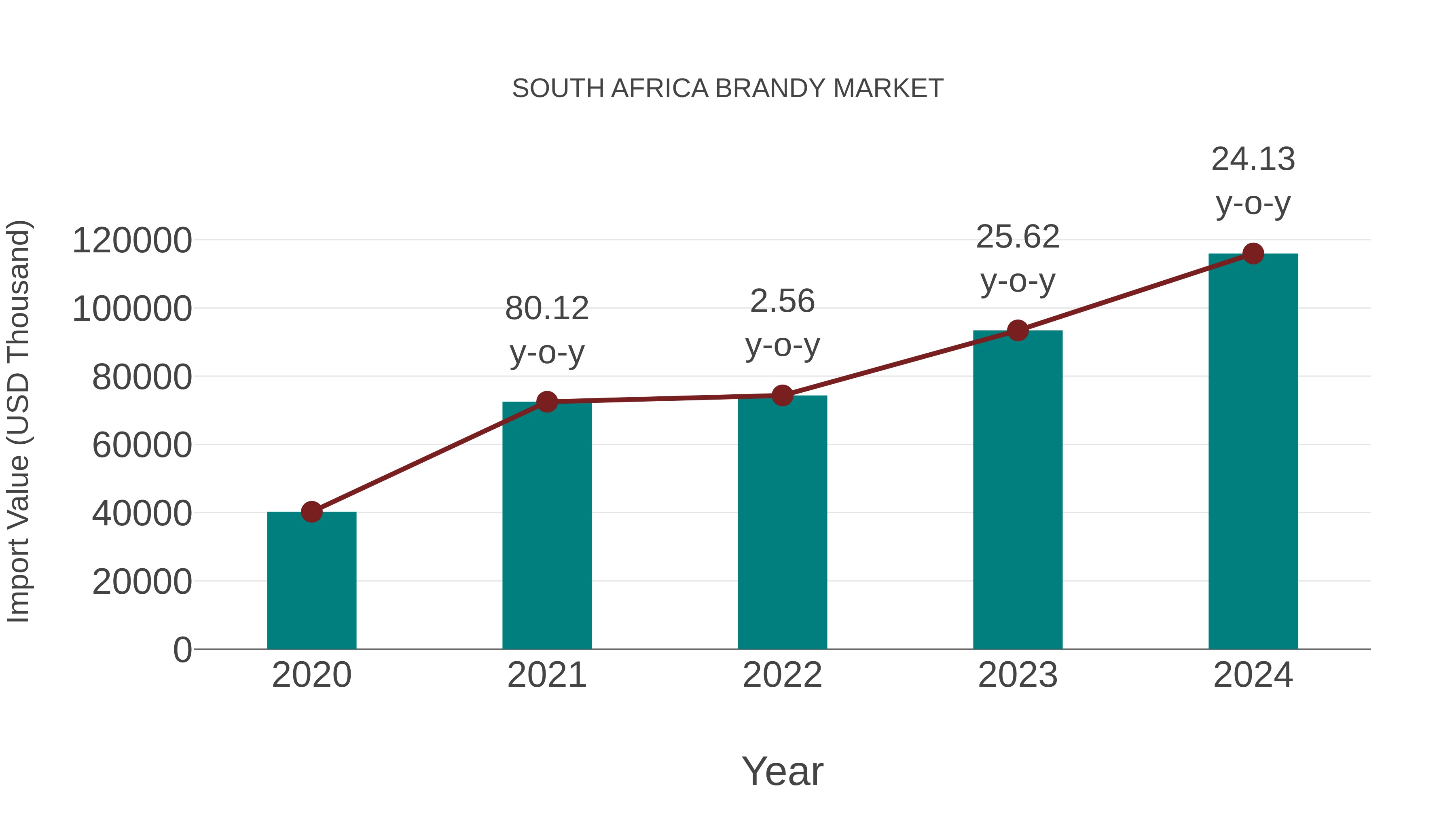
In the South African brandy market, the import trend exhibited significant growth from 2023 to 2024, with a notable increase of 24.13%. The compound annual growth rate (CAGR) for imports over the period of 2020 to 2024 stood at 30.28%. This surge in imports can be attributed to shifting consumer preferences towards premium spirits, indicating a notable demand shift in the market.
South Africa Brandy Market Overview
The South Africa Brandy Market is a prominent segment within the country`s alcoholic beverages industry, characterized by a rich history and strong cultural significance. South African brandy is known for its high quality, diverse flavors, and smooth finish, appealing to both local and international consumers. Key players in the market include Distell Group Limited, KWV, and Oude Meester, who offer a wide range of brandy products catering to various consumer preferences and price points. The market is driven by increasing consumer demand for premium and craft spirits, as well as growing interest in cocktail culture and mixology. Regulatory changes and marketing efforts promoting South African brandy as a sophisticated and versatile spirit are also contributing to the market`s growth and competitiveness.
South Africa Brandy Market Trends
The South Africa Brandy Market is experiencing a shift towards premiumization and artisanal products, with consumers increasingly seeking high-quality, unique offerings. Craft distilleries are gaining popularity, offering small-batch brandies with distinct flavors and production methods. Additionally, there is a growing interest in aged and vintage brandies, as well as innovative blends that cater to evolving consumer preferences. Sustainability and ethical production practices are also becoming important factors for consumers when choosing brandy products. The market is witnessing a rise in experiential marketing and brand activations to engage consumers and create memorable brand experiences. Overall, the South Africa Brandy Market is moving towards a more diverse and sophisticated landscape driven by consumer demand for premium, authentic, and socially responsible products.
South Africa Brandy Market Challenges
In the South Africa Brandy Market, several challenges are faced, including increasing competition from other spirit categories such as whiskey and gin, changing consumer preferences towards lighter and more versatile drinks, and a general decline in brandy consumption among younger demographics. Additionally, there is a perception issue with brandy being seen as old-fashioned or outdated compared to trendier spirits. Economic factors such as fluctuating exchange rates and disposable income levels also impact the market. Furthermore, the industry faces regulatory challenges related to advertising restrictions and taxation policies. To address these challenges, brandy producers in South Africa need to focus on innovation, marketing strategies targeted at younger consumers, and quality differentiation to stay competitive in the market.
South Africa Brandy Market Investment Opportunities
The South Africa Brandy Market presents several promising investment opportunities for investors looking to capitalize on the growing interest in premium spirits. With a rich history of brandy production and a reputation for high-quality products, South African brandy has been gaining recognition both domestically and internationally. Investing in established brandy distilleries with a focus on premium offerings or boutique craft producers could yield significant returns as consumer preferences shift towards premium and artisanal spirits. Additionally, there is potential for growth in the tourism sector through brandy tasting experiences and distillery tours, appealing to both local and international visitors. Overall, the South Africa Brandy Market offers a diverse range of investment opportunities for those looking to tap into the country`s burgeoning spirits industry.
South Africa Brandy Market Government Policy
In South Africa, the brandy market is governed by strict regulations to protect the authenticity and quality of the product. The Liquor Products Act and the Wine and Spirits Board Act outline the requirements for producing, labeling, and selling brandy in the country. These regulations include stipulations on the minimum aging period, the specific grape varieties that can be used, and the distillation process. The South African government also implements measures to promote responsible consumption of brandy and to prevent counterfeit products from entering the market. Additionally, the industry is supported by various trade bodies and associations that work to uphold industry standards and support the growth and development of the brandy sector in the country.
South Africa Brandy Market Future Outlook
The South Africa Brandy Market is expected to experience moderate growth in the coming years, driven by factors such as increasing disposable income, changing consumer preferences, and the rising popularity of craft and premium spirits. The market is likely to see a shift towards higher quality and more premium offerings, with consumers showing a growing interest in unique and innovative products. Additionally, the rise of cocktail culture and the expanding tourism industry in South Africa are expected to further boost the demand for brandy. However, challenges such as competition from other spirits categories and economic uncertainties may impact the market growth to some extent. Overall, the future outlook for the South Africa Brandy Market appears positive, with opportunities for growth and innovation in the premium segment.
Key Highlights of the Report:
- South Africa Brandy Market Outlook
- Market Size of South Africa Brandy Market, 2025
- Forecast of South Africa Brandy Market, 2032
- Historical Data and Forecast of South Africa Brandy Revenues & Volume for the Period 2022 - 2032F
- South Africa Brandy Market Trend Evolution
- South Africa Brandy Market Drivers and Challenges
- South Africa Brandy Price Trends
- South Africa Brandy Porter's Five Forces
- South Africa Brandy Industry Life Cycle
- Historical Data and Forecast of South Africa Brandy Market Revenues & Volume By Type for the Period 2022 - 2032F
- Historical Data and Forecast of South Africa Brandy Market Revenues & Volume By V.S. ("very special") for the Period 2022 - 2032F
- Historical Data and Forecast of South Africa Brandy Market Revenues & Volume By V.S.O.P. ("very superior old pale") for the Period 2022 - 2032F
- Historical Data and Forecast of South Africa Brandy Market Revenues & Volume By XO ("extra old") for the Period 2022 - 2032F
- Historical Data and Forecast of South Africa Brandy Market Revenues & Volume By Hors d'age ("beyond age") for the Period 2022 - 2032F
- Historical Data and Forecast of South Africa Brandy Market Revenues & Volume By Applications for the Period 2022 - 2032F
- Historical Data and Forecast of South Africa Brandy Market Revenues & Volume By Shop & Supermarket for the Period 2022 - 2032F
- Historical Data and Forecast of South Africa Brandy Market Revenues & Volume By Restaurant & Bar & Club for the Period 2022 - 2032F
- Historical Data and Forecast of South Africa Brandy Market Revenues & Volume By Exclusive Store for the Period 2022 - 2032F
- Historical Data and Forecast of South Africa Brandy Market Revenues & Volume By Others for the Period 2022 - 2032F
- South Africa Brandy Import Export Trade Statistics
- Market Opportunity Assessment By Type
- Market Opportunity Assessment By Applications
- South Africa Brandy Top Companies Market Share
- South Africa Brandy Competitive Benchmarking By Technical and Operational Parameters
- South Africa Brandy Company Profiles
- South Africa Brandy Key Strategic Recommendations






































