South Africa Gallium Market Size Growth Rate
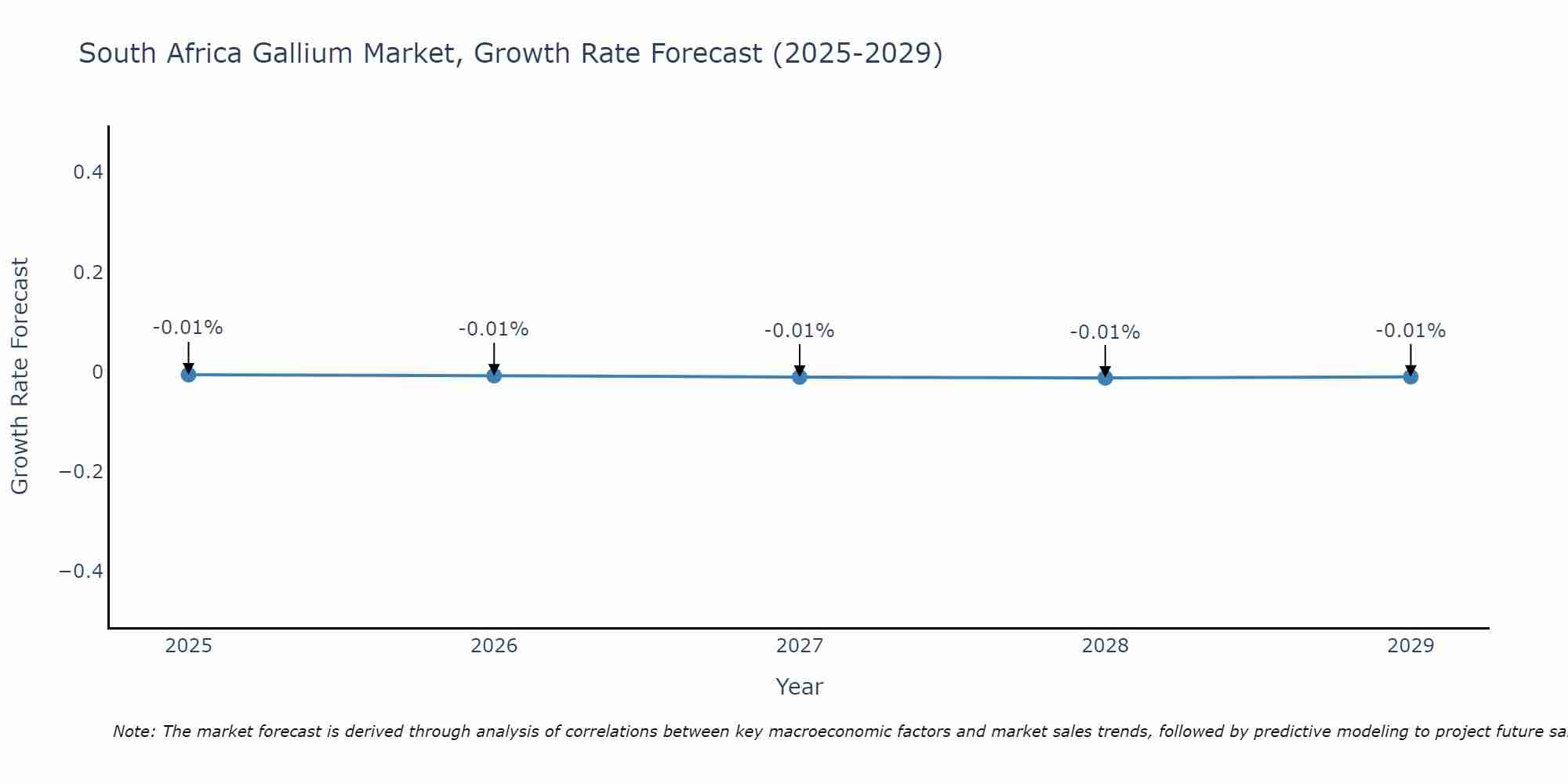
The South Africa Gallium Market is projected to witness mixed growth rate patterns during 2025 to 2029. Starting high at -0.01% in 2025, the market steadily declines to -0.01% by 2029.
South Africa Gallium Market Overview
The South Africa Gallium market is witnessing steady growth driven by increasing demand from the electronics and semiconductor industries. Gallium, a rare metal with unique properties, is extensively used in the production of semiconductors, LEDs, and solar panels. The country`s growing electronics manufacturing sector, coupled with the rising adoption of advanced technologies, is fueling the demand for gallium. Additionally, government initiatives to promote renewable energy sources are expected to further boost the market for gallium in South Africa. Key players in the market are focusing on research and development activities to enhance product offerings and gain a competitive edge. However, challenges such as supply chain disruptions and fluctuating prices of raw materials may impact market growth in the near term.
South Africa Gallium Market Trends
The South Africa Gallium market is currently experiencing growth driven by the increasing demand for gallium in the electronics industry, particularly in the production of semiconductors and LEDs. The expanding use of gallium nitride (GaN) in various applications such as 5G technology, electric vehicles, and renewable energy is bolstering the demand for gallium in the country. Additionally, the rising adoption of gallium in medical imaging devices and aerospace applications is contributing to the market`s growth. However, challenges such as supply chain disruptions and fluctuating prices of raw materials may impact the market in the near future. Overall, the South Africa Gallium market is poised for further expansion as industries continue to innovate and incorporate gallium-based technologies into their products.
South Africa Gallium Market Challenges
In the South Africa Gallium market, some of the key challenges include limited domestic production capacity, reliance on imports, fluctuating global prices, and competition from other countries with more established Gallium industries. Additionally, infrastructure constraints and regulatory hurdles can hinder the growth of the market. The lack of a well-developed supply chain and distribution network further complicates the availability and accessibility of Gallium in the region. Market participants also face challenges related to technological advancements and evolving customer requirements, requiring continuous innovation and investment in research and development. Overall, navigating these challenges requires strategic planning, collaboration within the industry, and adaptation to market dynamics to ensure sustainable growth in the South Africa Gallium market.
South Africa Gallium Market Investment Opportunities
The South Africa Gallium Market presents promising investment opportunities due to the country`s growing electronics and technology sectors. Gallium, a key component in the production of semiconductors and optoelectronic devices, is in increasing demand for applications such as 5G technology, solar cells, and LED lighting. With South Africa`s focus on advancing its technology infrastructure and renewable energy projects, there is a rising need for gallium in the market. Investors can consider opportunities in gallium mining companies, manufacturers of gallium-based products, or technology companies involved in research and development of gallium-based technologies. Additionally, partnerships with local research institutions or collaborations with international players can also provide avenues for investment and growth in the South Africa Gallium Market.
South Africa Gallium Market Government Policy
Government policies related to the South Africa Gallium Market include regulations on the mining and export of gallium, as well as incentives to promote domestic production and usage of this rare metal. The South African government has implemented measures to ensure sustainable mining practices, environmental protection, and fair labor practices within the gallium industry. Additionally, there are policies in place to encourage research and development in gallium-based technologies, such as solar cells and semiconductor devices, to stimulate innovation and economic growth. Overall, the government aims to support the growth of the South Africa Gallium Market while ensuring compliance with regulatory standards and promoting technological advancements in this sector.
South Africa Gallium Market Future Outlook
The future outlook for the South Africa Gallium Market appears promising due to the growing demand for gallium in various industries such as electronics, semiconductors, and healthcare. The increasing adoption of advanced technologies like 5G networks, IoT devices, and renewable energy sources is expected to drive the demand for gallium-based products in the country. Additionally, the focus on sustainable practices and the shift towards electric vehicles are likely to further boost the demand for gallium in the coming years. However, factors such as fluctuating prices of raw materials and regulatory challenges may pose some constraints to the market growth. Overall, the South Africa Gallium Market is anticipated to experience steady growth in the foreseeable future, driven by technological advancements and increasing applications of gallium in key industries.
Key Highlights of the Report:
- South Africa Gallium Market Outlook
- Market Size of South Africa Gallium Market, 2024
- Forecast of South Africa Gallium Market, 2031
- Historical Data and Forecast of South Africa Gallium Revenues & Volume for the Period 2021 - 2031
- South Africa Gallium Market Trend Evolution
- South Africa Gallium Market Drivers and Challenges
- South Africa Gallium Price Trends
- South Africa Gallium Porter's Five Forces
- South Africa Gallium Industry Life Cycle
- Historical Data and Forecast of South Africa Gallium Market Revenues & Volume By Applications for the Period 2021 - 2031
- Historical Data and Forecast of South Africa Gallium Market Revenues & Volume By LED for the Period 2021 - 2031
- Historical Data and Forecast of South Africa Gallium Market Revenues & Volume By Laser Diodes for the Period 2021 - 2031
- Historical Data and Forecast of South Africa Gallium Market Revenues & Volume By Integrated Circuits for the Period 2021 - 2031
- Historical Data and Forecast of South Africa Gallium Market Revenues & Volume By Solar Cells for the Period 2021 - 2031
- South Africa Gallium Import Export Trade Statistics
- Market Opportunity Assessment By Applications
- South Africa Gallium Top Companies Market Share
- South Africa Gallium Competitive Benchmarking By Technical and Operational Parameters
- South Africa Gallium Company Profiles
- South Africa Gallium Key Strategic Recommendations






































