South Africa Phenol Market Size Growth Rate
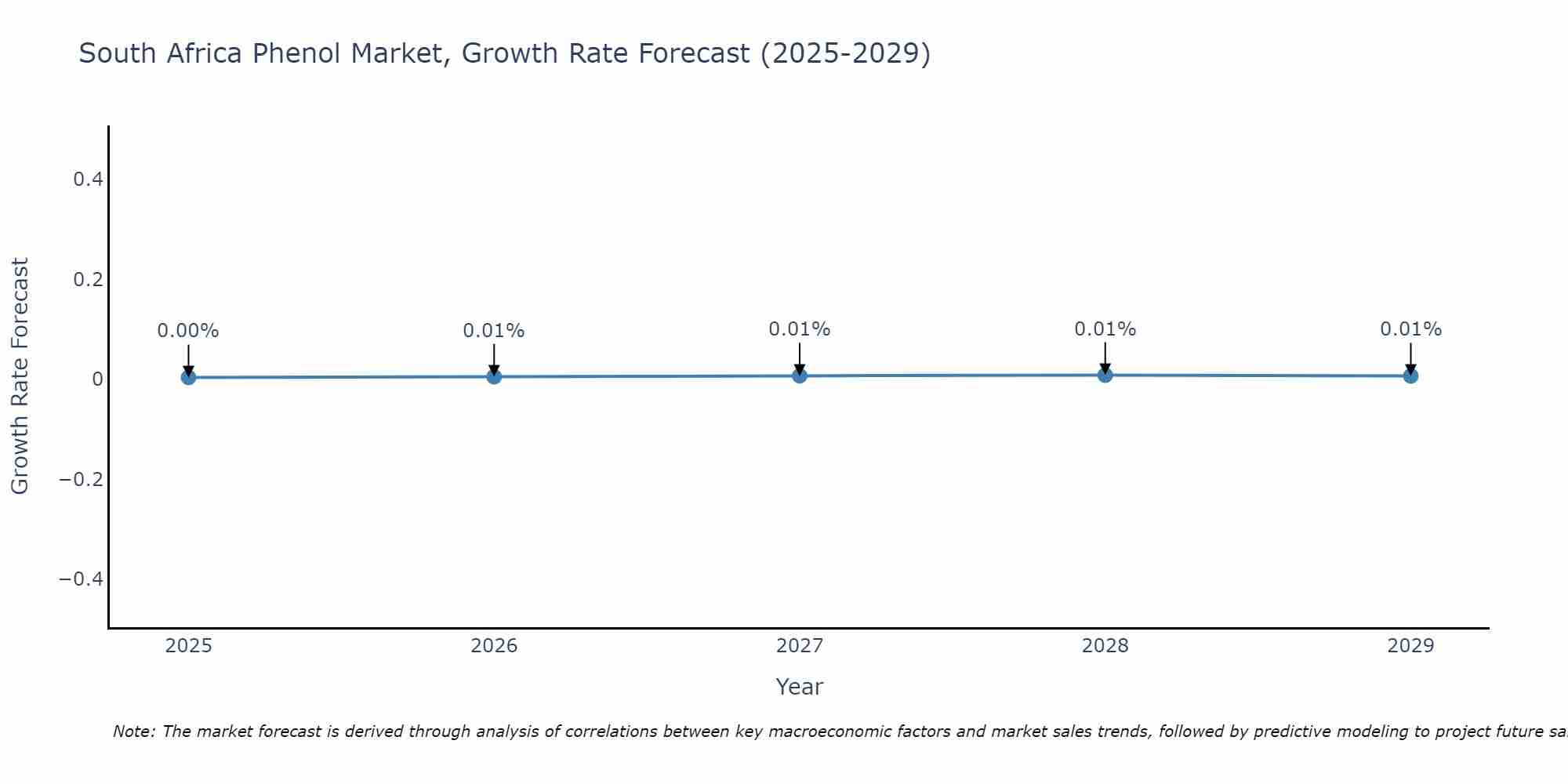
The South Africa Phenol Market is projected to witness mixed growth rate patterns during 2025 to 2029. Starting at 0.00% in 2025, the market peaks at 0.01% in 2028, and settles at 0.01% by 2029.
South Africa Phenol Market Overview
The South Africa Phenol Market is witnessing steady growth driven by its wide application in various industries such as pharmaceuticals, plastics, paints, and agriculture. Phenol is predominantly used in the production of Bisphenol A, which is further utilized in the manufacturing of polycarbonates and epoxy resins. The market is also influenced by the increasing demand for phenol derivatives like caprolactam and phenolic resins. The presence of major players in the region, coupled with the growing chemical industry, is contributing to the market`s expansion. However, fluctuations in raw material prices and environmental concerns regarding phenol production processes pose challenges to market growth. Overall, the South Africa Phenol Market is anticipated to continue its upward trajectory, driven by the rising demand for phenol-based products across various sectors.
South Africa Phenol Market Trends
The South Africa Phenol Market is witnessing steady growth driven by increasing demand from end-use industries such as automotive, construction, and electronics. A key trend in the market is the shift towards eco-friendly and sustainable production of phenol, with manufacturers focusing on adopting green technologies and processes to reduce environmental impact. Additionally, there is a growing preference for bio-based phenol derived from renewable sources as consumers become more conscious of the environmental footprint of products. The market is also experiencing innovations in product formulations to enhance performance and meet evolving customer requirements. Overall, the South Africa Phenol Market is poised for continued growth with a strong emphasis on sustainability and innovation shaping its future trajectory.
South Africa Phenol Market Challenges
In the South Africa Phenol Market, some key challenges include fluctuating raw material prices, competition from imported phenol, and regulatory restrictions on certain phenol derivatives due to environmental concerns. Fluctuating raw material prices, such as benzene and propylene, can impact the overall production costs for phenol manufacturers. Competition from imported phenol, particularly from countries with lower production costs, can pose a threat to local producers. Additionally, regulatory restrictions on certain phenol derivatives, such as Bisphenol A (BPA), due to environmental and health concerns can limit market opportunities. Overall, navigating these challenges requires strategic planning, innovation in production processes, and adherence to stringent regulatory requirements to ensure sustainable growth in the South Africa Phenol Market.
South Africa Phenol Market Investment Opportunities
The South Africa Phenol Market offers attractive investment opportunities due to the growing demand for phenol in various industries such as automotive, construction, and electronics. With the country`s increasing industrialization and infrastructure development, the demand for phenol is expected to rise further. Investing in phenol production facilities or partnering with existing manufacturers can be a lucrative option. Additionally, the focus on sustainable and eco-friendly practices in South Africa presents opportunities for investors looking to capitalize on the growing trend towards bio-based phenol production. Overall, the South Africa Phenol Market provides a promising investment landscape for those seeking exposure to a sector with strong growth potential and diversification opportunities.
South Africa Phenol Market Government Policy
Government policies related to the South Africa Phenol Market include regulations on environmental protection, occupational health and safety, and trade. The Department of Environmental Affairs regulates the disposal of phenol waste to prevent pollution and harm to the environment. The Department of Labour enforces occupational health and safety standards in phenol production facilities to ensure worker well-being. Additionally, the Department of Trade, Industry, and Competition oversees trade policies to promote fair competition and market growth. These policies aim to balance economic development with environmental sustainability and worker safety in the South Africa Phenol Market.
South Africa Phenol Market Future Outlook
The future outlook for the South Africa Phenol Market appears positive, driven by factors such as the increasing demand for phenol in various industries including automotive, construction, and electronics. The growing emphasis on sustainable practices and the shift towards eco-friendly products is expected to drive the demand for bio-based phenol in the region. Additionally, the expanding pharmaceutical and healthcare sectors are likely to contribute to the growth of the phenol market in South Africa. However, challenges such as price volatility of raw materials and regulatory issues may pose obstacles to market growth. Overall, with the increasing industrialization and focus on sustainable solutions, the South Africa Phenol Market is anticipated to witness steady growth in the coming years.
Key Highlights of the Report:
- South Africa Phenol Market Outlook
- Market Size of South Africa Phenol Market, 2021
- Forecast of South Africa Phenol Market, 2027
- Historical Data and Forecast of South Africa Phenol Revenues & Volume for the Period 2018 - 2027
- South Africa Phenol Market Trend Evolution
- South Africa Phenol Market Drivers and Challenges
- South Africa Phenol Price Trends
- South Africa Phenol Porter's Five Forces
- South Africa Phenol Industry Life Cycle
- Historical Data and Forecast of South Africa Phenol Market Revenues & Volume By End-users for the Period 2018 - 2027
- Historical Data and Forecast of South Africa Phenol Market Revenues & Volume By Bisphenol A for the Period 2018 - 2027
- Historical Data and Forecast of South Africa Phenol Market Revenues & Volume By Phenolic Resins for the Period 2018 - 2027
- Historical Data and Forecast of South Africa Phenol Market Revenues & Volume By Caprolactam for the Period 2018 - 2027
- Historical Data and Forecast of South Africa Phenol Market Revenues & Volume By Alkyl Phenyls for the Period 2018 - 2027
- Historical Data and Forecast of South Africa Phenol Market Revenues & Volume By Others for the Period 2018 - 2027
- South Africa Phenol Import Export Trade Statistics
- Market Opportunity Assessment By End-users
- South Africa Phenol Top Companies Market Share
- South Africa Phenol Competitive Benchmarking By Technical and Operational Parameters
- South Africa Phenol Company Profiles
- South Africa Phenol Key Strategic Recommendations






































