South Africa Winding Wire Market Size Growth Rate
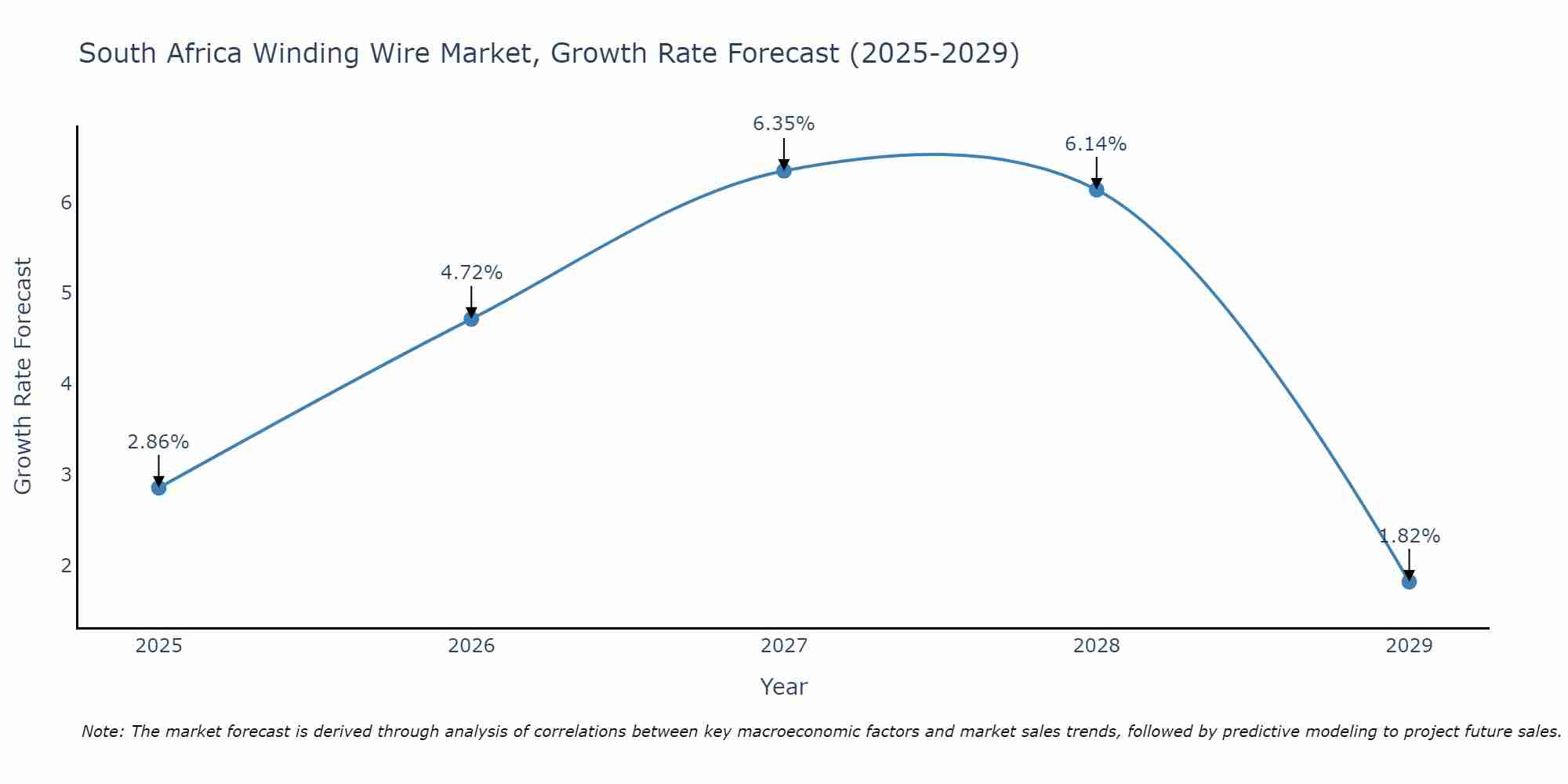
The South Africa Winding Wire Market is projected to witness mixed growth rate patterns during 2025 to 2029. Growth accelerates to 6.35% in 2027, following an initial rate of 2.86%, before easing to 1.82% at the end of the period.
South Africa Winding Wire Market Overview
The South Africa Winding Wire Market is experiencing steady growth driven by increasing demand from various industries such as automotive, electronics, and construction. The market is characterized by the presence of both domestic manufacturers and international players offering a wide range of winding wire products including copper and aluminum wires. The growing investments in infrastructure development and renewable energy projects in the country are further boosting the demand for winding wires. Additionally, the focus on modernizing the power transmission and distribution network is expected to drive the market growth in the coming years. The market is also witnessing innovations in terms of product development to meet the evolving needs of industries, thereby creating opportunities for manufacturers to expand their product portfolios and cater to a diverse customer base.
South Africa Winding Wire Market Trends
In the South Africa winding wire market, there is a noticeable shift towards the demand for energy-efficient and sustainable solutions. This trend is driven by the increasing focus on reducing energy consumption and environmental impact. Customers are increasingly seeking winding wires that offer higher conductivity, improved thermal properties, and longer operational life. Additionally, the growing adoption of electric vehicles and renewable energy sources is fueling the demand for specialized winding wires that can withstand high temperatures and harsh operating conditions. Manufacturers in the South Africa winding wire market are responding to these trends by investing in research and development to create innovative products that meet the evolving needs of the industry while adhering to quality and regulatory standards.
South Africa Winding Wire Market Challenges
In the South Africa winding wire market, some challenges faced include fluctuating raw material prices, competition from imported products, and the impact of currency exchange rates on production costs. Additionally, the market may also experience challenges related to stringent regulatory requirements, particularly in terms of quality standards and environmental regulations. Limited access to advanced technology and skilled labor can also pose obstacles to the growth of the winding wire industry in South Africa. Overall, overcoming these challenges will require industry players to focus on innovation, cost efficiency, and strategic partnerships to remain competitive and sustain growth in the market.
South Africa Winding Wire Market Investment Opportunities
The South Africa winding wire market presents promising investment opportunities due to increasing demand from sectors such as construction, infrastructure, automotive, and electronics. The growing focus on renewable energy projects in the region further fuels the demand for winding wires used in generators, transformers, and other applications. Investing in this market offers potential for growth as the country continues to modernize its infrastructure and industries. Additionally, advancements in technology are driving innovation in winding wire materials and manufacturing processes, providing opportunities for investment in research and development. With a supportive regulatory environment and a skilled workforce, investing in the South Africa winding wire market can be a strategic move for investors looking to capitalize on the country`s economic development and industrial growth.
South Africa Winding Wire Market Government Policy
The South African government has implemented various policies to regulate the winding wire market. These include the Manufacturing Competitiveness Enhancement Programme (MCEP) aimed at supporting manufacturing industries through grants and incentives. Additionally, the Broad-Based Black Economic Empowerment (B-BBEE) Act promotes the participation of black South Africans in the economy by setting targets for ownership, management control, and skills development within companies. The Industrial Policy Action Plan (IPAP) outlines strategies to promote industrialization and competitiveness in key sectors, including the electrical and electronics industry. These policies aim to stimulate growth, innovation, and sustainability within the winding wire market while fostering economic transformation and empowerment in South Africa.
South Africa Winding Wire Market Future Outlook
The South Africa Winding Wire Market is poised for steady growth in the coming years, driven by increasing investments in infrastructure development, renewable energy projects, and automotive manufacturing. The growing demand for electricity transmission and distribution systems, coupled with the rising adoption of electric vehicles, is expected to fuel the demand for winding wires in the country. Additionally, advancements in technology leading to the development of high-performance and efficient winding wires will further contribute to market growth. However, challenges such as fluctuating raw material prices and competition from imports may hinder market expansion. Overall, the South Africa Winding Wire Market is likely to experience positive growth opportunities, with key players focusing on product innovation and strategic partnerships to maintain a competitive edge in the market.
Key Highlights of the Report:
- South Africa Winding Wire Market Outlook
- Market Size of South Africa Winding Wire Market, 2021
- Forecast of South Africa Winding Wire Market, 2031
- Historical Data and Forecast of South Africa Winding Wire Revenues & Volume for the Period 2018 - 2031
- South Africa Winding Wire Market Trend Evolution
- South Africa Winding Wire Market Drivers and Challenges
- South Africa Winding Wire Price Trends
- South Africa Winding Wire Porter's Five Forces
- South Africa Winding Wire Industry Life Cycle
- Historical Data and Forecast of South Africa Winding Wire Market Revenues & Volume By Product for the Period 2018 - 2031
- Historical Data and Forecast of South Africa Winding Wire Market Revenues & Volume By Copper Winding Wire for the Period 2018 - 2031
- Historical Data and Forecast of South Africa Winding Wire Market Revenues & Volume By Aluminum Winding Wire for the Period 2018 - 2031
- South Africa Winding Wire Import Export Trade Statistics
- Market Opportunity Assessment By Product
- South Africa Winding Wire Top Companies Market Share
- South Africa Winding Wire Competitive Benchmarking By Technical and Operational Parameters
- South Africa Winding Wire Company Profiles
- South Africa Winding Wire Key Strategic Recommendations






































