South Korea Oats Market Size, Share & Growth Rate
The South Korea Oats Market was estimated at USD 390 Million in 2025 and is projected to reach USD 531 Million by 2032, growing at a CAGR of 4.5% from 2026 to 2032. This growth trajectory is fueled by increasing health consciousness among consumers, who are now more inclined to integrate oats into their diets for their nutritional benefits. The expanding range of oat-based products, from traditional oatmeal to innovative oat milk, further supports this positive outlook.
South Korea Oats Market Year-wise Growth Rate and Key Drivers
This graph highlights how the South Korea Oats Market has steadily grown over the years, supported by major growth factors.
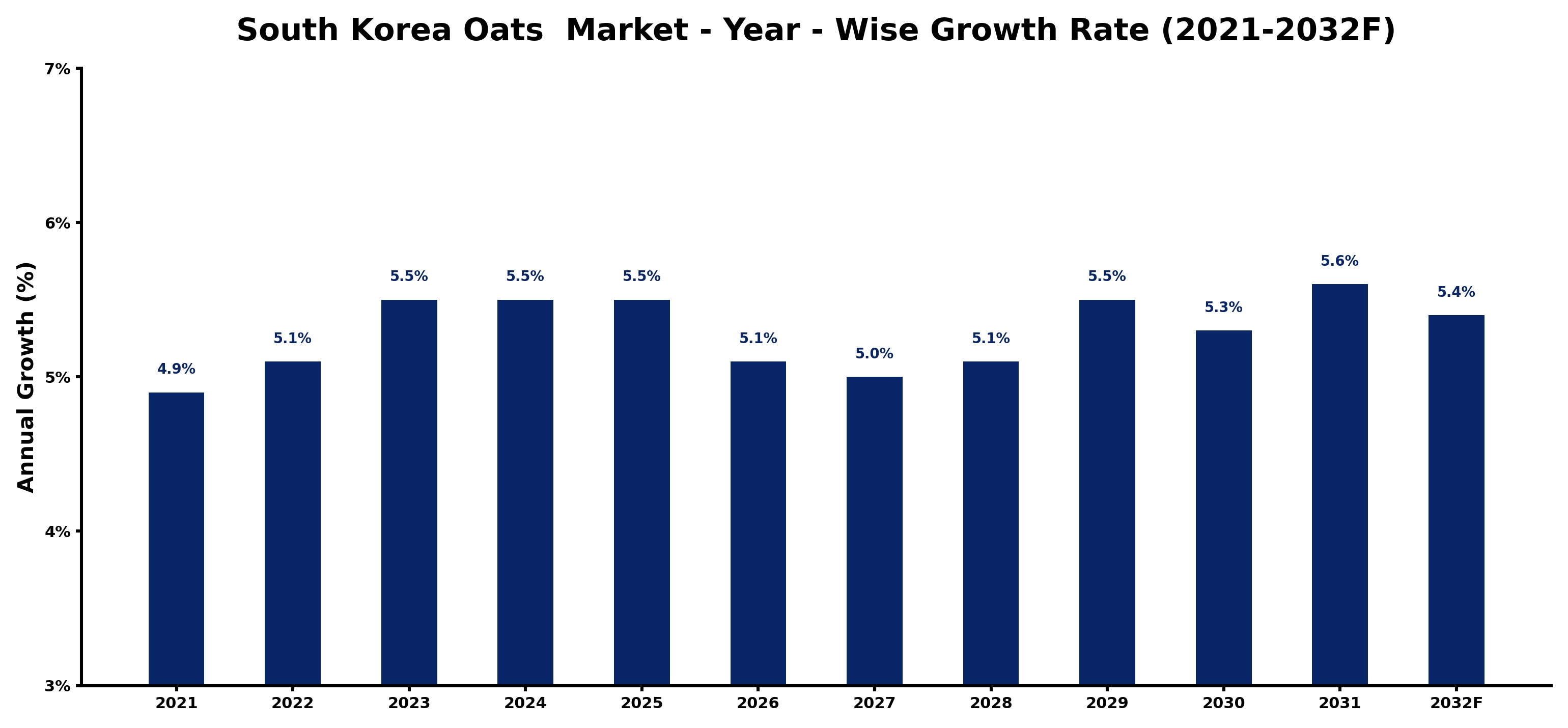
The table below presents the year‑wise growth rates along with the key drivers influencing the market
| Year | Growth Rate | Major Drivers |
| 2021 | 4.9% | Health trends favored oat consumption |
| 2022 | 5.1% | Increased awareness of nutrition benefits |
| 2023 | 5.5% | Plant-based diets gained popularity rapidly |
| 2024 | 5.5% | Innovative oat products entered market |
| 2025 | 5.5% | Sustainability initiatives promoted oat farming |
| 2026 | 5.1% | Consumer demand for gluten-free options |
| 2027 | 5.0% | Breakfast cereal market expanded offerings |
| 2028 | 5.1% | Oat milk alternatives gained traction |
| 2029 | 5.5% | E-commerce sales channels grew significantly |
| 2030 | 5.3% | Collaborations with food brands increased |
| 2031 | 5.6% | Health-focused marketing strategies flourished |
| 2032 | 5.4% | Culinary trends embraced oat ingredients |
Note - Market size estimations and growth projections presented in this report are based on 6Wresearch’s advanced forecasting approach, validated with industry datasets as of June 2026.
South Korea Oats Market Synopsis
The South Korea oats market has gained momentum in recent years, driven by heightened awareness of the health benefits associated with oats. As consumers seek nutritious, convenient breakfast options, oats are becoming more prevalent in both traditional and contemporary dishes. Looking ahead, the market is poised for sustained growth as healthier eating habits become ingrained in South Korean culture, creating space for new product innovations and wider acceptance.
While oats remain relatively unfamiliar compared to staple grains like rice and barley, changing dietary trends suggest a potential shift. The market is also experiencing a surge in interest for gluten-free and plant-based products, making oats increasingly attractive to health-conscious consumers. This evolving landscape indicates a promising future, even as challenges related to consumer familiarity persist.
South Korea Oats Market Key Takeaways
- The market is witnessing a growing demand for nutritious and convenient breakfast solutions.
- Increased health consciousness is driving the popularity of oats among consumers.
- Product innovation is key, with a focus on new flavors and ready-to-eat options.
- Government initiatives are supporting domestic oat production and consumer awareness campaigns.
- Oat-based products are expected to gain further traction in the mainstream market.
Evaluation of Restraints in South Korea Oats Market
Despite the positive growth indicators, several restraints hinder the full-scale adoption of oats in South Korea. The lack of familiarity with oats as a staple ingredient presents a significant challenge, as many consumers still prioritize traditional grains like rice and barley. There is also a persistent perception of oats as a foreign food, which can impede their acceptance. Additionally, pricing and distribution issues may present obstacles in effectively reaching consumers, requiring targeted marketing strategies to bridge the gap.
South Korea Oats Market Trends
Currently, the South Korea oats market is shaped by several noteworthy trends. The rise in health-oriented diets, including gluten-free and plant-based lifestyles, is propelling oats into the spotlight as a versatile ingredient. Furthermore, there's an increasing inclination towards ready-to-eat and portable oat-based products, such as granola bars and instant oatmeal, catering to busy lifestyles. Enhanced product offerings, including flavored options and fortified varieties, are also expanding consumer choices and engagement.
South Korea Oats Market Opportunities
Investment opportunities in the South Korea oats market are robust. Given the escalating consumer demand for healthy and convenient food, businesses can explore the development of diverse oat-based products, particularly in the breakfast segment. Oat milk and snacks are also gaining traction, reflecting a shift toward plant-based diets. Furthermore, strategic partnerships and innovation in product formulation may provide competitive advantages in this burgeoning market, appealing to the evolving preferences of South Korean consumers.
Government Initiatives in the South Korea Oats Market
The South Korean government is actively supporting the oats market through various initiatives aimed at increasing domestic production. Subsidies and incentives are being offered to local farmers to cultivate oats, which is crucial for fostering a sustainable supply chain. Additionally, public health campaigns are promoting the nutritional benefits of oats, further encouraging consumer adoption. These government actions are pivotal in establishing a favorable environment for oats within the culinary landscape of South Korea.
Future Insights of the South Korea Oats Market
As we look towards 2026-2032, the South Korea oats market is expected to continue its growth trajectory. Increasing awareness of health benefits associated with oats is likely to propel demand further. With a continual shift towards healthier eating patterns, consumers will increasingly seek out products that offer convenience without compromising on nutrition. The market landscape will evolve as innovations in oat-based products emerge, supported by more extensive distribution channels through supermarkets and online platforms.
South Korea Oats Market Latest Developments (May 2025 - June 2026)
Recent developments in the South Korea oats market indicate a surge in new product launches, particularly in the oat milk segment. Companies are increasingly targeting health-conscious consumers with innovative flavors and fortified options. Additionally, partnerships between health food brands and local retailers are becoming more common, enhancing product visibility and accessibility. These trends are indicative of the market's dynamic nature as it adapts to consumer demands for both health and convenience.
South Korea Oats Market - Key Attractiveness of the Report
- 10 Years of Market Numbers
- Historical Data Starting from 2022 to 2025
- Base Year: 2025
- Forecast Data until 2032
- Key Performance Indicators Impacting the Market
- Major Upcoming Developments and Projects
Key Highlights of the Report:
- South Korea Oats Market Outlook
- Market Size of South Korea Oats Market, 2025
- Forecast of South Korea Oats Market, 2032
- Historical Data and Forecast of South Korea Oats Revenues & Volume for the Period 2022-2032F
- South Korea Oats Market Trend Evolution
- South Korea Oats Market Drivers and Challenges
- South Korea Oats Price Trends
- South Korea Oats Porter's Five Forces
- South Korea Oats Industry Life Cycle
- Historical Data and Forecast of South Korea Oats Market Revenues & Volume By Form for the Period 2022-2032F
- Historical Data and Forecast of South Korea Oats Market Revenues & Volume By Flavoured Oats for the Period 2022-2032F
- Historical Data and Forecast of South Korea Oats Market Revenues & Volume By Base Oats for the Period 2022-2032F
- Historical Data and Forecast of South Korea Oats Market Revenues & Volume By Distribution Channel for the Period 2022-2032F
- Historical Data and Forecast of South Korea Oats Market Revenues & Volume By Supermarket/Hypermarket for the Period 2022-2032F
- Historical Data and Forecast of South Korea Oats Market Revenues & Volume By Convenience Stores for the Period 2022-2032F
- Historical Data and Forecast of South Korea Oats Market Revenues & Volume By Online Channels for the Period 2022-2032F
- Historical Data and Forecast of South Korea Oats Market Revenues & Volume By Others for the Period 2022-2032F
- South Korea Oats Import Export Trade Statistics
- Market Opportunity Assessment By Form
- Market Opportunity Assessment By Distribution Channel
- South Korea Oats Top Companies Market Share
- South Korea Oats Competitive Benchmarking By Technical and Operational Parameters
- South Korea Oats Company Profiles
- South Korea Oats Key Strategic Recommendations






































