South Korea Octopus Market Size Growth Rate
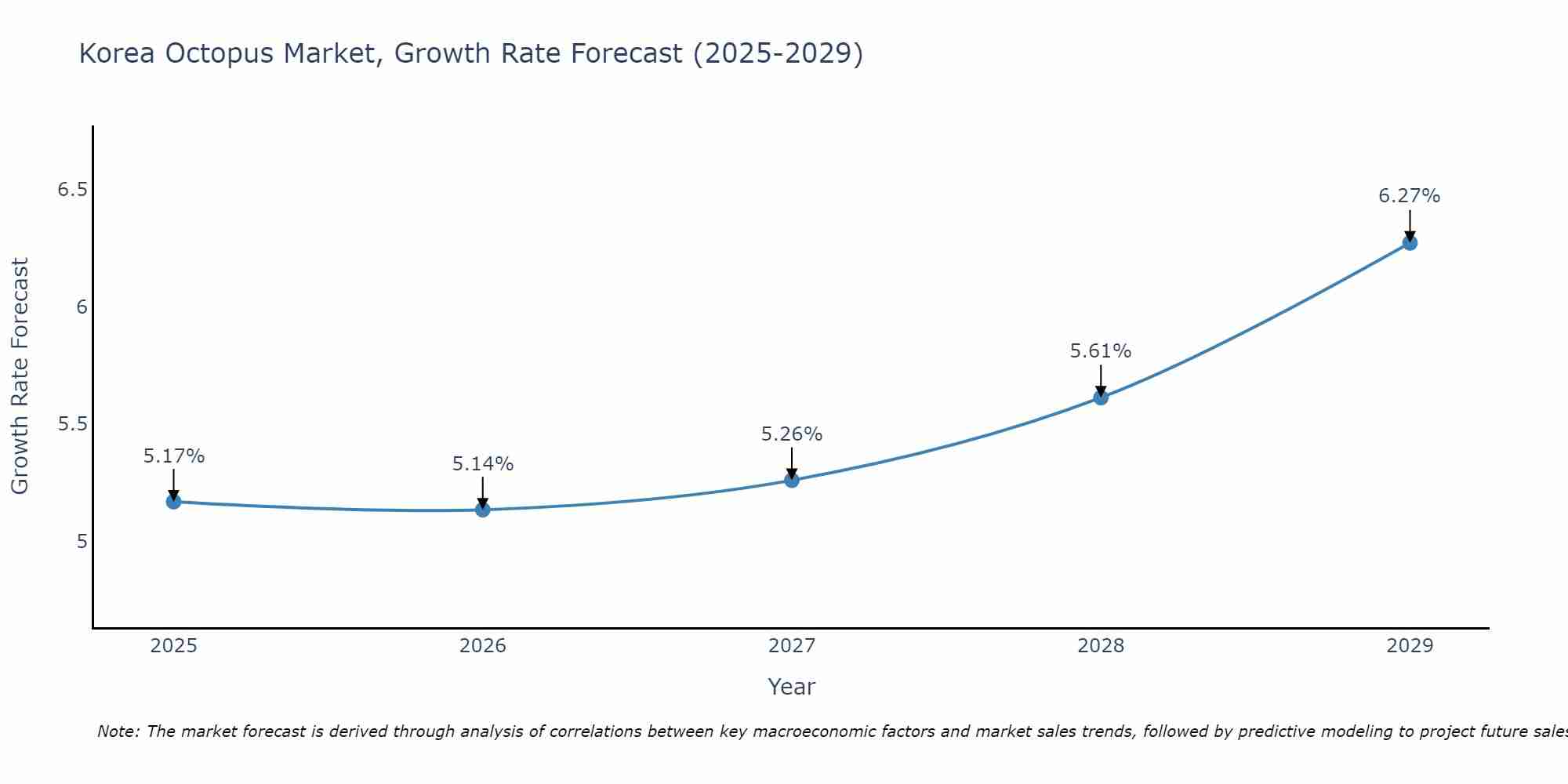
The South Korea Octopus Market is projected to witness mixed growth rate patterns during 2025 to 2029. Commencing at 5.17% in 2025, growth builds up to 6.27% by 2029.
South Korea Octopus Market Synopsis
The South Korea octopus market is a significant segment within the country`s seafood industry, driven by high demand both domestically and internationally. Octopus is a popular and versatile ingredient in Korean cuisine, with dishes like nakji bokkeum (stir-fried octopus) and sannakji (live octopus) being widely enjoyed. The market is characterized by a mix of fresh and processed octopus products, with a strong emphasis on quality and freshness. South Korea is known for its advanced fishing and aquaculture practices, ensuring a steady supply of high-quality octopus to meet consumer preferences. Additionally, South Korea exports a significant portion of its octopus production to countries like Japan, China, and the United States, contributing to its position as a key player in the global octopus market.
South Korea Octopus Market Trends
The South Korea octopus market is experiencing a rise in demand due to its popularity in Korean cuisine, particularly in dishes like Nakji Bokkeum (stir-fried octopus) and Sannakji (live octopus). There is a growing interest in sustainable and ethical sourcing practices among consumers, leading to an increased focus on the traceability and quality of octopus products. Additionally, there is a trend towards innovation in octopus-based products, such as ready-to-eat octopus snacks and convenience foods. The market is also seeing a rise in online sales and delivery services for octopus products, catering to the changing consumer preferences for convenience and accessibility. Overall, the South Korea octopus market is dynamic and evolving to meet the demands of modern consumers while also embracing traditional culinary practices.
South Korea Octopus Market Challenges
In the South Korea Octopus Market, some key challenges include fluctuating supply due to weather conditions affecting fishing operations, increasing competition from imported octopus, and changing consumer preferences towards other seafood options. The octopus fishing industry is heavily reliant on natural factors such as water temperature and currents, making it vulnerable to disruptions in supply. Additionally, the rise in imports of octopus from other countries has put pressure on local producers to remain competitive. Moreover, as South Korean consumers diversify their seafood choices, there is a need for market players to innovate and differentiate their products to attract customers. Adapting to these challenges through sustainable fishing practices, product innovation, and market diversification will be crucial for the South Korea Octopus Market to remain resilient and competitive in the long term.
South Korea Octopus Market Investment Opportunities
The South Korea octopus market presents various investment opportunities for both domestic and international investors. With South Korea being one of the largest consumers of octopus globally, there is a consistent demand for this seafood delicacy. Investing in octopus fishing fleets, aquaculture farms, or processing facilities could be lucrative ventures. Additionally, there is potential for growth in the export market, especially to countries with a growing appetite for seafood. Collaborating with local suppliers or establishing distribution channels within South Korea can also be profitable strategies. Furthermore, investing in research and development to improve octopus farming techniques or develop value-added octopus products could provide a competitive edge in this market. Overall, the South Korea octopus market offers diverse investment opportunities for those looking to capitalize on the demand for this popular seafood.
Jordan Agar Market Government Policies
The South Korean government has implemented regulations aimed at conserving the octopus population and promoting sustainable fishing practices within the country`s octopus market. These policies include restrictions on fishing seasons, gear types, and catch limits to prevent overexploitation of octopus stocks. Additionally, there are requirements for octopus size limits to ensure the protection of juvenile octopuses. The government also enforces strict monitoring and enforcement measures to deter illegal fishing activities and protect the marine environment. These policies are designed to support the long-term viability of the octopus market in South Korea by balancing economic interests with environmental sustainability.
South Korea Octopus Market Future Outlook
The South Korea octopus market is expected to experience steady growth in the coming years due to increasing demand for this seafood delicacy both domestically and internationally. Factors driving this growth include a rising consumer interest in Korean cuisine, particularly dishes featuring octopus as a key ingredient, as well as the growing popularity of Korean culture worldwide. Additionally, advancements in aquaculture technology are helping to increase octopus production, ensuring a stable supply for the market. However, challenges such as environmental factors impacting wild octopus populations and competition from other seafood options may affect market dynamics. Overall, the South Korea octopus market is likely to expand, driven by evolving consumer preferences and the country`s position as a key player in the global seafood industry.
Key Highlights of the Report:
- South Korea Octopus Market Outlook
- Market Size of South Korea Octopus Market, 2024
- Forecast of South Korea Octopus Market, 2031
- Historical Data and Forecast of South Korea Octopus Revenues & Volume for the Period 2021 - 2031
- South Korea Octopus Market Trend Evolution
- South Korea Octopus Market Drivers and Challenges
- South Korea Octopus Price Trends
- South Korea Octopus Porter's Five Forces
- South Korea Octopus Industry Life Cycle
- Historical Data and Forecast of South Korea Octopus Market Revenues & Volume By Product Type for the Period 2021 - 2031
- Historical Data and Forecast of South Korea Octopus Market Revenues & Volume By Fresh for the Period 2021 - 2031
- Historical Data and Forecast of South Korea Octopus Market Revenues & Volume By Processed for the Period 2021 - 2031
- Historical Data and Forecast of South Korea Octopus Market Revenues & Volume By Application for the Period 2021 - 2031
- Historical Data and Forecast of South Korea Octopus Market Revenues & Volume By Commercial for the Period 2021 - 2031
- Historical Data and Forecast of South Korea Octopus Market Revenues & Volume By Food and Beverage for the Period 2021 - 2031
- Historical Data and Forecast of South Korea Octopus Market Revenues & Volume By Distribution Channel for the Period 2021 - 2031
- Historical Data and Forecast of South Korea Octopus Market Revenues & Volume By Direct for the Period 2021 - 2031
- Historical Data and Forecast of South Korea Octopus Market Revenues & Volume By Indirect for the Period 2021 - 2031
- South Korea Octopus Import Export Trade Statistics
- Market Opportunity Assessment By Product Type
- Market Opportunity Assessment By Application
- Market Opportunity Assessment By Distribution Channel
- South Korea Octopus Top Companies Market Share
- South Korea Octopus Competitive Benchmarking By Technical and Operational Parameters
- South Korea Octopus Company Profiles
- South Korea Octopus Key Strategic Recommendations






































