Spain Furniture Market: Import Trend Analysis
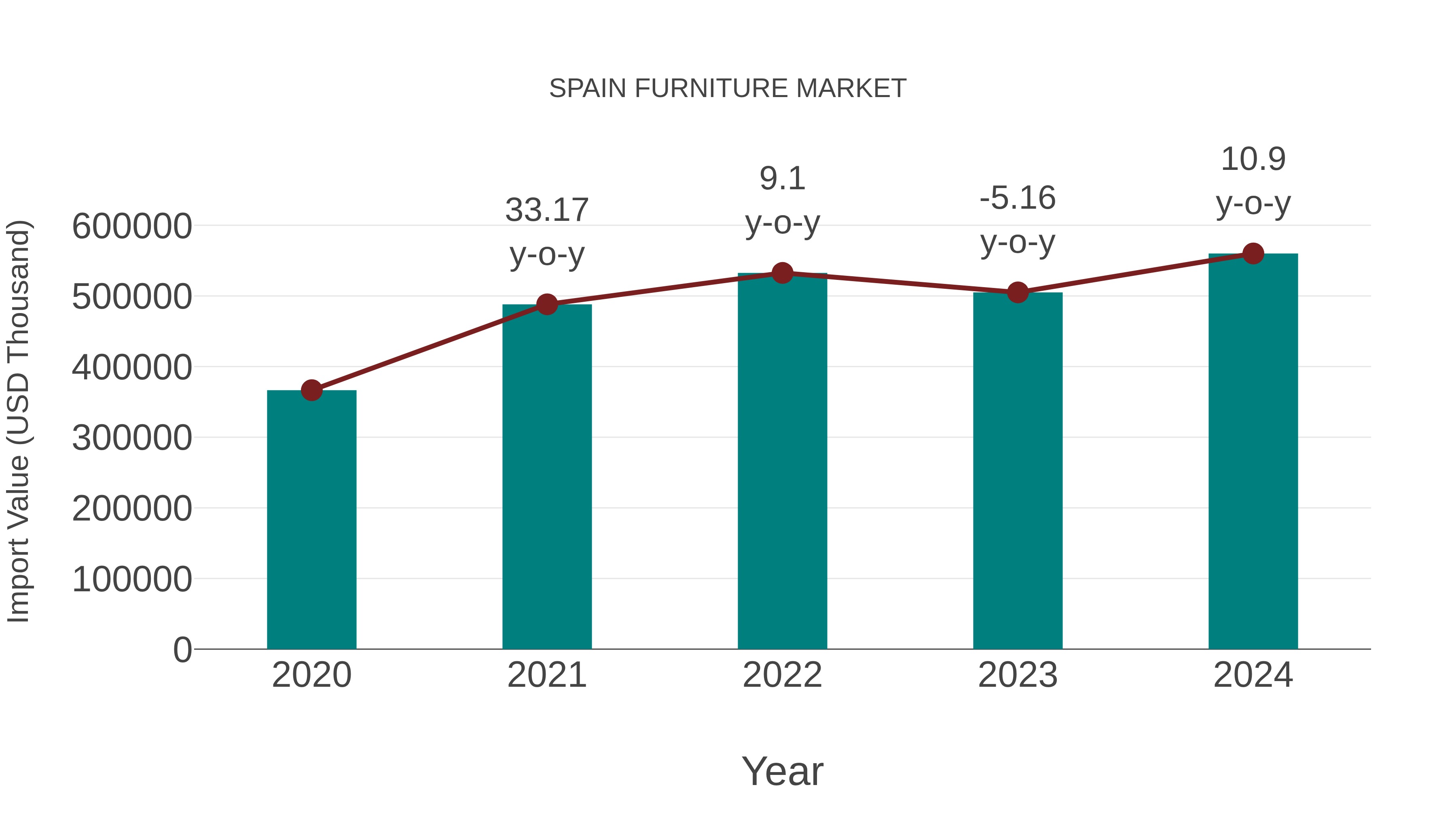
In 2024, Spain experienced a steady increase in furniture imports, driven by growing consumer demand for quality and diverse products. The trend reflected the market`s reliance on imported furniture to meet evolving consumer preferences and maintain competitiveness in the industry.
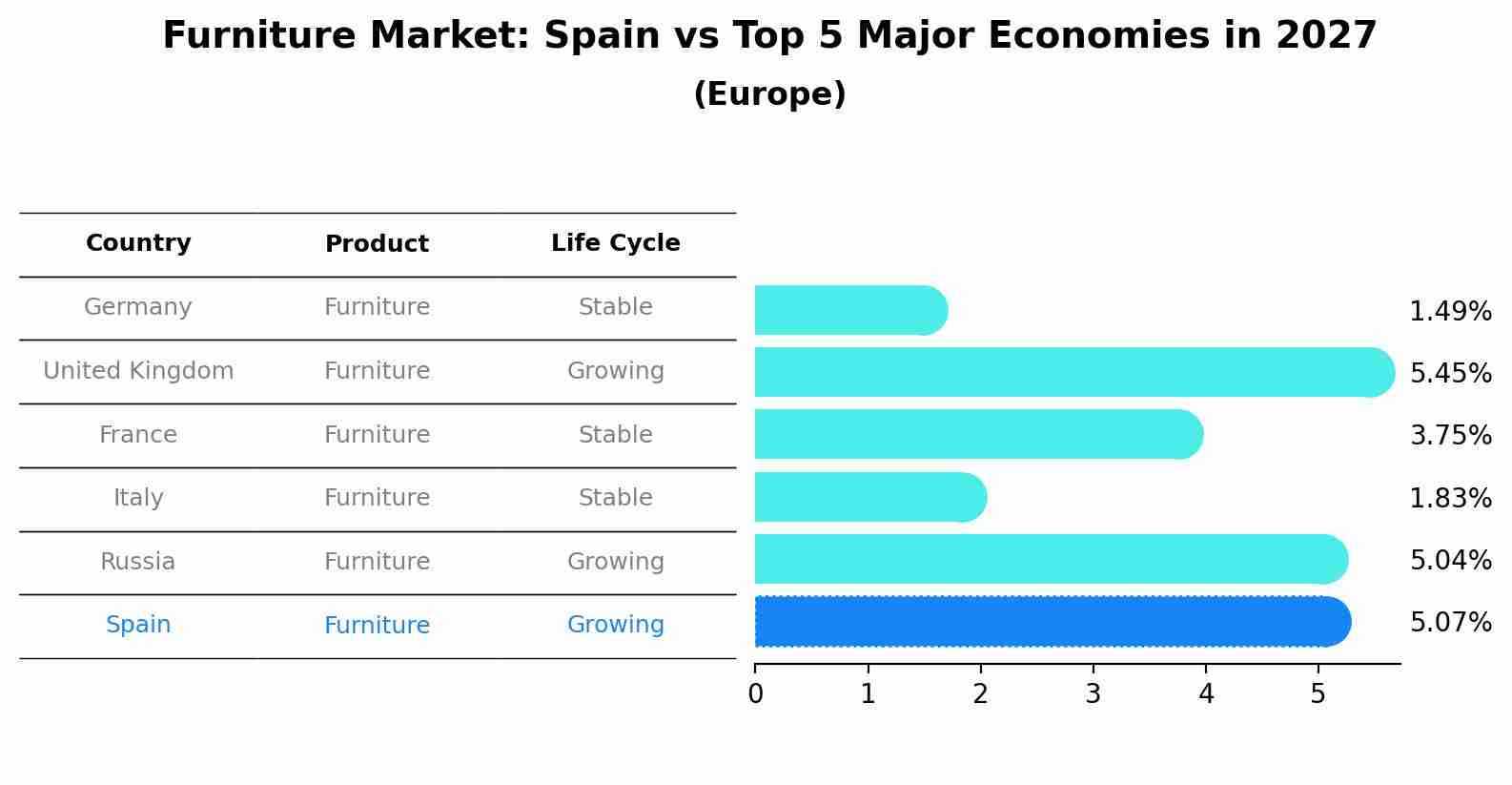
Furniture Market: Spain vs Top 5 Major Economies in 2027 (Europe)
In the Europe region, the Furniture market in Spain is projected to expand at a growing growth rate of 5.07% by 2027. The largest economy is Germany, followed by United Kingdom, France, Italy and Russia.
spain furniture market Synopsis
The Spain furniture market is expected to register a CAGR of 4.2% during the forecast period, 2020-2026. The factors driving the growth of the Spanish furniture market are increasing urbanization and rising disposable incomes in developing countries. Moreover, growing demand for ecofriendly furniture is also one of the major drivers propelling the market growth. Additionally, recent advances in technology have enabled manufacturers to design innovative products with improved aesthetics and performance levels which can be operated via mobile apps or voice commands. This factor has been boosting demand for smart home furnishings from consumers across Spain thereby augmenting market growth.
However, fluctuations in raw material prices may hamper the overall market growth during this period as it increases production costs for manufacturers thus creating an unfavorable scenario for them. Furthermore, stringent environmental regulations regarding wood harvesting may also hinder sales opportunities during this period as they pose additional costs on producers due to forest management procedures which are required by government agencies.
Key Highlights of the Report:
- Spain Furniture Market Outlook
- Market Size of Spain Furniture Market, 2019
- Forecast of Spain Furniture Market, 2026
- Historical Data and Forecast of Spain Furniture Revenues & Volume for the Period 2016 - 2026
- Spain Furniture Market Trend Evolution
- Spain Furniture Market Drivers and Challenges
- Spain Furniture Price Trends
- Spain Furniture Porter's Five Forces
- Spain Furniture Industry Life Cycle
- Historical Data and Forecast of Spain Furniture Market Revenues & Volume By Material Types for the Period 2016 - 2026
- Historical Data and Forecast of Spain Furniture Market Revenues & Volume By Plastic for the Period 2016 - 2026
- Historical Data and Forecast of Spain Furniture Market Revenues & Volume By Wood for the Period 2016 - 2026
- Historical Data and Forecast of Spain Furniture Market Revenues & Volume By Metal for the Period 2016 - 2026
- Historical Data and Forecast of Spain Furniture Market Revenues & Volume By Other for the Period 2016 - 2026
- Historical Data and Forecast of Spain Furniture Market Revenues & Volume By Applications for the Period 2016 - 2026
- Historical Data and Forecast of Spain Furniture Market Revenues & Volume By Residential for the Period 2016 - 2026
- Historical Data and Forecast of Spain Furniture Market Revenues & Volume By Commercial for the Period 2016 - 2026
- Spain Furniture Import Export Trade Statistics
- Market Opportunity Assessment By Material Types
- Market Opportunity Assessment By Applications
- Spain Furniture Top Companies Market Share
- Spain Furniture Competitive Benchmarking By Technical and Operational Parameters
- Spain Furniture Company Profiles
- Spain Furniture Key Strategic Recommendations






































