Sri Lanka Cigarette Market Size, Share & Growth Rate
The Sri Lanka Cigarette Market was estimated at USD 248 Million in 2025 and is projected to reach USD 318 Million by 2032, growing at a CAGR of 3.6% from 2026 to 2032. This growth trajectory is primarily driven by the entrenched smoking culture and the continued demand for traditional cigarettes, despite increasing health awareness. Furthermore, the market is experiencing a gradual shift toward alternative tobacco products, which could further influence market dynamics in the coming years.
Sri Lanka Cigarette Market Year-wise Growth Rate and Key Drivers
This graph highlights how the Sri Lanka Cigarette Market has steadily grown over the years, supported by major growth factors.
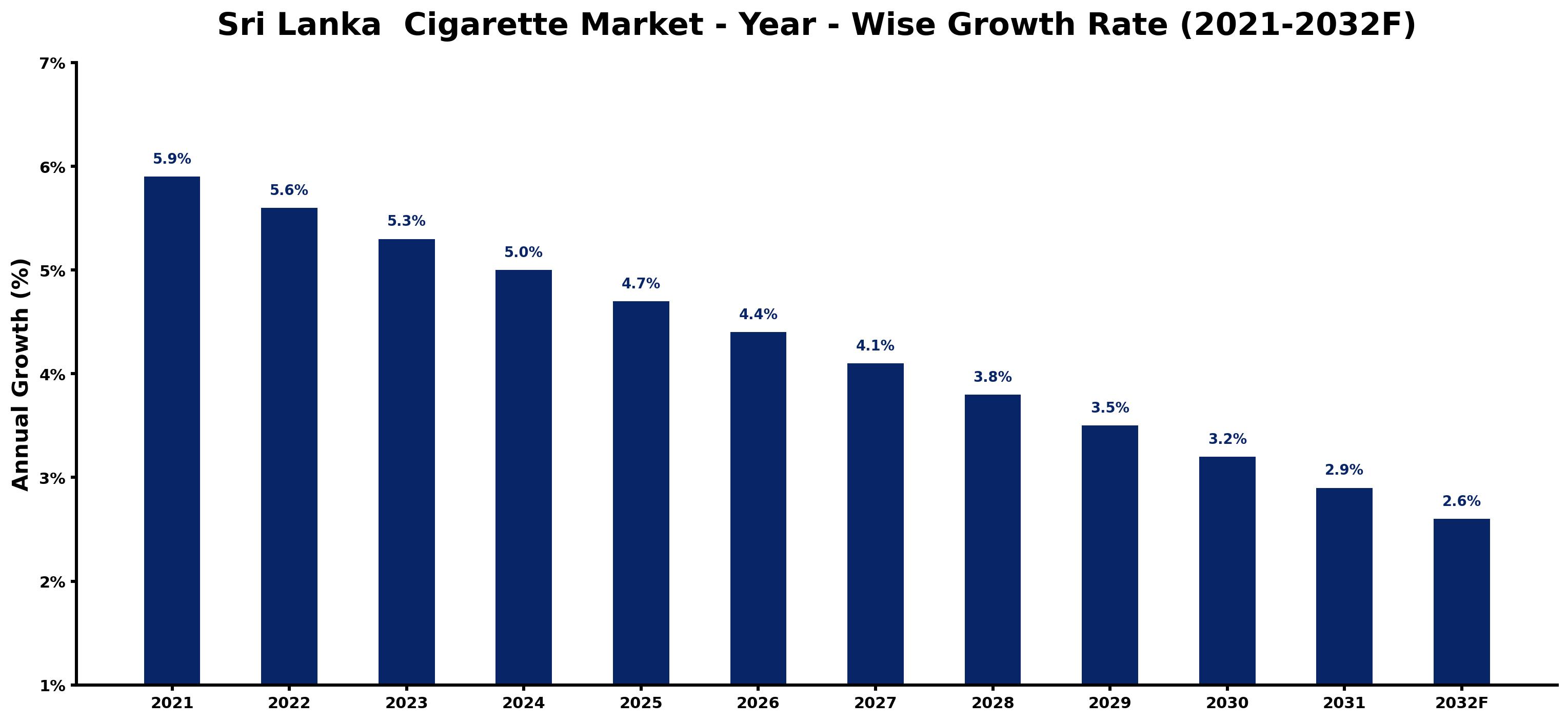
The table below presents the year‑wise growth rates along with the key drivers influencing the market
| Year | Growth Rate | Major Drivers |
| 2021 | 5.9% | Increasing smart city development projects |
| 2022 | 5.6% | Growing urbanization and commercial development |
| 2023 | 5.3% | Expansion of commercial construction activities |
| 2024 | 5.0% | Growing renewable energy integration projects |
| 2025 | 4.7% | Increasing smart city development projects |
| 2026 | 4.4% | Technology transition toward sustainable alternatives |
| 2027 | 4.1% | Growing adoption of energy efficient systems |
| 2028 | 3.8% | Environmental regulations reducing traditional demand |
| 2029 | 3.5% | Environmental regulations reducing traditional demand |
| 2030 | 3.2% | Growing adoption of energy efficient systems |
| 2031 | 2.9% | Growing adoption of energy efficient systems |
| 2032 | 2.6% | Declining investments in legacy infrastructure |
Note - Market size estimations and growth projections presented in this report are based on 6Wresearch's advanced forecasting approach, validated with industry datasets as of June 2026.
Sri Lanka Cigarette Market Synopsis
The cigarette market in Sri Lanka remains robust, with a significant proportion of the adult population engaged in smoking. While government initiatives aim to reduce consumption through taxation and public health campaigns, traditional cigarettes still dominate sales. A noteworthy characteristic of the market is the resilience of established brands despite regulatory challenges.
Evolving consumer preferences are leading to increased interest in premium and flavored cigarette offerings, particularly among younger demographics. Additionally, the rise of e-commerce has facilitated easier access to tobacco products, suggesting a potential shift in purchasing behaviors that may shape the future landscape of the Sri Lanka cigarette market.
Sri Lanka Cigarette Market Key Takeaways
- The Sri Lankan cigarette market is primarily dominated by traditional smoking habits, despite growing health consciousness.
- Government regulations and high taxes are driving some consumers towards illicit tobacco products, affecting legitimate market players.
- Emerging trends indicate a shift towards e-cigarettes and heated tobacco products, reflecting changing consumer preferences.
- The premium cigarette segment is witnessing increased demand, providing opportunities for manufacturers to innovate.
- Investment in less harmful tobacco products may offer significant returns as health concerns remain prevalent.
Evaluation of Restraints in Sri Lanka Cigarette Market
The Sri Lanka cigarette market faces considerable restraints, primarily due to stringent government regulations and escalating taxes on tobacco products. These measures not only increase retail prices but also encourage the growth of illicit cigarette sales. The rising health awareness among the public contributes to an overall decline in smoking rates, further challenging legitimate businesses. Restrictions on marketing and advertising limit manufacturers' abilities to effectively promote their products, constraining market growth potential.
Sri Lanka Cigarette Market Trends
The market is currently witnessing a shift towards reduced-risk products, notably e-cigarettes and heated tobacco alternatives, driven by a growing consumer focus on health. This transition is coupled with increasing demand for flavored and premium products, particularly among younger demographics who are keen on exploring diverse tobacco experiences. E-commerce platforms are gaining traction, enabling consumers to conveniently access a wider array of products while providing manufacturers an innovative avenue for distribution. Overall, these trends highlight a critical evolution in consumer behavior within the Sri Lanka cigarette market.
Sri Lanka Cigarette Market Opportunities
Investment opportunities within the Sri Lanka cigarette market are ripe for exploration. Established cigarette manufacturers are likely to provide stable returns, given the enduring demand for tobacco products. Furthermore, investing in emerging technologies that aim to mitigate health risks, such as electronic cigarettes or nicotine replacement therapies, can capitalize on the growing health consciousness. The luxury or premium cigarette segment presents another growth avenue, catering to affluent consumers eager to purchase exclusive tobacco products. Potential investors must remain cognizant of regulatory pressures and shifting consumer attitudes to optimize their strategies.
Government Initiatives in the Sri Lanka Cigarette Market
The Sri Lankan government has enacted comprehensive policies to regulate the cigarette market, which include imposing high taxes on tobacco products and enforcing strict advertising restrictions. There are also mandatory health warnings on packaging and bans on smoking in public areas aimed at protecting public health. Ongoing awareness campaigns about the dangers of smoking and programs supporting cessation efforts further underline the government's commitment to reducing smoking prevalence across the country.
Future Insights of the Sri Lanka Cigarette Market
The outlook for the Sri Lanka cigarette market between 2026 and 2032 indicates a persistent decline in traditional cigarette consumption, driven by increasing public health awareness and government regulations. Although premium and imported cigarette brands may sustain a niche market, overall market growth is projected to be modest. As smoking-related restrictions become more stringent and health-conscious attitudes prevail, the focus may shift further towards less harmful alternatives, potentially reshaping the market landscape.
Sri Lanka Cigarette Market Latest Developments (May 2025 - June 2026)
In recent months, the Sri Lankan cigarette market has been navigating the evolving regulatory landscape and shifting consumer preferences. Companies have begun to diversify their portfolios to include reduced-risk products amid increasing health consciousness. Additionally, the impact of e-commerce has become more pronounced, with online sales channels offering consumers greater access to a variety of tobacco products. These developments signal a market in transition, adapting to both consumer needs and regulatory challenges.
Sri Lanka Cigarette Market - Key Attractiveness of the Report
- 10 Years of Market Numbers
- Historical Data Starting from 2022 to 2025
- Base Year: 2025
- Forecast Data until 2032
- Key Performance Indicators Impacting the Market
- Major Upcoming Developments and Projects
Key Highlights of the Report:
- Sri Lanka Cigarette? Market Outlook
- Market Size of Sri Lanka Cigarette? Market, 2025
- Forecast of Sri Lanka Cigarette? Market, 2032
- Historical Data and Forecast of Sri Lanka Cigarette? Revenues & Volume for the Period 2022-2032F
- Sri Lanka Cigarette? Market Trend Evolution
- Sri Lanka Cigarette? Market Drivers and Challenges
- Sri Lanka Cigarette? Price Trends
- Sri Lanka Cigarette? Porter's Five Forces
- Sri Lanka Cigarette? Industry Life Cycle
- Historical Data and Forecast of Sri Lanka Cigarette? Market Revenues & Volume By Type for the Period 2022-2032F
- Historical Data and Forecast of Sri Lanka Cigarette? Market Revenues & Volume By Light for the Period 2022-2032F
- Historical Data and Forecast of Sri Lanka Cigarette? Market Revenues & Volume By Medium for the Period 2022-2032F
- Historical Data and Forecast of Sri Lanka Cigarette? Market Revenues & Volume By Others for the Period 2022-2032F
- Historical Data and Forecast of Sri Lanka Cigarette? Market Revenues & Volume By Distribution Channel for the Period 2022-2032F
- Historical Data and Forecast of Sri Lanka Cigarette? Market Revenues & Volume By Tobacco Shops for the Period 2022-2032F
- Historical Data and Forecast of Sri Lanka Cigarette? Market Revenues & Volume By Supermarket and Hypermarkets for the Period 2022-2032F
- Historical Data and Forecast of Sri Lanka Cigarette? Market Revenues & Volume By Convenience Stores for the Period 2022-2032F
- Historical Data and Forecast of Sri Lanka Cigarette? Market Revenues & Volume By Online Stores for the Period 2022-2032F
- Historical Data and Forecast of Sri Lanka Cigarette? Market Revenues & Volume By Others for the Period 2022-2032F
- Sri Lanka Cigarette? Import Export Trade Statistics
- Market Opportunity Assessment By Type
- Market Opportunity Assessment By Distribution Channel
- Sri Lanka Cigarette? Top Companies Market Share
- Sri Lanka Cigarette? Competitive Benchmarking By Technical and Operational Parameters
- Sri Lanka Cigarette? Company Profiles
- Sri Lanka Cigarette? Key Strategic Recommendations






































