Sri Lanka Fuel Oil Market: Import Trend Analysis
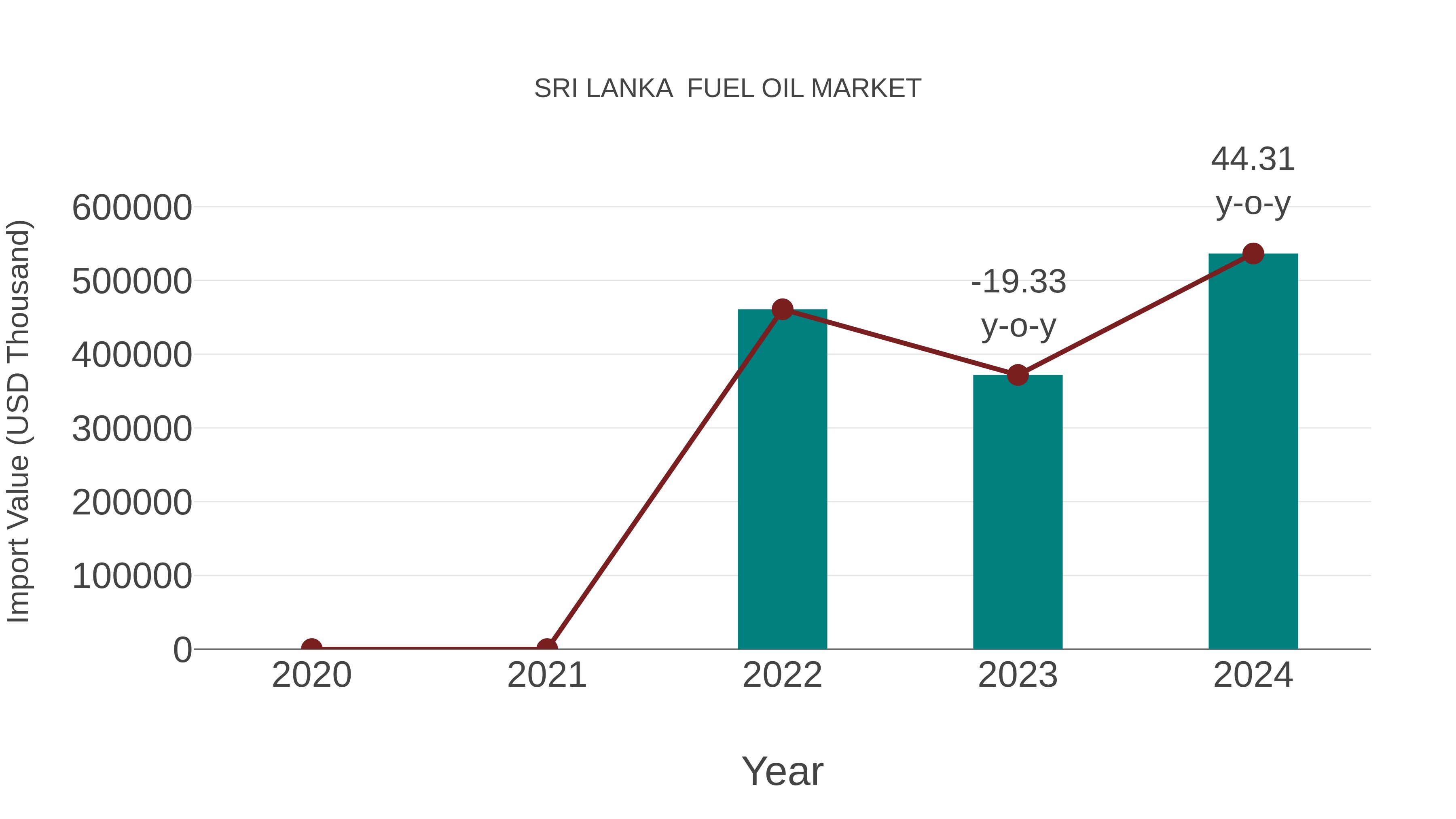
Sri Lanka fuel oil imports experienced a notable growth trend, with a 44.31% increase from 2023 to 2024. The compound annual growth rate (CAGR) for 2020-2024 stood at 7.9%. This surge can be attributed to the country`s increasing energy demands and evolving trade dynamics in the region.
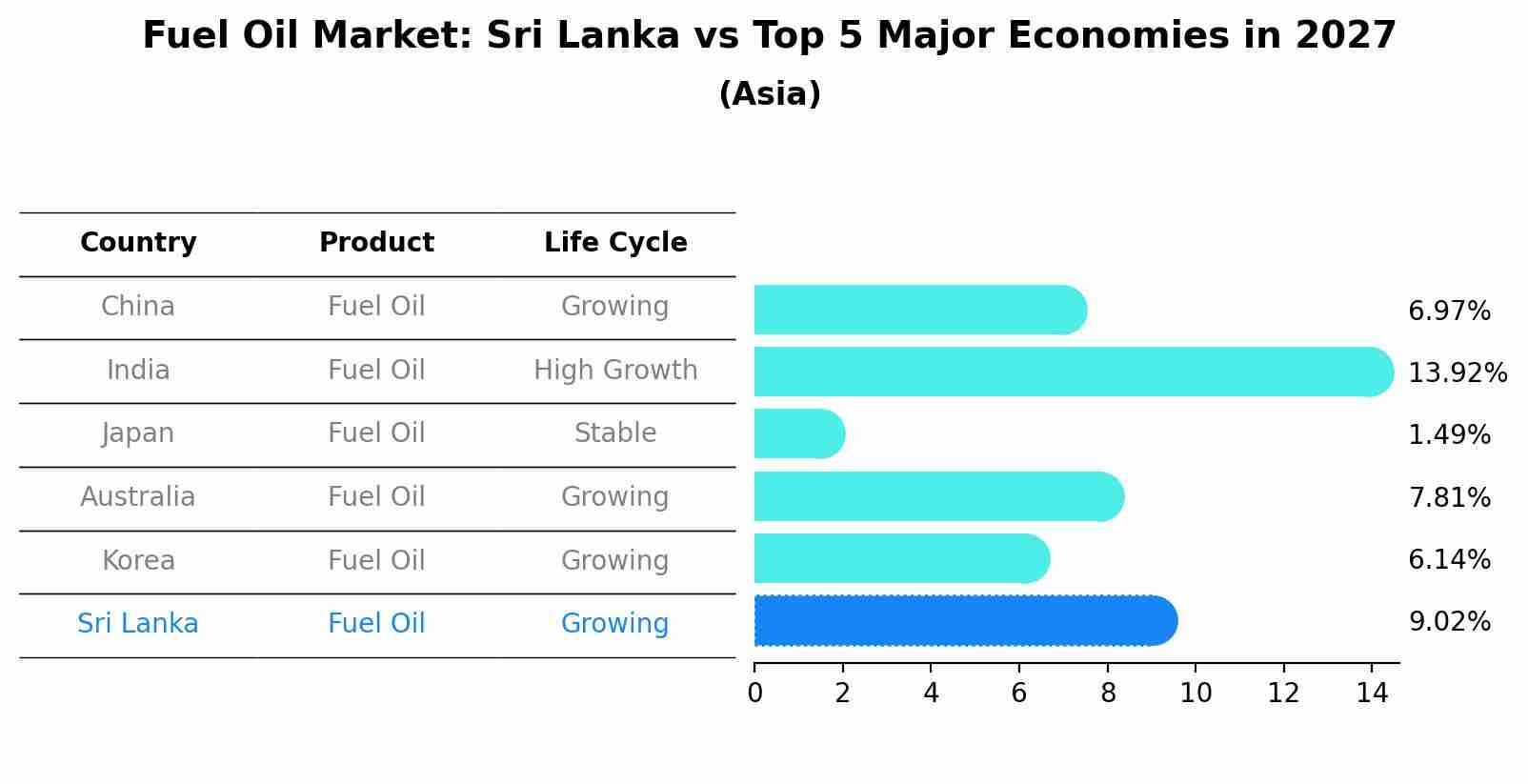
Fuel Oil Market: Sri Lanka vs Top 5 Major Economies in 2027 (Asia)
Sri Lanka's Fuel Oil market is anticipated to experience a growing growth rate of 9.02% by 2027, reflecting trends observed in the largest economy China, followed by India, Japan, Australia and South Korea.
Sri Lanka Fuel Oil Market Overview
The Sri Lankan fuel oil market is influenced by factors such as energy demand, industrial activities, and global oil price fluctuations. Fuel oil is predominantly used in power generation and industrial processes, contributing significantly to the country`s energy mix. Market dynamics are shaped by regulatory policies, energy infrastructure developments, and shifts towards cleaner and more sustainable energy sources amid environmental concerns and energy security considerations.
Drivers of the market
The fuel oil market in Sri Lanka is influenced by its essential role in energy generation, industrial processes, and transportation sectors. Despite global trends towards renewable energy sources, fuel oil remains crucial due to its affordability and reliability in meeting energy demands. Economic factors, geopolitical developments, and regulatory policies affecting energy pricing and supply contribute to market dynamics, impacting both consumers and businesses reliant on fuel oil.
Challenges of the market
The Sri Lanka fuel oil market encounters challenges related to price volatility, regulatory changes, and environmental concerns. Balancing the demand for affordable fuel oil with compliance to stringent environmental regulations poses challenges for suppliers and consumers alike. Ensuring reliable supply chains amidst global market fluctuations and geopolitical uncertainties impacts market stability. Moreover, addressing technological advancements in alternative energy sources and sustainable practices requires industry adaptation and investment. Additionally, fostering transparency in pricing and promoting energy efficiency initiatives presents opportunities for market differentiation and long-term sustainability.
Government Policy of the market
Government policies in Sri Lanka regulate the fuel oil market to ensure supply security and environmental sustainability. Regulations cover importation, distribution, quality standards, and pricing mechanisms to stabilize the market and protect consumers from price volatility. Environmental regulations enforce emissions standards and promote cleaner fuel alternatives.
Key Highlights of the Report:
- Sri Lanka Fuel Oil Market Outlook
- Market Size of Sri Lanka Fuel Oil Market, 2021
- Forecast of Sri Lanka Fuel Oil Market, 2028
- Historical Data and Forecast of Sri Lanka Fuel Oil Revenues & Volume for the Period 2018 - 2028
- Sri Lanka Fuel Oil Market Trend Evolution
- Sri Lanka Fuel Oil Market Drivers and Challenges
- Sri Lanka Fuel Oil Price Trends
- Sri Lanka Fuel Oil Porter's Five Forces
- Sri Lanka Fuel Oil Industry Life Cycle
- Historical Data and Forecast of Sri Lanka Fuel Oil Market Revenues & Volume By Application for the Period 2018 - 2028
- Historical Data and Forecast of Sri Lanka Fuel Oil Market Revenues & Volume By Marine for the Period 2018 - 2028
- Historical Data and Forecast of Sri Lanka Fuel Oil Market Revenues & Volume By Industrial for the Period 2018 - 2028
- Historical Data and Forecast of Sri Lanka Fuel Oil Market Revenues & Volume By Others for the Period 2018 - 2028
- Sri Lanka Fuel Oil Import Export Trade Statistics
- Market Opportunity Assessment By Application
- Sri Lanka Fuel Oil Top Companies Market Share
- Sri Lanka Fuel Oil Competitive Benchmarking By Technical and Operational Parameters
- Sri Lanka Fuel Oil Company Profiles
- Sri Lanka Fuel Oil Key Strategic Recommendations






































