Sri Lanka Higher Education Market Size & Growth Rate (2026-2032)
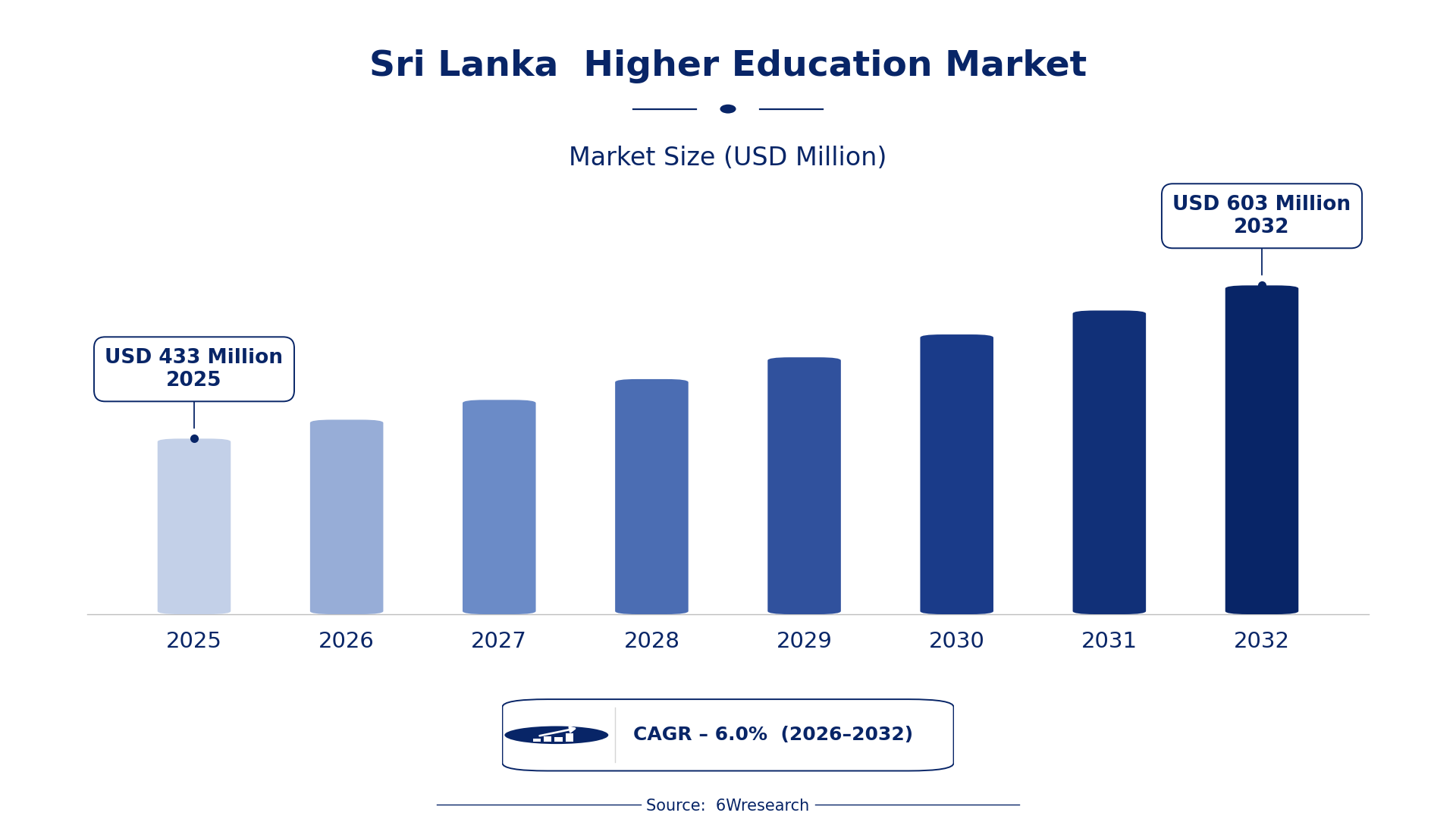
The Sri Lanka Higher Education Market was estimated at USD 433 Million in 2025 and is projected to reach USD 603 Million by 2032, growing at a CAGR of 6.0% from 2026 to 2032.
Sri Lanka Higher Education Market Synopsis
The increasing enrollment rates in higher education are driving substantial growth in the Sri Lanka Higher Education Market. As the demand for skilled labor intensifies, educational institutions are adapting to provide relevant programs that meet industry needs.
Government initiatives aimed at enhancing educational infrastructure play a significant role in shaping this market. With a focus on technology-driven learning solutions and international collaborations, educational standards are expected to rise in the coming years.
Sri Lanka Higher Education Market Year-wise Growth Rate and Key Drivers
This graph illustrates the annual growth rates of the Sri Lanka Higher Education Market from 2021 to 2032, highlighting a steady upward trajectory and projected expansion over the forecast period.
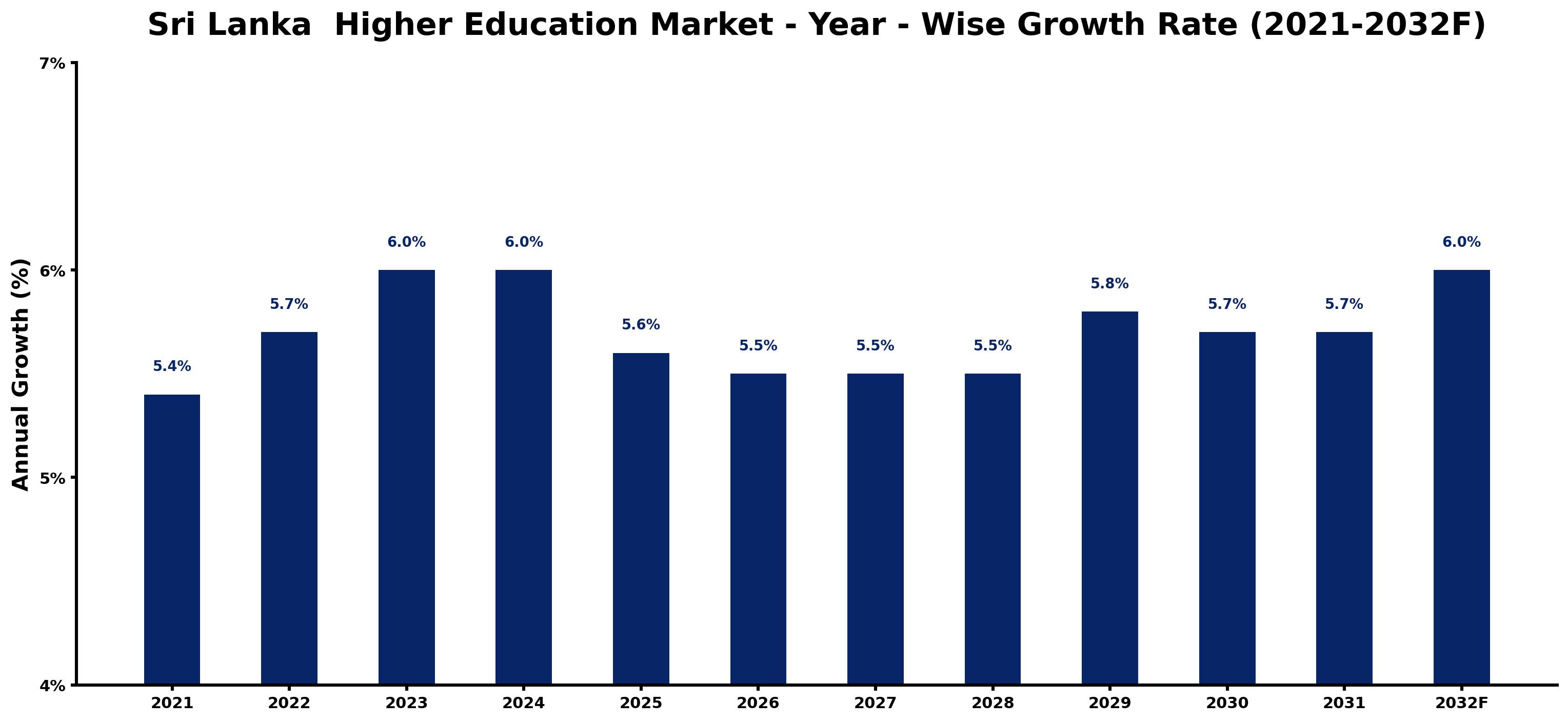
The table below presents the year‑wise growth rates along with the key drivers influencing the market
| Year | Growth Rate | Major Drivers |
| 2021 | 5.4% | New foreign university partnerships enhance local education quality. |
| 2022 | 5.7% | Increased scholarship programs boost student enrollment significantly. |
| 2023 | 6.0% | Growing online education platforms cater to rural students. |
| 2024 | 6.0% | Development of educational technology initiatives by the government. |
| 2025 | 5.6% | Increased emphasis on research funding from local universities. |
| 2026 | 5.5% | Growing expatriate Sri Lankan population drives educational demand. |
| 2027 | 5.5% | Strengthened international collaborations expand academic course offerings. |
| 2028 | 5.5% | Increased employment opportunities drive professional course enrollments. |
| 2029 | 5.8% | Government initiatives targeting higher education for sustainable development. |
| 2030 | 5.7% | Rising interest in postgraduate education among local professionals. |
| 2031 | 5.7% | Emergence of niche universities focusing on innovative disciplines. |
| 2032 | 6.0% | Growing public-private partnerships enhance educational infrastructure investments. |
Note: Market size estimations and growth projections presented in this report are based on 6Wresearch's proprietary forecasting methodology, utilizing the latest available industry data, government publications, and primary research inputs.
Sri Lanka Higher Education Market Key Takeaways
Below are some of the specific key takeaways from the market, including:
- The market is benefiting from increased government funding for educational infrastructure and research.
- Digital learning technologies are rapidly being integrated into curricula, enhancing accessibility and flexibility.
- International partnerships are creating opportunities for cross-border education and research initiatives.
- Growing industries are pushing for skilled graduates, emphasizing the need for curriculum relevance.
- Quality assurance mechanisms are being strengthened to improve educational outcomes and employability.
Evaluation of Restraints in Sri Lanka Higher Education Market
Despite promising growth, the Sri Lanka Higher Education Market faces several constraints. Funding issues remain a significant barrier, limiting the ability of institutions to innovate and enhance facilities. Quality assurance continues to be a concern, as many programs struggle to align with evolving industry standards. Additionally, the lack of research and development capabilities in universities hampers innovation, further affecting the employability of graduates.
Sri Lanka Higher Education Market Trends
Several trends are shaping the future of higher education in Sri Lanka. The integration of digital learning solutions is on the rise, driven by the need for flexible learning environments. Collaborative programs with international institutions are becoming increasingly common, enhancing educational quality and global exposure for students. on top of that, there is a noticeable shift towards aligning academic programs with the skills required in emerging industries.
Sri Lanka Higher Education Market Opportunities
The market presents several growth opportunities, particularly in technology-driven education. Institutions that invest in digital platforms can attract a broader student base, especially from remote areas. Additionally, the demand for specialized courses in fields like data science, artificial intelligence, and sustainable development is on the rise. Collaborations with foreign universities to offer joint degrees can also enhance the attractiveness of local institutions.
Government Initiatives in the Sri Lanka Higher Education Market
Government policies are actively shaping the Sri Lanka Higher Education Market, focusing on improving accessibility, quality, and alignment with industry needs. Recent initiatives reflect a commitment to enhancing educational standards through increased funding and international collaborations. These efforts are vital for ensuring that the education system meets the demands of a competitive job market.
- A recently launched initiative provides scholarships to underprivileged students, promoting greater access to higher education.
- A national digital infrastructure upgrade programme is currently underway, aimed at improving online learning capabilities across universities.
- A regulatory framework introduced in 2025 mandates quality assurance protocols for all higher education institutions.
- Upcoming plans include a public-private partnership expected to expand vocational training programs by 2028.
Future Insights of the Sri Lanka Higher Education Market
Looking ahead to 2026-2032, the Sri Lanka Higher Education Market is set to evolve significantly. With a continued focus on digital learning and industry collaboration, educational institutions will likely see increased enrollment and improved outcomes. The integration of international standards and partnerships will play a crucial role in enhancing the overall quality of higher education in the country.
Sri Lanka Higher Education Market Latest Developments
In the past year, the Sri Lanka Higher Education Market has experienced a surge in developments aimed at improving educational access and quality. Institutions are increasingly adopting digital tools to enhance learning experiences, reflecting a shift towards modern educational practices.
- A major technology vendor launched a comprehensive e-learning platform in early 2025, now being adopted by several universities.
- An initiative that began in mid-2025 is focused on training faculty members in digital pedagogy, which remains ongoing.
- Plans for a new campus dedicated to research and development are expected to begin construction in the second half of 2026.
- A collaborative project between local universities and international institutions was completed in late 2025, enhancing research capabilities.
Sri Lanka Higher Education Market - Key Attractiveness of the Report
- 10 Years of Market Numbers
- Historical Data Starting from 2022 to 2025
- Base Year: 2025
- Forecast Data until 2032
- Key Performance Indicators Impacting the Market
- Major Upcoming Developments and Projects
Key Highlights of the Report:
- Sri Lanka Higher Education Market Outlook
- Market Size of Sri Lanka Higher Education Market, 2025
- Forecast of Sri Lanka Higher Education Market, 2032
- Historical Data and Forecast of Sri Lanka Higher Education Revenues & Volume for the Period 2022-2032F
- Sri Lanka Higher Education Market Trend Evolution
- Sri Lanka Higher Education Market Drivers and Challenges
- Sri Lanka Higher Education Price Trends
- Sri Lanka Higher Education Porter's Five Forces
- Sri Lanka Higher Education Industry Life Cycle
- Historical Data and Forecast of Sri Lanka Higher Education Market Revenues & Volume By Component for the Period 2022-2032F
- Historical Data and Forecast of Sri Lanka Higher Education Market Revenues & Volume By Solutions for the Period 2022-2032F
- Historical Data and Forecast of Sri Lanka Higher Education Market Revenues & Volume By Services for the Period 2022-2032F
- Historical Data and Forecast of Sri Lanka Higher Education Market Revenues & Volume By Deployment Type for the Period 2022-2032F
- Historical Data and Forecast of Sri Lanka Higher Education Market Revenues & Volume By On-premises for the Period 2022-2032F
- Historical Data and Forecast of Sri Lanka Higher Education Market Revenues & Volume By Cloud for the Period 2022-2032F
- Historical Data and Forecast of Sri Lanka Higher Education Market Revenues & Volume By Vertical for the Period 2022-2032F
- Historical Data and Forecast of Sri Lanka Higher Education Market Revenues & Volume By State Universities for the Period 2022-2032F
- Historical Data and Forecast of Sri Lanka Higher Education Market Revenues & Volume By Community Colleges for the Period 2022-2032F
- Historical Data and Forecast of Sri Lanka Higher Education Market Revenues & Volume By Private Colleges for the Period 2022-2032F
- Sri Lanka Higher Education Import Export Trade Statistics
- Market Opportunity Assessment By Component
- Market Opportunity Assessment By Deployment Type
- Market Opportunity Assessment By Vertical
- Sri Lanka Higher Education Top Companies Market Share
- Sri Lanka Higher Education Competitive Benchmarking By Technical and Operational Parameters
- Sri Lanka Higher Education Company Profiles
- Sri Lanka Higher Education Key Strategic Recommendations






































