Sri Lanka Kids Footwear Market Summary
The sri lanka kids footwear market was estimated at USD 230 Million in 2025 and is projected to reach USD 305 Million by 2032, growing at a CAGR of 4.7% from 2026 to 2032.
Sri Lanka Kids Footwear Market Year-wise Growth Rate and Key Drivers
This graph highlights how the Sri Lanka Kids Footwear Market has steadily grown over the past five years, supported by major growth factors.
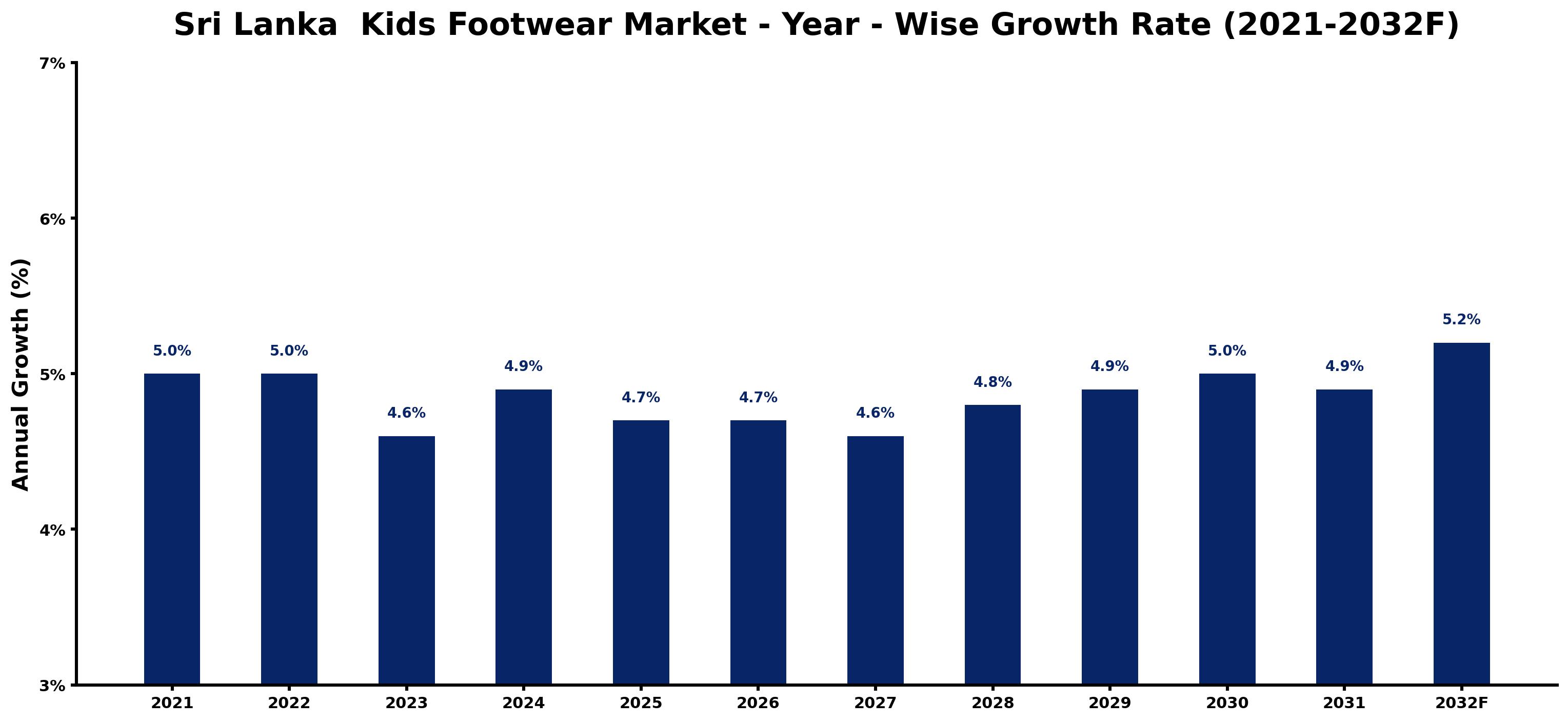
The table below presents the year wise growth rates along with the key drivers influencing the market
| Year | Growth Rate | Major Drivers |
| 2021 | 5.0% | Economic recovery post-COVID led to increased consumer spending on kids' footwear. |
| 2022 | 5.0% | Cultural shifts towards health and wellness encouraged active lifestyles among children. |
| 2023 | 4.6% | Local brands gained popularity, offering affordable and stylish options for parents. |
| 2024 | 4.9% | E-commerce platforms expanded, providing convenient access to diverse footwear selections. |
| 2025 | 4.7% | Increased awareness of foot health prompted interest in specialized children's shoes. |
| 2026 | 4.7% | Rising disposable incomes allowed families to invest in higher-quality footwear. |
| 2027 | 4.6% | Urbanization accelerated, leading to greater demand for durable, stylish kids' shoes. |
| 2028 | 4.8% | Sustainable material usage became a top trend, influencing brand offerings significantly. |
| 2029 | 4.9% | Innovative designs integrated comfort features that appealed to both children and parents. |
| 2030 | 5.0% | Social media marketing effectively reached tech-savvy parents seeking trendy footwear options. |
| 2031 | 4.9% | Strong community engagement by brands fostered loyalty among local consumers. |
| 2032 | 5.2% | International collaborations introduced global trends, further diversifying the kids' footwear market. |
Note - Market size estimations and growth projections presented in this report are based on 6Wresearch's advanced forecasting approach, validated with industry datasets as of June 2026.
Sri Lanka Kids Footwear Market Synopsis
The Sri Lanka Kids Footwear Market is projected to reach 4.7% and witness significant growth during the forecast period (2026-2032). The market is expected to register a compound annual growth rate (CAGR) of 5.5%, propelled by a combination of demographic and economic factors. The increasing population coupled with rising disposable incomes contributes notably to this growth. Moreover, a growing awareness regarding the health and safety benefits of well-fitted footwear is anticipated to further propel the demand for quality kids' shoes across the country. With a rising focus on fashion and lifestyle choices among the youth, along with international brands venturing into the Sri Lankan footwear sector, the market landscape is ripe for expansion. Nevertheless, challenges such as counterfeit products and the high costs associated with branded footwear could impede growth, notwithstanding the burgeoning trend of online shopping which promises to enhance accessibility and affordability.
Sri Lanka Kids Footwear Market Growth Drivers
The growth of the Sri Lanka Kids Footwear Market is underscored by various drivers that collectively create a conducive environment for expansion. Firstly, the demographic trends indicate a rising population, specifically among children, which inherently boosts the demand for kids' footwear. Secondly, the increase in disposable incomes allows families to invest more in quality footwear for their children, making it a prime driver of market growth.
- The rising awareness of the importance of proper footwear for children's health is encouraging parents to prioritize well-fitted shoes over cheaper alternatives.
- The ongoing development of innovative designs tailored for children's preferences is fostering a stronger connection with fashion-conscious parents and their children alike.
- International brands are increasingly targeting the Sri Lankan market, bringing with them advanced manufacturing techniques and high-quality materials that appeal to the local consumer base.
- The influence of social media and fashion trends is significantly shaping purchasing behavior, driving parents to favor trendy yet functional options for their kids.
- Government initiatives aimed at enhancing the overall retail landscape contribute positively, as they pave the way for both local and foreign investment into the footwear industry.
Sri Lanka Kids Footwear Market Trends and Opportunities
Several trends are emerging in the Sri Lanka Kids Footwear Market that present lucrative opportunities for expansion and innovation. The evolving consumer behavior towards online shopping has led to the proliferation of e-commerce platforms that cater specifically to children's footwear. This shift not only increases accessibility for consumers but also provides a convenient shopping experience.
- There is a marked increase in the popularity of athleisure wear among children, leading to a surge in demand for comfortable and versatile footwear options.
- Personalization in footwear, where consumers can customize designs, is gaining traction, appealing to the desire for unique products among parents and children.
- Brands are increasingly focusing on sustainable materials in their product offerings, driven by a growing awareness of environmental issues among consumers.
- Collaborations between footwear brands and children's celebrities or influencers are on the rise, creating a buzz and enhancing brand visibility in the market.
- Seasonal sales and promotions via online platforms are becoming common, providing consumers with opportunities to purchase quality footwear at discounted prices.
Sri Lanka Kids Footwear Market Challenges and Restraints
Despite the promising growth trajectory, the Sri Lanka Kids Footwear Market faces several challenges that could dampen its expansion. The prevalence of counterfeit footwear products in the market poses a significant threat to established brands, as these products often come at a lower price point and can mislead consumers.
- Counterfeit products not only undermine brand integrity but also lead to safety concerns regarding quality, which can deter parents from trusting certain brands.
- The high cost of branded footwear may restrict affordability for certain segments of the consumer population, particularly in lower-income families.
- The fluctuating economic environment can impact disposable incomes, leading to cautious spending among consumers on non-essential items like footwear.
- Seasonal fluctuations in demand can result in inventory challenges for retailers, particularly during off-peak months.
- The rapid pace of fashion evolution demands a continuous adaptation by brands, which may be challenging for smaller players lacking resources.
Sri Lanka Kids Footwear Market Government Investment and Initiatives
The Sri Lankan government plays a pivotal role in fostering a conducive environment for the growth of the kids' footwear market through various initiatives. Public spending on infrastructure development enhances retail spaces and logistics, crucial for foot traffic and distribution of footwear. Additionally, the government is emphasizing support for local manufacturing, which can lead to job creation and stimulate the economy.
- Incentives for foreign direct investments (FDI) in the retail and manufacturing sectors are being promoted, encouraging international brands to establish a presence in Sri Lanka.
- Trade agreements are being explored to reduce import tariffs on raw materials, thus benefiting local manufacturers by lowering production costs.
- Educational campaigns focused on health and safety emphasize the importance of quality footwear in child health, driving consumer awareness and demand.
- The government is also investing in public awareness programs that encourage parents to make informed purchasing decisions related to children's footwear.
- Regulatory frameworks are being strengthened to combat counterfeit products, ensuring that consumers have access to genuine and high-quality footwear.
Sri Lanka Kids Footwear Market Latest Developments (May 2025 - June 2026)
Recent developments in the Sri Lanka Kids Footwear Market have showcased a dynamic shift towards digitalization and innovation. The period from May 2025 to June 2026 has seen a notable increase in the adoption of e-commerce platforms by consumers, driving both sales and brand visibility. Retailers are increasingly investing in online marketing strategies to reach broader audiences.
- There has been a marked rise in online sales, with retailers leveraging social media advertising to attract tech-savvy parents.
- Collaborative partnerships among local manufacturers and international brands have become more common, enhancing the product offerings available to consumers.
- The emphasis on health and sustainability has prompted brands to innovate with eco-friendly materials and ergonomic designs in their footwear.
- Promotional events and discounts during key shopping seasons have resulted in increased consumer participation, positively impacting overall sales.
- Awareness campaigns regarding the benefits of proper footwear have grown, fostering a knowledge-driven consumer base.
Sri Lanka Kids Footwear Market - Key Attractiveness of the Report
- 10 Years of Market Numbers
- Historical Data Starting from 2022 to 2025
- Base Year: 2025
- Forecast Data until 2032
- Key Performance Indicators Impacting the Market
- Major Upcoming Developments and Projects
Key Highlights of the Report:
- Sri Lanka Kids Footwear Market Outlook
- Market Size of Sri Lanka Kids Footwear Market, 2025
- Forecast of Sri Lanka Kids Footwear Market, 2032F
- Historical Data and Forecast of Sri Lanka Kids Footwear Revenues & Volume for the Period 2022-2032F
- Sri Lanka Kids Footwear Market Trend Evolution
- Sri Lanka Kids Footwear Market Drivers and Challenges
- Sri Lanka Kids Footwear Price Trends
- Sri Lanka Kids Footwear Porter's Five Forces
- Sri Lanka Kids Footwear Industry Life Cycle
- Historical Data and Forecast of Sri Lanka Kids Footwear Market Revenues & Volume By Product Type for the Period 2022-2032F
- Historical Data and Forecast of Sri Lanka Kids Footwear Market Revenues & Volume By Casual for the Period 2022-2032F
- Historical Data and Forecast of Sri Lanka Kids Footwear Market Revenues & Volume By Sports for the Period 2022-2032F
- Historical Data and Forecast of Sri Lanka Kids Footwear Market Revenues & Volume By Formal for the Period 2022-2032F
- Historical Data and Forecast of Sri Lanka Kids Footwear Market Revenues & Volume By Others for the Period 2022-2032F
- Historical Data and Forecast of Sri Lanka Kids Footwear Market Revenues & Volume By End-users for the Period 2022-2032F
- Historical Data and Forecast of Sri Lanka Kids Footwear Market Revenues & Volume By Boys for the Period 2022-2032F
- Historical Data and Forecast of Sri Lanka Kids Footwear Market Revenues & Volume By Girls for the Period 2022-2032F
- Historical Data and Forecast of Sri Lanka Kids Footwear Market Revenues & Volume By Unisex for the Period 2022-2032F
- Sri Lanka Kids Footwear Import Export Trade Statistics
- Market Opportunity Assessment By Product Type
- Market Opportunity Assessment By End-users
- Sri Lanka Kids Footwear Top Companies Market Share
- Sri Lanka Kids Footwear Competitive Benchmarking By Technical and Operational Parameters
- Sri Lanka Kids Footwear Company Profiles
- Sri Lanka Kids Footwear Key Strategic Recommendations






































