Finland Kids Footwear Market Size (2020-2030)
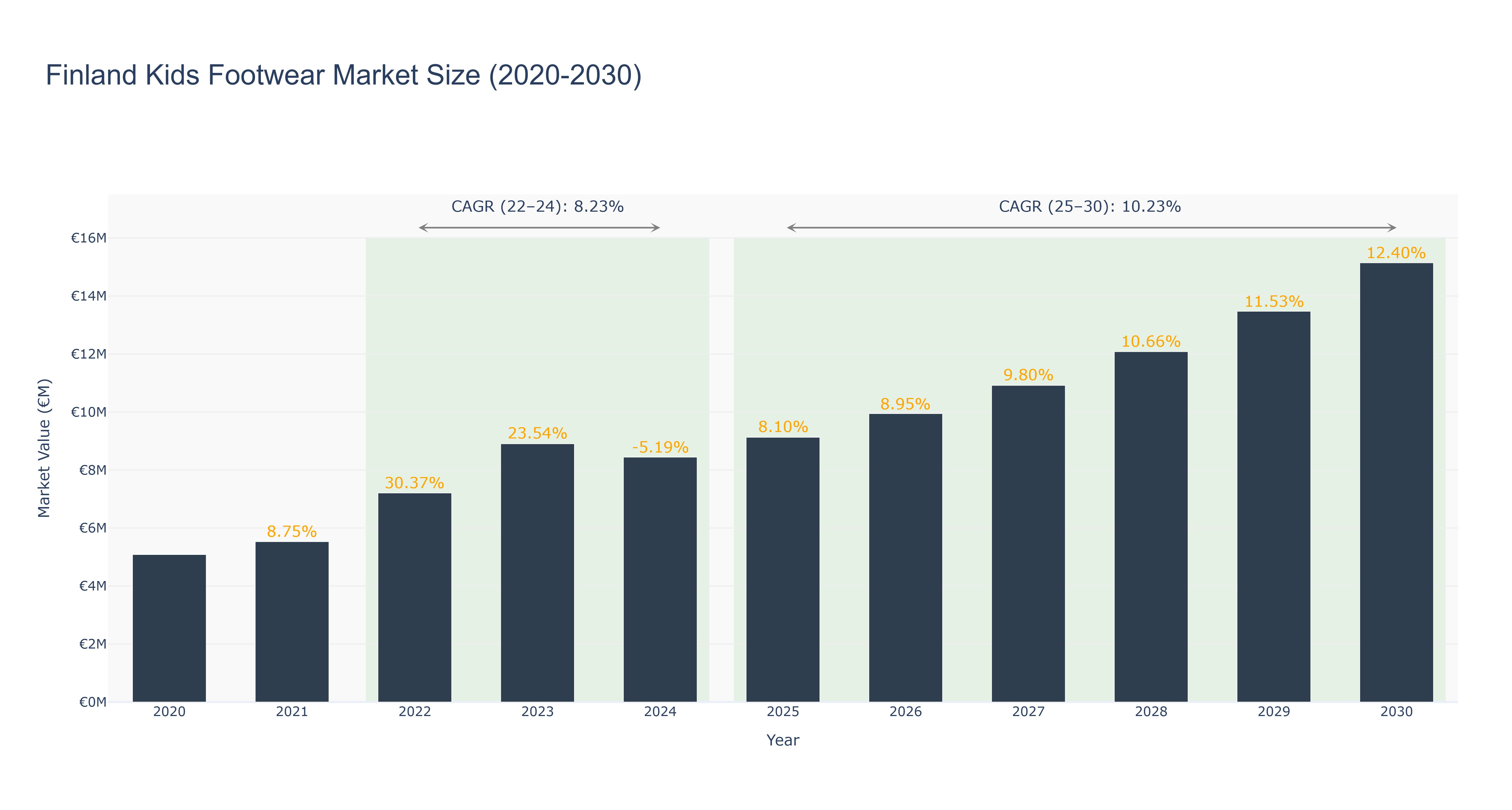
Finland Kids Footwear Market has shown a steady growth trajectory over the years. The peak market size of €15.14 million is forecasted for 2030, with a notable increase from the current market size of €9.94 million in 2026. The market experienced a slight decline in 2024 due to a temporary dip in consumer demand, but quickly recovered and maintained positive growth thereafter. The CAGR for the period 2025-2030 is 10.23%, indicating a strong potential for sustained growth. Industry drivers such as increasing disposable income, changing fashion trends, and a focus on children's health and comfort contribute to the market's positive outlook. Looking ahead, Finland is set to introduce innovative sustainable footwear materials in the kids' segment, aligning with the growing eco-conscious consumer preferences and driving further market expansion.
Finland Kids Footwear Market: Production & Trade Performance (2019-2025)
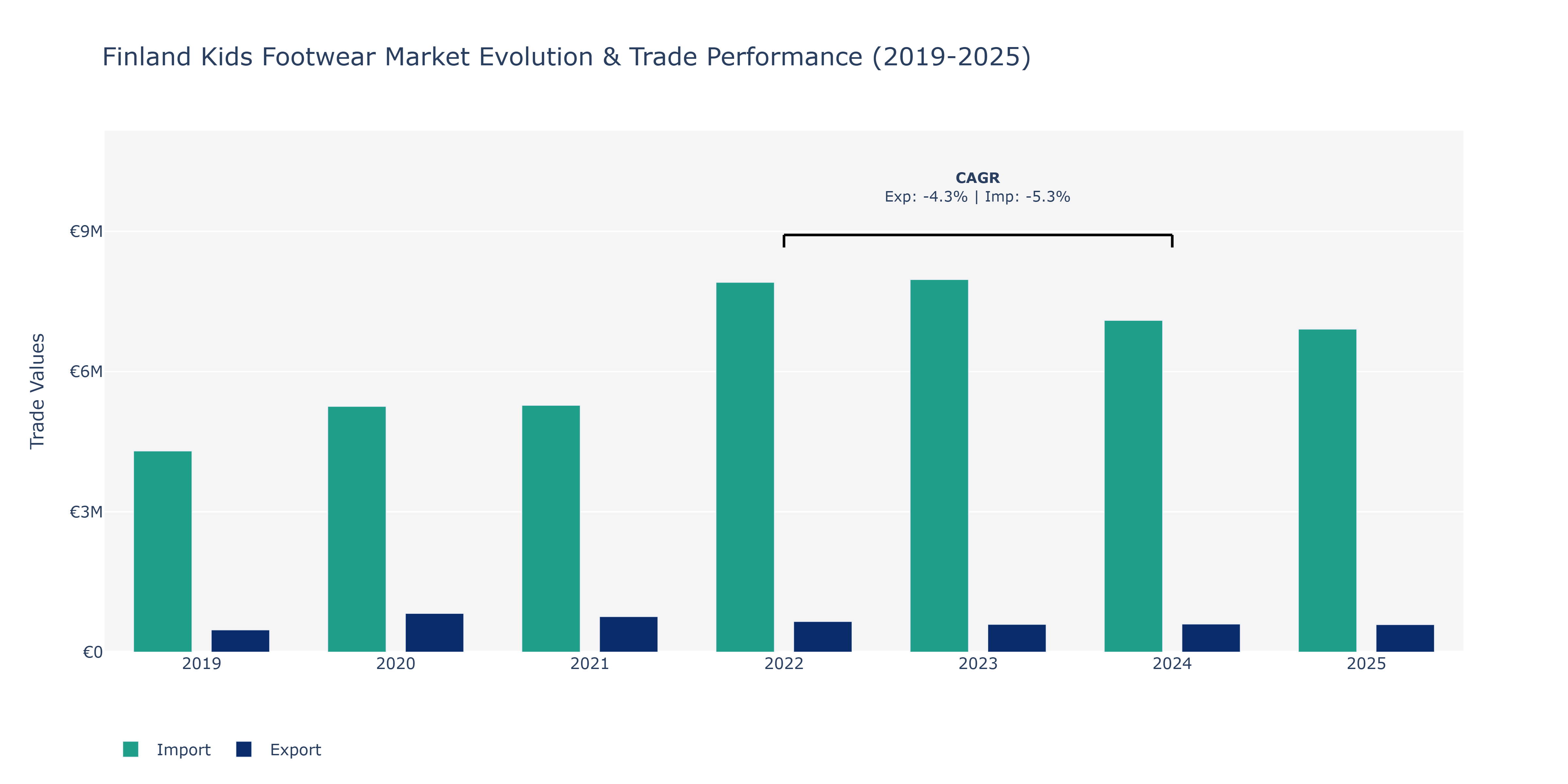
In the Finland Kids Footwear Market, exports and imports experienced varying trends during the analyzed period. From 2019 to 2020, exports surged from €472.54 thousand to €823.72 thousand, marking a substantial increase. In contrast, imports also saw a notable rise, reaching €5.25 million in 2020. However, in the following years, both exports and imports fluctuated. While exports declined to €590.85 thousand in 2023 before slightly recovering in 2025 to €585.97 thousand, imports peaked in 2023 at €7.97 million. The market likely witnessed these shifts due to evolving consumer preferences, changing fashion trends, and economic conditions impacting purchasing power. With a focus on sustainability and comfort gaining traction in children's footwear, manufacturers and retailers may adjust their strategies to meet these demands, influencing trade volumes in the market.
Key Highlights of the Report:
- Finland Kids Footwear Market Outlook
- Market Size of Finland Kids Footwear Market, 2024
- Forecast of Finland Kids Footwear Market, 2031
- Historical Data and Forecast of Finland Kids Footwear Revenues & Volume for the Period 2021-2031
- Finland Kids Footwear Market Trend Evolution
- Finland Kids Footwear Market Drivers and Challenges
- Finland Kids Footwear Price Trends
- Finland Kids Footwear Porter`s Five Forces
- Finland Kids Footwear Industry Life Cycle
- Historical Data and Forecast of Finland Kids Footwear Market Revenues & Volume By Product Type for the Period 2021-2031
- Historical Data and Forecast of Finland Kids Footwear Market Revenues & Volume By Casual for the Period 2021-2031
- Historical Data and Forecast of Finland Kids Footwear Market Revenues & Volume By Sports for the Period 2021-2031
- Historical Data and Forecast of Finland Kids Footwear Market Revenues & Volume By Formal for the Period 2021-2031
- Historical Data and Forecast of Finland Kids Footwear Market Revenues & Volume By Others for the Period 2021-2031
- Historical Data and Forecast of Finland Kids Footwear Market Revenues & Volume By End-users for the Period 2021-2031
- Historical Data and Forecast of Finland Kids Footwear Market Revenues & Volume By Boys for the Period 2021-2031
- Historical Data and Forecast of Finland Kids Footwear Market Revenues & Volume By Girls for the Period 2021-2031
- Historical Data and Forecast of Finland Kids Footwear Market Revenues & Volume By Unisex for the Period 2021-2031
- Finland Kids Footwear Import Export Trade Statistics
- Market Opportunity Assessment By Product Type
- Market Opportunity Assessment By End-users
- Finland Kids Footwear Top Companies Market Share
- Finland Kids Footwear Competitive Benchmarking By Technical and Operational Parameters
- Finland Kids Footwear Company Profiles
- Finland Kids Footwear Key Strategic Recommendations






































