Sri Lanka Luxury Leather Goods Market: Import Trend Analysis
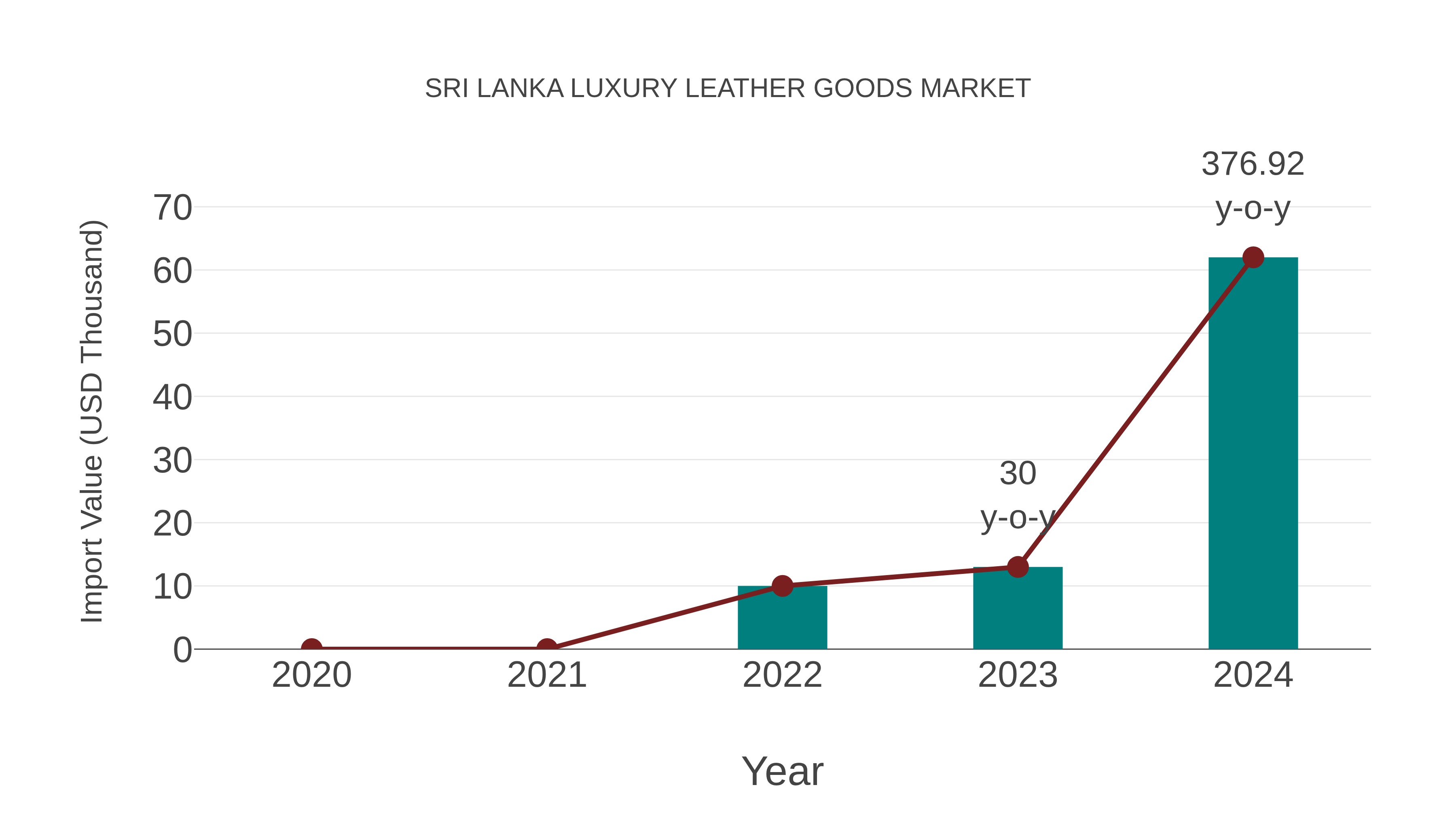
Sri Lanka luxury leather goods market witnessed a notable import trend, with a growth rate of 376.92% from 2023 to 2024 and a compound annual growth rate (CAGR) of 149.0% from 2020 to 2024. This surge can be attributed to increasing consumer demand for high-quality leather products in the region.
Sri Lanka Luxury Leather Goods Market Synopsis
The Sri Lanka Luxury Leather Goods Market is a growing sector driven by an increasing demand for high-quality, handcrafted leather products. The market offers a range of luxury items such as handbags, wallets, belts, and shoes, catering to a discerning clientele seeking premium quality and unique designs. Local artisans and manufacturers contribute significantly to the market by producing exquisite leather goods using traditional techniques and superior materials. The market is also influenced by global luxury brands entering the country and offering a diverse selection of upscale leather products. With a focus on sustainability and ethical production practices, the Sri Lanka Luxury Leather Goods Market is poised for further growth, attracting both domestic and international consumers looking for luxury items that reflect craftsmanship and sophistication.
Sri Lanka Luxury Leather Goods Market Trends
The Sri Lanka Luxury Leather Goods Market is experiencing growth driven by increasing disposable incomes, changing consumer preferences towards luxury and premium products, and a growing fashion-conscious population. Key trends in the market include a surge in demand for high-quality, locally-made leather goods, a preference for sustainable and ethically produced items, and a rising interest in unique and artisanal designs. Opportunities lie in expanding product offerings to cater to niche segments such as personalized/customized products, leveraging digital platforms for marketing and sales, and collaborating with local craftsmen to showcase traditional craftsmanship in modern designs. With the potential for further market penetration and a focus on quality and craftsmanship, the Sri Lanka Luxury Leather Goods Market offers promising prospects for growth and innovation.
Sri Lanka Luxury Leather Goods Market Challenges
In the Sri Lanka Luxury Leather Goods Market, some challenges include high production costs due to the need for quality materials and skilled craftsmanship, which can make it difficult for local brands to compete with international luxury brands. Additionally, the market may face limited domestic demand due to a relatively small affluent consumer base, leading to a reliance on export markets for growth. Competition from established international luxury brands and counterfeit products also pose challenges for local luxury leather goods manufacturers in terms of brand recognition and market share. Furthermore, fluctuations in raw material prices and changing consumer preferences towards sustainability and ethical sourcing practices present additional hurdles for companies operating in this sector in Sri Lanka.
Sri Lanka Luxury Leather Goods Market Investment Opportunities
The Sri Lanka Luxury Leather Goods Market is primarily driven by a growing consumer preference for high-quality, premium leather products that offer durability, style, and status symbol. The increasing disposable income levels among the affluent population in Sri Lanka have also played a significant role in driving the demand for luxury leather goods. Additionally, the influence of global fashion trends, rising awareness about sustainable and ethically sourced materials, and the proliferation of luxury retail outlets and e-commerce platforms have further fueled the growth of the market. Moreover, the emphasis on craftsmanship and attention to detail in luxury leather goods manufacturing has attracted discerning consumers who value exclusivity and superior quality, contributing to the overall expansion of the luxury leather goods market in Sri Lanka.
Sri Lanka Luxury Leather Goods Market Government Polices
The Sri Lankan government has implemented various policies to support the luxury leather goods market, including providing incentives for local manufacturers to enhance product quality and design, promoting exports through trade agreements and partnerships with international luxury brands, and imposing regulations to ensure compliance with ethical sourcing practices and environmental standards. Additionally, the government has focused on skills development and training programs to nurture talent within the industry, as well as offering financial assistance and support for market expansion initiatives. Overall, these policies aim to boost the competitiveness of Sri Lanka`s luxury leather goods sector, attract foreign investment, and position the country as a key player in the global luxury market.
Sri Lanka Luxury Leather Goods Market Future Outlook
The future outlook for the Sri Lanka Luxury Leather Goods Market appears promising with a potential for steady growth. The demand for high-quality leather goods is expected to rise as consumers increasingly seek premium and unique products. Factors such as increasing disposable income, changing consumer preferences towards luxury items, and a growing awareness of sustainable and ethically sourced materials are likely to drive the market expansion. Additionally, the rise of e-commerce platforms and digital marketing strategies will provide opportunities for luxury leather goods brands to reach a wider audience and enhance their market presence. Overall, the market is poised for growth as luxury leather goods continue to be perceived as a status symbol and a reflection of personal style and taste in Sri Lanka.
Key Highlights of the Report:
- Sri Lanka Luxury Leather Goods Market Outlook
- Market Size of Sri Lanka Luxury Leather Goods Market, 2025
- Forecast of Sri Lanka Luxury Leather Goods Market, 2032
- Historical Data and Forecast of Sri Lanka Luxury Leather Goods Revenues & Volume for the Period 2022 - 2032F
- Sri Lanka Luxury Leather Goods Market Trend Evolution
- Sri Lanka Luxury Leather Goods Market Drivers and Challenges
- Sri Lanka Luxury Leather Goods Price Trends
- Sri Lanka Luxury Leather Goods Porter's Five Forces
- Sri Lanka Luxury Leather Goods Industry Life Cycle
- Historical Data and Forecast of Sri Lanka Luxury Leather Goods Market Revenues & Volume By Product for the Period 2022 - 2032F
- Historical Data and Forecast of Sri Lanka Luxury Leather Goods Market Revenues & Volume By High- Grade for the Period 2022 - 2032F
- Historical Data and Forecast of Sri Lanka Luxury Leather Goods Market Revenues & Volume By Low-Grade for the Period 2022 - 2032F
- Historical Data and Forecast of Sri Lanka Luxury Leather Goods Market Revenues & Volume By Mid-Grade for the Period 2022 - 2032F
- Historical Data and Forecast of Sri Lanka Luxury Leather Goods Market Revenues & Volume By Application for the Period 2022 - 2032F
- Historical Data and Forecast of Sri Lanka Luxury Leather Goods Market Revenues & Volume By Men for the Period 2022 - 2032F
- Historical Data and Forecast of Sri Lanka Luxury Leather Goods Market Revenues & Volume By Women for the Period 2022 - 2032F
- Historical Data and Forecast of Sri Lanka Luxury Leather Goods Market Revenues & Volume By Distribution Channel for the Period 2022 - 2032F
- Historical Data and Forecast of Sri Lanka Luxury Leather Goods Market Revenues & Volume By Offline Retail Stores for the Period 2022 - 2032F
- Historical Data and Forecast of Sri Lanka Luxury Leather Goods Market Revenues & Volume By Online Retail Stores for the Period 2022 - 2032F
- Sri Lanka Luxury Leather Goods Import Export Trade Statistics
- Market Opportunity Assessment By Product
- Market Opportunity Assessment By Application
- Market Opportunity Assessment By Distribution Channel
- Sri Lanka Luxury Leather Goods Top Companies Market Share
- Sri Lanka Luxury Leather Goods Competitive Benchmarking By Technical and Operational Parameters
- Sri Lanka Luxury Leather Goods Company Profiles
- Sri Lanka Luxury Leather Goods Key Strategic Recommendations






































