Switzerland Apple Juice Market Growth Rate Analysis (2025 - 2031)
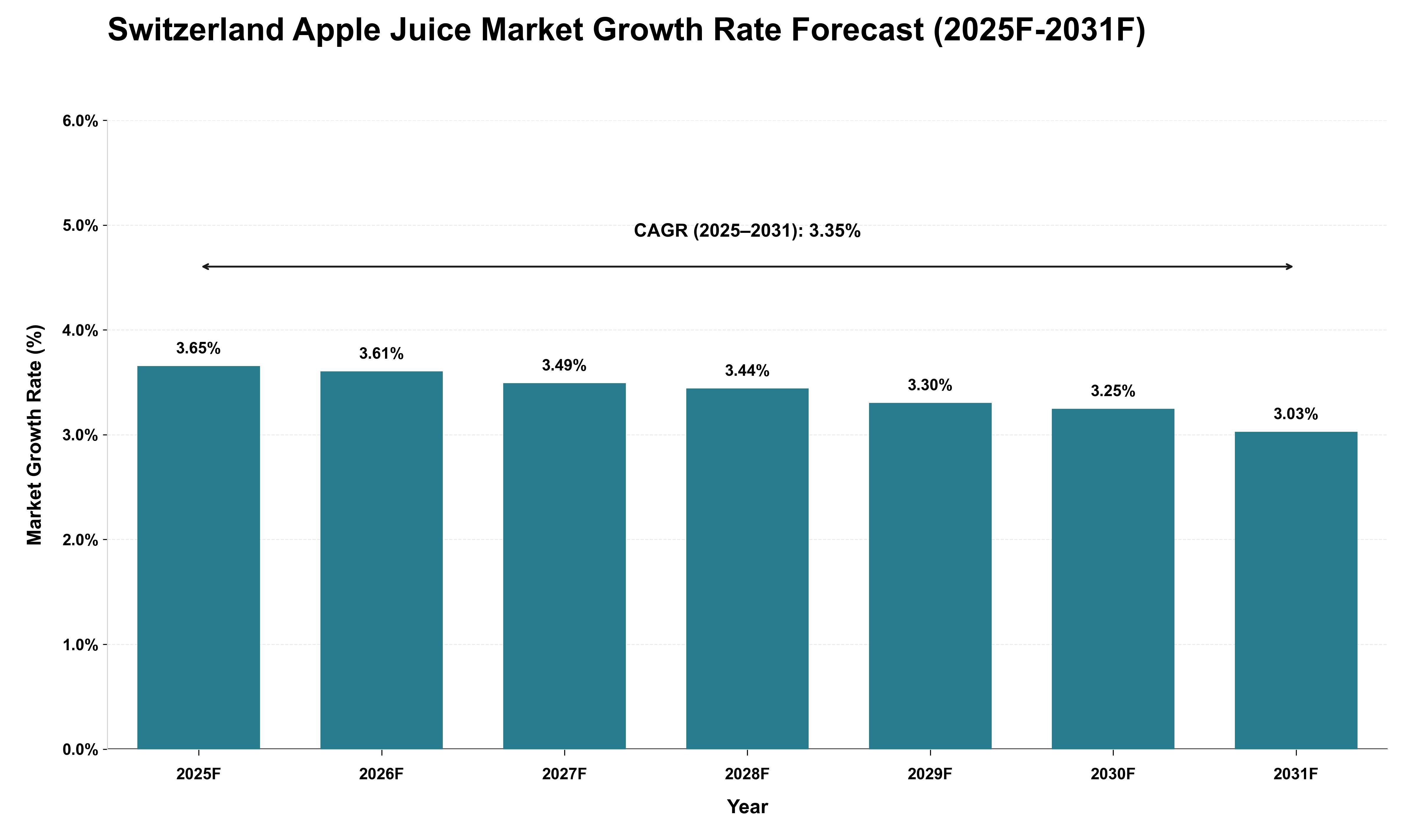
The projected compound annual growth rate of 3.35% for the Switzerland apple juice market from 2025 to 2031 indicates a steady expansion influenced by regulatory and trade policy factors. As Switzerland continues to prioritize sustainability, stricter regulations on agricultural practices and food safety standards will likely shape production methods, potentially increasing costs but also enhancing product quality. Import dependencies may fluctuate due to evolving trade agreements within Europe, impacting pricing dynamics and availability of raw materials. The gradual decline in annual growth rates—from 3.65% in 2025 to 3.03% by 2031—suggests that while demand remains robust, external pressures such as changing consumer preferences towards healthier alternatives and economic cycles could moderate growth. Overall, the apple juice market will navigate these complexities while adapting to regulatory frameworks that promote both local production and sustainable sourcing practices.
Key Highlights of the Report:
- Switzerland Apple Juice Market Outlook
- Market Size of Switzerland Apple Juice Market, 2024
- Forecast of Switzerland Apple Juice Market, 2031
- Historical Data and Forecast of Switzerland Apple Juice Revenues & Volume for the Period 2021-2031
- Switzerland Apple Juice Market Trend Evolution
- Switzerland Apple Juice Market Drivers and Challenges
- Switzerland Apple Juice Price Trends
- Switzerland Apple Juice Porter`s Five Forces
- Switzerland Apple Juice Industry Life Cycle
- Historical Data and Forecast of Switzerland Apple Juice Market Revenues & Volume By Type for the Period 2021-2031
- Historical Data and Forecast of Switzerland Apple Juice Market Revenues & Volume By Filtered for the Period 2021-2031
- Historical Data and Forecast of Switzerland Apple Juice Market Revenues & Volume By Unfiltered for the Period 2021-2031
- Historical Data and Forecast of Switzerland Apple Juice Market Revenues & Volume By Application for the Period 2021-2031
- Historical Data and Forecast of Switzerland Apple Juice Market Revenues & Volume By Commercial for the Period 2021-2031
- Historical Data and Forecast of Switzerland Apple Juice Market Revenues & Volume By Household for the Period 2021-2031
- Switzerland Apple Juice Import Export Trade Statistics
- Market Opportunity Assessment By Type
- Market Opportunity Assessment By Application
- Switzerland Apple Juice Top Companies Market Share
- Switzerland Apple Juice Competitive Benchmarking By Technical and Operational Parameters
- Switzerland Apple Juice Company Profiles
- Switzerland Apple Juice Key Strategic Recommendations






































