Switzerland Lumber Market Size Growth Rate
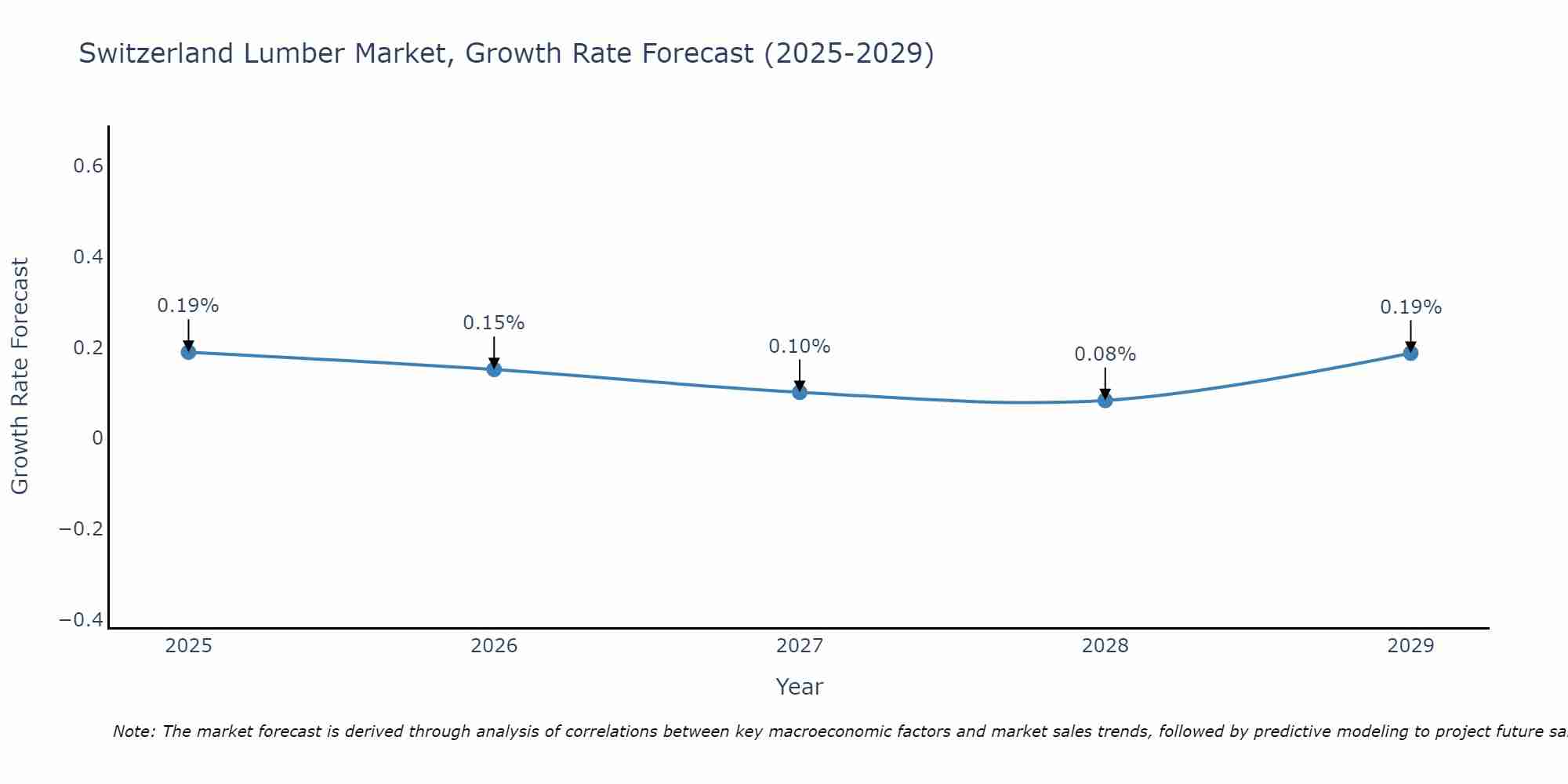
The Switzerland Lumber Market is projected to witness mixed growth rate patterns during 2025 to 2029. Although the growth rate starts strong at 0.19% in 2025, it steadily loses momentum, ending at 0.19% by 2029.
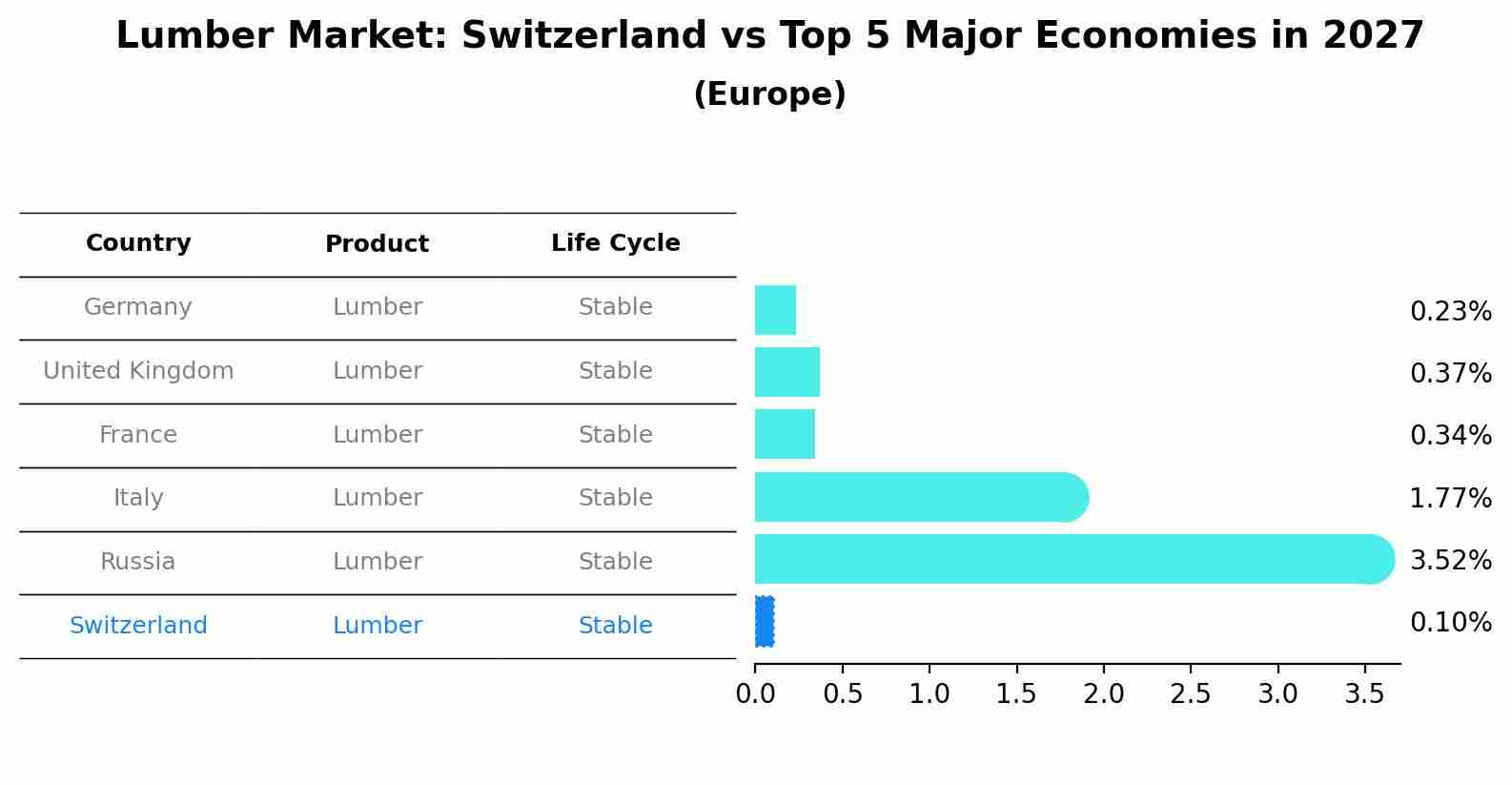
Lumber Market: Switzerland vs Top 5 Major Economies in 2027 (Europe)
By 2027, the Lumber market in Switzerland is anticipated to reach a growth rate of 0.10%, as part of an increasingly competitive Europe region, where Germany remains at the forefront, supported by United Kingdom, France, Italy and Russia, driving innovations and market adoption across sectors.
Switzerland Lumber Market Overview
The lumber market in Switzerland is characterized by a steady demand from the construction and furniture industries, where wood is valued for its aesthetic appeal, durability, and sustainability. The market is influenced by environmental considerations, with a focus on sustainable forestry practices and certified wood products. Growth in the housing sector and a preference for eco-friendly building materials continue to drive the lumber market, supported by innovations in wood processing and treatment.
Drivers of the market
The lumber market in Switzerland is driven by the increasing demand for sustainable building materials in the construction industry. As eco-conscious consumers and builders prioritize environmentally friendly options, the demand for high-quality lumber rises. The trend towards timber framing and green building practices further supports market growth. Additionally, innovations in lumber processing and treatment enhance the quality and versatility of lumber products.
Challenges of the market
The lumber market faces challenges related to sustainability and supply chain dynamics. As consumer demand for sustainable building materials grows, lumber producers must ensure that their sourcing practices are environmentally responsible. This requires compliance with regulations governing forestry practices and the use of certified sustainable wood. Additionally, fluctuations in supply due to weather events and market conditions can impact pricing and availability, necessitating strategic planning and risk management to navigate these challenges.
Government Policy of the market
The lumber market in Switzerland is shaped by government policies focused on sustainable forestry practices and environmental conservation. Regulations ensure the responsible sourcing and harvesting of timber, promoting eco-friendly practices in the lumber industry. Financial support for sustainable forestry initiatives encourages the growth of certified lumber products. The government`s commitment to biodiversity and forest conservation aligns with the demand for sustainable lumber, driving growth in this market while supporting local economies.
Key Highlights of the Report:
- Switzerland Lumber Market Outlook
- Market Size of Switzerland Lumber Market, 2024
- Forecast of Switzerland Lumber Market, 2031
- Historical Data and Forecast of Switzerland Lumber Revenues & Volume for the Period 2021-2031
- Switzerland Lumber Market Trend Evolution
- Switzerland Lumber Market Drivers and Challenges
- Switzerland Lumber Price Trends
- Switzerland Lumber Porter`s Five Forces
- Switzerland Lumber Industry Life Cycle
- Historical Data and Forecast of Switzerland Lumber Market Revenues & Volume By Types for the Period 2021-2031
- Historical Data and Forecast of Switzerland Lumber Market Revenues & Volume By Hardwood Lumber for the Period 2021-2031
- Historical Data and Forecast of Switzerland Lumber Market Revenues & Volume By Softwood Lumber for the Period 2021-2031
- Historical Data and Forecast of Switzerland Lumber Market Revenues & Volume By Application for the Period 2021-2031
- Historical Data and Forecast of Switzerland Lumber Market Revenues & Volume By Construction for the Period 2021-2031
- Historical Data and Forecast of Switzerland Lumber Market Revenues & Volume By Furniture for the Period 2021-2031
- Historical Data and Forecast of Switzerland Lumber Market Revenues & Volume By Flooring for the Period 2021-2031
- Historical Data and Forecast of Switzerland Lumber Market Revenues & Volume By Moldings for the Period 2021-2031
- Historical Data and Forecast of Switzerland Lumber Market Revenues & Volume By Others for the Period 2021-2031
- Switzerland Lumber Import Export Trade Statistics
- Market Opportunity Assessment By Types
- Market Opportunity Assessment By Application
- Switzerland Lumber Top Companies Market Share
- Switzerland Lumber Competitive Benchmarking By Technical and Operational Parameters
- Switzerland Lumber Company Profiles
- Switzerland Lumber Key Strategic Recommendations






































