Tajikistan Pearl Jewelry Market Size, Share & Growth Rate
The Tajikistan Pearl Jewelry Market was estimated at USD 151 Million in 2025 and is projected to reach USD 212 Million by 2032, growing at a CAGR of 5.0% from 2026 to 2032. This upward trajectory is largely driven by an increasing appreciation for pearl jewelry among Tajik consumers, who are turning to these exquisite accessories as symbols of elegance and sophistication. Moreover, the surge in online shopping platforms facilitates easier access to a broader range of pearl jewelry options, further stimulating market growth.
Tajikistan Pearl Jewelry Market Year-wise Growth Rate and Key Drivers
This graph highlights how the Tajikistan Pearl Jewelry Market has steadily grown over the years, supported by major growth factors.
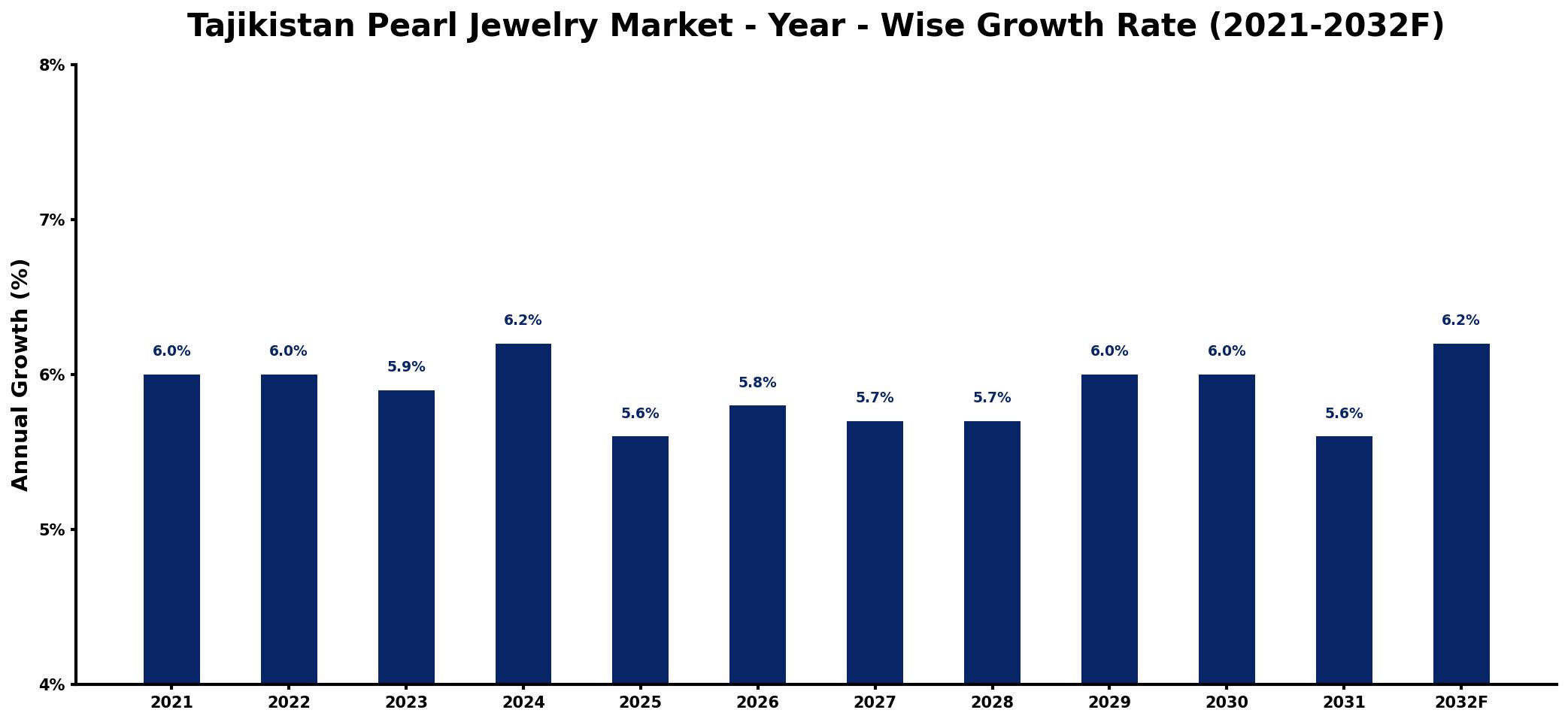
The table below presents the year‑wise growth rates along with the key drivers influencing the market
| Year | Growth Rate | Major Drivers |
| 2021 | 6.0% | Rising disposable income levels |
| 2022 | 6.0% | Increased consumer interest luxury |
| 2023 | 5.9% | Growing tourism and gifting culture |
| 2024 | 6.2% | Expansion online retail platforms |
| 2025 | 5.6% | Emerging artisan craftsmanship trends |
| 2026 | 5.8% | Strengthened local production capabilities |
| 2027 | 5.7% | Enhanced marketing and branding strategies |
| 2028 | 5.7% | Collaborations with fashion influencers |
| 2029 | 6.0% | Growing awareness sustainable sourcing |
| 2030 | 6.0% | Investment in cultural heritage preservation |
| 2031 | 5.6% | Diversification product offerings available |
| 2032 | 6.2% | Strengthening international trade relations |
Note: Market size estimations and growth projections presented in this report are based on 6Wresearch's proprietary forecasting methodology, utilizing the latest available industry data, government publications, and primary research inputs.
Tajikistan Pearl Jewelry Market Synopsis
The strongest force shaping the Tajikistan Pearl Jewelry Market today is the rising consumer demand for high-quality, unique pearl jewelry. As local designers create more contemporary and personalized pieces, they are tapping into a growing segment of buyers looking for distinctive accessories that reflect individual style.
This trend is underscored by a cultural shift towards valuing sustainable and ethically sourced products. Consumers are increasingly opting for pearls that align with their values, driving local artisans to prioritize responsible practices while crafting their jewelry.
Tajikistan Pearl Jewelry Market Key Takeaways
- The market is witnessing a significant rise in demand for custom and personalized pearl jewelry pieces.
- Online retail is playing a crucial role in expanding accessibility to a wider variety of pearl jewelry options.
- Sustainable sourcing practices are becoming important to environmentally conscious consumers.
- Investment opportunities are emerging, especially in pearl cultivation and local artisanal collaborations.
- Government support for the jewelry industry is enhancing the prospects for local craftsmanship and fair trade.
Evaluation of Restraints in Tajikistan Pearl Jewelry Market
Despite its potential, the Tajikistan Pearl Jewelry Market faces several limitations. A major hurdle is the relatively low awareness among the local consumer base regarding the allure of pearl jewelry, which contributes to its niche market status. Furthermore, the country lacks sufficient infrastructure for pearl cultivation and processing, leading to a dependency on imports that can inflate costs and hinder competitiveness. Additionally, access to modern technology in jewelry production remains limited, which impacts quality and innovation. These factors, combined with economic challenges affecting consumer spending power, create a complex landscape for growth in this sector.
Tajikistan Pearl Jewelry Market Trends
The market is currently characterized by emerging trends focused on unique designs and customization, appealing to consumers desire for individuality in their purchases. The increasing interest in sustainable practices means that ethically sourced pearls are becoming more popular, particularly among younger buyers who prioritize environmental impact. Social media and online platforms are playing a pivotal role in shaping preferences, showcasing new styles and influencing buying behavior across different demographics.
Tajikistan Pearl Jewelry Market Opportunities
Opportunities for genuine growth in the Tajikistan Pearl Jewelry Market are abundant. The picturesque landscapes provide a promising environment for freshwater pearl cultivation, positioning Tajikistan as a potential key player in the global pearl industry. Investors can explore initiatives to establish local pearl farms, which would help in reducing reliance on imports while enhancing product quality. Collaborations with local artisans can lead to the creation of unique, culturally rich designs that resonate with consumers both locally and abroad. With increasing international demand for authentic and ethically produced jewelry, the market presents a lucrative avenue for investment.
Government Initiatives in the Tajikistan Pearl Jewelry Market
The government of Tajikistan is actively promoting local craftsmanship and supporting small businesses within the pearl jewelry sector. Policies include providing training programs for artisans and financial incentives aimed at boosting small-scale producers. Regulations are also in place to ensure the quality of pearls and compliance with international standards, which enhances the markets credibility. Moreover, efforts to maintain fair trade practices contribute to the growth of ethical sourcing, benefiting both producers and consumers.
Future Insights of the Tajikistan Pearl Jewelry Market
Looking ahead to 2026-2032, the Tajikistan Pearl Jewelry Market is poised for significant development. The growing consumer interest in unique, natural gemstones will likely elevate Tajikistan's profile in the international market. By leveraging its rich history in pearl cultivation and emphasizing traditional craftsmanship, the country can enhance its appeal to both domestic and international consumers. Furthermore, innovative marketing strategies aimed at increasing visibility could stimulate market expansion, especially as global demand for sustainable and ethical jewelry continues to rise.
Tajikistan Pearl Jewelry Market Latest Developments (2025 - 2026)
In recent months, the Tajikistan Pearl Jewelry Market has seen shifts towards greater digital engagement, with several local artisans launching online stores to reach a wider audience. Collaborative efforts between jewelry designers and environmental organizations have gained momentum, focusing on promoting sustainable practices within the industry. Additionally, regional fairs and exhibitions have started to feature pearl jewelry prominently, increasing awareness and appreciation for local craftsmanship.
Tajikistan Pearl Jewelry Market - Key Attractiveness of the Report
- 10 Years of Market Numbers
- Historical Data Starting from 2022 to 2025
- Base Year: 2025
- Forecast Data until 2032
- Key Performance Indicators Impacting the Market
- Major Upcoming Developments and Projects
Key Highlights of the Report:
- Tajikistan Pearl Jewelry Market Outlook
- Market Size of Tajikistan Pearl Jewelry Market, 2025
- Forecast of Tajikistan Pearl Jewelry Market, 2032
- Historical Data and Forecast of Tajikistan Pearl Jewelry Revenues & Volume for the Period 2022-2032F
- Tajikistan Pearl Jewelry Market Trend Evolution
- Tajikistan Pearl Jewelry Market Drivers and Challenges
- Tajikistan Pearl Jewelry Price Trends
- Tajikistan Pearl Jewelry Porter's Five Forces
- Tajikistan Pearl Jewelry Industry Life Cycle
- Historical Data and Forecast of Tajikistan Pearl Jewelry Market Revenues & Volume By Pearl Type for the Period 2022-2032F
- Historical Data and Forecast of Tajikistan Pearl Jewelry Market Revenues & Volume By Freshwater for the Period 2022-2032F
- Historical Data and Forecast of Tajikistan Pearl Jewelry Market Revenues & Volume By Saltwater for the Period 2022-2032F
- Historical Data and Forecast of Tajikistan Pearl Jewelry Market Revenues & Volume By Material Type for the Period 2022-2032F
- Historical Data and Forecast of Tajikistan Pearl Jewelry Market Revenues & Volume By Gold for the Period 2022-2032F
- Historical Data and Forecast of Tajikistan Pearl Jewelry Market Revenues & Volume By Silver for the Period 2022-2032F
- Historical Data and Forecast of Tajikistan Pearl Jewelry Market Revenues & Volume By Others for the Period 2022-2032F
- Historical Data and Forecast of Tajikistan Pearl Jewelry Market Revenues & Volume By Jewelry Type for the Period 2022-2032F
- Historical Data and Forecast of Tajikistan Pearl Jewelry Market Revenues & Volume By Necklace for the Period 2022-2032F
- Historical Data and Forecast of Tajikistan Pearl Jewelry Market Revenues & Volume By Earrings for the Period 2022-2032F
- Historical Data and Forecast of Tajikistan Pearl Jewelry Market Revenues & Volume By Rings for the Period 2022-2032F
- Historical Data and Forecast of Tajikistan Pearl Jewelry Market Revenues & Volume By Others for the Period 2022-2032F
- Tajikistan Pearl Jewelry Import Export Trade Statistics
- Market Opportunity Assessment By Pearl Type
- Market Opportunity Assessment By Material Type
- Market Opportunity Assessment By Jewelry Type
- Tajikistan Pearl Jewelry Top Companies Market Share
- Tajikistan Pearl Jewelry Competitive Benchmarking By Technical and Operational Parameters
- Tajikistan Pearl Jewelry Company Profiles
- Tajikistan Pearl Jewelry Key Strategic Recommendations






































