Tanzania Content Services Platforms Market Size & Growth Rate (2026-2032)
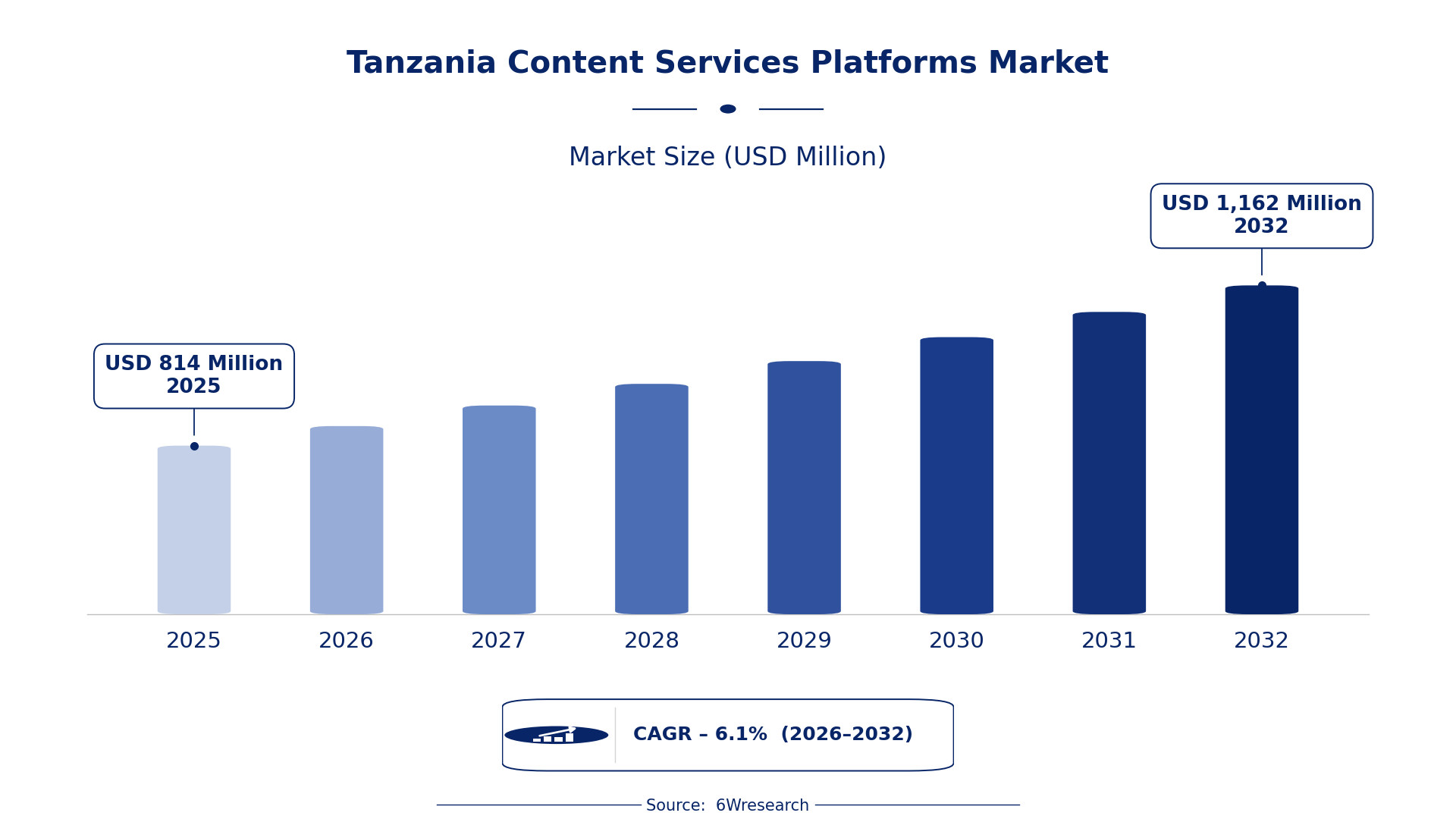
The Tanzania Content Services Platforms Market was estimated at USD 814 Million in 2025 and is projected to reach USD 1162 Million by 2032, growing at a CAGR of 6.1% from 2026 to 2032.
Tanzania Content Services Platforms Market Synopsis
The surge in internet accessibility is fundamentally altering the content consumption patterns in Tanzania. With a young, tech-savvy population increasingly reliant on mobile devices, there is a burgeoning demand for localized digital content and services.
Local and international service providers are vying for market share, offering a diverse array of platforms ranging from streaming services to e-learning solutions. This dynamic creates a fertile ground for innovation and expansion, as content providers strive to meet the evolving preferences of Tanzanian consumers.
Tanzania Content Services Platforms Market Year-wise Growth Rate and Key Drivers
This graph illustrates the annual growth rates of the Tanzania Content Services Platforms Market from 2021 to 2032, highlighting a steady upward trajectory and projected expansion over the forecast period.
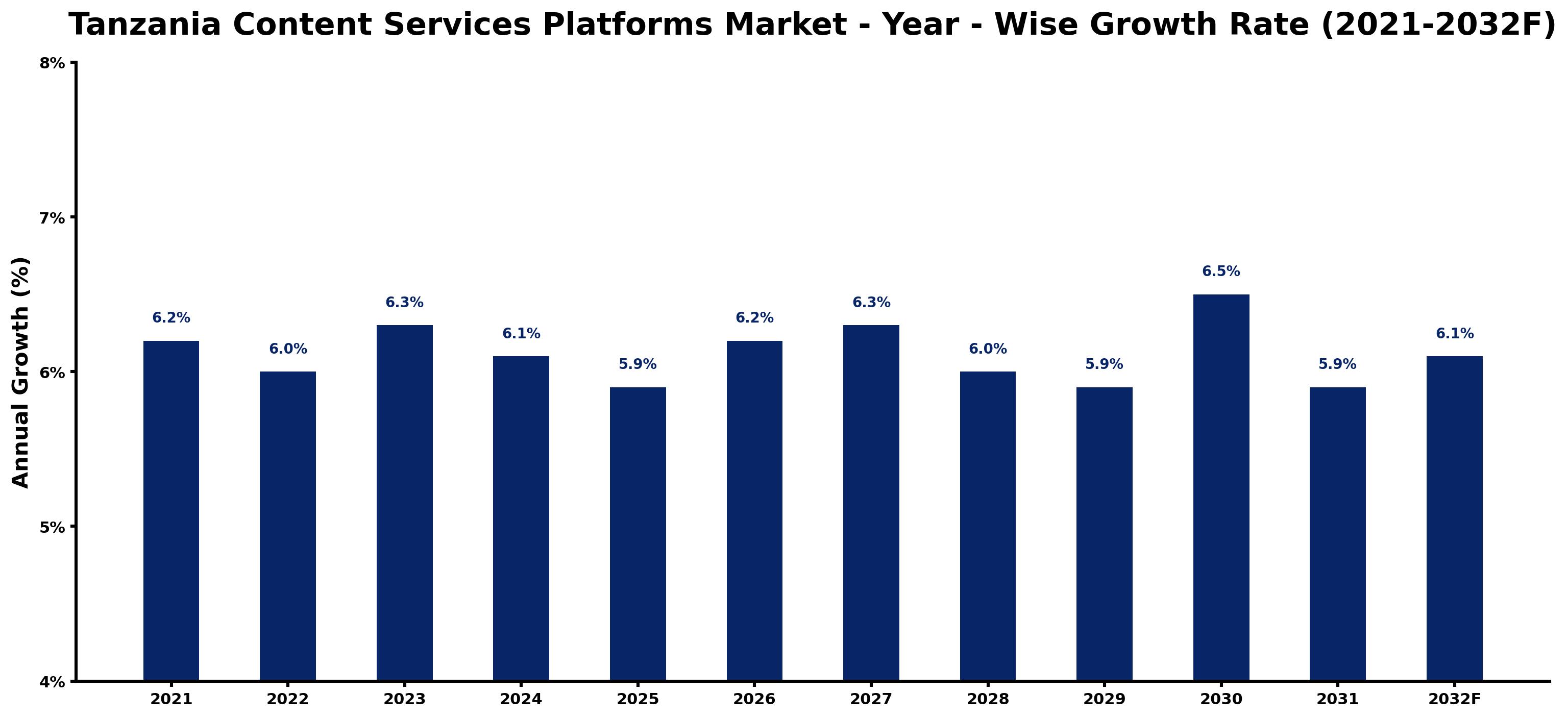
The table below presents the year‑wise growth rates along with the key drivers influencing the market
| Year | Growth Rate | Major Drivers |
| 2021 | 6.2% | Growing smartphone penetration among Tanzanian youth demographic. |
| 2022 | 6.0% | Increasing local content regulations encouraging regional content production. |
| 2023 | 6.3% | Rise in digital literacy programs across urban areas. |
| 2024 | 6.1% | Government incentives promoting e-commerce platform development. |
| 2025 | 5.9% | Surge in demand for regional entertainment streaming services. |
| 2026 | 6.2% | Investment in local internet infrastructure enhancing access speeds. |
| 2027 | 6.3% | Local mobile operators partnering with international content providers. |
| 2028 | 6.0% | Increased consumer preference for Swahili language content platforms. |
| 2029 | 5.9% | Adoption of digital payment solutions driving content access sales. |
| 2030 | 6.5% | Improved broadband connectivity fostering online streaming popularity. |
| 2031 | 5.9% | Emergence of local influencers driving social media content engagement. |
| 2032 | 6.1% | Government initiatives supporting digital entrepreneurship in content creation. |
Note: Market size estimations and growth projections presented in this report are based on 6Wresearch's proprietary forecasting methodology, utilizing the latest available industry data, government publications, and primary research inputs.
Tanzania Content Services Platforms Market Key Takeaways
Below are some of the specific key takeaways from the market, including:
- Strong growth driven by increased internet penetration and mobile device usage.
- A shift towards cloud-based solutions for content management and distribution.
- Rising importance of personalized content delivery to enhance user engagement.
- Investment opportunities in e-learning platforms and digital content creation.
- Government regulations promoting local content and fair competition among providers.
Evaluation of Restraints in Tanzania Content Services Platforms Market
The Tanzania Content Services Platforms Market faces several real barriers that hinder its full potential. One of the most pressing issues is the limited internet access in rural areas, which leaves a considerable segment of the population without reliable connectivity. This disparity limits the reach of digital content services.
on top of that, the high cost of data remains a significant obstacle, restricting many from fully engaging with content platforms. Another challenge lies in the availability of culturally relevant content, which is essential for user engagement. Local providers must also contend with intense competition from established global players that have greater resources and brand recognition, making it difficult to capture market share.
Tanzania Content Services Platforms Market Trends
An observable trend in the Tanzania Content Services Platforms Market is the increasing reliance on cloud-based solutions. Businesses are adopting content management systems that facilitate collaboration and scalability. This shift is crucial for streamlining content workflows and enhancing service delivery.
There is also a notable emphasis on personalizing content delivery, which helps in boosting customer engagement and conversion rates. Additionally, integrating AI and machine learning within content services platforms is gaining traction, automating processes for content curation and optimization, thus driving market evolution.
Tanzania Content Services Platforms Market Opportunities
This market presents numerous opportunities for investment, particularly in sectors like digital content creation, streaming services, and online education. As smartphone adoption continues to rise, there is a growing appetite for diverse digital content offerings.
Investing in e-learning platforms could be particularly lucrative, given the increasing demand for online education solutions. Content creation agencies and digital publishing platforms are also well-positioned to capitalize on the shift towards digital engagement among consumers in Tanzania.
Government Initiatives in the Tanzania Content Services Platforms Market
The Tanzanian government is actively shaping the content services sector through various regulations and initiatives aimed at enhancing the digital economy. A robust regulatory framework is crucial for fostering fair competition and protecting consumers from inappropriate content, which is vital for building trust in digital platforms.
- A regulatory framework established in 2025 mandates that all online content providers register with the Tanzania Communications Regulatory Authority (TCRA).
- A national digital infrastructure upgrade programme is currently underway, aimed at improving internet access across the country.
- The government has launched initiatives to support local content creators, emphasizing the importance of promoting Tanzanian culture through digital media.
- Future plans include a comprehensive policy expected to be introduced by 2027, focused on enhancing the digital skills of the workforce to better support the content services industry.
- Recent guidelines have been issued to ensure that digital platforms promote responsible online behavior and adhere to consumer protection standards.
Future Insights of the Tanzania Content Services Platforms Market
Looking ahead to 2026-2032, the Tanzania Content Services Platforms Market is set to expand significantly. The combination of increasing internet penetration, a youthful population eager for content, and government support for digital initiatives will drive this growth.
As local content creators continue to emerge, there will be opportunities for tailored solutions that resonate with Tanzanian consumers. The focus on personalized and localized content will play a critical role in attracting users and fostering brand loyalty.
Tanzania Content Services Platforms Market Latest Developments
In the last year, the Tanzania Content Services Platforms Market has seen a surge in activity, with numerous initiatives aimed at enhancing digital content offerings. Companies are increasingly focusing on innovative solutions to engage consumers effectively and drive growth.
- A major technology vendor launched a new cloud-based content management system in early 2025, designed to streamline content workflows for local businesses.
- An initiative began in mid-2025 to enhance mobile internet coverage in underserved areas, improving access to digital content services.
- A regional operator is currently developing partnerships with local content creators to diversify its service offerings, enhancing its competitive edge.
- Plans are in place for a public-private partnership expected to kick off in 2026, aimed at expanding the reach of e-learning platforms in remote communities.
- A digital marketing campaign was successfully rolled out in Q3 2025 to promote Tanzanian content creators and their offerings to a broader audience.
Tanzania Content Services Platforms Market - Key Attractiveness of the Report
- 10 Years of Market Numbers
- Historical Data Starting from 2022 to 2025
- Base Year: 2025
- Forecast Data until 2032
- Key Performance Indicators Impacting the Market
- Major Upcoming Developments and Projects
Key Highlights of the Report:
- Tanzania Content Services Platforms Market Outlook
- Market Size of Tanzania Content Services Platforms Market, 2025
- Forecast of Tanzania Content Services Platforms Market, 2032
- Historical Data and Forecast of Tanzania Content Services Platforms Revenues & Volume for the Period 2022-2032F
- Tanzania Content Services Platforms Market Trend Evolution
- Tanzania Content Services Platforms Market Drivers and Challenges
- Tanzania Content Services Platforms Price Trends
- Tanzania Content Services Platforms Porter's Five Forces
- Tanzania Content Services Platforms Industry Life Cycle
- Historical Data and Forecast of Tanzania Content Services Platforms Market Revenues & Volume By Business Function for the Period 2022-2032F
- Historical Data and Forecast of Tanzania Content Services Platforms Market Revenues & Volume By Human Resource for the Period 2022-2032F
- Historical Data and Forecast of Tanzania Content Services Platforms Market Revenues & Volume By Sales and Marketing for the Period 2022-2032F
- Historical Data and Forecast of Tanzania Content Services Platforms Market Revenues & Volume By Accounting and Legal for the Period 2022-2032F
- Historical Data and Forecast of Tanzania Content Services Platforms Market Revenues & Volume By Procurement and Supply Chain Management for the Period 2022-2032F
- Historical Data and Forecast of Tanzania Content Services Platforms Market Revenues & Volume By Deployment Mode for the Period 2022-2032F
- Historical Data and Forecast of Tanzania Content Services Platforms Market Revenues & Volume By Cloud for the Period 2022-2032F
- Historical Data and Forecast of Tanzania Content Services Platforms Market Revenues & Volume By On-premises for the Period 2022-2032F
- Historical Data and Forecast of Tanzania Content Services Platforms Market Revenues & Volume By Enterprise Size for the Period 2022-2032F
- Historical Data and Forecast of Tanzania Content Services Platforms Market Revenues & Volume By Large Enterprises for the Period 2022-2032F
- Historical Data and Forecast of Tanzania Content Services Platforms Market Revenues & Volume By SMEs for the Period 2022-2032F
- Historical Data and Forecast of Tanzania Content Services Platforms Market Revenues & Volume By Vertical for the Period 2022-2032F
- Historical Data and Forecast of Tanzania Content Services Platforms Market Revenues & Volume By Banking, Financial Services, and Insurance for the Period 2022-2032F
- Historical Data and Forecast of Tanzania Content Services Platforms Market Revenues & Volume By Retail and Consumer Goods for the Period 2022-2032F
- Historical Data and Forecast of Tanzania Content Services Platforms Market Revenues & Volume By Energy and Utilities for the Period 2022-2032F
- Historical Data and Forecast of Tanzania Content Services Platforms Market Revenues & Volume By Government and Public Sector for the Period 2022-2032F
- Historical Data and Forecast of Tanzania Content Services Platforms Market Revenues & Volume By Healthcare and Life Sciences for the Period 2022-2032F
- Historical Data and Forecast of Tanzania Content Services Platforms Market Revenues & Volume By IT and ITeS for the Period 2022-2032F
- Historical Data and Forecast of Tanzania Content Services Platforms Market Revenues & Volume By Manufacturing for the Period 2022-2032F
- Tanzania Content Services Platforms Import Export Trade Statistics
- Market Opportunity Assessment By Business Function
- Market Opportunity Assessment By Deployment Mode
- Market Opportunity Assessment By Enterprise Size
- Market Opportunity Assessment By Vertical
- Tanzania Content Services Platforms Top Companies Market Share
- Tanzania Content Services Platforms Competitive Benchmarking By Technical and Operational Parameters
- Tanzania Content Services Platforms Company Profiles
- Tanzania Content Services Platforms Key Strategic Recommendations






































