Thailand Acrylic Bathtub Market Size, Share & Growth Rate
The Thailand Acrylic Bathtub Market was estimated at USD 176 Million in 2025 and is projected to reach USD 202 Million by 2032, growing at a CAGR of 2.0% from 2026 to 2032. This growth trajectory is primarily driven by the increasing demand for luxurious and modern bathroom fittings, as homeowners and developers invest in aesthetically appealing home improvements. The vibrant real estate sector and the trend towards home renovations further enhance this market's potential, as consumers seek to elevate their living spaces with stylish and functional bathroom solutions.
Thailand Acrylic Bathtub Market Year-wise Growth Rate and Key Drivers
This graph highlights how the Thailand Acrylic Bathtub Market has steadily grown over the years, supported by major growth factors.
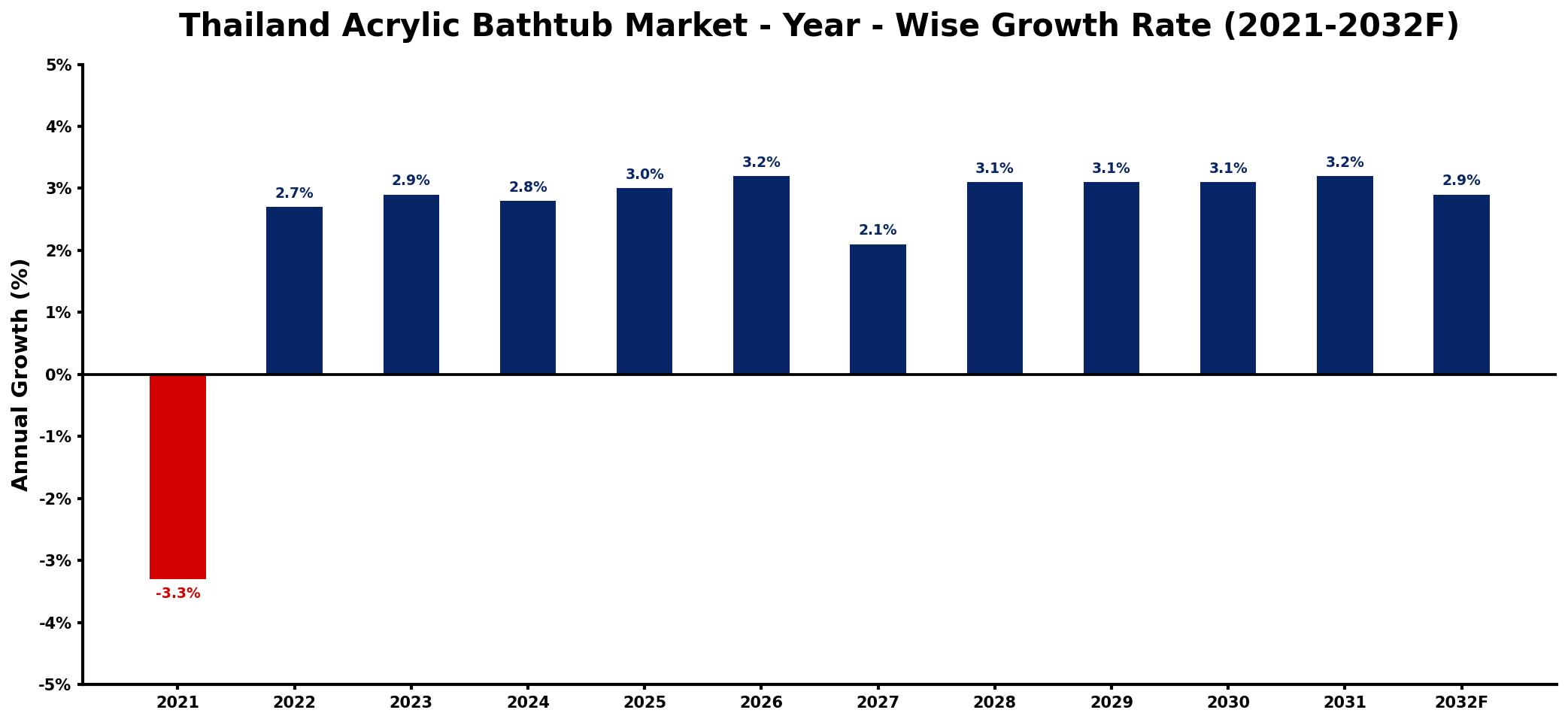
The table below presents the year‑wise growth rates along with the key drivers influencing the market
| Year | Growth Rate | Major Drivers |
| 2021 | -3.3% | decreased consumer spending on luxury |
| 2022 | 2.7% | rise in home renovation projects |
| 2023 | 2.9% | increased focus on wellness trends |
| 2024 | 2.8% | growing demand for modern designs |
| 2025 | 3.0% | expansion of construction industry investments |
| 2026 | 3.2% | increased disposable income of consumers |
| 2027 | 2.1% | shift towards eco-friendly options |
| 2028 | 3.1% | increased popularity of home spas |
| 2029 | 3.1% | growing trend of custom designs |
| 2030 | 3.1% | rising influence of social media |
| 2031 | 3.2% | enhanced marketing strategies by brands |
| 2032 | 2.9% | rising procurement volume requirements |
Note: Market size estimations and growth projections presented in this report are based on 6Wresearch's proprietary forecasting methodology, utilizing the latest available industry data, government publications, and primary research inputs.
Thailand Acrylic Bathtub Market Synopsis
The strongest force shaping the Thailand Acrylic Bathtub Market is the growing interest in modern bathroom aesthetics, where comfort and style are paramount. As the middle-class population continues to expand, there is a noticeable shift towards investing in home upgrades, particularly in the bathroom, which is now viewed as a sanctuary for relaxation.
Additionally, the flourishing hospitality sector significantly contributes to market growth, as hotels and resorts seek to enhance guest experiences through upscale bathroom amenities. This has created a sustained demand for acrylic bathtubs, which are valued for their versatility and ease of maintenance.
Thailand Acrylic Bathtub Market Key Takeaways
- The market is projected to witness steady growth driven by luxury bathroom fittings.
- Home renovations are a key demand driver as homeowners invest in enhancing their living spaces.
- The expanding middle-class demographic is increasingly prioritizing quality bathroom fixtures.
- Competitive pressures from alternative materials prompt innovations in design and functionality.
- Strong growth in the hospitality sector fuels demand for aesthetically pleasing bathtubs.
Evaluation of Restraints in Thailand Acrylic Bathtub Market
Despite a favorable growth outlook, the Thailand Acrylic Bathtub Market faces notable restraints. The presence of established alternatives, such as porcelain and fiberglass, presents a competitive challenge, as these materials often appeal to consumers seeking different aesthetics or pricing. Moreover, logistical hurdles concerning transportation and installation can impact the market's penetration, particularly in rural areas. Environmental concerns surrounding the production and disposal of acrylic also influence consumer choices, as a growing segment of the population gravitates towards sustainable options in bathroom fixtures.
Thailand Acrylic Bathtub Market Trends
Current trends indicate a pronounced shift towards customization and eco-friendly designs in the acrylic bathtub segment. Homeowners are increasingly seeking unique styles and sizes to fit their personal tastes and available spaces. Furthermore, advancements in manufacturing technology enable the creation of bathtubs that not only meet aesthetic preferences but also enhance functionality, including features like built-in jets and ergonomic designs. The rise of smart bathroom technologies is also influencing consumer preferences, as integrated features become more common.
Thailand Acrylic Bathtub Market Opportunities
Significant growth opportunities exist within the Thailand Acrylic Bathtub Market, particularly in the residential sector where ongoing home renovations continue to soar. Moreover, engaging with sustainable materials can attract eco-conscious consumers, creating a niche for brands focused on environmentally friendly production practices. Additionally, capitalizing on the increasing demand from the hospitality sector, including boutique hotels and luxury resorts, can further drive sales and market penetration.
Government Initiatives in the Thailand Acrylic Bathtub Market
The Thai government has initiated various policies aimed at promoting sustainable construction and energy-efficient housing, which indirectly benefit the acrylic bathtub market. Incentives for green building practices and public awareness campaigns about eco-friendly home renovations are encouraging consumers to consider sustainable materials in their bathroom fixtures. Furthermore, support for the real estate sector, particularly through investment in infrastructure development, bolsters the overall demand for modern home amenities, including acrylic bathtubs.
Future Insights of the Thailand Acrylic Bathtub Market
Looking ahead to 2026-2032, the Thailand Acrylic Bathtub Market is expected to continue its upward trajectory, propelled by ongoing urbanization and an increasing focus on home aesthetics. As technology progresses, the integration of smart features into bathroom designs will likely become a game-changer, enhancing the appeal of acrylic bathtubs. Additionally, a rising emphasis on wellness in home environments may see consumers gravitate towards bathtubs that promote relaxation and luxury experiences. This convergence of trends positions the market for robust growth and transformation.
Thailand Acrylic Bathtub Market Latest Developments (2025 - 2026)
Recent developments in the Thailand Acrylic Bathtub Market indicate a shift towards innovative designs that incorporate both functionality and aesthetics. Manufacturers are increasingly focusing on eco-friendly production methods, responding to consumer demand for sustainable products. Additionally, collaborations between design firms and manufacturers are resulting in unique product offerings tailored for luxury hotels and high-end residential projects, reflecting the evolving tastes of Thai consumers.
Thailand Acrylic Bathtub Market - Key Attractiveness of the Report
- 10 Years of Market Numbers
- Historical Data Starting from 2022 to 2025
- Base Year: 2025
- Forecast Data until 2032
- Key Performance Indicators Impacting the Market
- Major Upcoming Developments and Projects
Key Highlights of the Report:
- Thailand Acrylic Bathtub Market Outlook
- Market Size of Thailand Acrylic Bathtub Market, 2025
- Forecast of Thailand Acrylic Bathtub Market, 2032
- Historical Data and Forecast of Thailand Acrylic Bathtub Revenues & Volume for the Period 2022-2032F
- Thailand Acrylic Bathtub Market Trend Evolution
- Thailand Acrylic Bathtub Market Drivers and Challenges
- Thailand Acrylic Bathtub Price Trends
- Thailand Acrylic Bathtub Porter's Five Forces
- Thailand Acrylic Bathtub Industry Life Cycle
- Historical Data and Forecast of Thailand Acrylic Bathtub Market Revenues & Volume By Type for the Period 2022-2032F
- Historical Data and Forecast of Thailand Acrylic Bathtub Market Revenues & Volume By Large Type for the Period 2022-2032F
- Historical Data and Forecast of Thailand Acrylic Bathtub Market Revenues & Volume By Medium Type for the Period 2022-2032F
- Historical Data and Forecast of Thailand Acrylic Bathtub Market Revenues & Volume By Small Type for the Period 2022-2032F
- Historical Data and Forecast of Thailand Acrylic Bathtub Market Revenues & Volume By Application for the Period 2022-2032F
- Historical Data and Forecast of Thailand Acrylic Bathtub Market Revenues & Volume By Home Use for the Period 2022-2032F
- Historical Data and Forecast of Thailand Acrylic Bathtub Market Revenues & Volume By Commercial Use for the Period 2022-2032F
- Thailand Acrylic Bathtub Import Export Trade Statistics
- Market Opportunity Assessment By Type
- Market Opportunity Assessment By Application
- Thailand Acrylic Bathtub Top Companies Market Share
- Thailand Acrylic Bathtub Competitive Benchmarking By Technical and Operational Parameters
- Thailand Acrylic Bathtub Company Profiles
- Thailand Acrylic Bathtub Key Strategic Recommendations






































