Thailand Alternative Building Materials Market: Import Trend Analysis
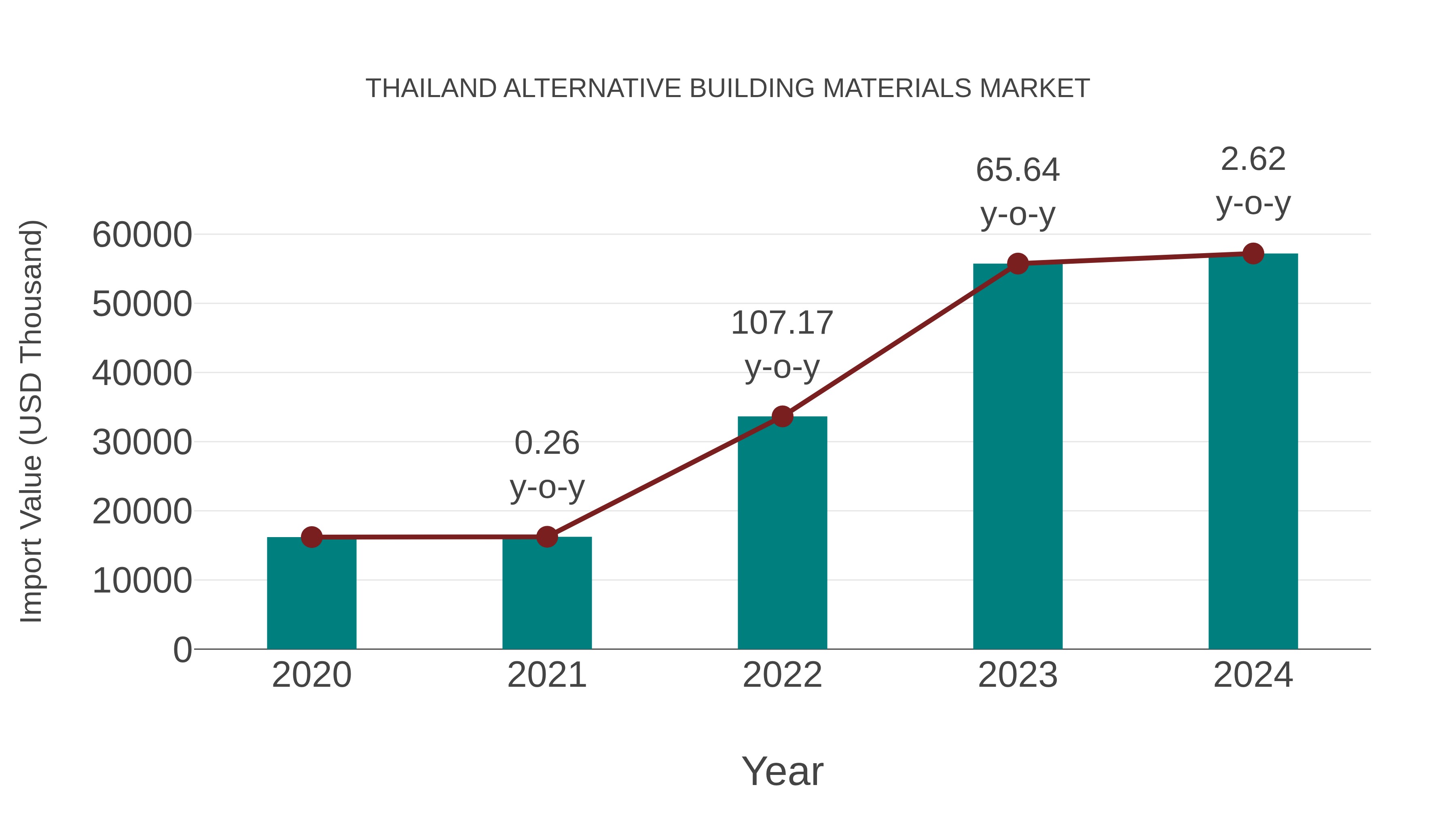
Thailand import trend for alternative building materials in 2024 exhibited a growth rate of 2.62% compared to the previous year. The compound annual growth rate (CAGR) for the period 2020-2024 stood at 37.07%. This robust import momentum can be attributed to the increasing demand for sustainable construction solutions and a shift towards environmentally friendly building practices in the market.
Thailand Alternative Building Materials Market Synopsis
The Thailand Alternative Building Materials Market is a growing sector within the construction industry. As environmental consciousness increases, there is a rising demand for sustainable and eco-friendly construction materials. Alternative building materials such as bamboo, recycled plastic, and compressed earth blocks are gaining popularity in Thailand. These materials offer not only reduced environmental impact but also cost savings in the long run. Government initiatives to promote sustainable construction further fuel this market`s growth, making it an attractive prospect for investors and businesses in the construction sector.
Drivers of the Market
The Thailand Alternative Building Materials market is fueled by a combination of environmental concerns and the construction industry`s need for innovative, sustainable solutions. As sustainability becomes a top priority, alternative building materials like bamboo, recycled materials, and environmentally friendly composites gain prominence. Government regulations and incentives for green building practices further support the adoption of these materials. Cost-effectiveness, energy efficiency, and reduced carbon footprint are key drivers, making this market attractive to both builders and investors seeking eco-friendly solutions.
Challenges of the Market
The Thailand Alternative Building Materials market faces challenges related to market awareness and acceptance. Traditional construction materials are deeply ingrained in the industry, and convincing builders, developers, and regulators to adopt alternative materials like bamboo, recycled materials, or innovative composites can be a slow process. Moreover, ensuring the structural integrity and safety of these materials is a crucial challenge.
COVID-19 Impact on the Market
The Thailand Alternative Building Materials Market saw shifts in demand during the COVID-19 pandemic. Initially, construction activities slowed down due to lockdowns and disruptions in the supply chain. This affected the demand for alternative building materials. However, as the government initiated infrastructure and construction projects as part of economic recovery measures, the market began to rebound. Moreover, growing environmental awareness led to increased interest in sustainable and eco-friendly building materials, which benefited the market as consumers and builders sought greener alternatives.
Key Players in the Market
The Thailand Alternative Building Materials market is evolving, with companies like SCG Cement Building Materials, AAC Blocks, and Green Builder Group taking the forefront. These firms focus on sustainable and eco-friendly building materials, including autoclaved aerated concrete (AAC) blocks and other innovative solutions. Their commitment to reducing the environmental impact of construction has made them leaders in the alternative building materials sector.
Key Highlights of the Report:
- Thailand Alternative Building Materials Market Outlook
- Market Size of Thailand Alternative Building Materials Market, 2025
- Forecast of Thailand Alternative Building Materials Market, 2032
- Historical Data and Forecast of Thailand Alternative Building Materials Revenues & Volume for the Period 2022-2032F
- Thailand Alternative Building Materials Market Trend Evolution
- Thailand Alternative Building Materials Market Drivers and Challenges
- Thailand Alternative Building Materials Price Trends
- Thailand Alternative Building Materials Porter's Five Forces
- Thailand Alternative Building Materials Industry Life Cycle
- Historical Data and Forecast of Thailand Alternative Building Materials Market Revenues & Volume By Material for the Period 2022-2032F
- Historical Data and Forecast of Thailand Alternative Building Materials Market Revenues & Volume By Bamboo for the Period 2022-2032F
- Historical Data and Forecast of Thailand Alternative Building Materials Market Revenues & Volume By Recycled Plastic for the Period 2022-2032F
- Historical Data and Forecast of Thailand Alternative Building Materials Market Revenues & Volume By Wood for the Period 2022-2032F
- Historical Data and Forecast of Thailand Alternative Building Materials Market Revenues & Volume By Others for the Period 2022-2032F
- Historical Data and Forecast of Thailand Alternative Building Materials Market Revenues & Volume By End User for the Period 2022-2032F
- Historical Data and Forecast of Thailand Alternative Building Materials Market Revenues & Volume By Residential for the Period 2022-2032F
- Historical Data and Forecast of Thailand Alternative Building Materials Market Revenues & Volume By Non-residential for the Period 2022-2032F
- Historical Data and Forecast of Thailand Alternative Building Materials Market Revenues & Volume By Application for the Period 2022-2032F
- Historical Data and Forecast of Thailand Alternative Building Materials Market Revenues & Volume By Construction for the Period 2022-2032F
- Historical Data and Forecast of Thailand Alternative Building Materials Market Revenues & Volume By Furniture for the Period 2022-2032F
- Historical Data and Forecast of Thailand Alternative Building Materials Market Revenues & Volume By Flooring for the Period 2022-2032F
- Thailand Alternative Building Materials Import Export Trade Statistics
- Market Opportunity Assessment By Material
- Market Opportunity Assessment By End User
- Market Opportunity Assessment By Application
- Thailand Alternative Building Materials Top Companies Market Share
- Thailand Alternative Building Materials Competitive Benchmarking By Technical and Operational Parameters
- Thailand Alternative Building Materials Company Profiles
- Thailand Alternative Building Materials Key Strategic Recommendations






































