Thailand Glass Fibre Reinforced Plastic Market: Import Trend Analysis
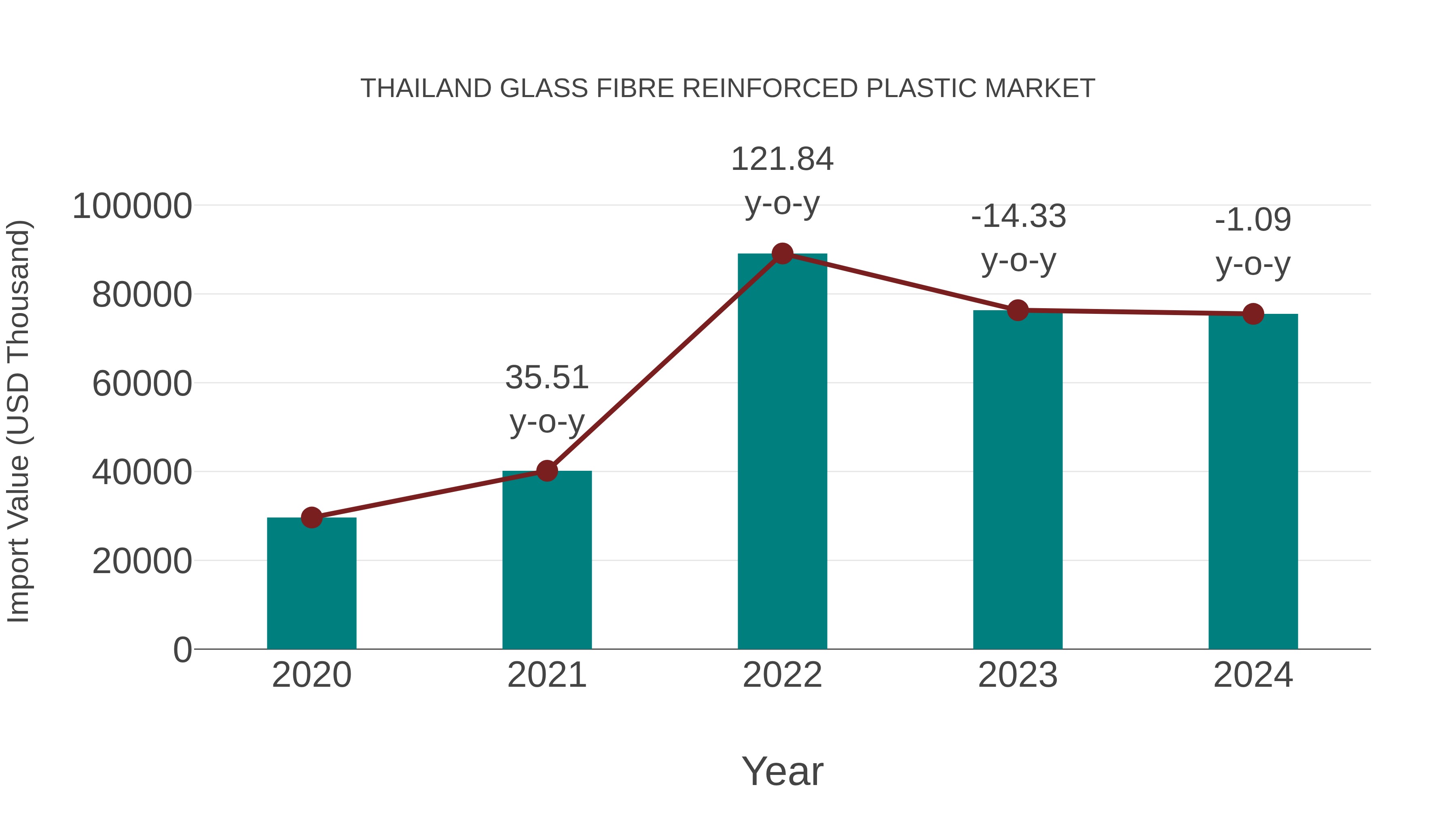
In 2024, Thailand glass fibre reinforced plastic market experienced a -1.09% decline in imports compared to 2023, with a notable compound annual growth rate (CAGR) of 26.33% from 2020 to 2024. This import slowdown may reflect shifting market demands or adjustments in trade policies impacting the sector`s momentum.
Thailand Glass Fibre Reinforced Plastic Market Synopsis
The Thailand glass fibre reinforced plastic (GRP) market has witnessed significant growth, driven by the versatile applications of GRP materials in industries such as construction, automotive, aerospace, and marine. GRP offers advantages such as high strength-to-weight ratio, corrosion resistance, and durability. As infrastructure development and modernization projects continue, the demand for GRP-based products like panels, tanks, and pipes remains strong. Additionally, the automotive sector has also adopted GRP for components to reduce vehicle weight and enhance fuel efficiency.
Drivers of the Market
The Thailand glass fiber reinforced plastic (GRP) market is experiencing growth due to several key drivers. Firstly, GRP offers lightweight, corrosion-resistant, and durable properties, making it a preferred material in various industries, including automotive, construction, and marine. The demand for GRP products in these sectors, driven by infrastructure development and transportation needs, fuels market growth. Additionally, the emphasis on environmental sustainability has led to the adoption of GRP for eco-friendly applications. The versatility of GRP in design and its cost-effectiveness further contribute to its increasing use in a wide range of products.
Challenges of the Market
Challenges in the Thailand glass fiber reinforced plastic market include the need for skilled labor and environmental considerations. The production process of these materials can be energy-intensive and generate waste, requiring companies to adopt eco-friendly practices and invest in workforce development to ensure product quality.
COVID-19 Impact on the Market
The Thailand glass fibre reinforced plastic (GRP) market experienced a dual impact due to the COVID-19 pandemic. On one hand, there was a slowdown in construction activities and infrastructure projects during the initial phases of the pandemic, affecting the demand for GRP products in these sectors. On the other hand, GRP found applications in the healthcare sector, particularly in the production of medical equipment and components. The pandemic heightened the demand for medical equipment, including ventilators and protective gear, which often featured GRP components due to their lightweight and durability. This helped partially offset the decline in demand from other industries. Manufacturers in the GRP sector adapted by diversifying their product offerings and exploring new opportunities in healthcare and sanitation.
Key Players in the Market
In the Thailand glass fiber reinforced plastic (GRP) market, several key players have established themselves as pioneers in the production of GRP products. Companies such as GRP Innovations, FiberCraft Thailand, and GlassFiber Tech have been at the forefront of developing and manufacturing GRP materials for various applications, including construction, automotive, and marine industries.
Key Highlights of the Report:
- Thailand Glass Fibre Reinforced Plastic Market Outlook
- Market Size of Thailand Glass Fibre Reinforced Plastic Market, 2025
- Forecast of Thailand Glass Fibre Reinforced Plastic Market, 2032
- Historical Data and Forecast of Thailand Glass Fibre Reinforced Plastic Revenues & Volume for the Period 2022-2032F
- Thailand Glass Fibre Reinforced Plastic Market Trend Evolution
- Thailand Glass Fibre Reinforced Plastic Market Drivers and Challenges
- Thailand Glass Fibre Reinforced Plastic Price Trends
- Thailand Glass Fibre Reinforced Plastic Porter's Five Forces
- Thailand Glass Fibre Reinforced Plastic Industry Life Cycle
- Historical Data and Forecast of Thailand Glass Fibre Reinforced Plastic Market Revenues & Volume By Type for the Period 2022-2032F
- Historical Data and Forecast of Thailand Glass Fibre Reinforced Plastic Market Revenues & Volume By Polyester for the Period 2022-2032F
- Historical Data and Forecast of Thailand Glass Fibre Reinforced Plastic Market Revenues & Volume By Vinyl Ester for the Period 2022-2032F
- Historical Data and Forecast of Thailand Glass Fibre Reinforced Plastic Market Revenues & Volume By Epoxy for the Period 2022-2032F
- Historical Data and Forecast of Thailand Glass Fibre Reinforced Plastic Market Revenues & Volume By Polyurethane for the Period 2022-2032F
- Historical Data and Forecast of Thailand Glass Fibre Reinforced Plastic Market Revenues & Volume By Peek Resin for the Period 2022-2032F
- Historical Data and Forecast of Thailand Glass Fibre Reinforced Plastic Market Revenues & Volume By Others for the Period 2022-2032F
- Historical Data and Forecast of Thailand Glass Fibre Reinforced Plastic Market Revenues & Volume By Application for the Period 2022-2032F
- Historical Data and Forecast of Thailand Glass Fibre Reinforced Plastic Market Revenues & Volume By Wind Energy for the Period 2022-2032F
- Historical Data and Forecast of Thailand Glass Fibre Reinforced Plastic Market Revenues & Volume By Transportation for the Period 2022-2032F
- Historical Data and Forecast of Thailand Glass Fibre Reinforced Plastic Market Revenues & Volume By Marine for the Period 2022-2032F
- Historical Data and Forecast of Thailand Glass Fibre Reinforced Plastic Market Revenues & Volume By Pipe & Tanks for the Period 2022-2032F
- Historical Data and Forecast of Thailand Glass Fibre Reinforced Plastic Market Revenues & Volume By Others for the Period 2022-2032F
- Thailand Glass Fibre Reinforced Plastic Import Export Trade Statistics
- Market Opportunity Assessment By Type
- Market Opportunity Assessment By Application
- Thailand Glass Fibre Reinforced Plastic Top Companies Market Share
- Thailand Glass Fibre Reinforced Plastic Competitive Benchmarking By Technical and Operational Parameters
- Thailand Glass Fibre Reinforced Plastic Company Profiles
- Thailand Glass Fibre Reinforced Plastic Key Strategic Recommendations






































