Thailand Halal Meat Market: Import Trend Analysis
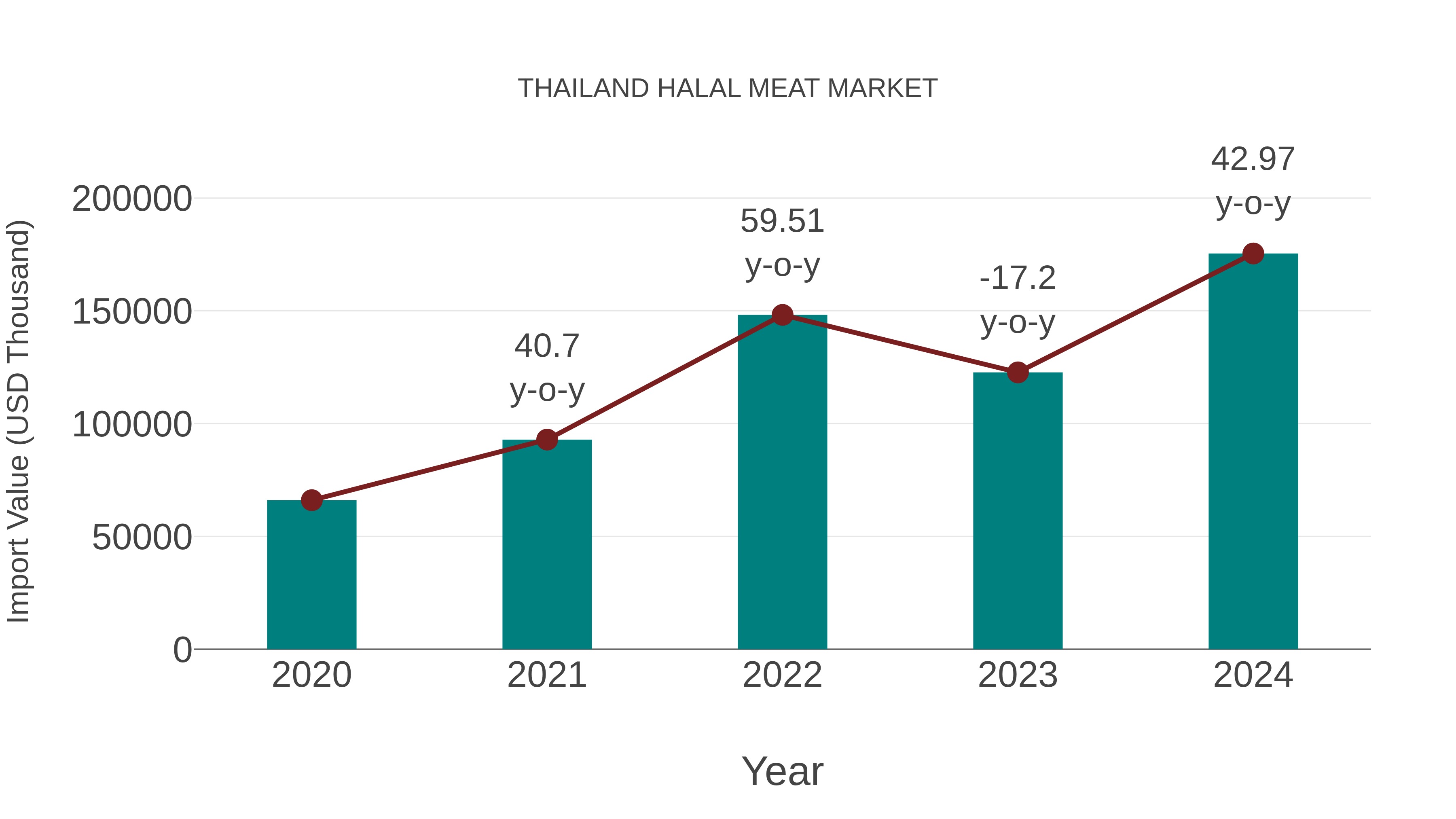
Thailand import trend for the halal meat market exhibited significant growth from 2023 to 2024, with a notable increase of 42.97%. The compound annual growth rate (CAGR) for the period from 2020 to 2024 stood at 27.67%. This surge can be attributed to a notable shift in consumer preferences towards halal products, indicating a strengthening demand for halal meat in Thailand during this period.
Halal Meat Market: Thailand vs Top 5 Major Economies in 2027 (Asia)
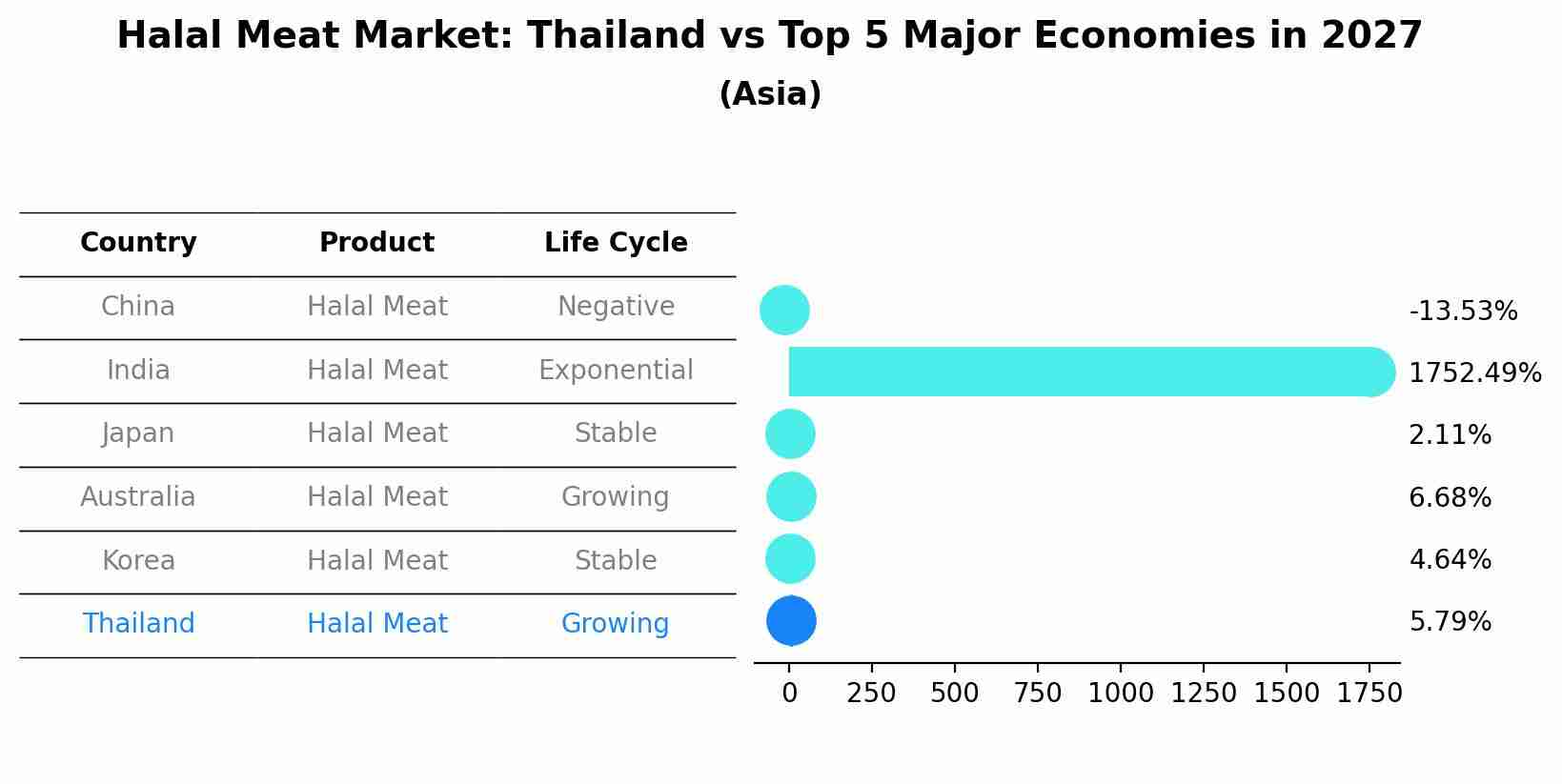
By 2027, Thailand's Halal Meat market is forecasted to achieve a growing growth rate of 5.79%, with China leading the Asia region, followed by India, Japan, Australia and South Korea.
Thailand Halal Meat Market Synopsis
The Thailand Halal Meat Market is a significant segment of the country`s food industry. Halal meat refers to meat prepared in accordance with Islamic dietary laws, making it permissible for Muslims to consume. In Thailand, where Islam is a prominent religion, there is a growing demand for halal meat products. The market includes various types of halal meat such as beef, chicken, and lamb, which are processed and distributed in accordance with halal certification standards. The Thai government and various organizations have been working to ensure the quality and authenticity of halal products to meet domestic demand and expand exports to international markets.
Drivers of the Market
The Thailand Halal Meat Market is being driven by a combination of factors. Firstly, there is a growing demand for halal products among Thailand`s Muslim population, which is increasing due to both natural population growth and immigration. This has led to an increased interest in halal food options, including meat products. Additionally, Thailand has been actively promoting itself as a halal food hub in the region, aiming to tap into the global halal market. Government initiatives and certifications have contributed to building trust in Thai halal products, boosting both domestic consumption and export potential. Moreover, the tourism sector, which brings in a significant number of Muslim visitors, plays a vital role in stimulating demand for halal meat in various culinary offerings. Therefore, the Thailand Halal Meat Market is poised for growth due to a combination of domestic demand, international export opportunities, and government support.
Challenges of the Market
In the halal meat market, ensuring compliance with strict halal standards is essential. Quality control, traceability, and certification are challenges that must be addressed to maintain consumer trust. Supply chain logistics, including sourcing halal-certified livestock, can also be complex.
COVID-19 Impact on the Market
The Thailand Halal Meat market faced challenges during the COVID-19 pandemic. While the demand for halal meat remained steady, disruptions in the supply chain affected availability and pricing. Lockdowns and restrictions on the movement of people also impacted the distribution and consumption of halal meat. Enhanced safety measures were implemented in processing facilities to ensure the safety of workers, affecting production capacity and increasing costs.
Key Players in the Market
The Thailand Halal Meat Market features several notable players, including Halal Farms Ltd. This company is renowned for its commitment to producing high-quality halal meat products that meet strict Islamic dietary standards. Their dedication to quality and ethical practices has made them a trusted name in the halal meat industry.
Key Highlights of the Report:
- Thailand Halal Meat Market Outlook
- Market Size of Thailand Halal Meat Market, 2025
- Forecast of Thailand Halal Meat Market, 2032
- Historical Data and Forecast of Thailand Halal Meat Revenues & Volume for the Period 2022-2032F
- Thailand Halal Meat Market Trend Evolution
- Thailand Halal Meat Market Drivers and Challenges
- Thailand Halal Meat Price Trends
- Thailand Halal Meat Porter's Five Forces
- Thailand Halal Meat Industry Life Cycle
- Historical Data and Forecast of Thailand Halal Meat Market Revenues & Volume By Product Type for the Period 2022-2032F
- Historical Data and Forecast of Thailand Halal Meat Market Revenues & Volume By Fresh Food for the Period 2022-2032F
- Historical Data and Forecast of Thailand Halal Meat Market Revenues & Volume By Processed Food for the Period 2022-2032F
- Thailand Halal Meat Import Export Trade Statistics
- Market Opportunity Assessment By Product Type
- Thailand Halal Meat Top Companies Market Share
- Thailand Halal Meat Competitive Benchmarking By Technical and Operational Parameters
- Thailand Halal Meat Company Profiles
- Thailand Halal Meat Key Strategic Recommendations






































