Thailand Home Bedding Market: Import Trend Analysis
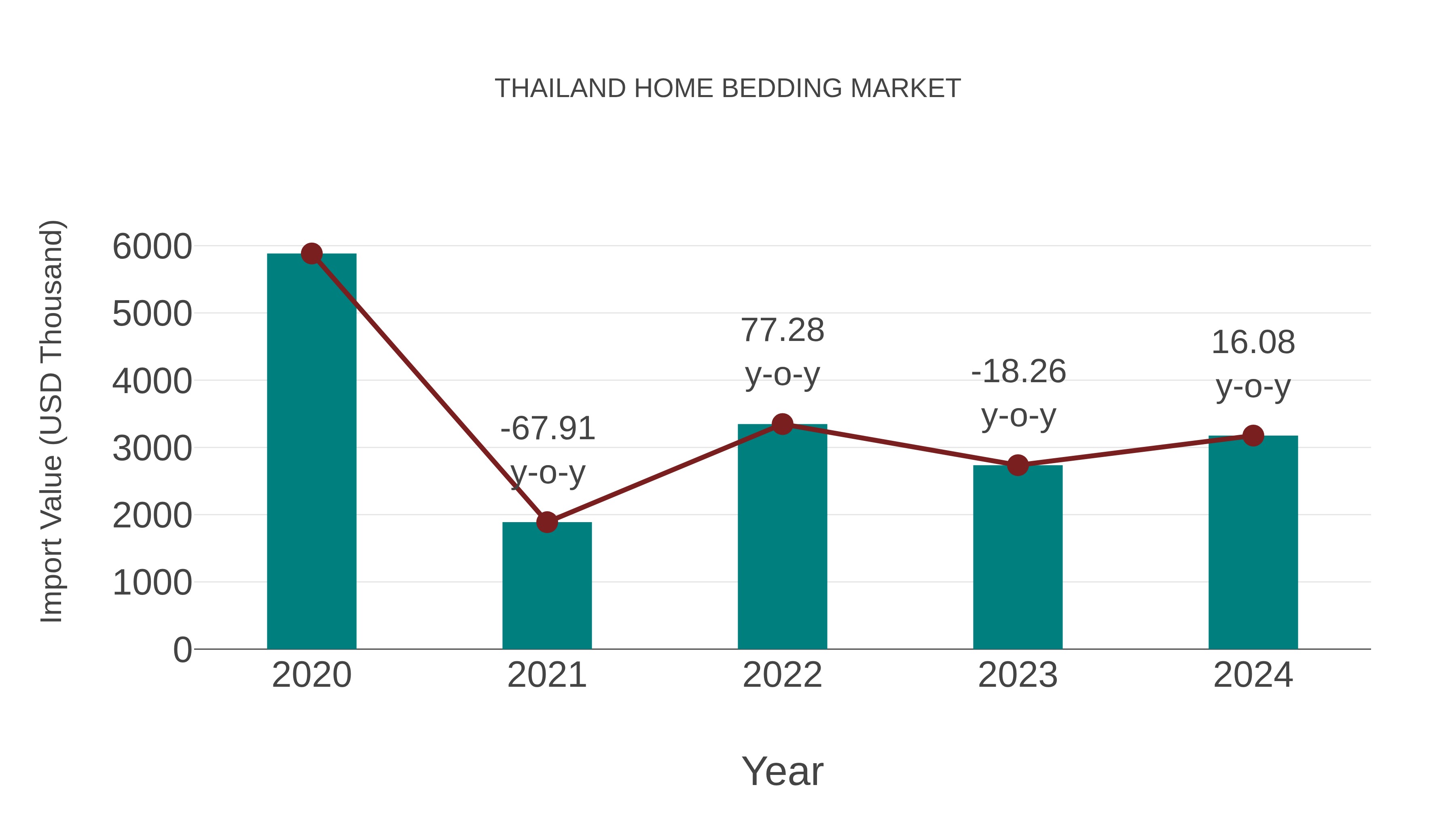
Thailand import trend for the home bedding market saw a growth rate of 16.08% from 2023 to 2024, with a compound annual growth rate (CAGR) of -14.29% from 2020 to 2024. The negative CAGR may be attributed to shifts in consumer preferences or changes in trade policies impacting market stability.
Home Bedding Market: Thailand vs Top 5 Major Economies in 2027 (Asia)
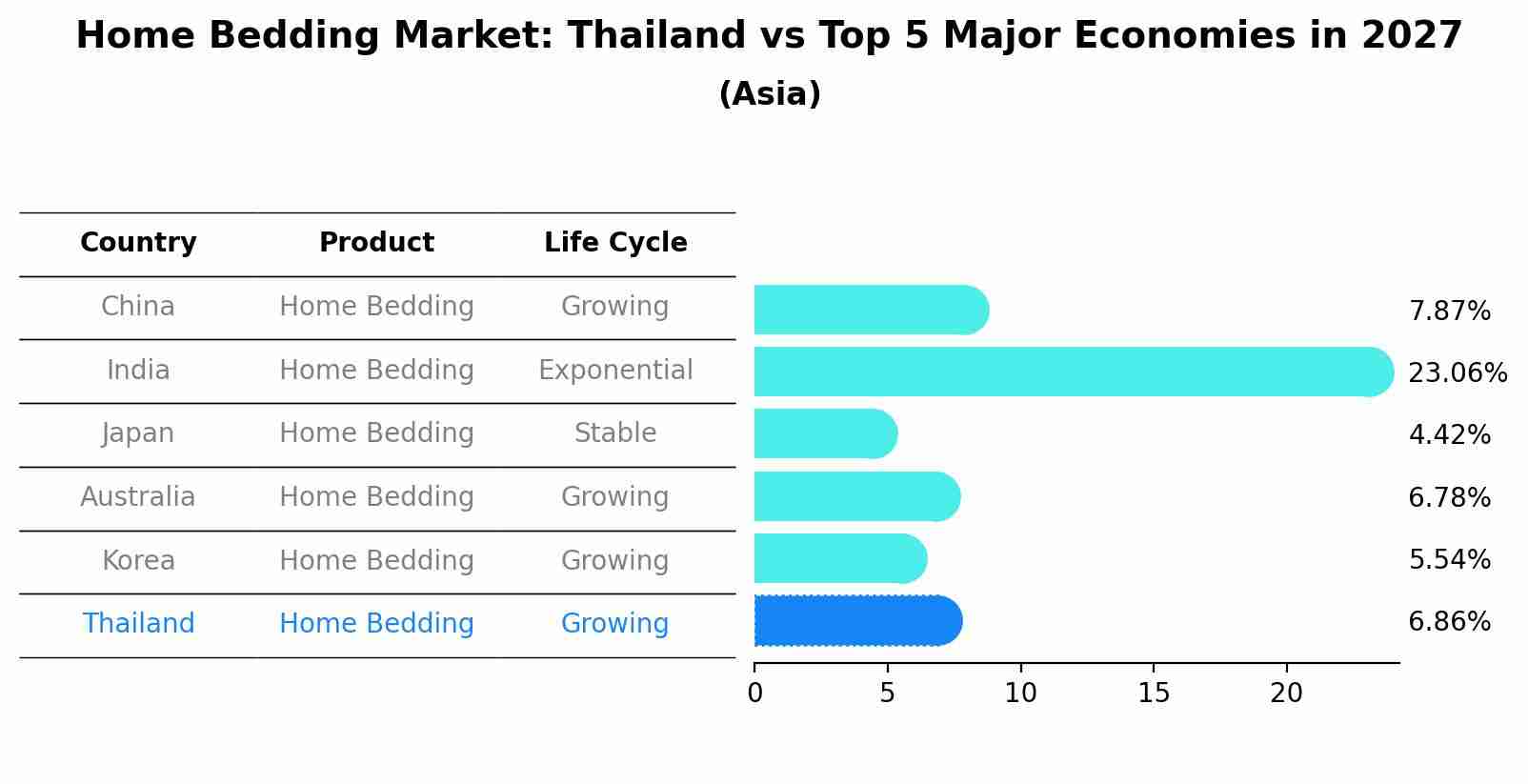
The Home Bedding market in Thailand is projected to grow at a growing growth rate of 6.86% by 2027, highlighting the country's increasing focus on advanced technologies within the Asia region, where China holds the dominant position, followed closely by India, Japan, Australia and South Korea, shaping overall regional demand.
Thailand Home Bedding Market Synopsis
The Thailand home bedding market reflects changing consumer lifestyles and preferences. With increasing disposable incomes and a growing awareness of the importance of quality sleep, consumers are investing in premium bedding products. This market encompasses a wide range of products, including mattresses, pillows, bed linens, and duvets. Manufacturers are incorporating advanced technologies and materials to offer products that provide better support, comfort, and durability. The hospitality sector also contributes to this market, as hotels and resorts seek to provide guests with a luxurious and restful sleep experience.
Drivers of the Market
The Thailand home bedding market is experiencing growth due to various factors. Firstly, the increasing focus on home comfort and interior decor is driving the demand for high-quality bedding products. Consumers are looking for bedding that not only provides comfort but also complements their home aesthetics. Additionally, the trend toward wellness and healthy sleep habits is boosting the market, as people seek bedding solutions that promote better sleep. The availability of a wide range of bedding options, including eco-friendly and hypoallergenic materials, is further contributing to market expansion.
Challenges of the Market
In the Thailand home bedding market, imitation and counterfeit products pose a significant challenge. Consumers may unknowingly purchase subpar or unsafe bedding products. Building trust and differentiating genuine products from fakes is essential for legitimate manufacturers. Additionally, economic fluctuations can impact consumer spending on bedding.
COVID-19 Impact on the Market
The Thailand home bedding market faced challenges related to supply chain disruptions and changing consumer preferences during the pandemic. Initially, there was a surge in demand for bedding products as people spent more time at home. However, economic uncertainties led to cautious spending, affecting the high-end home bedding segment. Additionally, supply chain disruptions affected the availability of certain materials. The market is expected to stabilize as the economy recovers, but consumer preferences may continue to evolve.
Key Players in the Market
The Thailand home bedding market features leading players such as DreamComfort Bedding, BedBliss Home Textiles, and CozyNest Linens. These companies offer a wide range of bedding products, including sheets, pillows, and comforters, to ensure a restful night`s sleep for consumers.
Key Highlights of the Report:
- Thailand Home Bedding Market Outlook
- Market Size of Thailand Home Bedding Market, 2025
- Forecast of Thailand Home Bedding Market, 2032
- Historical Data and Forecast of Thailand Home Bedding Revenues & Volume for the Period 2022-2032F
- Thailand Home Bedding Market Trend Evolution
- Thailand Home Bedding Market Drivers and Challenges
- Thailand Home Bedding Price Trends
- Thailand Home Bedding Porter's Five Forces
- Thailand Home Bedding Industry Life Cycle
- Historical Data and Forecast of Thailand Home Bedding Market Revenues & Volume By Type for the Period 2022-2032F
- Historical Data and Forecast of Thailand Home Bedding Market Revenues & Volume By Bed Linen for the Period 2022-2032F
- Historical Data and Forecast of Thailand Home Bedding Market Revenues & Volume By Mattress for the Period 2022-2032F
- Historical Data and Forecast of Thailand Home Bedding Market Revenues & Volume By Pillows for the Period 2022-2032F
- Historical Data and Forecast of Thailand Home Bedding Market Revenues & Volume By Blankets for the Period 2022-2032F
- Historical Data and Forecast of Thailand Home Bedding Market Revenues & Volume By Others for the Period 2022-2032F
- Historical Data and Forecast of Thailand Home Bedding Market Revenues & Volume By Distribution Channel for the Period 2022-2032F
- Historical Data and Forecast of Thailand Home Bedding Market Revenues & Volume By Offline for the Period 2022-2032F
- Historical Data and Forecast of Thailand Home Bedding Market Revenues & Volume By Online for the Period 2022-2032F
- Thailand Home Bedding Import Export Trade Statistics
- Market Opportunity Assessment By Type
- Market Opportunity Assessment By Distribution Channel
- Thailand Home Bedding Top Companies Market Share
- Thailand Home Bedding Competitive Benchmarking By Technical and Operational Parameters
- Thailand Home Bedding Company Profiles
- Thailand Home Bedding Key Strategic Recommendations






































