Thailand Packaged Water Market: Import Trend Analysis
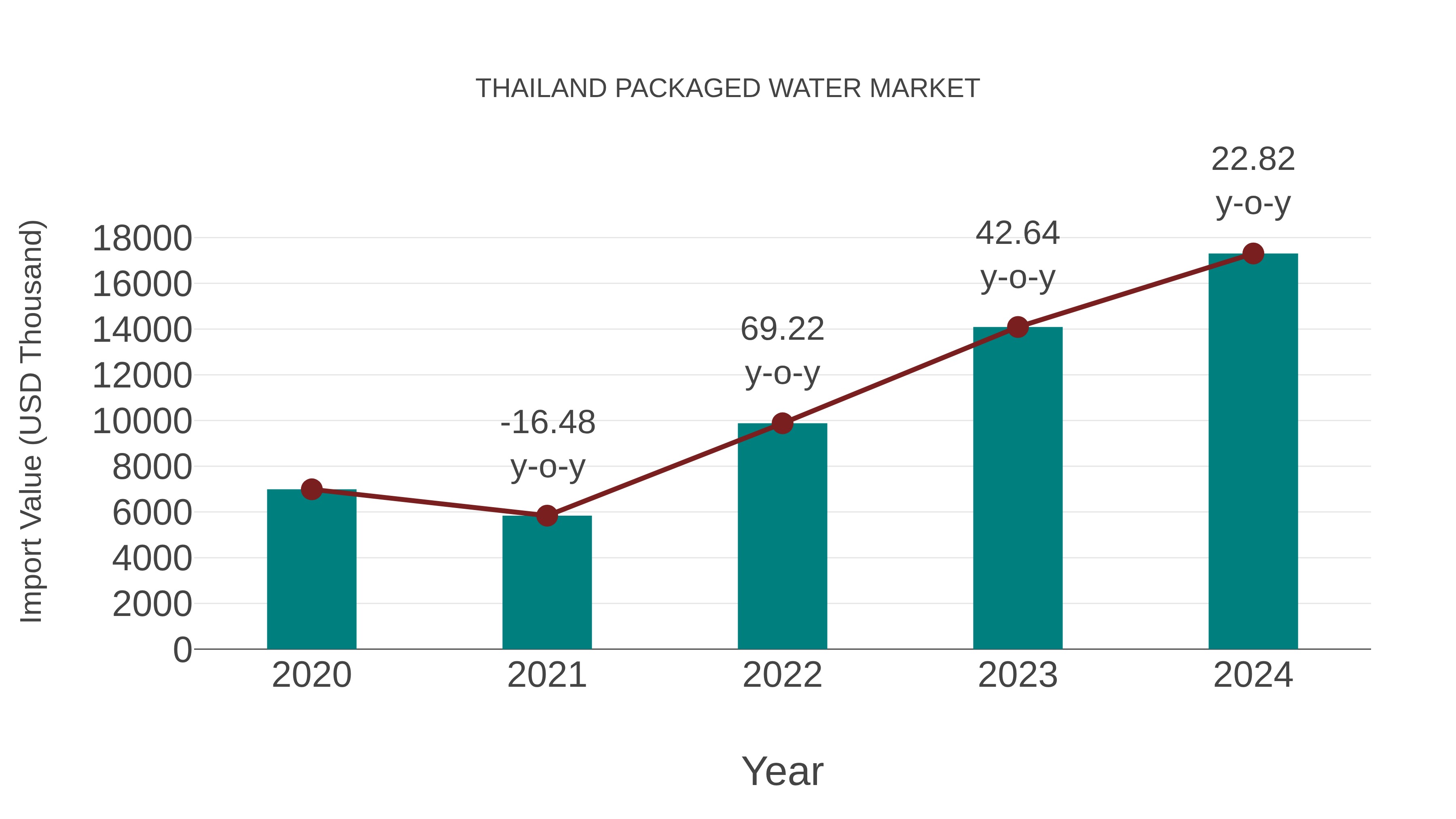
Thailand import trend for the packaged water market saw significant growth from 2023 to 2024, with a growth rate of 22.82%. The compound annual growth rate (CAGR) for the period from 2020 to 2024 stood at 25.44%. This strong import momentum can be attributed to shifting consumer preferences towards healthier beverage options, driving increased demand for packaged water in the market.
Thailand Packaged water Market Overview
The Thailand packaged water market is experiencing steady growth driven by increasing health consciousness among consumers and a growing preference for convenient and safe drinking water options. The market is characterized by a wide range of products including bottled water, flavored water, and functional water, catering to diverse consumer needs. Key factors contributing to market growth include rising disposable incomes, urbanization, and changing consumer lifestyles. Strong marketing strategies, product innovations, and the expansion of distribution channels are key strategies adopted by leading players to maintain their market position. The market is also witnessing a shift towards sustainable packaging solutions to address environmental concerns. Overall, the Thailand packaged water market is poised for further growth, with opportunities for both local and international brands to capitalize on the increasing demand for packaged water products.
Thailand Packaged water Market Trends and Opportunities
The Thailand packaged water market is experiencing significant growth due to increasing consumer awareness about the importance of hydration and convenience. The trend towards healthier lifestyles and the shift away from sugary drinks have also contributed to the rising demand for packaged water. Opportunities in this market lie in the development of innovative packaging solutions, such as eco-friendly and sustainable materials, as well as products tailored to specific consumer segments like flavored or vitamin-infused waters. With the growing emphasis on health and wellness, there is potential for market players to differentiate themselves through branding and marketing strategies that highlight the quality and purity of their water products. Expanding distribution channels and leveraging e-commerce platforms can also help companies tap into the increasing demand for packaged water in Thailand.
Thailand Packaged water Market Challenges
In the Thailand packaged water market, challenges arise mainly from intensifying competition among established brands and emerging local players, leading to price wars and pressure on profit margins. Additionally, concerns over environmental sustainability and plastic waste have prompted government regulations and consumer preferences shifting towards eco-friendly packaging solutions, impacting traditional plastic bottled water sales. Distribution challenges, such as ensuring efficient supply chain management and maintaining product quality during transportation, also pose obstacles for market players. Furthermore, fluctuating raw material costs and economic uncertainties can impact production costs and pricing strategies, affecting the overall competitiveness of packaged water brands in Thailand. Overall, market participants need to navigate these challenges by innovating sustainable packaging solutions, enhancing distribution networks, and adapting to evolving consumer demands to maintain market share and profitability.
Thailand Packaged water Market Drivers
The Thailand Packaged water market is primarily driven by factors such as increasing health consciousness among consumers, growing concerns over water quality and safety, convenience and portability of packaged water, and the rise in disposable income leading to higher spending on convenient packaged beverages. The trend of urbanization and on-the-go lifestyles also contribute to the demand for packaged water as a convenient and accessible hydration option. Furthermore, the marketing strategies of key players, emphasizing the purity and quality of packaged water, play a significant role in driving consumer purchasing decisions. Additionally, the growing tourism industry in Thailand further boosts the demand for packaged water as tourists seek safe and convenient hydration options while exploring the country.
Thailand Packaged water Market Government Policy
The Thailand Packaged water Market is subject to government policies aimed at ensuring quality and safety standards for consumers. The Food and Drug Administration (FDA) in Thailand regulates the production, packaging, and labeling of packaged water to guarantee compliance with health and safety regulations. Additionally, the government has implemented initiatives to promote the consumption of clean and safe drinking water, particularly in response to public health concerns. These policies include monitoring and enforcing industry standards, conducting regular inspections of production facilities, and providing guidelines for proper storage and distribution practices. Overall, the government`s focus on regulatory oversight and consumer protection plays a significant role in shaping the Thailand Packaged water Market.
Thailand Packaged water Market Future Outlook
The Thailand packaged water market is expected to experience steady growth in the coming years, driven by factors such as increasing health consciousness among consumers, rising disposable incomes, and a growing preference for convenient and safe drinking water options. With a shift towards healthier lifestyles and a greater awareness of the importance of hydration, the demand for packaged water is likely to continue to rise. Additionally, the trend towards on-the-go consumption and the convenience offered by single-serve packaged water products are expected to further fuel market growth. Innovation in packaging formats and the introduction of functional and flavored water varieties are also anticipated to attract more consumers. Overall, the outlook for the Thailand packaged water market appears positive, with opportunities for expansion and market penetration.
Key Highlights of the Report:
- Thailand Packaged water Market Outlook
- Market Size of Thailand Packaged water Market, 2025
- Forecast of Thailand Packaged water Market, 2032
- Historical Data and Forecast of Thailand Packaged water Revenues & Volume for the Period 2022 - 2032F
- Thailand Packaged water Market Trend Evolution
- Thailand Packaged water Market Drivers and Challenges
- Thailand Packaged water Price Trends
- Thailand Packaged water Porter's Five Forces
- Thailand Packaged water Industry Life Cycle
- Historical Data and Forecast of Thailand Packaged water Market Revenues & Volume By Product for the Period 2022 - 2032F
- Historical Data and Forecast of Thailand Packaged water Market Revenues & Volume By Still for the Period 2022 - 2032F
- Historical Data and Forecast of Thailand Packaged water Market Revenues & Volume By Carbonated for the Period 2022 - 2032F
- Historical Data and Forecast of Thailand Packaged water Market Revenues & Volume By Flavored for the Period 2022 - 2032F
- Historical Data and Forecast of Thailand Packaged water Market Revenues & Volume By Functional for the Period 2022 - 2032F
- Thailand Packaged water Import Export Trade Statistics
- Market Opportunity Assessment By Product
- Thailand Packaged water Top Companies Market Share
- Thailand Packaged water Competitive Benchmarking By Technical and Operational Parameters
- Thailand Packaged water Company Profiles
- Thailand Packaged water Key Strategic Recommendations






































