Thailand Spandex Fiber Market: Import Trend Analysis
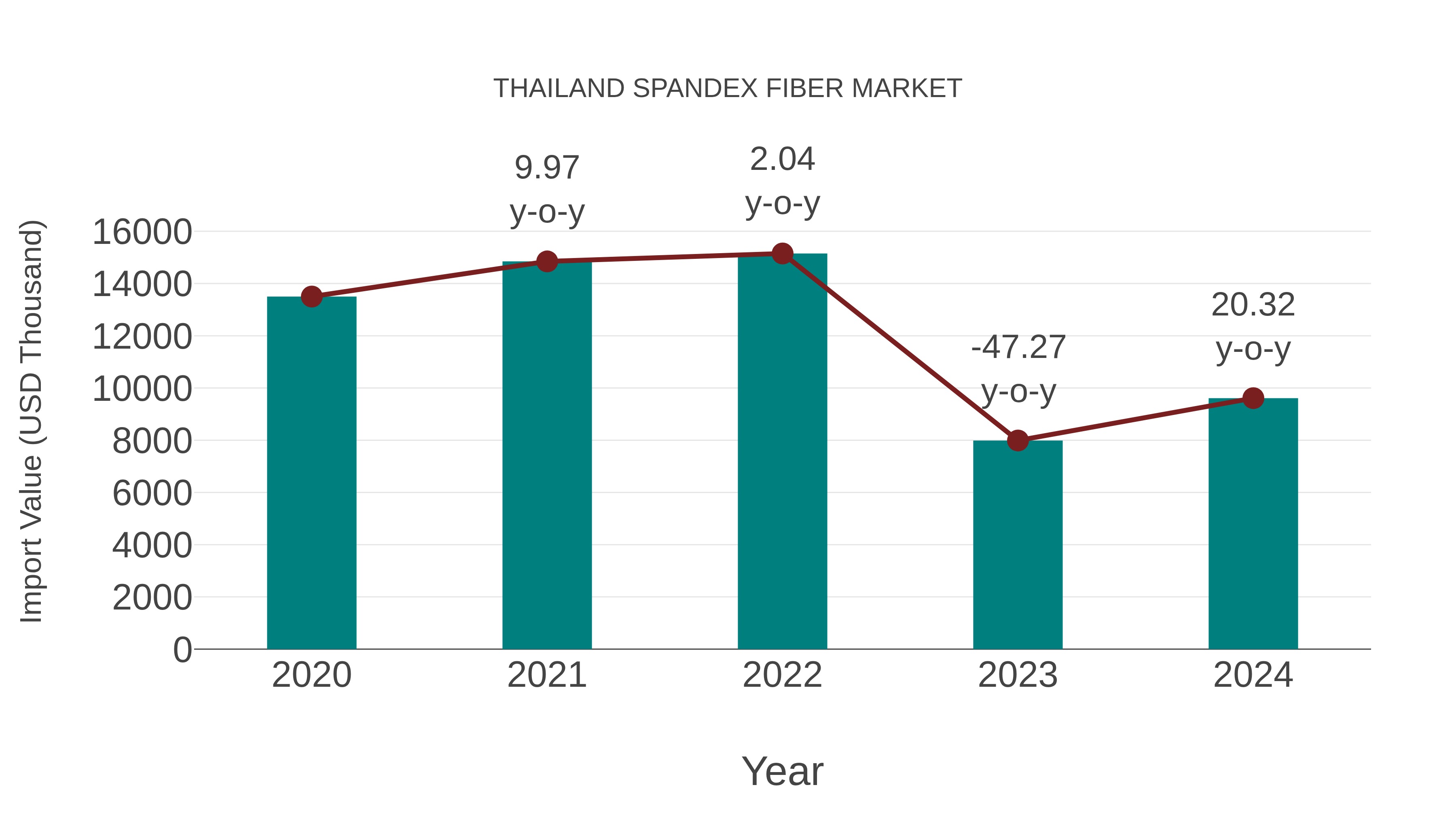
Thailand import trend for spandex fiber showed a notable growth rate of 20.32% from 2023 to 2024, following a compound annual growth rate (CAGR) of -8.14% from 2020 to 2024. This fluctuation could be attributed to shifts in demand dynamics within the textile industry, potentially influenced by changing consumer preferences or market stabilization efforts.
Thailand Spandex Fiber Market Synopsis
Spandex fibers are essential in the textile industry, offering elasticity and comfort in clothing. The Thailand Spandex Fiber Market is expanding to cater to the growing demand for stretchable and form-fitting apparel.
Drivers of the Market
The Thailand Spandex Fiber market is witnessing substantial growth, driven by the increasing demand for stretchable and comfortable textiles in the apparel and textile industries. Spandex, known for its exceptional elasticity and recovery, is widely used in sportswear, undergarments, and medical textiles. As Thailand textile and garment sectors evolve, and there is a focus on producing innovative and performance-oriented fabrics, the adoption of spandex fibers is on the rise. The market growth is further propelled by advancements in spandex manufacturing processes, the development of specialty spandex blends, and efforts to cater to changing consumer preferences for stretchable and form-fitting clothing.
Challenges of the Market
Challenges in the Spandex Fiber market include the impact of fluctuating raw material prices and the need for sustainable manufacturing practices. Market players also face competition from alternative stretch fabrics, necessitating constant innovation.
COVID-19 Impact on the Market
The Thailand Spandex Fiber market faced challenges during the COVID-19 pandemic, with disruptions in the textile and apparel industries affecting demand. Spandex, known for its elasticity and comfort, encountered fluctuations in production and consumption. Post-pandemic, the market is recovering as consumer preferences for stretchable and comfortable textiles drive demand. The Thailand Spandex Fiber market remains essential in providing solutions for industries requiring flexible and form-fitting fabrics in apparel and sportswear.
Key Players in the Market
In the Spandex Fiber sector in Thailand, key market players include Hyosung Corporation, Asahi Kasei Corporation, and Invista. These players significantly influence the market with their technological advancements and market strategies.
Key Highlights of the Report:
- Thailand Spandex Fiber Market Outlook
- Market Size of Thailand Spandex Fiber Market, 2025
- Forecast of Thailand Spandex Fiber Market, 2032
- Historical Data and Forecast of Thailand Spandex Fiber Revenues & Volume for the Period 2022-2032F
- Thailand Spandex Fiber Market Trend Evolution
- Thailand Spandex Fiber Market Drivers and Challenges
- Thailand Spandex Fiber Price Trends
- Thailand Spandex Fiber Porter's Five Forces
- Thailand Spandex Fiber Industry Life Cycle
- Historical Data and Forecast of Thailand Spandex Fiber Market Revenues & Volume By Production Process for the Period 2022-2032F
- Historical Data and Forecast of Thailand Spandex Fiber Market Revenues & Volume By Solution Dry Spinning for the Period 2022-2032F
- Historical Data and Forecast of Thailand Spandex Fiber Market Revenues & Volume By Solution Wet Spinning for the Period 2022-2032F
- Historical Data and Forecast of Thailand Spandex Fiber Market Revenues & Volume By End Use for the Period 2022-2032F
- Historical Data and Forecast of Thailand Spandex Fiber Market Revenues & Volume By Textile for the Period 2022-2032F
- Historical Data and Forecast of Thailand Spandex Fiber Market Revenues & Volume By Healthcare for the Period 2022-2032F
- Thailand Spandex Fiber Import Export Trade Statistics
- Market Opportunity Assessment By Production Process
- Market Opportunity Assessment By End Use
- Thailand Spandex Fiber Top Companies Market Share
- Thailand Spandex Fiber Competitive Benchmarking By Technical and Operational Parameters
- Thailand Spandex Fiber Company Profiles
- Thailand Spandex Fiber Key Strategic Recommendations






































