Thailand Viscose Filament Yarns Market: Import Trend Analysis
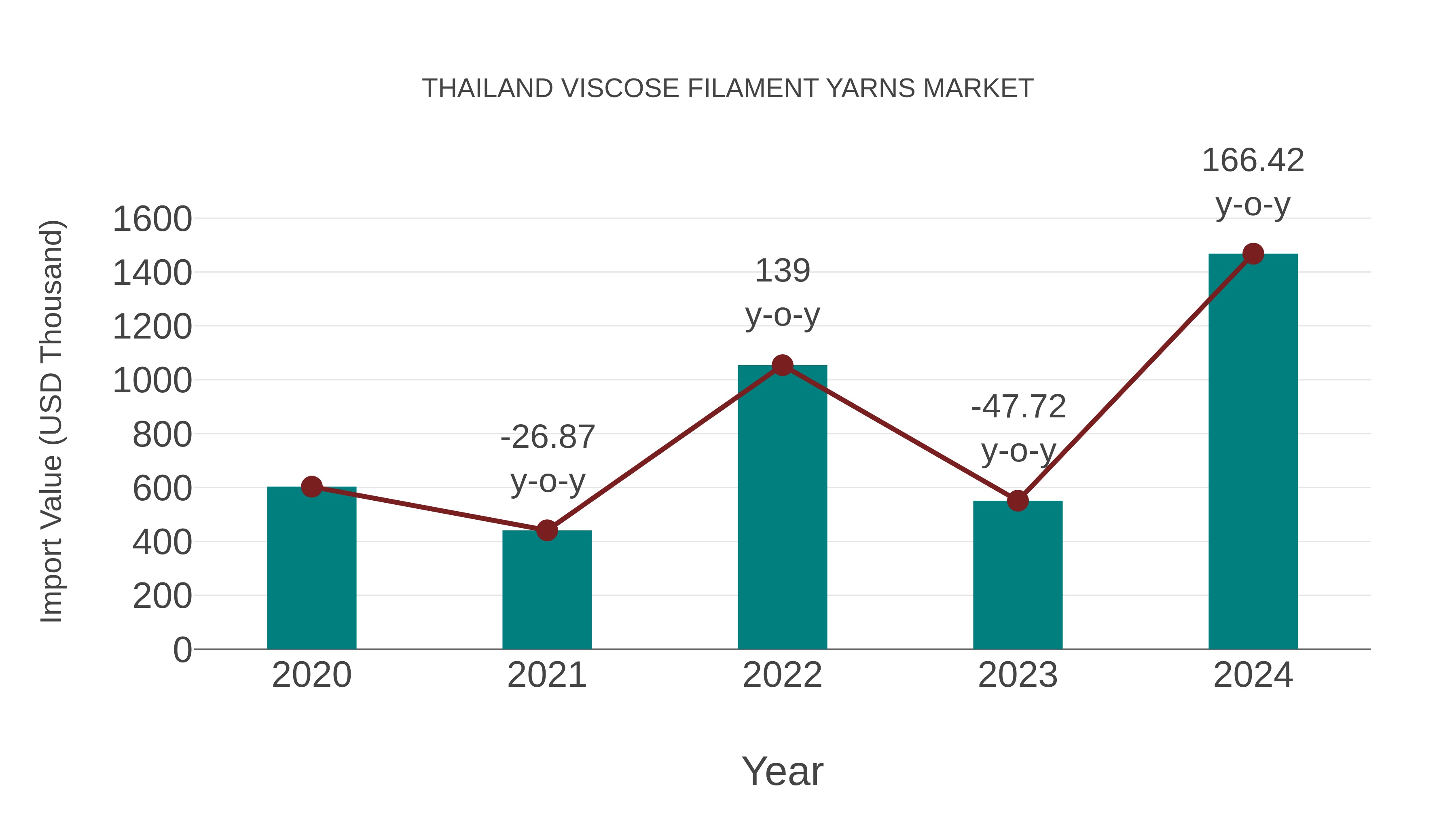
Thailand import trend for viscose filament yarns experienced significant growth from 2023 to 2024, with a growth rate of 166.42%. The compound annual growth rate (CAGR) for the period from 2020 to 2024 stood at 24.91%. This surge in imports could be attributed to a notable demand shift towards viscose filament yarns in the textile industry, indicating a positive market momentum and increasing reliance on imported raw materials to meet domestic manufacturing needs.
Thailand Viscose Filament Yarns Market Synopsis
The Thailand viscose filament yarns market was valued at approximately USD 100 million in 2025 and is anticipated to witness a healthy CAGR over 5.4% during the forecast period. Key factors driving growth include increasing consumer preference towards high quality apparel fabrics that offer superior comfortability; growing disposable income among consumers leading them towards purchasing better quality garments; significant expansion witnessed by textile manufacturers investing heavily on production capacity expansions; large scale infrastructural developments backed up by government initiatives such as special economic zones; changing lifestyles demanding higher levels of convenience; technological advancements resulting into cost effective manufacturing processes and lastly emergence of e-commerce platforms enabling easier access between buyers & sellers globally thus providing wider customer base.
Drivers of the Market
In the realm of textiles, Thailandviscose filament yarns market is driven by the fashion, apparel, and textile industries. Viscose filament yarns, known for their silky texture and versatile nature, find applications in clothing, home textiles, and fashion accessories. The thriving fashion industry, along with changing consumer preferences for sustainable and eco-friendly textiles, contributes to the demand for viscose filament yarns. Manufacturers that prioritize innovation, quality, and sustainable practices are likely to flourish in this evolving market.
Challenges of the Market
Challenges in the Thailand viscose filament yarns market include sustainability considerations. Viscose fibers, while derived from natural sources, involve chemical processes that can impact environmental and water resources. Developing sustainable production practices that minimize environmental impact, water usage, and chemical waste while maintaining product quality poses a challenge for the viscose filament yarns industry.
COVID-19 Impact on the Market
The Covid-19 pandemic impacted the Thailand viscose filament yarns market, particularly in the textile and fashion industries. With reduced consumer spending on clothing and textiles, demand for viscose filament yarns temporarily declined. The closure of retail outlets and reduced manufacturing activities also affected the supply chain. However, as economic activities resume and consumer preferences for sustainable and versatile textiles continue, the market is expected to recover, driven by the need for eco-friendly fabrics.
Key Players in the Market
Leading players in the Thailand viscose filament yarns market encompass TextileFiberTech Solutions, ThaiViscose Filament Yarns Ltd., and FabricBlend Innovations. These companies specialize in producing viscose filament yarns used in textiles, clothing, and home furnishings. Their commitment to sustainable fibers and textile innovation positions them as key contributors to the market.
Key Highlights of the Report:
- Thailand Viscose Filament Yarns Market Outlook
- Market Size of Thailand Viscose Filament Yarns Market, 2025
- Forecast of Thailand Viscose Filament Yarns Market, 2032
- Historical Data and Forecast of Thailand Viscose Filament Yarns Revenues & Volume for the Period 2022-2032F
- Thailand Viscose Filament Yarns Market Trend Evolution
- Thailand Viscose Filament Yarns Market Drivers and Challenges
- Thailand Viscose Filament Yarns Price Trends
- Thailand Viscose Filament Yarns Porter's Five Forces
- Thailand Viscose Filament Yarns Industry Life Cycle
- Historical Data and Forecast of Thailand Viscose Filament Yarns Market Revenues & Volume By Type for the Period 2022-2032F
- Historical Data and Forecast of Thailand Viscose Filament Yarns Market Revenues & Volume By Continuous for the Period 2022-2032F
- Historical Data and Forecast of Thailand Viscose Filament Yarns Market Revenues & Volume By Semi-contunuous for the Period 2022-2032F
- Historical Data and Forecast of Thailand Viscose Filament Yarns Market Revenues & Volume By Application for the Period 2022-2032F
- Historical Data and Forecast of Thailand Viscose Filament Yarns Market Revenues & Volume By Garment industry for the Period 2022-2032F
- Historical Data and Forecast of Thailand Viscose Filament Yarns Market Revenues & Volume By Auto industry for the Period 2022-2032F
- Historical Data and Forecast of Thailand Viscose Filament Yarns Market Revenues & Volume By other for the Period 2022-2032F
- Thailand Viscose Filament Yarns Import Export Trade Statistics
- Market Opportunity Assessment By Type
- Market Opportunity Assessment By Application
- Thailand Viscose Filament Yarns Top Companies Market Share
- Thailand Viscose Filament Yarns Competitive Benchmarking By Technical and Operational Parameters
- Thailand Viscose Filament Yarns Company Profiles
- Thailand Viscose Filament Yarns Key Strategic Recommendations






































